
icnlive

ICN.live

Rami Al-Saadi

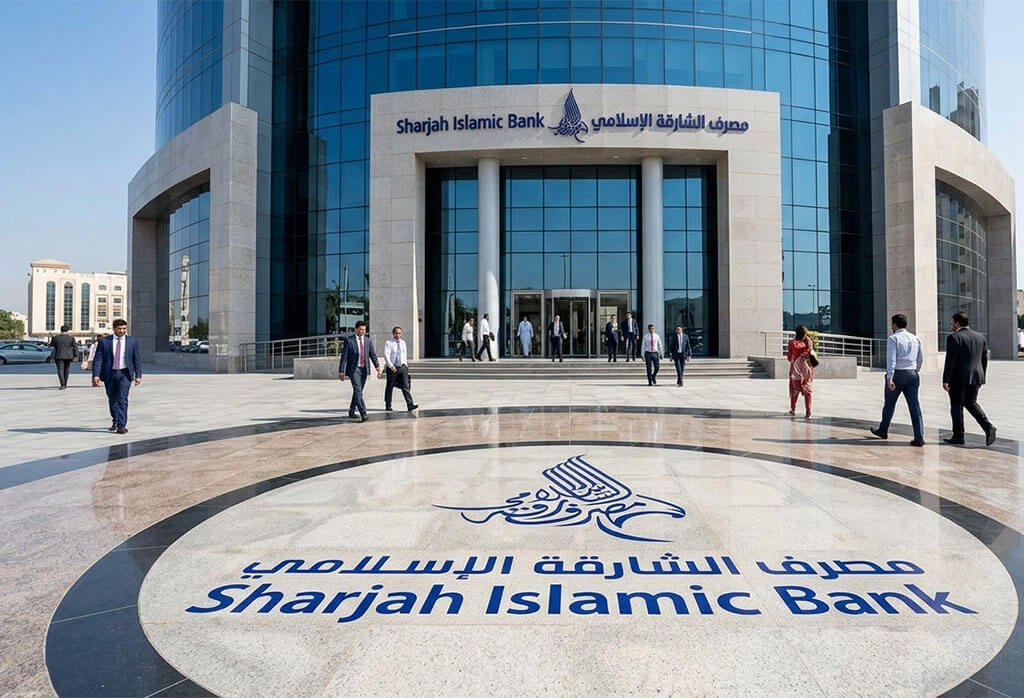
  • Sharjah Islamic Bank’s net profit rose 15.3 percent to AED803.9 million in the first half of 2026.
  • Total operating income climbed 20.5 percent to AED1.4 billion across financing and banking services.
  • The Islamic financing portfolio grew 9.5 percent, while customer deposits growth reached 6.6 percent.
  • Return on equity improved to 14.81 percent, supported by an AED2.6 billion capital increase.

Sharjah Islamic Bank H1 2026 results showed net profit after tax reaching AED803.9 million. The lender lifted earnings 15.3 percent from AED697.2 million during the same period last year. Balanced growth across core business lines drove this result, alongside a strengthened capital base. You can see the strength in both income diversification and improved operating efficiency this half.

Income from Islamic financing and sukuk rose 12.1 percent to about AED2.1 billion this half. The increase equals AED227.6 million more than the AED1.9 billion posted one year earlier. Net fee and commission income grew 8.1 percent to AED445.7 million over the year. Total operating income reached AED1.4 billion, a rise of 20.5 percent from last year. Sharjah Islamic Bank net profit gains rested on wider income streams and lower relative costs.

Profit efficiency improves while the bank keeps investing

General and administrative expenses rose 17.2 percent to AED475.2 million during the first half. The bank spent more on people, technology, and stronger operational systems across this period. Net operating income before provisions and tax grew 22.3 percent to reach AED925.8 million. SIB net profit after tax rose while the bank kept investing in future growth. Impairment provisions for financial assets stood at AED79.2 million by the end of June. Recoveries reached AED37.9 million during the same six-month period across the financing portfolio here. The non-performing financing ratio improved to 3.6 percent, down from 3.8 percent last year. Provision coverage held firm at 107 percent, close to the 109 percent recorded earlier. These indicators point to a prudent credit policy and careful risk management across the book.

Balance sheet expands as customer deposits growth continues

Total assets increased to AED94.5 billion by the end of the first half period. The figure grew 4.7 percent from AED90.3 billion recorded at the close of 2025. Growth came mainly from the Islamic financing portfolio, which reached AED49.9 billion this half. The portfolio climbed 9.5 percent from AED45.6 billion posted at the end of 2025. Customer deposits growth reached 6.6 percent, lifting total balances to AED59.4 billion this half. The financing-to-deposits ratio rose to 84 percent, up from 82 percent one year earlier. Liquid assets stood at AED19.8 billion, close to 20.9 percent of total assets overall. Shareholders’ equity rose by AED2.6 billion after the bank completed its capital increase this year. The bank issued 1.1 billion new shares at AED1 each, plus a share premium. Investors added a premium of AED1.4 per share during the bank’s successful capital raise. These Sharjah Islamic Bank H1 2026 results also show a firmer capital base overall.

Sharjah Islamic Bank H1 2026 results lift shareholder returns

Return on equity improved to 14.81 percent from 14.78 percent during the prior year. The lender pushed return on assets to 1.74 percent from 1.55 percent last year. In its official results statement, Sharjah Islamic Bank tied these gains to disciplined risk management. The bank said results reflected “balanced growth across its core business activities” this half. From my reading, these numbers point to steady, well-managed expansion rather than one-off gains. Sharjah Islamic Bank H1 2026 results confirm strong momentum heading into the second half. You should watch deposits, financing demand, and margins closely as the year moves forward.

TAGS

EXPLORE MORE ON:

Sharjah Islamic Bank H1 2026 results
The Secret Ways To Sell ANYTHING

Joanna Wiebe, a creator with over 20 years in the creative field, explains that the brain doesn’t adopt entirely new ideas, but new versions of ideas it already holds.

Dubai's total diamond trade

Dubai’s total diamond trade reached a new all-time high during 2025 across every major category. Official figures from Dubai Customs place the yearly diamond total at 41.7 billion dollars overall. This result beats the earlier record of 40.9 billion dollars set back in 2011. Traders also moved 359.5 million carats, a volume rising 42.5 percent from last year. DMCC has announced today that, for the first time, the Emirate of Dubai hit record value and record volume in one year. Dubai diamond trade 2025 figures show steady demand across natural stones and coloured gemstones. Total trade value climbed 16.2 percent from the 35.8 billion dollars recorded during 2024.

The market added 5.8 billion dollars in fresh trade across a single twelve-month span. Dubai now works as a key gateway linking mines, cutting hubs, and buyer markets worldwide. Producers ship rough stones here, while cutters and traders prepare them for retail shelves. Retail demand in India, the United States, and Europe keeps large orders flowing steadily. Strong regulation and secure vaults give global buyers real confidence in each recorded deal. Access to finance also helps smaller firms trade larger stone volumes across each season. Grading services and clear customs steps move each shipment through the emirate at speed.

Why Dubai’s total diamond trade reached a new all-time high

Records confirm Dubai’s total diamond trade reached a new all-time high through natural stone strength. Natural diamond trade value hit 39.9 billion dollars, near 95.8 percent of the total. Dubai traded 205.2 million carats of natural rough stones, the second highest volume on record. Rough volume rose by nearly 34 percent, showing strong appetite among global cutting and polishing centres. Polished natural trade reached 18.7 billion dollars, a rise of nearly 25 percent from 2024. Over five years, Dubai’s total diamond trade reached a new all-time high with 139 percent value growth.

Average value per carat rose about eight to nine times across the same five-year window. Ten-year data shows Dubai’s wider diamond trade rose 63 percent by value overall. Volume across the same decade climbed 44 percent, a sign of deeper market roots. Investors read these gains as proof of steady policy and reliable long-term trade rules. Ahmed Bin Sulayem, DMCC’s Chairman and Chief Executive Officer, tied the results to long planning.

He said: “Dubai’s latest diamond trade figures demonstrate the success of a long-term strategy to build the world’s most connected, transparent, and efficient precious stones ecosystem. Since the Covid-19 pandemic in 2020, we have seen trade through Dubai double in physical volume and grow by almost 140% in value. For natural polished diamonds alone, value has grown by 246%. We are the partner of choice for producers, manufacturers, traders, and retailers across the global industry. Through world-class infrastructure, regulatory certainty, access to finance, and one of the world’s most sophisticated ecosystems for precious stones, we will continue to provide the platform the industry needs to grow.”

Leadership and demand behind the record

DMCC’s diamond trade leaders point to strong demand from producers, manufacturers, and global retailers. Buyers worldwide noticed Dubai’s total diamond trade reached a new all-time high last year. From my view, this run signals real staying power for the emirate’s precious stones sector.

Reports on coloured gemstones Dubai handled last year show a record 1.1 billion dollars. This category grew 48 percent, with imports up 68.8 percent and re-exports up 33.5 percent. Synthetic and industrial diamonds now make up nearly 39 percent of total carat volume. DMCC runs the Dubai Diamond Exchange, the region’s largest tender site for precious stones. The Emirate also hosts many tenders and auctions for both rough and polished stones. Each tender draws bidders from Africa, Asia, and Europe onto a single trading floor. You can watch these figures to judge where global diamond demand heads through 2026. The exchange keeps Dubai near the front of the entire world’s diamond trading network.

Share this post

on your favourite social platforms

or copy the link