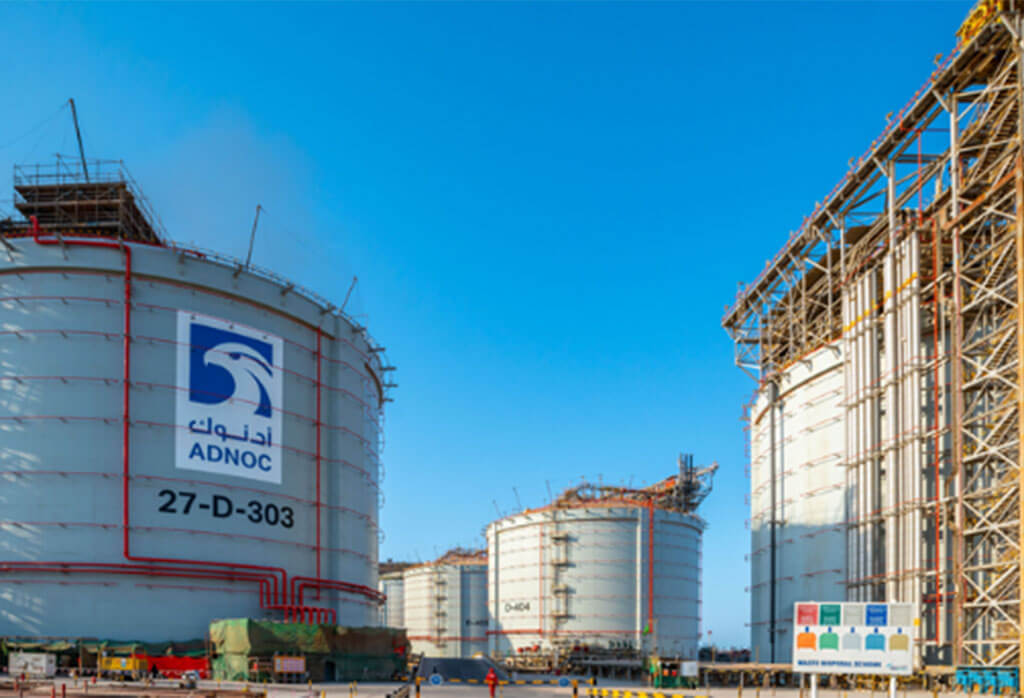



ADNOC Gas Q2 2026 net income reached $665 million, a figure that carries the strain of the months behind it. In early April, security-related incidents hit the Habshan processing site, and Reuters tied them to intercepted drone and missile attacks in the region. Supply from the site fell. Shipping through the Strait of Hormuz slowed. The company still cleared the top of its own forecast, which had run from $400 million to $600 million.
Margins in the domestic gas business held firm, and that steadiness carried the numbers when exports came under pressure. Recovery at Habshan moved faster than planned. Gas supply returned to 85 percent, past the year-end target the company had set in May. Managers leaned on inventory and rerouted logistics to keep customers supplied while the Strait of Hormuz disruption dragged on. ADNOC Gas supplies close to 60 percent of the UAE’s sales gas and reaches customers in more than 20 countries, so a stalled export lane touches a wide base. None of it erased the damage. It softened the edges.
A larger bet behind the numbers
The quarter’s real weight sits in a decision made beside it. ADNOC Gas took final investment decisions on Phases 2 and 3 of its Rich Gas Development project and awarded $8.2 billion in engineering, procurement and construction contracts. Wison Engineering won the $3.9 billion Phase 2 award to build a new gas processing train at Habshan. Tecnimont took the $4.3 billion Phase 3 award for a natural gas liquids fractionation train at Ruwais. Added to the $5 billion Phase 1 committed in 2025, total spending on the project reaches $13.2 billion. Chief Executive Officer Fatema Al Nuaimi framed the awards as a step up in ambition rather than steady progress.
ADNOC Gas Q2 2026 net income against a longer plan
Set against that spending, the ADNOC Gas Q2 2026 net income reads as one marker on a long line. The company lifted its ADNOC Gas EBITDA growth 2030 target to 60 percent versus 2023, up from an earlier goal of more than 40 percent through 2029. Reaching it means roughly $28 billion of investment between 2026 and 2030. Four megaprojects anchor the plan: Ruwais LNG, MERAM, the Rich Gas Development work, and Estidama, together expected to generate $13.4 billion in In-Country Value. MERAM is due in 2027, with the others advancing on schedule.
Part of the efficiency story runs through hardware. ADNOC Gas is putting aerial drones, four-legged inspection robots and tank-climbing crawlers across its sites. The company says the tools can cut some inspection costs by up to 75 percent and finish certain checks as much as 15 times faster. They also pull workers out of hazardous spots. The direction points toward more autonomous operations over time, and it feeds the same goals behind the earnings.
Dividend and the road ahead
Shareholders drew a clear signal. The board approved a $940 million ADNOC Gas dividend for September, holding to a promise of 5 percent annual dividend growth through 2030. ADNOC Gas remains the largest dividend payer on the Abu Dhabi exchange. Guidance for the third quarter runs from $600 million to $800 million, and it assumes the Strait stays contested. If maritime routes reopen by the fourth quarter and pricing steadies, the company expects full-year net income between $3.5 billion and $4 billion. The ADNOC Gas Q2 2026 net income gives that range a firmer base. Read against a year ago, the picture is harder. Reuters reported net income fell 52 percent from $1.39 billion in the same quarter of 2025. The ADNOC Gas Q2 2026 net income shows a company earning through the pressure, not around it.