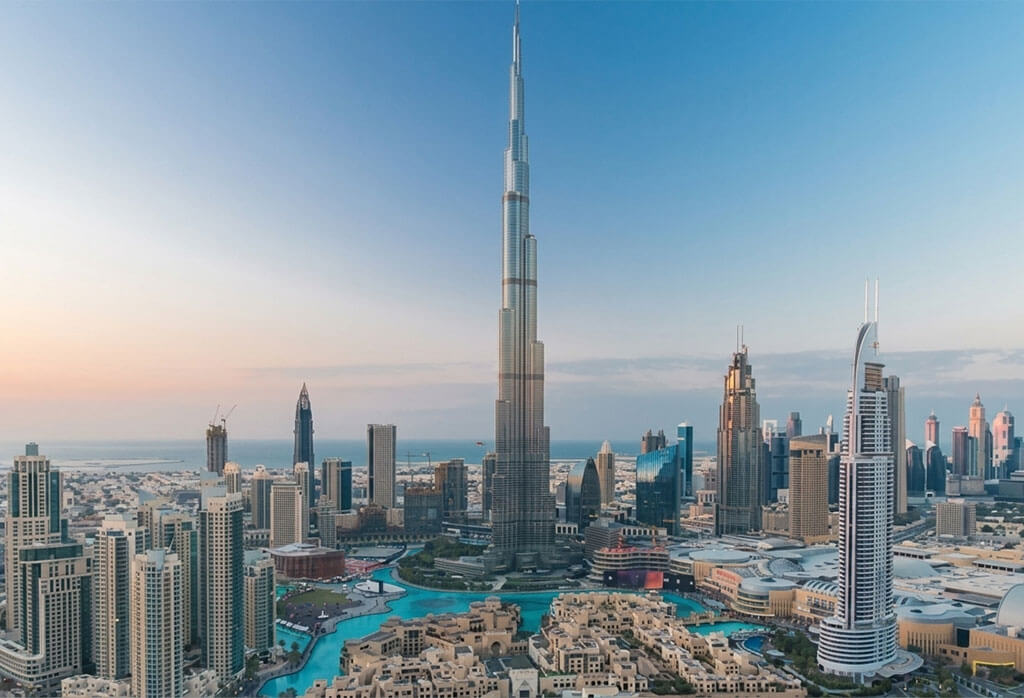



A number sits at the center of the Emaar Properties H1 2026 results, and it is worth pausing on. The revenue backlog reached roughly AED164.9 billion, or about US$44.9 billion, as of 30 June 2026. That figure is money already committed by buyers but not yet booked as revenue. It tells you what the next few years might look like before they arrive.
Emaar reported revenue of AED23.9 billion, up 21 percent against the same period last year. EBITDA rose 24 percent to AED12.9 billion. Net profit before tax reached AED12.8 billion, a gain of 23 percent. These are the headline lines, and they build on a first quarter that already ran ahead of 2025.
The backlog matters because it de-risks what comes next. When a developer sells homes before completion, the cash lands over time as construction hits each stage. Emaar’s backlog grew 13 percent year-on-year, giving the group visibility that many builders lack.
Where the sales came from
Emaar property sales reached approximately AED26.6 billion in the first half, drawn from its master-planned communities and a set of timed launches. The company said pricing held firm across those developments, a sign buyers kept their confidence through the period.
Eleven residential launches went out across Emaar South, Dubai Hills Estate, The Heights Country Club, The Oasis, Rashid Yachts and Marina, and Expo Living. Alongside these, the group announced a new AED200 billion masterplan, adding to a pipeline that already spans a large share of Dubai’s developable land.
The development engine
Emaar Development, the build-to-sell arm, carried much of the weight. It reported revenue of AED13.3 billion, up 34 percent, with net profit before tax of AED7.8 billion, a rise of 41 percent. Counting other UAE operations, Emaar Development revenue from property development in the country reached AED17.7 billion, up 30 percent.
The backlog for UAE development projects stood at AED135.7 billion as of 30 June, up 6 percent on the first half of 2025. Mohamed Alabbar, founder of Emaar, tied the group’s steady footing to Dubai itself. He said the city never stands still, and that its stable, business-friendly environment continues to draw capital and talent even against a more uncertain global backdrop.
The recurring side of the ledger
Beyond selling homes, Emaar runs malls, hotels, and leased space that produce income year after year. That side held its ground. Recurring revenue reached AED5.1 billion, close to the prior year, with recurring EBITDA at AED4.0 billion.
The malls, retail, and commercial leasing portfolio brought in AED3.5 billion, up 9 percent, with occupancy near 98 percent. Hospitality, leisure, and entertainment generated AED1.6 billion, and UAE hotels ran at 60 percent average occupancy. International work, led by Egypt and India, added property sales of AED4.2 billion and revenue of AED1.1 billion, about 4.6 percent of the group total.
Emaar net profit before tax, then, rests on two engines running together. One sells the city as it grows. The other collects rent on what is already built. The Emaar Properties H1 2026 results suggest both kept pace through the half.