icnlive

WATCH LIVE. THINK BUSINESS.

© 2026 ICN.LIVE

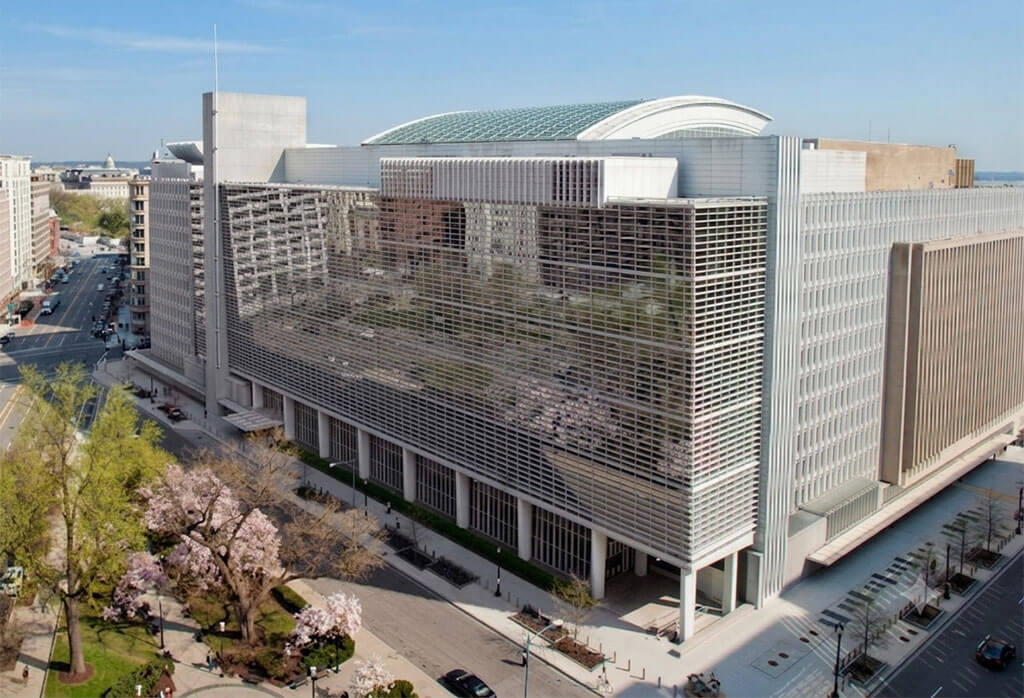
The World Bank grants $100 million to Syria to rebuild the foundations of a financial system worn down by more than a

Trending Capital

Brookfield Middle East Partners fund

The Brookfield Middle East Partners fund reached its first close with $500 million of Brookfield’s own money committed alongside its partners. That figure says something before any strategy deck does. A manager willing to place half a billion dollars next to its investors is telling you where it believes the returns sit. In total, the vehicle raised close to $2 billion, drawn from Saudi Arabia’s Public Investment Fund and a group of other global and regional institutions. Neither the size of PIF’s own commitment nor the final fundraising target has been disclosed.

PIF sits at the center of the deal as the PIF anchor investor. A backer of that size gives the fund a base of capital and, harder to price, local standing. An anchor like this can open the door to larger and more sensitive transactions than a first-time manager would reach alone. Yazeed A. Al-Humied, Deputy Governor and Head of MENA Investments at PIF, said the partnership is built to bring international private equity into Saudi Arabia and the wider region. The Brookfield Middle East Partners fund gives PIF a way to test that idea with real money.

What the Brookfield Middle East Partners fund will buy

Half the capital is set for Saudi Arabia. The rest will move across high-growth markets in the Gulf Cooperation Council. BMEP plans to pursue buyouts, minority growth equity and other deals across financial and business services, consumer services, industrials, technology and healthcare. Brookfield built the Brookfield $2 billion Saudi Arabia fund on nearly three decades of regional work. Since starting direct investments in 2015, the firm has managed more than $16 billion in assets across private equity, real estate and infrastructure in the Middle East.

The agreement did not appear overnight. PIF and Brookfield signed a non-binding memorandum of understanding in October 2024 at the Future Investment Initiative in Riyadh, naming PIF as the strategic anchor. This first close follows the approval of PIF’s 2026 to 2030 strategy earlier this year, a plan weighted toward financial returns and wider private-sector participation. Public Investment Fund private equity commitments have grown as the sovereign fund shifts from writing every check itself toward drawing outside money in beside it. The pattern shows up again in the Brookfield Middle East Partners fund.

Why the Kingdom wants the money local

PIF said the investment supports its work to deepen Saudi capital markets, widen financing for local companies and bring new products to market. That aim runs straight through Saudi Vision 2030 investments, the program meant to move the economy off oil. The fund reported assets under management above $900 billion in 2025, up from $150 billion in 2015. More than $199 billion went into new domestic projects between 2021 and 2025. GCC private equity has drawn steady foreign interest as regional governments court managers willing to build teams on the ground.

What comes next

Bruce Flatt, chief executive of Brookfield, said the fund reflects growing international confidence in the region and a chance to back businesses for long-term growth. The firm will also bring the Brookfield Academy, founded in 2019, to Saudi Arabia, running professional development for investment staff. Whether the Brookfield Middle East Partners fund returns what both sides expect will take years to read. The money, for now, sits on the table.

📸: Saudi Gazette

Emirati investors in Sharjah

The department’s specialised report placed UAE nationals at the top of every investor segment. Their AED14.9 billion covered 22,599 properties held by 9,655 investors. That share came to 50.6 percent of the total, a figure that frames the rest of the data. Sharjah real estate transactions H1 2026 reached AED29.5 billion across all buyers.

The department linked the result to confidence in the emirate’s investment environment. It pointed to advanced legislation, sustainable urban development and quality projects as the drivers. Each factor, the report said, adds to the emirate’s competitiveness.

Sharjah’s real estate market drew a wide investor base this year, and Emirati buyers set the pace on both value and volume.

Women’s share of the market

The report gave close attention to Emirati women in the property market. Male investors accounted for 72 percent of traded properties. Women held the other 28 percent.

Ownership distribution told a similar story. Emirati male owners made up 59.3 percent of sales transactions, against 40.7 percent for female owners. On value, men accounted for 75.3 percent of total sales transaction value and women 24.7 percent. The department read these figures as a sign of the growing economic role of Emirati women and their weight as partners in investment and development.

How the age groups compare

The report broke investment activity into three age bands. Among nationals aged 35 and under, men held 65.5 percent of traded properties and women 34.5 percent. Ownership split 57 percent to 43 percent, while sales value ran 72.5 percent to 27.5 percent.

For the 36 to 53 band, men accounted for 71.2 percent of traded properties and women 28.8 percent. Ownership reached 58.2 percent for men and 41.8 percent for women. Sales value stood at 73.3 percent to 26.7 percent. Among investors aged 54 and above, men held 77.6 percent of traded properties and women 22.4 percent. Ownership reached 64.3 percent to 35.7 percent, and sales value 78 percent to 22 percent. The pattern points to stronger female participation at younger ages.

What officials said

Abdulaziz Ahmed Al-Shamsi, Director-General of the Sharjah Real Estate Registration Department, said the UAE Investor Report results reflect the success of the emirate’s development approach and the strength of its market. He tied the achievements to the vision of His Highness Sheikh Dr. Sultan bin Muhammad Al Qasimi, Supreme Council Member and Ruler of Sharjah, and the follow-up of H.H. Sheikh Sultan bin Muhammad bin Sultan Al Qasimi, Crown Prince and Deputy Ruler.

Al-Shamsi said the report’s meaning goes beyond investment volumes to the wider participation of young people and women. Emirati investors in Sharjah, he added, continue to find opportunities that reinforce the emirate’s standing as a destination for sustainable property investment. UAE nationals’ property investment across Sharjah, backed by the Sharjah Real Estate Registration Department, keeps drawing steady interest. For anyone tracking Sharjah property investment, the H1 figures set a clear marker on where the demand sits.

Kuwait $6 billion bond sale

The Kuwait $6 billion bond sale closed this week with an order book the finance ministry calls one of the largest for a multi-tranche sovereign deal in 2026. Three tranches went out. Investors took $3 billion in three-year paper, $1.5 billion in five-year notes and $1.5 billion at 10 years. Final spreads landed at 70, 75 and 85 basis points over US Treasuries. It was the country’s first international issuance since October last year.

Pricing tells you more here than the headline number does. Kuwait tightened 25 basis points across all three tranches from its opening levels, according to a person familiar with the deal cited by Bloomberg. Buyers do not give up that much yield to a borrower they distrust.

Demand for the Kuwait $6 billion bond sale came in two versions. The finance ministry put total orders above $18 billion, more than three times the issue size. Bloomberg reported books near $14.8 billion at final terms. Peak interest and final interest are different numbers, and both can be accurate.

Who bought the Kuwait $6 billion bond sale?

American accounts took 48 percent of the allocation. The UK and Europe followed with 28 percent, then the Middle East and North Africa at 16 percent. Asia took 4 percent, and other international markets took the rest. Finance minister Yaqoub Al-Refaei said the result shows investor confidence in Kuwait’s credit position and financial standing.

The short end did the heavy lifting. Half the total sat in the three-year tranche, which points to buyers who want yield without long duration risk. Five- and 10-year paper gives other Kuwaiti borrowers a benchmark to price against.

Geography matters more than usual on this one. JPMorgan reclassified Kuwait as a developed market in February 2025 and removed it from its emerging market bond index. That move stripped out index-driven demand the country once attracted by default. Pulling almost half the book from the Americas without that support is a real result for a Kuwait sovereign bond issuance.

War risk barely moved the price

Iranian attacks have hit US military assets in Kuwait and Bahrain in recent weeks. Fixed income desks priced the three-tranche bond sale anyway. Gulf sovereign bonds already went through this test once, falling to lows in mid-March before climbing back through late April. Traders have a reference point now, and they used it.

Why Kuwait keeps borrowing

The arithmetic is plain. Kuwait’s 2026-27 budget forecasts revenue of KD16.3 billion against spending of KD26.1 billion. That leaves a Kuwait budget deficit of KD9.8 billion, up from KD6.3 billion the year before. Oil was expected to supply close to 80 percent of budgeted revenue, so disruption around Hormuz cuts straight into the top line.

Access came back through legislation. The Kuwait public debt law, approved in March 2025, set the borrowing ceiling at KD30 billion, roughly $97.4 billion, and allowed maturities out to 50 years. Political gridlock had kept the country out of the sovereign market for eight years before that. Since the law passed, Kuwait raised $11.25 billion in October 2025 and another $2 billion in May.

Kuwait is building a yield curve, and curves need repeat business. Each deal hands domestic banks and corporate borrowers a pricing reference they did not have. I read the Kuwait $6 billion bond sale as a curve-building exercise first and a cash-raising one second. The deficit is real. So is the sovereign wealth sitting behind it. What global investors bought this week was the legal framework and the balance sheet, not the news cycle.