

icnlive

WATCH LIVE. THINK BUSINESS.

© 2026 ICN.LIVE

ICN.live

PUBLISHED BY ICN PRESS

  • The World Bank approved a $100 million grant for the Syria Financial Sector Modernization Project.
  • The plan targets at least 15 million electronic retail payments a year and 500,000 new digital payment users, including 150,000 women.
  • Central Bank of Syria Governor Mohamed Safwat Raslan called the grant a milestone toward international standards.
  • The funding covers supervision, financial integrity, and asset quality reviews across public and private banks.

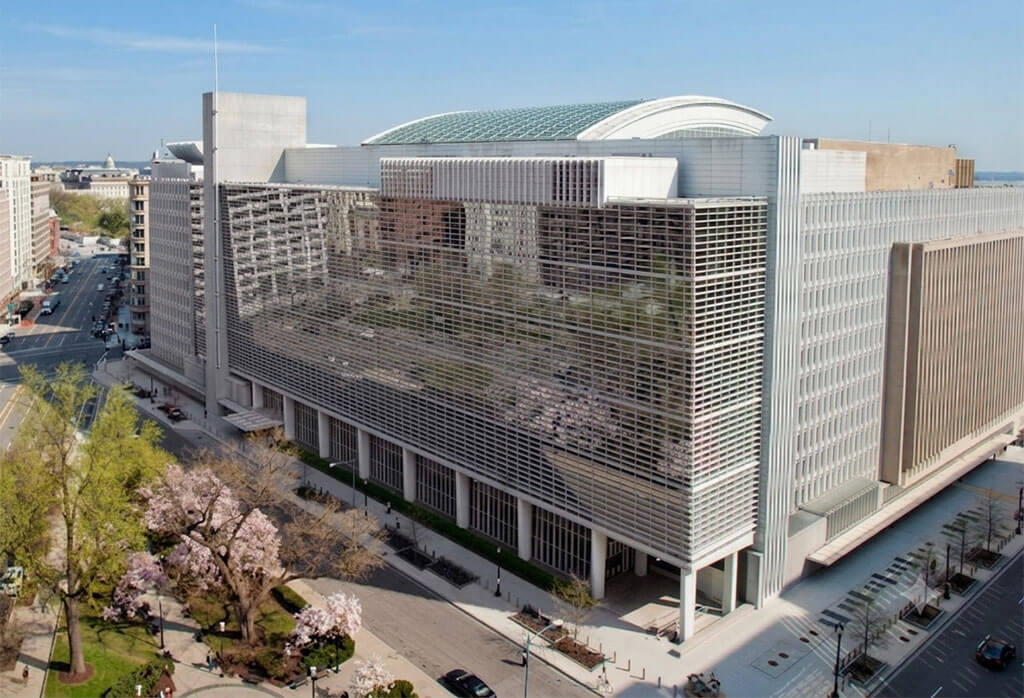
The World Bank grants $100 million to Syria to rebuild the foundations of a financial system worn down by more than a decade of conflict. Delivered as a grant from the International Development Association, the Bank’s arm for its poorest borrowers, the money will fund the Syria Financial Sector Modernization Project. That program is built to make payments safer and to widen access to banking. Behind the headline figure sits a harder question about governance, one about who will oversee the funds and to what standard.

A sector rebuilt from cash upward

After 14 years of war, Syria’s banking system remains small and leans heavily on cash. Financial intermediation is thin, digital payment infrastructure is dated, and supervision has weakened. These gaps raise the cost of every transaction and keep the country cut off from the international channels that trade and investment depend on. The project aims to operationalize core financial systems and to enable at least 15 million electronic retail payments a year. It also aims to bring 500,000 people and businesses into digital payments, among them 150,000 women. Expanding Syria’s digital payments sits at the center of the plan, which the World Bank frames as a route toward wider financial inclusion.

Why the World Bank grants $100 million to Syria now

Timing reflects a shift in how Damascus and the Bank work together. In May 2025, Saudi Arabia and Qatar cleared Syria’s arrears to the International Development Association, which restored the country’s eligibility for financing after a 14-year suspension. A month later, the Bank approved a $146 million grant for emergency electricity, its first Syrian project in nearly four decades. Finance Minister Mohamed Yisr Barnieh has said the Bank endorsed Syria’s economic reform plans for 2026. The latest decision, in which the World Bank grants $100 million to Syria, carries that reengagement into the heart of the financial system.

Oversight, integrity, and accountability

Much of the grant targets control rather than cash. The plan funds independent asset quality reviews across public and private banks, a step meant to show regulators the true health of the system. It strengthens risk-based supervision and rebuilds the Central Bank of Syria’s core systems, from its banking platform to its cybersecurity. Investment will also flow to anti-money laundering and counter-terrorism financing tools, and to the Financial Intelligence Unit that runs them. Dalia Khalifa, the World Bank’s director for the Middle East, tied the project to Syria’s economic recovery, calling a modern financial system essential to the country’s future.

A test of standards

Governor Mohamed Safwat Raslan called the approval a milestone for the country’s banking infrastructure and a step toward standards used across global finance. He told the Syrian Arab News Agency the Central Bank would keep working to restore confidence and to return Syria to the international financial system. The International Development Association grant carries no repayment obligation, which lowers the fiscal risk for a state whose revenues have fallen sharply since 2011. Whether the reforms hold will depend on the strength of the new oversight. When the World Bank grants $100 million to Syria, the harder task is not the transfer but the accountability that comes after.

TAGS

EXPLORE MORE ON:

UAE vape tax from September 1

The UAE vape tax from September 1 changes how much tax a bottle of e-liquid carries, even though the tax rate itself stays where it is. The Ministry of Finance has confirmed a minimum excise price of AED 1 per millilitre for liquids used in electronic smoking devices and tools. The rule covers e-cigarette liquids and vape liquids sold across the country.

Here is the part worth slowing down on. A minimum excise price is not a shelf price. It is the lowest value tax officials will use when they work out what a product owes. If a liquid sells for less than that floor, the tax gets calculated as if it had reached the floor anyway.

So the price you pay at the till is one number. The number the tax is built on is another. From September, those two can drift apart on cheaper products.

What the UAE vape tax from September 1 actually changes

The UAE excise tax rate on tobacco and electronic smoking products stays at 100 per cent. Nothing in this decision touches that. What moves is the base.

Take a 60 mL bottle priced at AED 40. Under the old method, the tax was worked out on AED 40. From September 1, the same bottle sits on a taxable value of AED 60, because AED 1 per millilitre multiplied by 60 gives AED 60. The full rate then applies on top of that higher figure.

Run the same sum on a 10 mL bottle, and the floor is AED 10. On a 30 mL bottle, AED 30. Premium liquids already priced above AED 1 per millilitre feel nothing. Budget liquids feel it most.

Who pays and when

The UAE vape tax from September 1 lands on every link of the supply chain. Importers, distributors and retailers all calculate excise duty on the new floor, and they must be registered with the Federal Tax Authority to trade in these goods at all. Whether a business absorbs the extra cost or moves it onto the shelf will depend on the product and how it was priced before.

For anyone who vapes, September 1 is the date to watch. Expect movement at the cheaper end of the shelf. The premium end should hold steady.

Not the first tax on vaping here

This is not the arrival of vape tax in the UAE. Excise tax reached vapes and e-liquids on December 1, 2019, and the wider excise system started in 2017 with tobacco and high-sugar drinks. What arrives next month is the floor underneath the calculation.

The Ministry says the decision keeps the excise system in step with the market and applies one standard across every category of tobacco and electronic smoking product. It also says the change supports compliance and limits practices that weaken how the tax works day to day.

Existing floors elsewhere hold. Cigarettes, water pipe tobacco and similar products keep the minimum excise prices they already had.

The two goals behind the UAE vape tax from September 1

The Federal Tax Authority describes excise tax openly as a tool with two jobs. One is to cut consumption of products judged harmful to health. The other is to raise revenue. The UAE vape tax from September 1 serves both. A higher taxable base on cheap liquids narrows the gap between the budget end and the rest, which may push some users to buy less. It also lifts what the government collects on every millilitre sold.

There is a counterweight, and retailers have raised it. If legal prices climb far enough above unofficial ones, some buyers may go looking for the unofficial ones. That risk sits alongside the health goal rather than cancelling it.

PIF acquires Saudi football club stakes

When PIF acquires Saudi football club stakes, the change reaches the stands well before it shows up on a balance sheet. Saudi Arabia’s sports ministry said in a social media post that it has begun moving 25 percent of the shares held by non-profit foundations in Al-Ittihad, Al-Ahli, Al-Hilal and Al-Nassr to the Public Investment Fund. Regulatory steps are complete. The boards of those foundations will be dissolved. No price was disclosed, and the ministry framed the step as the second phase of an ownership transfer meant to make the four clubs easier for outside money to buy into.

Those foundations were built by club members. Some served for years, running elections, handling club affairs, carrying the identity of a club from one generation to the next. That role now ends. If you support one of these four teams, the people who used to speak for you inside the boardroom no longer sit there.

The PIF ownership stake and what it replaces

Regional and Saudi outlets report the fund already held 75 percent of the four clubs after the first phase in 2023, with the remaining quarter parked with each foundation. Folding in that quarter hands the fund the whole company. The second time PIF acquires Saudi football club stakes, the terms look cleaner than the first, because a single owner is far simpler to sell than a split one.

Al Hilal ownership shows where this goes. In April, the fund agreed to sell 70 percent of the club to Kingdom Holding Company, the investment firm founded by Prince Alwaleed bin Talal, for SAR840 million, around $224 million. Before that, in July 2025, US venture firm Harburg Group bought Al-Kholood Club and became the first foreign owner in the league.

Saudi Pro League privatisation moves club by club

Saudi Pro League privatisation started as a formal programme in 2024, covering 14 clubs. Teams across the top tier have since moved to owners backed by sovereign money or private capital. Each deal follows the same shape. Convert the club into a company, tighten the governance, then find a buyer who wants the brand.

Ibrahim AlMoaiqel, assistant deputy minister for investment and privatisation, told a London forum in June that 11 club transactions had closed with two more underway, and more than 40 local and international investors had registered interest, according to reporting by Enterprise KSA. Five further clubs went on offer the same month.

What happens next after PIF acquires Saudi football club stakes

The logic behind all of it sits inside the Saudi Vision 2030 sports sector plan, which Crown Prince Mohammed bin Salman set out to widen the economy beyond oil. Sport and entertainment carry part of that weight. The 2034 World Cup, which Saudi Arabia is preparing to host, tightens the clock, since a club bought today should be worth more once the league grows ahead of the tournament.

Each time PIF acquires Saudi football club stakes, the fund edges closer to handing the clubs over completely. What arrives with the new owners is harder to read. Budgets have tightened across the league, and Enterprise KSA reports transfer spending this summer sits far below the 2023 peak, when Saudi clubs pulled stars out of Europe at speed.

So the shares move, the paperwork clears, and the boardroom empties out. For the crowd in the stands, the real question is who walks in next.

CBUAE's Financial Stability Report

CBUAE’s Financial Stability Report puts numbers behind something many people in the UAE already sense: that banks are lending more freely than they did a few years ago. UAE banking sector assets grew 17.1 percent in 2025 to AED5.3 trillion, worth roughly $1.44 trillion. Loans rose faster still, up 17.8 percent. Most of that credit stayed inside the country. Retail customers and private companies took on the bulk of it.

For anyone who has applied for a mortgage, a car loan, or working capital for a small shop, this is what a growing loan book feels like. Credit gets easier to reach. Approvals come through more often. Banks compete harder for your business.

Loan quality improved alongside the volume. The non-performing loan ratio fell to 3.3 percent in 2025, down from 4.7 percent a year earlier. In 2020, it stood at 8.2 percent. Lending more while getting repaid more reliably is an unusual pairing, and it points to households and firms in better financial shape.

Profits and the cushion behind them

Net profits climbed 11.7 percent to AED90.8 billion, about $24.7 billion, helped by higher operating income. The capital adequacy ratio finished the year at 17 percent, above the regulatory minimum. Deposits kept flowing in, so liquidity stayed comfortable.

Think of a capital ratio the way you would think of a household emergency fund. The bigger the buffer, the longer a bank can take losses without cutting off customers.

CBUAE’s Financial Stability Report also covers what happens if conditions turn ugly. Supervisory stress tests run during 2025 modelled a severe economic shock. Under the adverse scenario, the average Common Equity Tier 1 ratio slipped from 14.1 percent to a low of 11.1 percent, staying above the regulatory floor for the whole test period.

What CBUAE’s Financial Stability Report says about payments

CBUAE’s Financial Stability Report tracks how money moves as well as where it sits. The Aani instant payment platform carried around 183 percent more transactions in 2025 than in 2024, and enrolled users passed 11.7 million by the end of December. Aani lets you send up to AED50,000 at any hour of the day, with QR payments, payment requests and split bills built in.

The Jaywan card scheme runs alongside it as the national card network. Both sit inside the Financial Infrastructure Transformation Programme, the central bank’s plan for rebuilding the country’s payment rails. Work on cross-border payments continues under the same programme.

Beyond the big banks

CBUAE’s Financial Stability Report describes steady conditions across Islamic banking and insurance too. A legal change sits underneath all of this. Federal Decree-Law No. 6 of 2025 consolidated the rules covering banks and insurers, reinforced the central bank’s independence, and named the CBUAE as the country’s Resolution Authority, the body that steps in when a financial firm fails.

Khaled Mohamed Balama, Governor of the CBUAE, said the report “affirms the strength and resilience of the UAE financial system and its ability to continue supporting the national economy efficiently.” He said the central bank will keep tightening its supervisory and prudential frameworks and preparing the system for risks still ahead.

For savers and borrowers, the practical read is simple. Banks have room to lend, buffers to absorb trouble, and payment tools that clear money in seconds rather than days. What the next report shows will depend on whether credit growth near 18 percent holds without loan quality slipping back.

Share this post

on your favourite social platforms

or copy the link