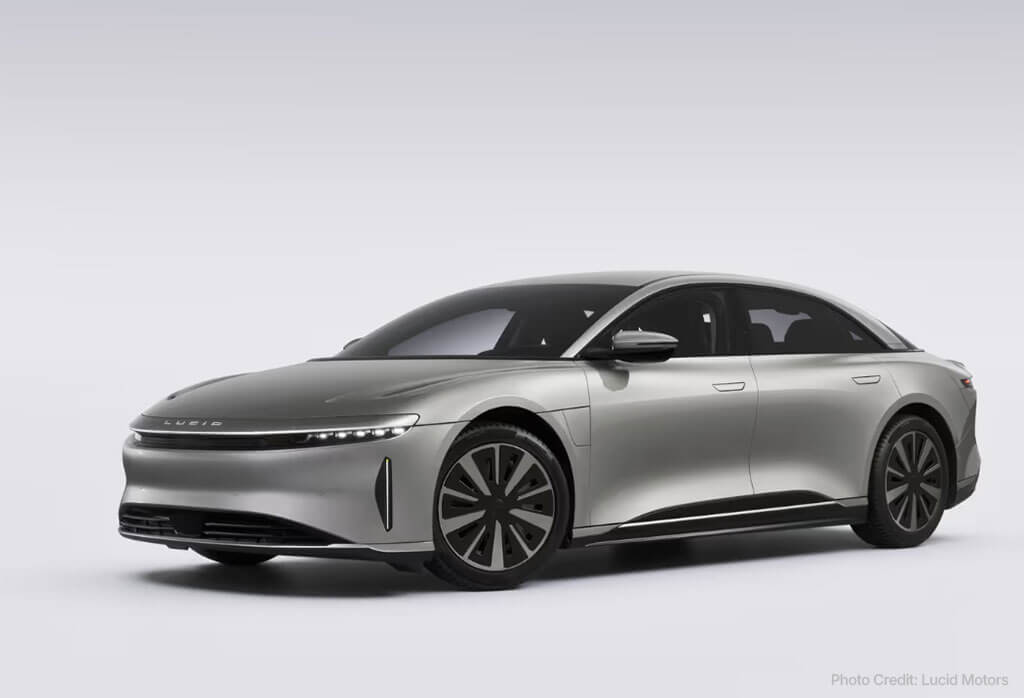


How PIF is investing in EVs comes into sharper focus this week, as Lucid Group laid out a $1.4bn plan to trim cash burn and steady its business. The electric vehicle maker posted second-quarter revenue of $405m, up 56 per cent from a year earlier. It built 4,774 cars and delivered 3,953, gains of 24 and 19 per cent. The results land as the company works to prove it can turn engineering strength into steady sales. Chief executive Silvio Napoli put it bluntly. “Lucid has leading technology, compelling products and deeply committed people, but potential is not performance,” he said. “We are going back to basics, with a clear focus on cash, customers, and culture,” Napoli added.
The plan leans on three areas: cash and cost, customer and quality, culture and team. Napoli also halved the number of people reporting straight to him.
Where the savings come from
Lucid mapped out $1.4bn in cash flow improvements for 2026. Roughly $600m to $800m comes from smaller inventories. Around $500m sits in capital spending, with close to $200m in operating costs. A US workforce cut announced in June should save about $158m a year. The company slowed production on purpose to match output with demand and hold on to cash. It ended the quarter with $3bn in liquidity, which it says covers needs well into 2027.
For newcomers, think of it as a household trimming subscriptions before payday. Less waste now buys time later.
How PIF is investing in EVs through Saudi factories
The Saudi Public Investment Fund owns most of Lucid and has poured more than $8 billion into it since 2018. That backing sits at the heart of PIF’s Lucid investment strategy, and it connects the carmaker to Vision 2030 electric vehicles goals. The fund treats Lucid as a way to diversify a crude-reliant economy and build skills at home. Saudi Arabia wants a homegrown auto industry, and Lucid Group Saudi Arabia operations are a big part of that push.
The clearest sign of how PIF is investing in EVs stands in King Abdullah Economic City. Lucid’s AMP-2 King Abdullah Economic City plant has moved from construction to industrialisation. Crews are installing and testing systems for stamping, body, paint and final assembly ahead of production trials. Lucid says the site will export cars beyond the kingdom as output grows. The Saudi government has agreed to buy up to 100,000 vehicles over a decade.
“The actions underway are intended to strengthen the company’s execution, improve the customer experience, and translate Lucid’s technology and product leadership into long-term value,” chairman Turqi Alnowaiser said.
What comes next
Lucid names four must-win priorities: the $1.4bn savings plan, AMP-2, a robotaxi programme, and a midsize model. The company frames these as the base for its next chapter. The robotaxi work with Uber and Nuro has entered active testing, with close to 100 vehicles running across the San Francisco Bay Area and Houston. Production-validation Gravity cars are already reaching Nuro.
So how PIF is investing in EVs looks less like a quick bet and more like patient money tied to a national plan. The near-term test is simple. Can Lucid turn its technology into steady output and healthier cash? The next few quarters will show whether the reset holds.