icnlive

WATCH LIVE. THINK BUSINESS.

© 2026 ICN.LIVE

Tariq Al-Mansouri

Writer,

icn.live

Follow

Tariq Al-Mansouri is an ICN.live writer since 2023 and reports on the future of financial systems. He published work on Investing.com and Financial News. His expertise spans tokenized markets, digital banking, and the intersection of AI with finance. His academic foundation is a bachelor’s degree in Mass Communication earned in Abu Dhabi.

Abu Dhabi free visa

The Abu Dhabi free visa for Indian travellers is here, and the rules are refreshingly plain. Book a holiday of at least three nights in the emirate, and your UAE entry visa comes at no extra cost. The Department of Culture and Tourism, Abu Dhabi, known as DCT Abu Dhabi, covers the fee. That charge runs Dh285, or roughly $77 a person.

The offer began on August 1 and runs through October 31, 2026. During this pilot window, DCT Abu Dhabi will support up to 20,000 visas.

Who can claim it

Treat this as a targeted deal, not an open door. The Abu Dhabi free visa for Indian travellers applies to Indian passport holders who depart from India. You need to book through a participating travel partner or an online travel agency. Your stay must run at least three consecutive nights at a hotel in Abu Dhabi. A return flight from India is also required.

One detail matters here. Travellers cannot apply on their own. The free UAE visa for Indian tourists flows only through approved partners, so the package is the key.

Behind the scenes, travel companies have two ways to process the visa. One route uses a Destination Management Company appointed by DCT Abu Dhabi. Pick this path, and the department pays the visa cost directly.

The second option lets partners keep their existing destination management companies. Under this route, DCT Abu Dhabi reimburses Dh285 for every visa issued. Either way, you receive a UAE entry visa without paying more, and the Abu Dhabi holiday package carries the cost.

The math adds up fast. At 20,000 visas and Dh285 each, the pilot represents about Dh5.7 million, close to $1.5 million in direct travel support.

Why Abu Dhabi is targeting India

India sits near the top of Abu Dhabi tourism priorities. The Abu Dhabi free visa for Indian travellers extends a longer effort to strengthen air links and build closer ties with the travel trade. Cheaper entry means an easier yes for a family weighing a trip. Indian nationals also form the UAE’s largest expatriate community, nearly 35 percent of the population, with about 800,000 living in Abu Dhabi alone.

Abdulla Yousuf, Director of International Operations at DCT Abu Dhabi, framed the goal in market terms. He said India remains one of the destination’s most important international markets, and the department wants to keep making Abu Dhabi more accessible for Indian travellers.

Yousuf gave a second reason too. By covering the visa, he said, the department hands travel partners another strong reason to recommend the emirate. He pointed to longer stays as the payoff, with visitors spending more time across the emirate’s culture, entertainment, hospitality and natural attractions.

What travellers should check

So where does this leave you? If a three-night Abu Dhabi trip already sits on your list, the Abu Dhabi free visa for Indian travellers trims a real cost from the total. Ask your travel partner whether they take part before you pay. Book early. The 20,000 cap could fill before October, and once it does, the free window closes.

How PIF is investing in EVs

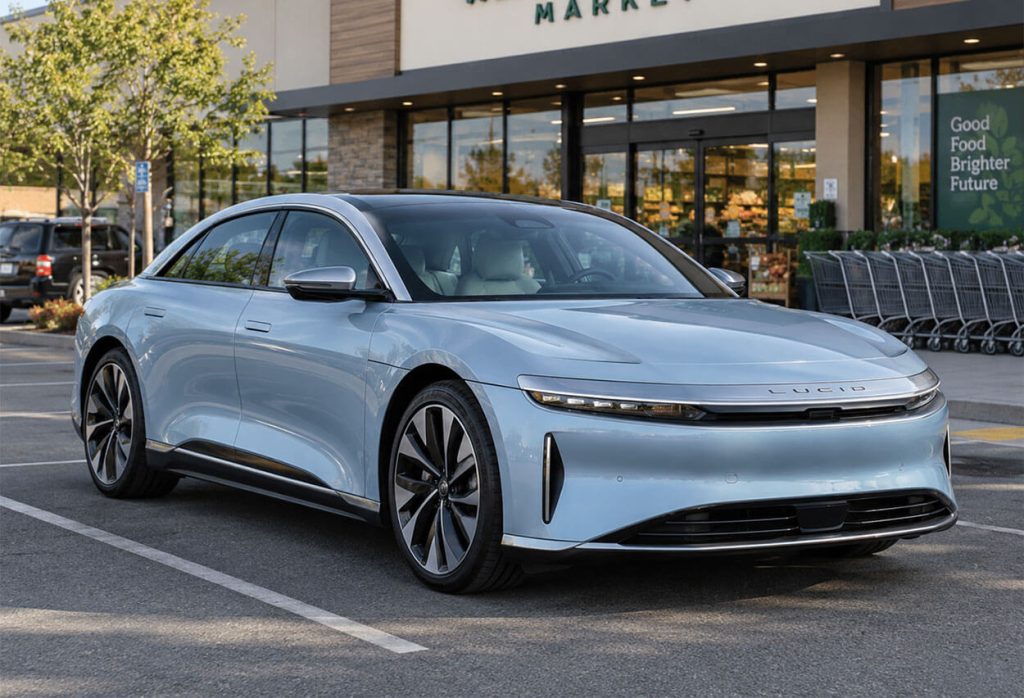
How PIF is investing in EVs comes into sharper focus this week, as Lucid Group laid out a $1.4bn plan to trim cash burn and steady its business. The electric vehicle maker posted second-quarter revenue of $405m, up 56 per cent from a year earlier. It built 4,774 cars and delivered 3,953, gains of 24 and 19 per cent. The results land as the company works to prove it can turn engineering strength into steady sales. Chief executive Silvio Napoli put it bluntly. “Lucid has leading technology, compelling products and deeply committed people, but potential is not performance,” he said. “We are going back to basics, with a clear focus on cash, customers, and culture,” Napoli added.

The plan leans on three areas: cash and cost, customer and quality, culture and team. Napoli also halved the number of people reporting straight to him.

Where the savings come from

Lucid mapped out $1.4bn in cash flow improvements for 2026. Roughly $600m to $800m comes from smaller inventories. Around $500m sits in capital spending, with close to $200m in operating costs. A US workforce cut announced in June should save about $158m a year. The company slowed production on purpose to match output with demand and hold on to cash. It ended the quarter with $3bn in liquidity, which it says covers needs well into 2027.

For newcomers, think of it as a household trimming subscriptions before payday. Less waste now buys time later.

How PIF is investing in EVs through Saudi factories

The Saudi Public Investment Fund owns most of Lucid and has poured more than $8 billion into it since 2018. That backing sits at the heart of PIF’s Lucid investment strategy, and it connects the carmaker to Vision 2030 electric vehicles goals. The fund treats Lucid as a way to diversify a crude-reliant economy and build skills at home. Saudi Arabia wants a homegrown auto industry, and Lucid Group Saudi Arabia operations are a big part of that push.

The clearest sign of how PIF is investing in EVs stands in King Abdullah Economic City. Lucid’s AMP-2 King Abdullah Economic City plant has moved from construction to industrialisation. Crews are installing and testing systems for stamping, body, paint and final assembly ahead of production trials. Lucid says the site will export cars beyond the kingdom as output grows. The Saudi government has agreed to buy up to 100,000 vehicles over a decade.

“The actions underway are intended to strengthen the company’s execution, improve the customer experience, and translate Lucid’s technology and product leadership into long-term value,” chairman Turqi Alnowaiser said.

What comes next

Lucid names four must-win priorities: the $1.4bn savings plan, AMP-2, a robotaxi programme, and a midsize model. The company frames these as the base for its next chapter. The robotaxi work with Uber and Nuro has entered active testing, with close to 100 vehicles running across the San Francisco Bay Area and Houston. Production-validation Gravity cars are already reaching Nuro.

So how PIF is investing in EVs looks less like a quick bet and more like patient money tied to a national plan. The near-term test is simple. Can Lucid turn its technology into steady output and healthier cash? The next few quarters will show whether the reset holds.

Abu Dhabi's Disneyland business impact

Abu Dhabi’s Disneyland business impact will reach far past the park gates, and the whole Gulf is watching. Disney plans to open its first Middle East park on Yas Island in the early 2030s. Six years is a long runway. Yet developers, hoteliers and property owners are already lining up for what comes next.

The region’s attractions industry runs at roughly $19 billion, and Disney lands as the anchor everyone else builds around. Picture a shopping mall. One big-name store pulls the crowd, and the smaller shops nearby live off the overflow. That is the bet behind Abu Dhabi’s Disneyland business impact right now.

Why care about a 2030s opening today? Because the money moves first. Land deals, hotel plans and hiring pipelines take shape years ahead of a ribbon cutting.

One park, a full regional pull

Mike Rigby, regional vice president and director of the International Association of Amusement Parks and Attractions, sees room for everyone. Parks will compete at times, he said, but the pie can still grow for all of them. It is not a zero-sum game.

The other parks in the GCC will likely serve a more regional set of tourists, Rigby said, with Disney the anchor. “I think the GCC, the Mena region as a whole, is coming to the point where we can go for two weeks to the Middle East, and there is plenty to do,” he said.

Disney carries the brand and the gravity. Rivals across the Gulf are moving too. Saudi Arabia is building Qiddiya, an entire theme park city. Bahrain has set its sights on the Six Flags brand. Qatar is lining its coast with large waterparks. Rigby likened the emerging cluster to Orlando, where visitors hop between attractions over several days. That kind of spread is what could push Abu Dhabi tourism into a longer, multi-stop trip.

When the park was announced last year, Disney chief Bob Iger called the emirate the crossroads of the world. He pointed to half a billion potential customers within a four-hour flight. No firm Disneyland Abu Dhabi opening date exists yet, though the company has pointed to the early 2030s.

Abu Dhabi’s Disneyland business impact on homes and jobs

The clearest signal so far shows up in housing. On Yas Island, the annual rent for a one-bedroom apartment climbed from AED55,000, about $15,000, in 2023 to AED92,000 this year. That is a 67 percent jump, according to government figures. Authorities stepped in with a rental freeze earlier this year to cool prices. Yas Island real estate has become a live test of how fast one project can move a market.

Work follows the walls going up. Beyond the rides, the project could create more than 30,000 Disneyland Abu Dhabi jobs across construction, operations and tourism services, according to estimates from staffing group TASC. The roles would span hospitality, retail, food service and ride operations, the kind of work that keeps hiring long after opening day.

What comes next for the region

Domestic visitors give the sector a cushion. Regional conflict can dent arrivals, Rigby said, but many attractions here target local families who still need things to do. People stay, and they keep spending.

Aldar, Abu Dhabi’s government-owned developer, told AGBI last year it expects to gain from the park. Entertainment can anchor the real estate, the population and the hospitality around it, Rigby said, and the rest tends to follow. The full Abu Dhabi Disneyland business impact will take years to land. The groundwork is being laid today.