

icnlive

WATCH LIVE. THINK BUSINESS.

© 2026 ICN.LIVE

Inside the GCC banking sector, Q2 2026 figures show a shift in how the region’s banks earn. Lenders now lean on loan

Trending Banking

CBUAE's Financial Stability Report

CBUAE’s Financial Stability Report puts numbers behind something many people in the UAE already sense: that banks are lending more freely than they did a few years ago. UAE banking sector assets grew 17.1 percent in 2025 to AED5.3 trillion, worth roughly $1.44 trillion. Loans rose faster still, up 17.8 percent. Most of that credit stayed inside the country. Retail customers and private companies took on the bulk of it.

For anyone who has applied for a mortgage, a car loan, or working capital for a small shop, this is what a growing loan book feels like. Credit gets easier to reach. Approvals come through more often. Banks compete harder for your business.

Loan quality improved alongside the volume. The non-performing loan ratio fell to 3.3 percent in 2025, down from 4.7 percent a year earlier. In 2020, it stood at 8.2 percent. Lending more while getting repaid more reliably is an unusual pairing, and it points to households and firms in better financial shape.

Profits and the cushion behind them

Net profits climbed 11.7 percent to AED90.8 billion, about $24.7 billion, helped by higher operating income. The capital adequacy ratio finished the year at 17 percent, above the regulatory minimum. Deposits kept flowing in, so liquidity stayed comfortable.

Think of a capital ratio the way you would think of a household emergency fund. The bigger the buffer, the longer a bank can take losses without cutting off customers.

CBUAE’s Financial Stability Report also covers what happens if conditions turn ugly. Supervisory stress tests run during 2025 modelled a severe economic shock. Under the adverse scenario, the average Common Equity Tier 1 ratio slipped from 14.1 percent to a low of 11.1 percent, staying above the regulatory floor for the whole test period.

What CBUAE’s Financial Stability Report says about payments

CBUAE’s Financial Stability Report tracks how money moves as well as where it sits. The Aani instant payment platform carried around 183 percent more transactions in 2025 than in 2024, and enrolled users passed 11.7 million by the end of December. Aani lets you send up to AED50,000 at any hour of the day, with QR payments, payment requests and split bills built in.

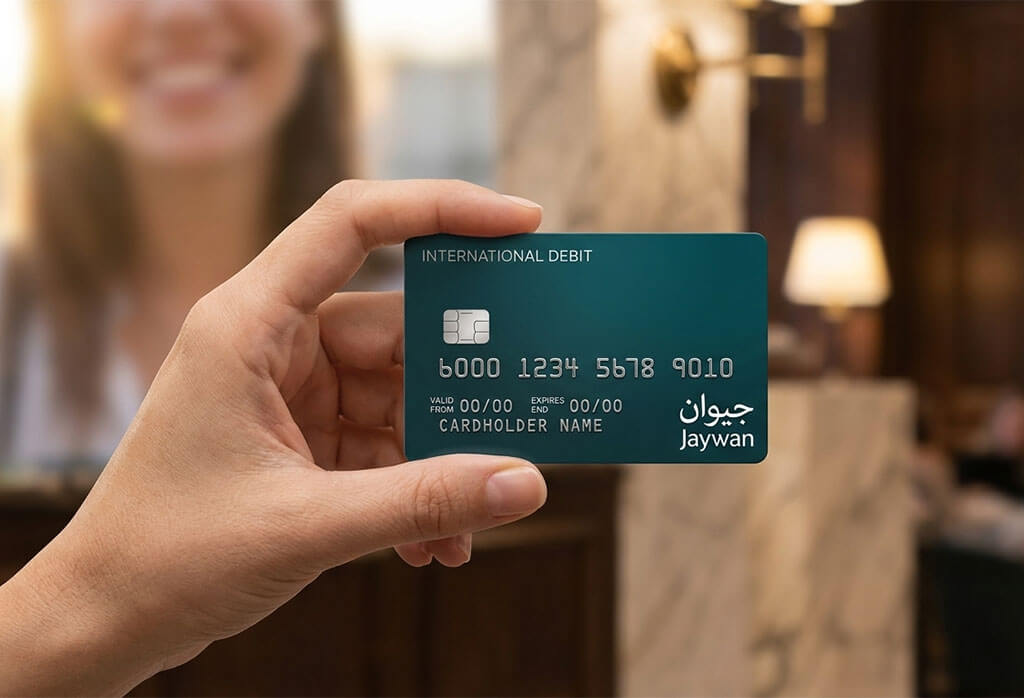
The Jaywan card scheme runs alongside it as the national card network. Both sit inside the Financial Infrastructure Transformation Programme, the central bank’s plan for rebuilding the country’s payment rails. Work on cross-border payments continues under the same programme.

Beyond the big banks

CBUAE’s Financial Stability Report describes steady conditions across Islamic banking and insurance too. A legal change sits underneath all of this. Federal Decree-Law No. 6 of 2025 consolidated the rules covering banks and insurers, reinforced the central bank’s independence, and named the CBUAE as the country’s Resolution Authority, the body that steps in when a financial firm fails.

Khaled Mohamed Balama, Governor of the CBUAE, said the report “affirms the strength and resilience of the UAE financial system and its ability to continue supporting the national economy efficiently.” He said the central bank will keep tightening its supervisory and prudential frameworks and preparing the system for risks still ahead.

For savers and borrowers, the practical read is simple. Banks have room to lend, buffers to absorb trouble, and payment tools that clear money in seconds rather than days. What the next report shows will depend on whether credit growth near 18 percent holds without loan quality slipping back.

UAE Islamic finance strategy

The UAE Islamic finance strategy sets a target of Dh2.56 trillion in local Islamic bank assets by 2031, part of a wider effort to root Shari’ah-compliant finance deeper in the national economy. Islamic banking assets in the country stood at Dh1.4 trillion as of June 2026, and 43 Islamic financial institutions now hold licences. The UAE ranked third worldwide in the Islamic Finance Development Indicator for 2025. Those figures give the plan a base to build from.

Targets under the plan sit inside the UAE Strategy for Islamic Finance and Halal Industry 2025 to 2031, which the Cabinet approved in May 2025. The Central Bank of the UAE is coordinating with federal and local bodies to tie Islamic finance and the halal industry more closely to the broader economic agenda. Two goals run through it. Scale the sector, and give it firmer legal ground.

Clearer rules under the UAE Islamic finance strategy

Much of the UAE Islamic finance strategy turns on legal and Shari’ah certainty. The Commercial Transactions Law, Federal Decree-Law No. 50 of 2022, carries a dedicated chapter on Islamic finance contracts and financing arrangements. It ties parts of the law to Shari’ah standards issued by the Higher Shari’ah Authority and sets out how to read those provisions and settle disputes. Once the Higher Shari’ah Authority approves them, the Central Bank can issue regulations of its own.

The framework works toward clearer rights and obligations, standard Shari’ah interpretations, and fewer legal disputes tied to Islamic financial transactions. For customers and banks alike, that means fewer grey areas.

Costs and supervision

The Central Bank Law, Federal Decree-Law No. 6 of 2025, governs how Islamic financial institutions operate and how supervisors oversee them. Under its terms, these institutions can handle transactions involving real estate and goods where a Shari’ah-compliant structure calls for it. The law also exempts Islamic financial transactions from registration requirements and similar fees or costs. Customer protection ranks among the framework’s stated goals, next to stronger trust in Islamic finance services and a legal setting that supports new products.

Established at the Central Bank in 2018, the Higher Shari’ah Authority works to bring Shari’ah practice into line across institutions. It has issued more than 280 standards and resolutions to govern Islamic financial transactions and narrow differences in interpretation, along with more than nine Shari’ah governance standards. Prudential standards covering financial integrity, risk management and stability complete the supervisory base.

Beyond banking

The UAE Islamic finance strategy reaches past the banks. Plans under it develop the market for sukuk, Islamic money markets and Islamic funds, while backing larger and more competitive institutions. Sukuk issuances form a central part of that ambition. The plan also draws Islamic finance in the UAE closer to the halal economy. It calls for more local production of high-value halal goods, a halal traceability system to support re-exports, and added backing for SMEs and technology startups in the sector.

Set against the region, the direction fits a pattern. Islamic finance in the UAE is shifting from a parallel channel toward a core part of how the economy raises and moves capital. The UAE Islamic finance strategy puts a number and a date on that move, and Dh2.56 trillion is the figure to watch.

Yalla payment services approval

The Yalla payment services approval moves a growing fintech one step closer to serving customers across the UAE. On Monday, Yalla Financial Solutions said the Central Bank of the UAE (CBUAE) had granted it an In-Principle Approval for a Retail Payment Services Category II License. The nod falls under the CBUAE Retail Payment Services and Card Schemes Regulation. This is not the final license yet. It signals the company has cleared an early, serious gate.

What the Yalla payment services approval means for you

For anyone who taps a phone to pay for coffee or sends money home at the end of the month, licensing like this matters more than it sounds. A Category II License lets a firm handle regulated payment activity under close supervision. Behind the paperwork sits a simple promise. Your money should move safely, and someone should answer for it if something goes wrong.

The Yalla payment services approval signals that the company met the CBUAE’s early conditions. Full authorisation still depends on finishing the remaining requirements. Once that happens, Yalla can build out its payment capabilities inside one of the most active digital finance markets anywhere.

A milestone in Yalla’s journey

Waleed Sadek, CEO and Founder of Yalla Financial Solutions, framed the moment plainly. He said receiving the In-Principle Approval reflects the company’s commitment to building trusted, secure, and innovative payment infrastructure in one of the world’s most advanced digital economies. Sadek added that the UAE has become a global hub for financial innovation through a forward-looking regulatory environment and a clear vision for digital transformation.

“We are proud to be part of this journey and look forward to working closely with the Central Bank of the UAE to complete the remaining regulatory requirements and obtain the final Retail Payment Services Category II License,” Sadek said.

Why the timing fits

The Yalla payment services approval lands as the country pushes hard toward cashless living. Dubai’s Cashless Strategy targets 90 percent of transactions going digital, according to Digital Dubai, and analysts at Mordor Intelligence value the UAE fintech market at about 52 billion dollars in 2026. Numbers like these describe a shift you can feel at the checkout counter, in the taxi, at the corner shop.

More UAE digital payments flow through licensed players each year. That growth pulls in global names and homegrown firms alike. Earlier this year, Revolut secured its own In-Principle Approval for the same Category II license, a sign of how crowded and serious this space has become.

What comes next for Yalla

The road from In-Principle Approval to a live service runs through compliance, testing, and final sign-off. As a payment service provider, Yalla must satisfy the CBUAE on safeguards for customer funds, risk controls, and reporting. None of that is quick. All of it protects the person on the other side of the transaction.

The Yalla payment services approval is a beginning, not a finish line. If the company clears the final steps, everyday users could gain another trusted way to pay, send, and receive. For a market racing toward a cashless future, one more supervised option is welcome news.