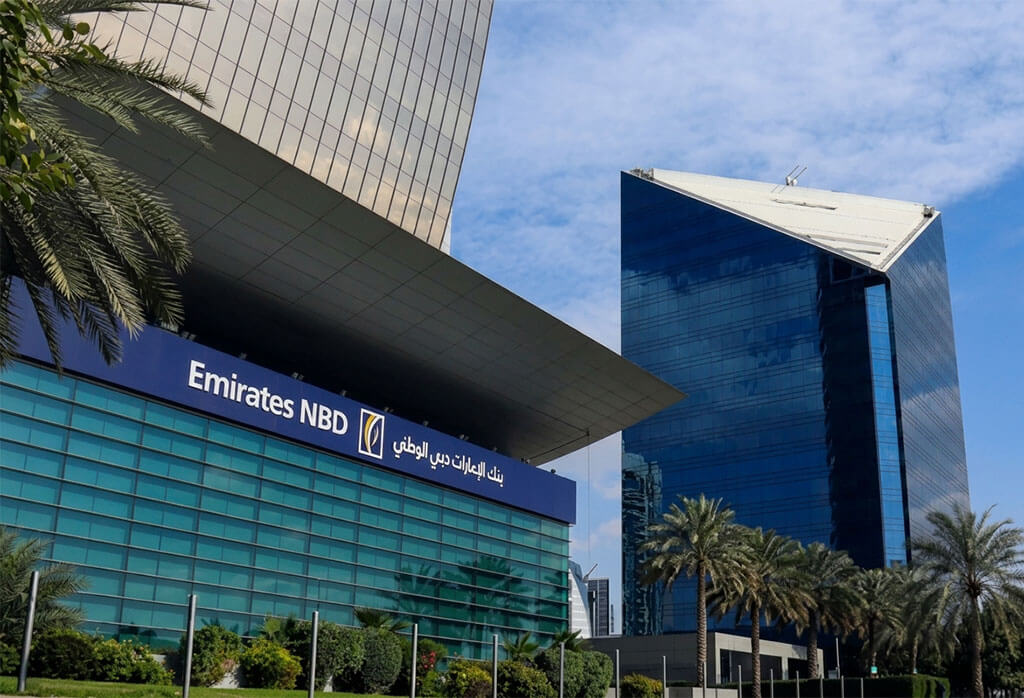



UAE’s first transition finance framework has arrived, and it changes how carbon-heavy companies in the country can access funding for their shift away from fossil-heavy operations. Emirates NBD built the framework specifically for corporate and institutional clients whose businesses cannot yet meet the strict criteria of green finance, but who are taking real, measurable steps to cut emissions.
Why this gap needed filling
Think of green finance as a club with a strict entry test. A solar farm gets in easily. A steel plant working to cut its carbon footprint does not, even if it is making genuine progress. That plant still needs capital to fund the changeover, and until now, the UAE market had no dedicated structure for financing it. UAE’s first transition finance framework fills that gap by defining what counts as credible transition activity, rather than requiring businesses to already be green.
The framework applies to high-emitting and hard-to-abate sectors: manufacturing, mining, power and energy, real estate, transport and storage, agriculture and information technology. These industries share a common problem. They are often complex, capital-intensive, or lack a commercially viable zero-carbon alternative right now. A cement producer cannot simply swap its kilns for clean equivalents overnight. Emirates NBD’s methodology gives lenders a consistent way to assess which projects in these sectors deserve transition funding, based on emissions reduction, energy efficiency gains, and adoption of cleaner technologies.
Built on international standards
Emirates NBD did not write this framework in isolation. It drew on the ICMA Climate Transition Finance Handbook, the ICMA Climate Transition Bond Guidelines 2025, and the Loan Market Association’s Guide to Transition Loan Finance 2025. That grounding matters for credibility. A framework built only on internal judgment invites skepticism from investors who want proof that “transition” labels mean something real, not a marketing gloss on business as usual.
To back that credibility, the bank commissioned DNV Assurance to deliver a second-party opinion on the framework. An outside assessor reviewing the methodology gives clients and investors a check beyond the bank’s own claims. Vijay Bains, Chief Sustainability Officer and Group Head of ESG at Emirates NBD, said the framework builds on the bank’s existing sustainable finance and sustainability-linked financing tools, and will help support the transition of the real economy across the UAE and the wider region.
Part of a larger target
UAE’s first transition finance framework does not stand alone. It sits inside Emirates NBD’s broader push to mobilize $30 billion in sustainable and transition finance by 2030. The bank said the new structure will help channel capital toward decarbonization, industrial transformation and long-term resilience projects, giving it another instrument alongside existing green and sustainability-linked products.
The initiative also connects to a bigger regional goal. Emirates NBD is supporting the UAE Banking Federation’s ambition to mobilize AED 1 trillion in sustainable finance by 2030. That figure covers the entire national banking sector, and frameworks like this one are the mechanism through which individual banks contribute their share.
What clients get from it
For a company in one of the covered sectors, the practical benefit is clarity. Before this framework, a business pursuing decarbonization had few consistent signals on which projects would qualify for transition financing versus standard corporate lending. Now, clients get defined criteria covering emissions reduction, energy efficiency upgrades, cleaner technology adoption and shifts toward lower-carbon business models. Investors benefit too, since a shared methodology makes it easier to compare transition claims across borrowers rather than evaluating each one from scratch.
The framework does not promise instant transformation of the region’s heaviest emitters. What it offers is a structured entry point, one that treats credible progress as fundable even when a business has not yet reached green status. For sectors that make up a large share of the UAE’s industrial base, that distinction could shape how quickly decarbonization investment actually moves.