
icnlive

WATCH LIVE. THINK BUSINESS.

© 2026 ICN.LIVE

ICN.live

  • NBQ reported a profit after tax of AED271 million for the six months to 30 June 2026.
  • Customer deposits rose 29 percent to AED17.1 billion, and total assets grew to AED24.1 billion.
  • The capital adequacy ratio held at 31 percent, while the non-performing loans ratio stayed low at 0.4 percent.
  • Net interest income held about flat at AED310 million as interest rates fell.

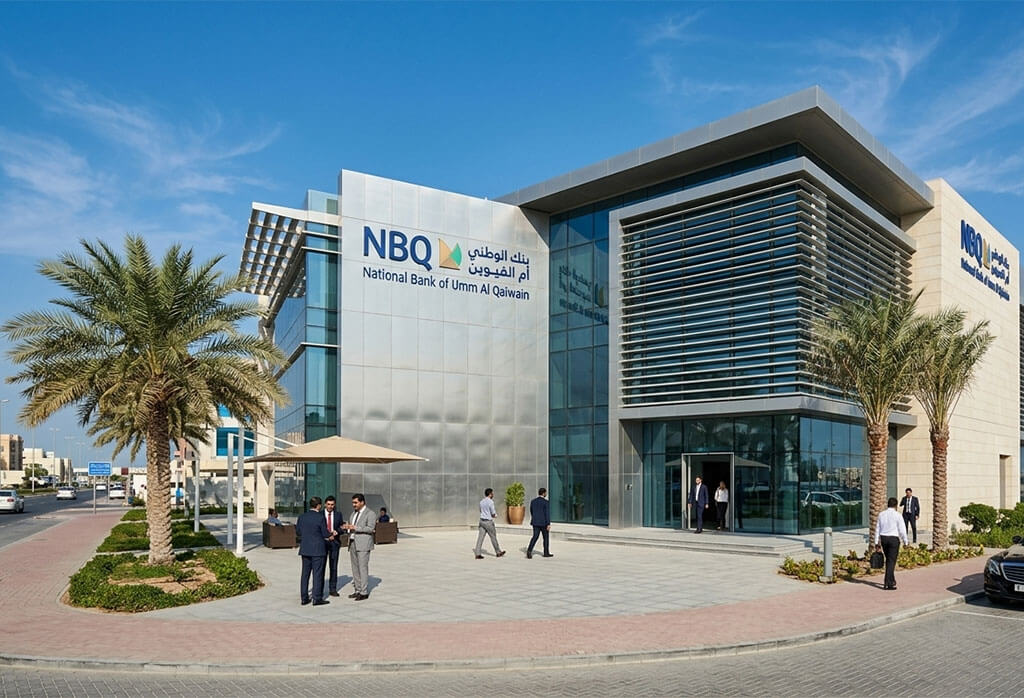
NBQ’s 2026 half-year profit came in at AED271 million for the six months to 30 June. Behind that figure sit the depositors, borrowers and staff who keep the lender running. The National Bank of Umm Al Qaiwain results point to steady footing at a small bank that families and businesses in the northern emirates lean on for everyday needs.

What NBQ’s 2026 half-year profit shows

The bank credited its first-half showing to a wider mix of income and a broader balance sheet, paired with tight cost control. Total interest income reached AED503 million over the period. Net interest income held about flat at AED310 million, against AED309 million a year earlier. That flat line matters more than it looks. Interest rates fell over the year, so keeping core income steady took real work on both pricing and funding.

For a customer, this shows up in small ways. Your deposit stays safe. Loan terms stay predictable. A bank that earns steadily can keep the lights on for the people who bank with it.

Balance sheet growth and deposits

NBQ total assets rose to AED24.1 billion by the end of June, up 5 percent from December and 20 percent from a year earlier. Customer deposits did much of the heavy lifting. They climbed 29 percent to AED17.1 billion, a sign that more people trusted the bank with their money. Net loans and advances grew 4 percent over the year to AED8.7 billion. Shareholders’ equity reached AED6.4 billion, up 3 percent from June 2025.

Deposit growth on that scale tells a human story. When savers move money into a bank, they place a bet on its stability. That trust gives the lender room to fund loans for homes, shops and small firms across the emirate.

Capital strength and asset quality

The capital adequacy ratio stood at 31 percent, well above the floor the Central Bank of the UAE sets under Basel III rules. Put simply, the bank holds a thick cushion against shocks. The non-performing loans ratio came in at 0.4 percent, up slightly from 0.3 percent at the end of 2025 but far below the 2.2 percent seen a year earlier. Fewer bad loans mean fewer customers in distress and a cleaner book. NBQ net profit after tax landed at AED271 million on the back of these numbers.

Adnan Al Awadhi, Chief Executive Officer of NBQ, said the bank delivered solid results despite geopolitical uncertainty and lower interest rates. He pointed to a diversified model, careful balance sheet management and a focus on lasting growth. Al Awadhi said the bank kept strong capital and liquidity while supporting customers and the wider economy through prudent risk management and better asset quality.

He added that NBQ kept investing in digital tools to improve the customer experience and to make its platforms safer and more reliable. Partnerships would widen its services further, he said. Al Awadhi also restated the bank’s pledge to Emiratisation, leadership development, sustainability and community work.

Why NBQ’s 2026 half-year profit matters to customers

Numbers like these can feel far from daily life. Yet a stable bank shapes real choices for real people. NBQ’s 2026 half-year profit gives the lender the means to keep lending, keep hiring and keep serving the towns it calls home. For anyone who banks there, that steadiness is the point.

TAGS

EXPLORE MORE ON:

Abu Dhabi free visa

The Abu Dhabi free visa for Indian travellers is here, and the rules are refreshingly plain. Book a holiday of at least three nights in the emirate, and your UAE entry visa comes at no extra cost. The Department of Culture and Tourism, Abu Dhabi, known as DCT Abu Dhabi, covers the fee. That charge runs Dh285, or roughly $77 a person.

The offer began on August 1 and runs through October 31, 2026. During this pilot window, DCT Abu Dhabi will support up to 20,000 visas.

Who can claim it

Treat this as a targeted deal, not an open door. The Abu Dhabi free visa for Indian travellers applies to Indian passport holders who depart from India. You need to book through a participating travel partner or an online travel agency. Your stay must run at least three consecutive nights at a hotel in Abu Dhabi. A return flight from India is also required.

One detail matters here. Travellers cannot apply on their own. The free UAE visa for Indian tourists flows only through approved partners, so the package is the key.

Behind the scenes, travel companies have two ways to process the visa. One route uses a Destination Management Company appointed by DCT Abu Dhabi. Pick this path, and the department pays the visa cost directly.

The second option lets partners keep their existing destination management companies. Under this route, DCT Abu Dhabi reimburses Dh285 for every visa issued. Either way, you receive a UAE entry visa without paying more, and the Abu Dhabi holiday package carries the cost.

The math adds up fast. At 20,000 visas and Dh285 each, the pilot represents about Dh5.7 million, close to $1.5 million in direct travel support.

Why Abu Dhabi is targeting India

India sits near the top of Abu Dhabi tourism priorities. The Abu Dhabi free visa for Indian travellers extends a longer effort to strengthen air links and build closer ties with the travel trade. Cheaper entry means an easier yes for a family weighing a trip. Indian nationals also form the UAE’s largest expatriate community, nearly 35 percent of the population, with about 800,000 living in Abu Dhabi alone.

Abdulla Yousuf, Director of International Operations at DCT Abu Dhabi, framed the goal in market terms. He said India remains one of the destination’s most important international markets, and the department wants to keep making Abu Dhabi more accessible for Indian travellers.

Yousuf gave a second reason too. By covering the visa, he said, the department hands travel partners another strong reason to recommend the emirate. He pointed to longer stays as the payoff, with visitors spending more time across the emirate’s culture, entertainment, hospitality and natural attractions.

What travellers should check

So where does this leave you? If a three-night Abu Dhabi trip already sits on your list, the Abu Dhabi free visa for Indian travellers trims a real cost from the total. Ask your travel partner whether they take part before you pay. Book early. The 20,000 cap could fill before October, and once it does, the free window closes.

DFSA advances financial competitiveness

The Dubai Financial Services Authority (DFSA) has introduced a series of regulatory initiatives and technological updates to streamline procedures, expand digital asset regulation, and integrate agentic AI across its operations to bolster the Dubai International Financial Centre (DIFC).

Over the past 12 months, the regulator updated its crypto token regime and revised securities regulations to limit offering rules strictly to DIFC-based issuances, reducing operational overlap while maintaining investor protection.

Updated crypto token rules came into force in January 2026, granting licensed firms greater responsibility for assessing tokens under strict risk management guidelines. The DFSA also recognised three fiat-backed stablecoins for financial services within DIFC and signed a memorandum of understanding with the Virtual Assets Regulatory Authority.

The authority launched public consultations to update the Islamic finance framework and initiated its largest review of the collective investment funds framework since 2010.

On the supervisory front, the DFSA signed an agreement with the Ministry of Economy and Tourism to enhance information sharing while continuing enforcement actions against regulatory breaches, including misleading conduct and non-compliance with suspicious transaction reporting.

Mark Steward, Chief Executive of the DFSA, said the regulator is building on its 21-year foundation by applying a risk-based approach that offers flexibility and transparency. He noted that DIFC’s attraction rests on a framework providing regulatory certainty, reducing complexity, and aligning standards across the region.

The developments coincide with significant growth across DIFC-supervised sectors in 2025. Total assets of operating banks reached $251 billion, up 19 percent year-on-year, while capital markets recorded $30.6 billion in new listings, led by sukuk and ESG-linked instruments. DIFC now hosts 27 of the world’s 29 systemically important global banks and China’s top five banks, contributing to Dubai’s rise to seventh globally in the Global Financial Centres Index.

In line with the Dubai Economic Agenda D33 and DIFC Strategy 2030, the DFSA’s second annual AI survey published in November 2025 revealed that 52 percent of DIFC firms now use AI technologies—up from 33 percent in 2024—with 60 percent planning further expansion in 2026. The regulator is also advancing cybersecurity resilience by upgrading third-party technology risk management and broadening cyber threat intelligence sharing.


IMPORTANT: CONTENT SUBMITTED BY THE CLIENT. THIS IS A PRESS RELEASE ARTICLE. PLEASE READ THE INFORMATION BELOW.

ICN.live neither validates nor guarantees the accuracy, reliability, or quality of the information, promotional materials, or products mentioned herein. Readers are encouraged to conduct independent due diligence before making any decisions related to the featured company. ICN.live bears no responsibility, directly or indirectly, for any harm, loss, or consequences that may result from reliance on or interaction with the content, services, or offerings described in this release.

The details shared in this announcement do not constitute financial, trading, or investment guidance. Readers are strongly advised to carry out independent research and seek advice from a qualified financial professional before making any investment or cryptocurrency-related decisions.

ADNOC Gas Q2 2026 net income

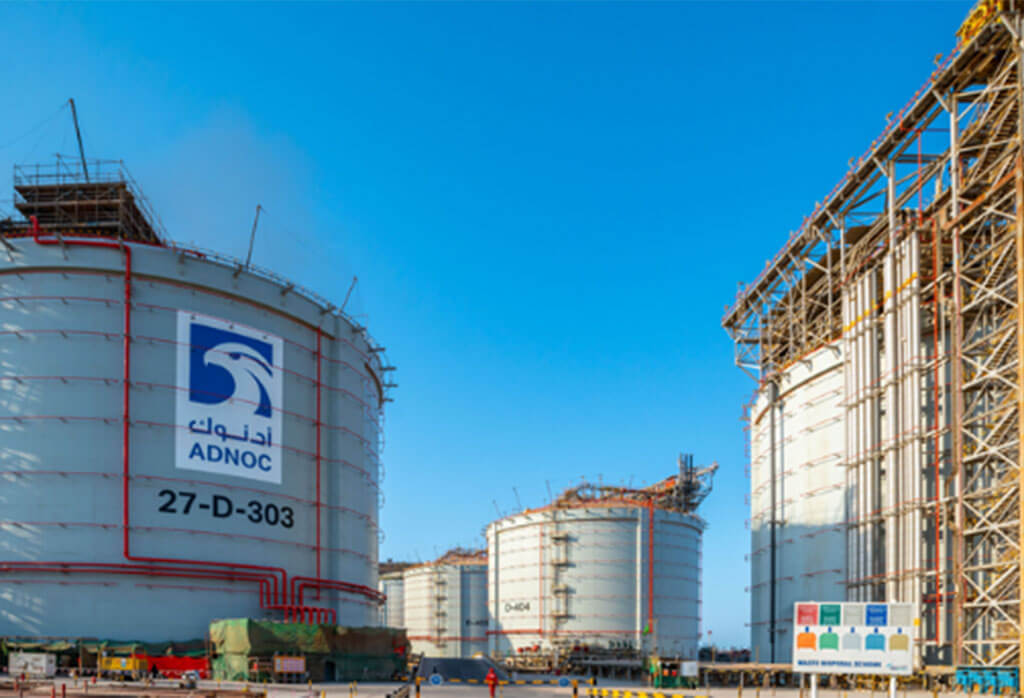
ADNOC Gas Q2 2026 net income reached $665 million, a figure that carries the strain of the months behind it. In early April, security-related incidents hit the Habshan processing site, and Reuters tied them to intercepted drone and missile attacks in the region. Supply from the site fell. Shipping through the Strait of Hormuz slowed. The company still cleared the top of its own forecast, which had run from $400 million to $600 million.

Margins in the domestic gas business held firm, and that steadiness carried the numbers when exports came under pressure. Recovery at Habshan moved faster than planned. Gas supply returned to 85 percent, past the year-end target the company had set in May. Managers leaned on inventory and rerouted logistics to keep customers supplied while the Strait of Hormuz disruption dragged on. ADNOC Gas supplies close to 60 percent of the UAE’s sales gas and reaches customers in more than 20 countries, so a stalled export lane touches a wide base. None of it erased the damage. It softened the edges.

A larger bet behind the numbers

The quarter’s real weight sits in a decision made beside it. ADNOC Gas took final investment decisions on Phases 2 and 3 of its Rich Gas Development project and awarded $8.2 billion in engineering, procurement and construction contracts. Wison Engineering won the $3.9 billion Phase 2 award to build a new gas processing train at Habshan. Tecnimont took the $4.3 billion Phase 3 award for a natural gas liquids fractionation train at Ruwais. Added to the $5 billion Phase 1 committed in 2025, total spending on the project reaches $13.2 billion. Chief Executive Officer Fatema Al Nuaimi framed the awards as a step up in ambition rather than steady progress.

ADNOC Gas Q2 2026 net income against a longer plan

Set against that spending, the ADNOC Gas Q2 2026 net income reads as one marker on a long line. The company lifted its ADNOC Gas EBITDA growth 2030 target to 60 percent versus 2023, up from an earlier goal of more than 40 percent through 2029. Reaching it means roughly $28 billion of investment between 2026 and 2030. Four megaprojects anchor the plan: Ruwais LNG, MERAM, the Rich Gas Development work, and Estidama, together expected to generate $13.4 billion in In-Country Value. MERAM is due in 2027, with the others advancing on schedule.

Part of the efficiency story runs through hardware. ADNOC Gas is putting aerial drones, four-legged inspection robots and tank-climbing crawlers across its sites. The company says the tools can cut some inspection costs by up to 75 percent and finish certain checks as much as 15 times faster. They also pull workers out of hazardous spots. The direction points toward more autonomous operations over time, and it feeds the same goals behind the earnings.

Dividend and the road ahead

Shareholders drew a clear signal. The board approved a $940 million ADNOC Gas dividend for September, holding to a promise of 5 percent annual dividend growth through 2030. ADNOC Gas remains the largest dividend payer on the Abu Dhabi exchange. Guidance for the third quarter runs from $600 million to $800 million, and it assumes the Strait stays contested. If maritime routes reopen by the fourth quarter and pricing steadies, the company expects full-year net income between $3.5 billion and $4 billion. The ADNOC Gas Q2 2026 net income gives that range a firmer base. Read against a year ago, the picture is harder. Reuters reported net income fell 52 percent from $1.39 billion in the same quarter of 2025. The ADNOC Gas Q2 2026 net income shows a company earning through the pressure, not around it.

Share this post

on your favourite social platforms

or copy the link