

icnlive

ICN.live

Adnan Al-Jaziri

  • The engine repair centre developed in Al Ain will cost AED480 million and repair 65,000 parts each year once fully operational by 2030.
  • Sanad, backed by Mubadala, plans to become the world’s fifth-largest engine MRO provider through this major facility.
  • The 17,600 square metre hub will serve five major engine platforms, including LEAP, GTF, GEnx, Trent 700, and V2500.
  • The project will create more than 350 jobs with a strong focus on Emirati talent and Abu Dhabi aerospace growth.

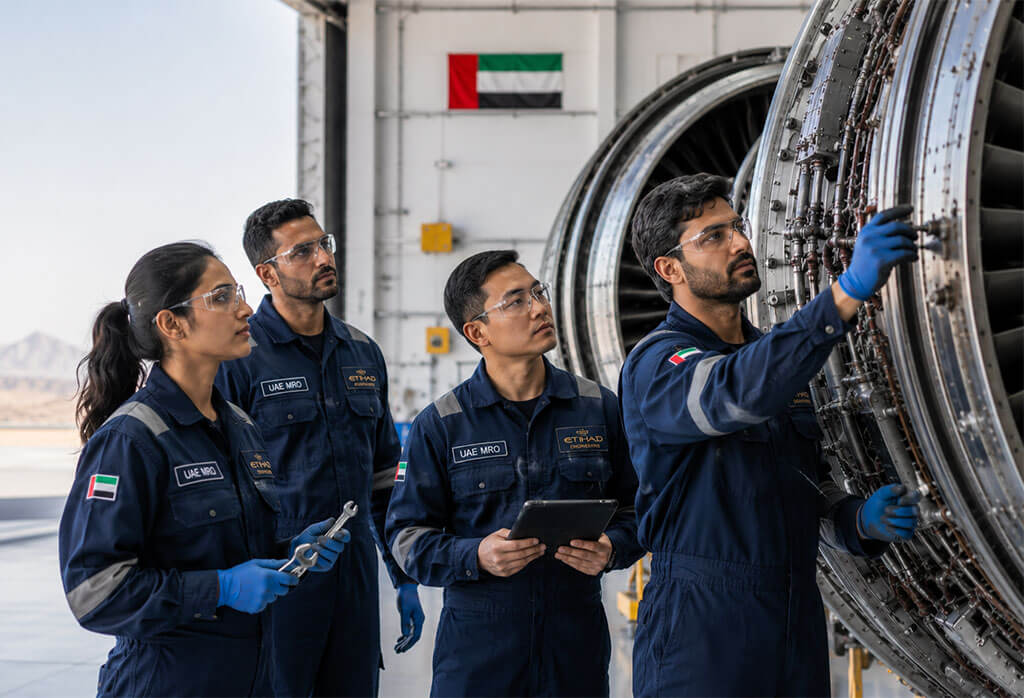
The engine repair centre developed in Al Ain marks a defining moment for the UAE aviation sector. Sanad, backed by Mubadala Investment Company, announced an AED480 million commitment to build a new Repair Centre of Excellence. The facility targets a position among the top five engine overhaul providers across the global MRO industry. Your understanding of this investment starts with knowing how big the demand shift truly is.

Global engine volumes keep rising as airlines expand fleets and retire older aircraft faster. Sanad already served over 80 customers worldwide before this new facility entered the plan. In 2025 alone, the company added 24 new airline customers to its growing international network. Engine inductions are forecast to rise from 230 annually in 2025 to over 500 by 2035. That doubling of volume makes in-house repair capability a financial and operational priority for the firm.

Engine Repair Centre Developed in Al Ain Anchors Abu Dhabi Aerospace Strategy

The 17,600 square metre facility will sit inside Al Ain Aerospace Park and open fully by 2030. Sanad will consolidate all its repair work into one integrated platform for greater speed. The hub will cover five major engine types: Trent 700, V2500, LEAP, GEnx, and GTF. Repair volumes are expected to reach 65,000 parts per year once the site reaches full output. In 2025, the company inspected 43,000 parts and completed engine overhaul work on 19,000 components. That growth gap shows exactly why this new investment is necessary for Sanad to scale.

Mansoor Janahi, Managing Director and Group CEO of Sanad, put the strategy clearly. He said: “Repairs are increasingly becoming the defining factor in engine MRO.” He added that building capabilities in-house is critical to improving turnaround times and creating in-country value. As I see it, this statement signals a deliberate shift away from relying on third-party repair providers. Bringing key functions under one roof reduces cost exposure and strengthens delivery reliability for airline clients.

ANOTHER MUST-READ ON ICN.LIVE: Dubai Launches World’s First AI-Native Financial Centre at DIFC Today

Sanad Targets Top Five MRO Ranking Through Strategic Al Ain Investment

The engine repair centre developed in Al Ain will also serve other MRO providers needing specialist support. This opens a second revenue stream beyond direct airline contracts and adds commercial flexibility. No other independent MRO in the MENA region currently offers repair capabilities at this scale. Sanad will hold a unique market position once the facility reaches full operational status in 2030. That position strengthens the broader Abu Dhabi aerospace push to become a recognised global aviation hub.

Mubadala’s support gives Sanad the financial backing to commit to long-term infrastructure at this level. The greenfield design means the facility starts fresh with workflows built for efficiency from day one. Workers will not face the delays common in retrofitted or repurposed industrial buildings. Operational speed and precision matter greatly in MRO, where aircraft downtime carries serious financial consequences for airlines.

The facility will also support the UAE’s wider economic agenda by localising high-value aerospace skills. More than 350 jobs will come from this project, with Emirati nationals prioritised across technical and operational roles. This aligns directly with national workforce development goals and the UAE’s broader diversification strategy.

The Centre Sets a New Regional Standard

The engine repair centre developed in Al Ain sends a clear signal to the global MRO community. Sanad now competes not just regionally but on a world stage with the largest engine service providers. The company’s contracted backlog already reached AED38 billion, covering more than 1,000 shop visits over three decades. That backlog confirms sustained demand and gives investors confidence in the long-term revenue outlook. You can read this investment as both a capacity decision and a competitive statement.

The Abu Dhabi aerospace sector gains a significant anchor asset through this single project. Sanad’s engine overhaul expertise, combined with the new facility’s scale, creates a compelling case for airline operators worldwide. Airlines choosing MRO partners weigh cost, turnaround speed, and platform coverage above almost everything else. This facility addresses all three of those factors in one integrated location. The engine repair centre developed in Al Ain now stands as the clearest proof of the UAE’s aerospace ambitions.

TAGS

EXPLORE MORE ON:

Saudi Arabia rethinks NEOM giga-project

Saudi Arabia rethinks NEOM giga-project plans as new budget figures reveal billions set aside for cancellations. The 2026 to 2030 budget includes around $16 billion in payments to contractors, according to Semafor. These payments are tied to penalty clauses inside long-term agreements signed during years of rapid contracting. Saudi authorities now expect to spend more on cancelling work than on building it. You should watch this shift because it reshapes one of the world’s largest development plans.

NEOM sits under the Public Investment Fund, which now reviews spending across its entire portfolio. The fund once projected that the full project would cost more than $1 trillion to build. Officials have already spent $64 billion on the site, with progress focused on select areas. Visible work centres on Oxagon NEOM, the industrial city and port near the Red Sea. An $8.4 billion green hydrogen project also nears completion within this same coastal zone.

This reset gained pace after Aiman Al-Mudaifer became NEOM’s chief executive during the past year. His strategic review brought layoffs, corporate restructuring, and a fresh look at development plans on-site. Saudi Arabia rethinks NEOM giga-project priorities through tighter procurement and a clear focus on delivery.

THE COST OF SLOWING DOWN GROWS

The reported $16 billion bill shows that scaling back a project this size carries high costs. NEOM contract cancellation costs equal more than a third of the projected 2026 budget deficit. Negotiations with contractors might change the final figure, people familiar with the matter told Semafor. The Line Saudi Arabia plan has become the clearest symbol of this wider recalibration effort. Planners first presented it as a 170-kilometre linear city running from the coast inland. Its scale, cost, and timeline drew growing scrutiny as the kingdom reassessed spending priorities. Semafor reported earlier work on The Line stays delayed until after the year 2030. Officials now redirect this spending toward infrastructure carrying clearer strategic or commercial near-term value. Selected parts of the development stay fully active even during this broader financial pullback.

WHY SAUDI ARABIA RETHINKS NEOM GIGA-PROJECT SPENDING

Saudi Arabia rethinks NEOM giga-project budgets because deficits and weak foreign investment forced tighter choices. The Public Investment Fund now favours projects tied to clearer returns and national priorities. Those priorities include logistics, artificial intelligence, defence, and infrastructure for Expo 2030 and the 2034 World Cup. Oxagon NEOM gained importance as the Iran war disrupted shipping through the Strait of Hormuz. The Red Sea port now serves as an alternative route for goods moving into the Gulf. One Qatar-based firm moved cargo from Europe to Doha in 22 days using this route. NEOM still plans to spend $10.7 billion on new work, mostly tied to Oxagon and utilities.

WHAT THE RESET MEANS FOR YOU

By contrast, some tourism plans face long delays under the revised NEOM budget 2026 framework. MAGNA resorts and the Trojena mountain site wait until the next decade for fresh funding. As I see it, Saudi Arabia rethinks NEOM giga-project plans to protect long-term financial stability. You now see a kingdom balancing bold ambition against cost, liquidity, and tight delivery timelines. The shift signals discipline reaching every corner of the kingdom’s wider development programme today.

China software industry growth

China’s software industry growth reached 10.9 percent over the first four months of 2026. The sector earned about 4.67 trillion yuan, nearly 689 billion US dollars, during this period. China’s Ministry of Industry and Information Technology released the official figures last month. You should track these numbers because they signal where the digital economy moves next.

Software product revenue hit around 1.05 trillion yuan, rising 8 percent year on year. These products made up 22.4 percent of the entire industry total during the window. Core software earned 59.8 billion yuan, while industrial software products reached 99.8 billion yuan. Both segments climbed 9.1 percent compared with the same four months one year earlier.

China’s IT services revenue climbed faster, reaching about 3.13 trillion yuan during the period. This category rose 12 percent and now forms 67.1 percent of all sector income. You can see services driving most of the Chinese software industry revenue right now. Cloud computing and big data China services earned 534.4 billion yuan over these four months. These services grew 12.6 percent, showing strong demand from companies across many different sectors. Integrated circuit design revenue reached 142.8 billion yuan, jumping 18.3 percent year on year. This segment posted the fastest rate among all areas the ministry reported this time.

SERVICES POWER THE SECTOR FORWARD

E-commerce platform technology services generated 363.3 billion yuan, rising 7.8 percent over the year. Your business strategy should weigh these shifts because online platforms keep gaining real momentum. Industry profits rose 2.2 percent, a slower pace than total revenue across the period. China’s software exports in 2026 figures showed strength, growing 13 percent to 20.65 billion dollars. My analysis indicates these export gains reflect rising global demand for Chinese software products. Strong service demand pushed overall China software industry growth above last year’s solid pace.

Cloud platforms, data tools, and chip design now anchor a large part of this expansion. You gain a clear picture when you read product, service, and export numbers together. Government policy keeps backing the sector through digital economy plans and steady public support. Analysts link the rise to enterprise digital shifts, cloud adoption, and demand for AI tools. These drivers should keep the China software industry growth story strong through the coming quarters. Software firms across the country now compete hard for skilled workers and new clients. Rising competition pushes companies to invest more in research and into faster product cycles. You will notice these trends shaping prices, hiring, and overall software quality over time.

CHINA SOFTWARE INDUSTRY GROWTH SIGNALS A WIDER SHIFT

Foreign clients keep seeking Chinese software services because prices stay low and quality improves. This trend supports China’s software exports in 2026 and lifts the broader trade balance. Domestic demand also stays firm as banks, factories, and retailers adopt new digital systems. Each sector now relies on cloud computing and big data China platforms for daily work. Chip design teams also gain ground as integrated circuit design revenue keeps rising fast. Your view of the market improves a lot when you watch these parts together. China’s software industry growth now sits at the center of the national tech plan. Leaders treat the sector as a core engine for jobs, exports, and future income.

UAE Government Media Office

UAE Government Media Office launched a practical content guideline for every federal communication team this week. The launch happened during the latest Government Communication Network meeting at Creators HQ in Dubai. Communication directors and officials from across federal entities joined the session to review new standards. Saeed Al Eter, Chairman of the office, opened the meeting with a clear national message. He told the room that the government wants communication to move as fast as the world. Al Eter said, “We are developing an advanced government communication ecosystem grounded in data and knowledge.” His goal centers on credible content reaching every segment of society across the country. People stay at the heart of every public message the office plans to publish.

Al Eter then turned to artificial intelligence and its role in shaping future media. He said clearly, “Agentic AI will define the next chapter” for the sector ahead. This approach lets teams produce real-time, high-quality content at a far larger working scale. Agentic AI government communication also helps teams counter false information before it spreads widely online. Such tools also support precise crisis response and deeper engagement with growing digital communities. Government messaging then becomes more proactive, more responsive, and more effective for the wider public.

HOW THE NEW GUIDELINE HELPS YOUR TEAM

The Government Media Content Guideline works as a practical, end-to-end framework for federal teams. Rather than broad principles, it offers concrete tools for every stage of content work. You move through planning, message development, written and visual production, and channel distribution steps. Each stage follows clear standards built around the UAE communication identity and audience needs. The UAE Government Media Office wants content reaching the audiences each team plans to move. Officials designed every standard to keep content clear, consistent, and simple for most readers. You gain one repeatable process for planning, writing, and publishing across all federal channels.

The office also organised a hands-on workshop for the communication teams attending the meeting. Participants turned the framework into live practice through real content tasks and group exercises. They built strong narratives, shaped clear messages, and adapted content for many different platforms. The workshop ran as a working space, not a lecture, for the attending teams.

UAE GOVERNMENT MEDIA OFFICE BACKS CRISIS-READY TEAMS

A dedicated session from NCEMA addressed crisis media management across the wider federal system. Speakers explained the UAE model for communication during emergencies and other high-pressure crisis moments. Good crisis media management builds public trust and limits the spread of inaccurate information. Strong communication helps institutions respond with confidence and coherence when each moment matters most.

The new framework signals a clear shift toward faster, data-driven public communication for citizens. From my standpoint, this move ties technology, standards, and trust into one practical system. You should expect government content to arrive faster and stay clearer in the coming months. The UAE Government Media Office plans steady support as these tools reach every entity. Saeed Al Eter framed the guideline and Agentic AI as the next phase together. His message places the UAE Government Media Office at the center of national communication. You can follow how each entity adopts the new guideline through future network meetings. The Government Communication Network will likely track progress and share results with all teams.

Share this post

on your favourite social platforms

or copy the link