
icnlive

  • DIFC becomes the world’s first AI-Native financial centre, embedding AI across legal, regulatory, and physical systems.
  • The initiative will deliver US$3.5 billion in economic value and create 25,000 new jobs in Dubai.
  • DIFC plans a full-stack AI Campus combining regulation, training, compute power, and physical AI by 2030.
  • The centre aligns with Dubai Economic Agenda D33 and positions the emirate as a global AI finance leader.

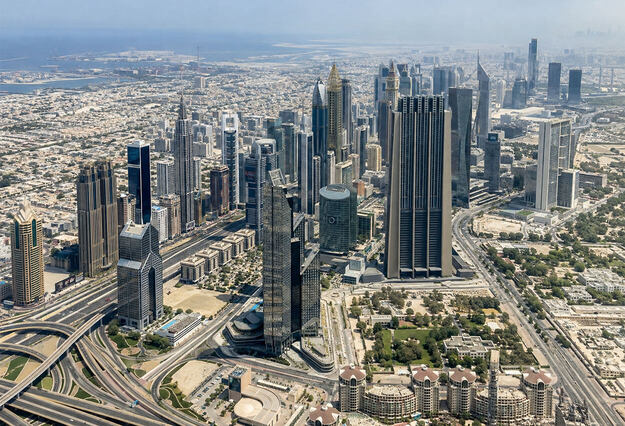
World’s first AI-Native financial centre has officially launched at the Dubai International Financial Centre today. The announcement places Dubai ahead of every rival hub in global finance innovation. DIFC plans to embed AI across legal frameworks, business systems, talent pipelines, and physical infrastructure. You now see a bold shift from pilot projects toward full system integration across the district. The DIFC Authority’s artificial intelligence roadmap will reshape how finance firms work across Dubai each day.

As I see it, this move signals a decisive pivot for AI in finance. Dubai professionals must watch closely. The Centre’s native AI programme will generate US$3.5 billion in economic benefits over the coming years. It will also create around 25,000 new jobs across financial services and supporting industries citywide. DIFC already hosts more than 1,677 AI, FinTech and innovation firms within its thriving ecosystem today.

Leadership speaks on a defining shift

Essa Kazim, Governor of DIFC, offered a direct view on the scale of the change ahead. “DIFC’s evolution into the world’s first AI-Native financial centre marks a defining step,” he said. He added that the move reinforces Dubai’s role in setting global standards across innovation, trust, and competitiveness areas. Arif Amiri, Chief Executive Officer of DIFC Authority, said the plan goes deeper than surface experiments. “This is not about experimenting with AI at the edges,” Amiri said about the new direction. He said the Centre will embed AI across legal frameworks, regulatory systems, talent pipelines, and infrastructure.

The DIFC AI-Native financial centre vision builds on a five-year AI strategy launched back in 2023. Data governance rules now sit inside Regulation 10 under the DIFC Data Protection Law framework. The Dubai International Financial Centre also uses AI to support client compliance and relationship management workflows.

Infrastructure, jobs, and a new operating core

By 2030, a large share of the Centre will run on intelligent buildings and sensor networks. Autonomous mobility, service robotics, digital twins, and smart utilities will form a managed city-within-a-city district. Thousands of sensors will track energy use, movement, and building performance across the Centre each day. Select maintenance and security work will shift to robots, cutting energy waste across the district over time.

The Dubai AI strategy 2026 aligns with the UAE’s national ambitions in advanced technology and regulation. DIFC will translate research into rules, innovation into products, and policy into real infrastructure at speed. The Centre plans to export AI governance software and trained talent directly to the Global South region.

Why this matters for you and global finance

For you as a reader or investor, this shift changes how Dubai competes with other top financial hubs. Regulators across London, Singapore, and New York now face a new benchmark set by DIFC leadership. The world’s first AI-Native financial centre aims to top global rankings in startup density and unicorn creation. DIFC also plans to host the Dubai AI Festival on 26 and 27 October 2026 at DWTC. The event will bring together more than 20,000 participants from over 100 countries across the globe.

TAGS

EXPLORE MORE ON:

Meta AI infrastructure to Anthropic

The prospect of renting Meta AI infrastructure to Anthropic points to a fresh revenue line for the social media company, and it could reach anyone who uses AI tools built on that capacity. Meta and Anthropic are in early talks, a source familiar with the discussions confirmed to CNN. The New York Times reported the potential Meta-Anthropic compute deal first, pegging its value at up to $10 billion over two years and citing three people with knowledge of the talks. CNN’s source said any specific numbers already reported are speculative.

The discussions are preliminary. Reuters reported Anthropic proposed the arrangement in June, with monthly payments over two years and an early exit for either side. Nothing is signed. Terms can still change. Meta and Anthropic declined to comment.

What the deal would mean for Meta

A move to lease Meta AI infrastructure to Anthropic would open a Meta cloud computing business, a line the company has never run before. That would place it against Amazon, Microsoft and Google, the three firms that dominate cloud today. For a company whose returns come almost entirely from advertising, an AI compute lease turns idle servers into cash.

The spending backdrop explains the interest. Meta said it plans to spend between $125 billion and $145 billion this year, most of it on data center buildout. That could roughly double the prior year. Investors have pressed Meta on its AI infrastructure spending, and its shares are down more than 8% from a year ago.

Zuckerberg has hinted at this path before. At Meta’s annual shareholder meeting in May, he said outside companies approach almost every week asking to buy compute “at some premium to what we’ve bought it at.” Meta held off, he said, because it still had a use for the capacity. If it overbuilds, leasing becomes an option.

Why Anthropic wants more compute

Anthropic Claude compute demand keeps climbing, and the company cannot add capacity fast enough on its own. It already holds multibillion-dollar compute deals with Google, SpaceX, Microsoft and Amazon. Adding Meta would give it another supplier as it works to keep Claude running for a growing user base.

The setup is unusual. Meta builds its own AI models and competes with Anthropic on features. Under this arrangement, it would also become Anthropic’s supplier for computing power. The compute shortage has made that kind of rival-to-rival deal routine across the industry.

What it means for you

Here is the ripple. When an AI lab adds compute, users tend to feel it. More capacity can mean looser usage limits, faster responses and steadier access to advanced models. If the plan to rent Meta AI infrastructure to Anthropic closes, Claude users could see those gains over time. If it falls apart, the pressure on Anthropic’s capacity stays.

Meta is chasing bigger AI returns on other fronts too. Last month it released an upgraded Muse Spark model it said could rival the coding tools from OpenAI, Anthropic and others. For the first time, Meta offered a paid version, another signal it wants more money back from its AI push.

The prospect of renting Meta AI infrastructure to Anthropic sits at the center of that shift. Watch whether talk turns into a signed contract.

FAB Launches the Emirati Jaywan Debit Card

FAB launches the Emirati Jaywan Debit Card, and the country now has a homegrown card sitting inside its biggest bank. The card is live for domestic use. It runs on the UAE national card scheme, the local rails managed by Al Etihad Payments and backed by the Central Bank of the UAE. First Abu Dhabi Bank is the largest lender in the country by assets. So this reads as a real signal, not a pilot.

What the Jaywan debit card does

Here is what you get. The Jaywan debit card handles everyday payments and cash access across the UAE. Tap or dip at local merchant outlets. Online, it works on UAE-based platforms. ATMs nationwide handle cash withdrawals. The card also links to digital wallets through tokenised wallet integration, so your card details get swapped for a secure token on supported devices.

Security sits at the core. The card uses Chip and PIN for in-person buys and 3D Secure authentication online. Your four-digit PIN confirms you are the real cardholder at the till. For a domestic scheme handling millions of daily taps, this layer counts.

Why FAB launches the Emirati Jaywan Debit Card now

Timing tells the story. FAB launches the Emirati Jaywan Debit Card as the national rollout moves from plan to practice. The card is integrated with the FAB Mobile app, so you manage it where you already bank. You watch transactions, handle your account, and run digital servicing from one screen. Al Etihad Payments built Jaywan to localise card payments and cut transaction costs. Keeping this flow inside UAE borders also strengthens national data sovereignty, a point FAB made plainly.

Two names carried the message. Futoon Al Mazrouei, Group Head of Personal, Wealth and Business Banking at FAB, tied the card to trust and customer focus inside the UAE’s financial system. Andrea Ciancetti, Chief Products Officer at Al Etihad Payments, called the FAB launch “a critical milestone for the roll-out of the scheme,” and thanked the bank for making Jaywan real for people nationwide.

How to get the Jaywan debit card

Getting one is simple if you already bank with FAB. Apply through the FAB Mobile app or at a FAB branch. No account with the bank yet? Open an eligible one first, then apply. Elite and Private Banking clients can go through their relationship managers. FAB has not disclosed fees, account tiers, or rewards, so check those points before you commit.

Jaywan is bigger than one card. The scheme, launched in 2024, is the first UAE national card scheme, built to localise payments and lower costs for merchants and banks. First Abu Dhabi Bank is one of the early issuers, with other lenders lining up prepaid and debit products over the coming months. Al Etihad Payments has also signed global networks for co-badged cards, so travel use can follow the domestic base. For now, the FAB card stays inside UAE borders.


IMPORTANT: CONTENT SUBMITTED BY THE CLIENT. THIS IS A PRESS RELEASE ARTICLE. PLEASE READ THE INFORMATION BELOW.

ICN.live neither validates nor guarantees the accuracy, reliability, or quality of the information, promotional materials, or products mentioned herein. Readers are encouraged to conduct independent due diligence before making any decisions related to the featured company. ICN.live bears no responsibility, directly or indirectly, for any harm, loss, or consequences that may result from reliance on or interaction with the content, services, or offerings described in this release.

The details shared in this announcement do not constitute financial, trading, or investment guidance. Readers are strongly advised to carry out independent research and seek advice from a qualified financial professional before making any investment or cryptocurrency-related decisions.

ADNOC Umm Shaif Gas Cap

The ADNOC Umm Shaif Gas Cap has moved from a plan to a funded project, with a $6.2 billion final investment decision now signed. ADNOC will develop the offshore field alongside TotalEnergies, Eni and China National Petroleum Corporation. The deal carries a headline figure of AED22.6 billion. It targets first output by 2030.

What the ADNOC Umm Shaif Gas Cap deal delivers

The development will add more than 600 million standard cubic feet per day of natural gas and associated gas liquids. That equals close to 10 percent of what the UAE burns in a day right now. For a country holding the world’s seventh-largest gas reserves, the math matters. Rising UAE natural gas production feeds homes, factories, and the power-hungry data centres behind artificial intelligence growth. You can read this as a bet on demand staying strong.

The Umm Shaif Gas Cap FID sits inside a wider push. ADNOC has been expanding its liquefied natural gas reach and firming up UAE energy security at the same time. Global demand for lower-carbon gas keeps rising, which raises the stakes. Both goals point the same direction.

Who is building it and how

Contracts back up the ambition. ADNOC awarded three engineering, procurement and construction packages worth a combined $5.1 billion, or AED18.8 billion. Consortiums of UAE and international contractors won the work, which covers large-scale offshore infrastructure. A separate $365 million programme, AED1.3 billion, funds 14 wells. ADNOC Drilling will run that campaign over 18 months using three rigs it already owns. No new rigs join the field.

Dr. Sultan Ahmed Al Jaber, Minister of Industry and Advanced Technology and ADNOC Managing Director and Group CEO, tied the move to the company’s broader plan. “The Umm Shaif Gas Cap FID is another important milestone in delivering this strategy and reinforcing ADNOC’s position as a reliable gas supplier,” he said. Umm Shaif is Abu Dhabi’s longest-operating offshore field, so this builds on decades of work.

The field runs deep in the emirate’s history. It hosted Abu Dhabi’s first offshore well and fed the emirate’s first oil exports back in 1962. Six decades on, it now anchors a gas plan aimed at near self-sufficiency by 2030.

The bigger gas play

This Abu Dhabi offshore gas project does not stand alone. The ADNOC Umm Shaif Gas Cap follows a concession award for the Bab Gas Cap from the Supreme Council for Financial and Economic Affairs. That field is expected to add another 1.5 billion standard cubic feet per day of gas and liquids. Stack the two, and the supply picture grows fast.

There is a trading side too. A new ADNOC LNG platform now sits in Abu Dhabi Global Market. The venture is chasing 47 million tonnes per annum of marketable LNG capacity by 2035. That scale would place it among the largest LNG traders anywhere. The ADNOC Umm Shaif Gas Cap fits neatly into that goal, feeding molecules into a growing export machine.

My read: the ADNOC Umm Shaif Gas Cap is Abu Dhabi buying insurance and market share at once. Demand for reliable, lower-carbon gas keeps climbing, and ADNOC wants to be the name buyers trust when they place long orders. The 2030 timeline gives partners room to build. Watch the drilling pace over the next 18 months for the first real signal.

Share this post

on your favourite social platforms

or copy the link