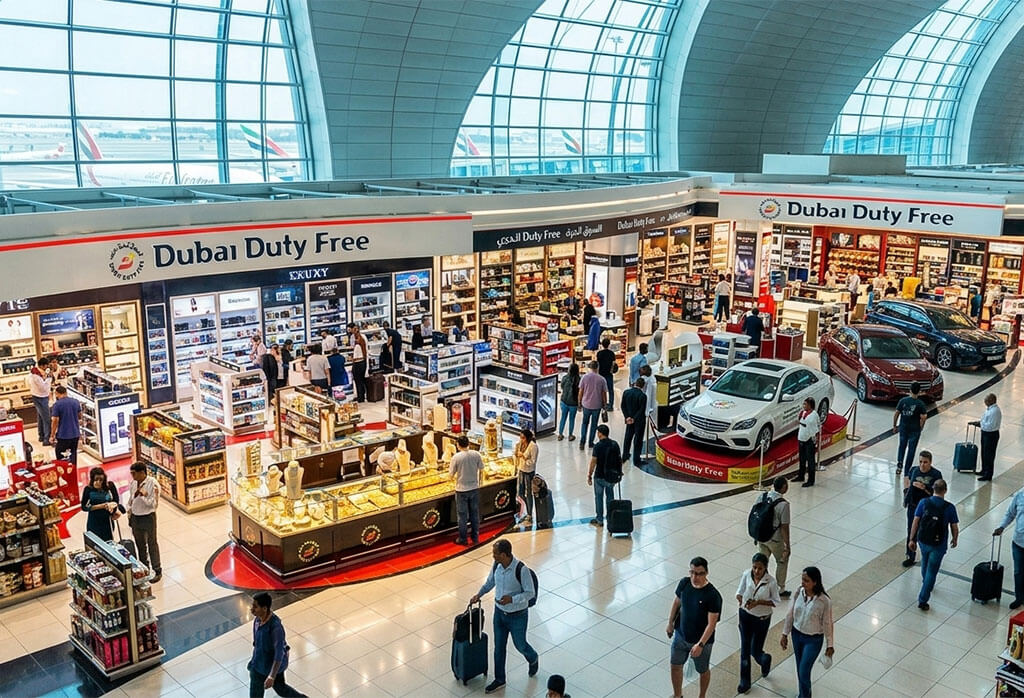



Dubai Duty Free now accepts crypto payments, a step that puts one of the world’s largest single-airport retailers inside Dubai’s wider move toward digital money. The retailer has become the first airport operator in the Middle East to add Crypto.com Pay as a regulated digital payment option. Eligible customers can use it at Dubai International Airport (DXB), at Al Maktoum International Airport, and on the online store at dubaidutyfree.com.
The rollout completes a partnership the two companies signed in July 2025. Back then, Dubai Duty Free and Crypto.com agreed a memorandum of understanding to study blockchain-based payments and other digital commerce ideas. That study has now turned into a live service.
How the payment works
The system sits inside the checkout customers already use. In a store, the point-of-sale terminal creates a QR code showing the amount in UAE dirhams. The shopper scans it with the Crypto.com app and approves the payment from a digital wallet. Online, the same QR flow appears before the order goes through. Dubai Duty Free receives its settlement in UAE dirhams through Crypto.com’s regulated payment infrastructure, so the retailer never holds the digital asset itself.
Access is limited. Only eligible UAE residents with a Crypto.com account can use the service for now. Ramesh Cidambi, managing director of Dubai Duty Free, said the launch moves the July agreement into its roll-out phase and adds convenience for customers while supporting Dubai’s goal of leading global digital commerce. Eric Anziani, president and chief operating officer of Crypto.com, described the launch as another milestone in bringing regulated digital payments into everyday spending.
Why Dubai Duty Free now accepts crypto payments under central-bank rules
The service runs under the framework set by the Central Bank of the UAE. Crypto.com said it is the first Virtual Asset Service Provider in the country to receive a Stored Value Facilities licence from the central bank, which lets it offer regulated payment services. Because Dubai Duty Free now accepts crypto payments under that licence, each transaction stays inside central-bank supervision. That licence is the reason the offer counts as a regulated digital payment option rather than an informal crypto transfer.
This detail carries weight for the region. For years, crypto in the Gulf sat outside clear rules. A central-bank licence changes the footing, because it lets a large, cash-heavy retailer take digital-asset payments without stepping outside supervision.
Where this fits in Dubai’s plan
Dubai Duty Free now accepts crypto payments alongside Apple Pay, Alipay and TerraPay, its existing digital options. The addition feeds directly into the Dubai Cashless Strategy under the Dubai Economic Agenda, known as D33. That plan targets 90 percent of financial transactions across the public and private sectors to be cashless by the end of 2026.
Seen at scale, Dubai Duty Free crypto payments form one node in a much larger shift. Travel retail moves a high volume of transactions across many currencies and many nationalities. Adding a regulated crypto rail to that flow tests whether digital assets can work for routine buying rather than trading alone.
The wider signal is about method, not novelty. When Dubai Duty Free now accepts crypto payments through a licensed provider, it shows the emirate routing new payment types through its regulator instead of around it. For a city aiming to sit among the world’s top cashless economies, that route matters more than the technology on show.