



icnlive

Best AI Stocks to Buy 2026

This analysis reflects publicly available data as of early May 2026. Markets move; these break. Re-underwrite quarterly.

1. MARKET CONTEXT

Macro setup. We are in the middle of the largest concentrated capex cycle in technology history. The four hyperscalers (Microsoft, Amazon, Alphabet, Meta) collectively raised their 2026 AI capex to roughly $725 billion — a 77% increase over 2025’s record $410 billion. Add Oracle, and you cross the $750B mark. This now represents roughly 2.2% of US GDP, and the five hyperscalers plan to add about $2 trillion of AI-related assets to balance sheets by 2030. Capex of this magnitude is funded partly from cash piles and partly from debt — big tech issued $100B of bonds in early 2026 to fund AI capex, with investors demanding record CDS protection. That tells you the bond market is pricing in tail risk. Yahoo Finance + 2

Where we are on the adoption curve: mid-stage, infrastructure-heavy, application-light. Hyperscalers report markets are supply-constrained, not demand-constrained; OpenAI ended 2025 at ~$20B ARR, a threefold increase YoY. Microsoft has an $80B backlog of Azure orders that cannot be fulfilled due to power constraints. Translation: the bottleneck is not “will customers buy?” — it is “can we deliver the chips, the power, the data centers fast enough?” Futurum GroupFuturum Group

Tailwinds: sustained capex visibility through 2027 (Alphabet’s CFO already guided “significantly higher” 2027 capex), enterprise contract backlogs locking in multi-year revenue (Google Cloud’s backlog roughly doubled QoQ to $460B), and pricing power in scarce nodes (TSMC raised advanced node prices and saw HPC hit 61% of revenue).

Risks (don’t skip these): (1) ROI question — two-thirds of Microsoft’s capex is going to short-lived GPU/CPU assets that depreciate in 3–5 years, meaning depreciation hits operating margins almost immediately while revenue ramps later; (2) at 20% annual depreciation on $2T of planned AI assets, hyperscalers face $400B annual depreciation by 2030, more than their combined 2025 profits; (3) capex-to-stock-return is historically a poor relationship — when investment intensity peaks, returns tend to soften; (4) China export controls remain an open wound for Nvidia specifically; (5) the AI bubble debate is no longer fringe — Meta dropped 6% on its capex guide, signaling investor patience is now conditional on revenue scaling. On my OmComsoc

The capital allocator’s takeaway: This is not 1999. Revenue is real, backlogs are contracted, and the bottleneck is physical (power, fabs). But the marginal dollar of capex is producing less marginal revenue than two years ago. The right strategy is to own the chokepoints and the proven monetizers — not the speculative downstream applications.


2. SELECTION CRITERIA — WHO MAKES THE CUT

Of the universe I considered (Nvidia, Alphabet, Microsoft, Amazon, Meta, TSMC, Broadcom, ASML, AMD, Oracle, Palantir), three names hit at least 5 of the 6 filters with the cleanest risk/reward profile:

Filter NVDA GOOGL TSM
Revenue growth >20% ✅ ~70%+ ✅ 22% (Cloud +63%) ✅ 35–40%
AI value chain position ✅ Chips (dominant) ✅ Full stack ✅ Foundry monopoly
Margin expansion/profitability ✅ 71% GM, 60% EBIT ✅ Op margin +200bps ✅ 66% GM, 58% op margin
Moat ✅ CUDA + ecosystem ✅ Data + distribution + TPU ✅ Process node monopoly
Smart money / institutional
Operating leverage

I deliberately excluded Microsoft (great business, but most expensive of hyperscalers and stock down 17% YTD reflects the highest investor anxiety on capex/FCF tradeoff), Meta (consumer ad payback path is hardest to verify and stock just got punished), and Amazon (best long-term but FCF turning negative this year creates a dirty entry window). I excluded Palantir on valuation — fundamentals are good, but the multiple prices are perfect.


3. TOP 3 — DEEP ANALYSIS

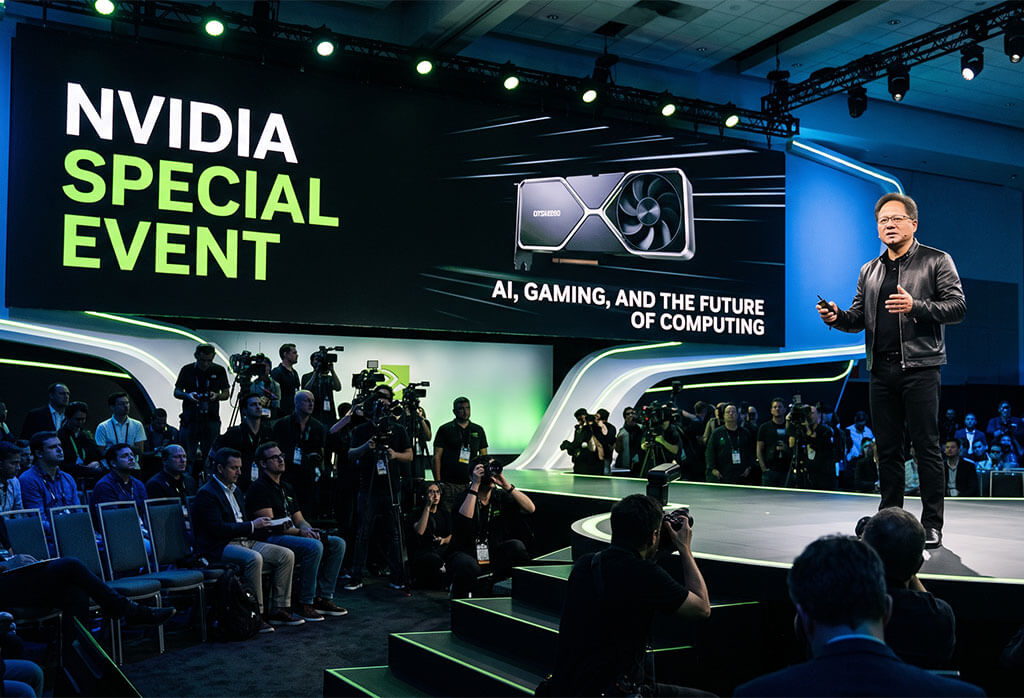
Pick #1: NVIDIA (NVDA)

A. Investment Thesis

  • Owns the picks-and-shovels of the AI era with the only software ecosystem (CUDA) that has ~15 years of accumulated developer mindshare — every meaningful AI workload was built on it
  • Q4 FY26 revenue grew 73% YoY to $68.1B, with data center now over 91% of sales; net income nearly doubled to $43B — this is software-like operating leverage on hardware revenue CNBC
  • Q1 FY27 guidance of $78B (±2%) beat consensus of $72.6B and explicitly excludes any China data center revenue — meaning the upside case if/when China resolves is pure optionality CNBC
  • Hyperscaler capex doubling in 2026 flows directly into Nvidia’s order book; the company is the most direct beneficiary of the $725B spend
  • Annual product cadence (Hopper → Blackwell → Rubin) means competitors are perpetually one generation behind

B. Financial Strength $51.1B net cash, 71.1% gross margin, 60.4% LTM EBIT margin. Free cash flow conversion is exceptional. The inflection point is already in the rearview — the next inflection is whether they can sustain growth deceleration gracefully (going from 70%+ to 30–40% growth without multiple compressions). TIKR

C. AI Leverage the most direct possible. Roughly 90% of revenue is AI-related. Position in the stack: foundational silicon layer. Every dollar of hyperscaler AI capex routes through Nvidia until alternatives mature.

D. Competitive Edge CUDA is the moat that nobody talks about correctly. Hardware can be replicated; 15 years of developer libraries, optimized kernels, and trained engineering talent cannot. Custom silicon (Google TPU, Amazon Trainium, Microsoft Maia) is the real long-term threat — it’s already cannibalizing Nvidia’s share at the largest customers. But for the merchant market (every other enterprise, every neocloud, every sovereign AI program), Nvidia remains the default.

E. Valuation Reality Check Nvidia trades at ~24x NTM P/E, the cheapest of its closest peers — Broadcom is 31x, ASML 36x, AMD 53x. For a company growing 70%+ with 60% EBIT margins, this is mathematically anomalous. The discount exists because of China’s overhang and peak-cycle anxiety. For a 2–3x return: revenue compounds at 30%+ for three years (entirely plausible given backlog), multiple holds at 24–28x, China optionality returns to the model. Base case = ~80–100% upside in 3 years, bull case = 2.5x. TIKR

F. Risk Factors

  • Execution: Yield problems on Rubin or supply chain disruption at TSMC would be material
  • Market: Hyperscaler in-house chips taking 20–30% share by 2028 is the consensus bear case and likely correct
  • Regulatory: China export controls could tighten further; Taiwan geopolitical risk is the unhedgeable tail
  • Competition: AMD’s MI400 cycle is real; Broadcom’s custom ASIC business is growing faster

Pick #2: ALPHABET (GOOGL)

A. Investment Thesis

  • The only company with a credible full-stack AI position: own data (Search, YouTube, Maps), own model (Gemini), own chip (TPU), own cloud, own distribution (3B+ Android users) — no competitor has all five
  • Q1 2026 revenue $109.9B (+22%), operating income +30% to $39.7B, operating margin expanded 200bps to 36.1% — margin expansion in a heavy capex year is the signal that matters TIKR
  • Google Cloud revenue grew 63% to $20B with backlog nearly doubling QoQ to $460B — this is the most tangible evidence in the sector that AI capex is converting into customer demand SEC.gov
  • The Search-cannibalization-by-AI bear case has been quietly disproven: Search revenue grew 19% to $60.4B with AI Overviews driving usage, and Gemini processes 16 billion tokens per minute Perplexity
  • TPU is the under-appreciated asset — it gives Google cost-per-token economics that no merchant cloud can match

B. Financial Strength 22% top-line growth at $440B+ run rate with expanding margins is rare at this scale. Cloud operating income tripled to $6.6B from $2.2B YoY — this segment has flipped from cash drag to profit engine. The financial inflection point is occurring now: Cloud margins crossing into the 30%+ range over the next 24 months would re-rate the entire equity. Yahoo Finance

C. AI Leverage Indirect but compounding. Search ad monetization gets a quality lift from Gemini. Cloud captures third-party AI workloads. Workspace AI add-ons monetize the install base. Waymo is a free option. Gemini’s improved intent understanding now monetizes longer, more complex queries that were previously difficult to monetize — that’s pure margin. TIKR

D. Competitive Edge Search distribution + ad infrastructure is a 25-year moat that AI competitors must reproduce from scratch. The DOJ antitrust overhang is the principal risk to this moat. The TPU stack means even if Nvidia GPUs get expensive, Google has cost-advantaged inference internally.

E. Valuation Reality Check Forward P/E of ~25x. Trades at 19.3x NTM EV/EBITDA versus Meta at 10.3x — premium reflects Cloud acceleration and the integrated stack, but raises the execution bar. For a 2–3x return: Cloud compounds at 40%+ for 2–3 years, Cloud operating margins expand to 30%+, antitrust doesn’t force a Chrome/Android divestiture, AI Overviews monetization holds. Base case = ~60–80% upside, bull case = 2x. CoinDCXTIKR

F. Risk Factors

  • Regulatory: DOJ remedy phase is the biggest single overhang in tech; a forced divestiture of Chrome or AdTech would be material
  • Search disruption: If users genuinely shift to ChatGPT/Anthropic for high-intent queries, ad revenue erodes faster than Cloud can replace
  • Capex: $180–190B in 2026 with “significantly increase” guided for 2027 — at some point, investors revolt
  • Execution: Gemini still lags GPT-class models on some benchmarks despite improvements

Pick #3: TAIWAN SEMICONDUCTOR (TSM)

A. Investment Thesis

  • The single chokepoint of the entire AI build-out — Nvidia, AMD, Apple, Broadcom, Google TPU all manufacture here, no alternative exists at leading-edge nodes
  • HPC accounted for 61% of Q1 2026 revenue, up from ~52% a year ago — AI is structurally re-mixing the company toward higher-margin work CNBC
  • Management raised full-year 2026 USD revenue growth guidance to “above 30%” — TSMC almost never raises guidance; this is unprecedented confidence TipRanks
  • Pricing power is real: TSMC raised advanced node prices in early 2026, and customers paid; gross margin expanded 390 bps QoQ to 66.2%
  • “Demand still significantly outpaces supply” — sold-out conditions are expected to define the industry through 2026, CNBC

B. Financial Strength Q1 2026: revenue $35.9B (+40.6% YoY USD), gross margin 66.2%, operating margin 58.1%, EPS up 58.3% YoY. ROE of 40.5%. The financial inflection point: 2nm ramp in late 2026 will pressure margins 2–3% near-term but expand them substantially as yields mature in 2027–2028 — this is the classic “buy the dip in margins” setup. TickeronICO Optics

C. AI Leverage the most leveraged company in the world to AI capex on a fundamentals basis. NVIDIA alone contributes ~22–25% of TSMC’s sales. Every dollar of hyperscaler capex on chips passes through this fab. Position in the stack: the foundation of the foundation. TECHi®

D. Competitive Edge Process node leadership is roughly 2–3 years ahead of Samsung, 4–5 years ahead of Intel. Catching up requires not just capital but accumulated process knowledge that takes a decade. Apple, Nvidia, and AMD have all signaled long-term commitments to TSMC for leading-edge.

E. Valuation Reality Check Forward P/E of ~26x, ranking better than 67% of semiconductor peers. For a company with monopoly-like positioning and 30%+ growth, this is the most attractive risk/reward of the three on a pure multiple basis. For a 2–3x return: Revenue compounds at 25%+ for 3 years, gross margin holds at 60%+ post-2nm ramp, Taiwan geopolitical risk doesn’t materialize, US/Japan/Germany fabs reach economic productivity. Base case = ~70–90% upside, bull case = 2.2x. GuruFocus

F. Risk Factors

  • Geopolitical: Taiwan invasion/blockade is the single largest tail risk in global equities — unhedgeable, low probability, infinite consequence
  • Customer concentration: Nvidia + Apple = ~40% of revenue
  • Cyclicality: Foundry industry has historically been brutally cyclical; if AI capex pulls back even 20%, TSMC’s growth deceleration would be sharp
  • Capex strain: $52–56B in 2026 capex with overseas fabs (Arizona, Japan, Germany) carrying margin dilution near-term ICO Optics

4. RANKING — CONVICTION SCORECARD

NVDA GOOGL TSM
Expected Return (3–5 yr) 8/10 7/10 8/10
Risk Level Medium-High Medium Medium-High
Time Horizon Medium (2–3 yr) Long (3–5 yr) Long (3–5 yr)
Asymmetry High Medium-High High
Verdict BUY BUY BUY

Why GOOGL ranks lower on return but is my highest-conviction risk-adjusted pick: The full-stack AI position with embedded Search cash flows means downside is more bounded than NVDA or TSM. You give up some upside for resilience. NVDA and TSM are higher-beta plays on the same thesis.


5. PORTFOLIO STRATEGY

Suggested allocation across the three (within whatever portion of your portfolio is allocated to AI/tech equities):

  • GOOGL: 40% — anchor position, lowest risk-adjusted entry
  • NVDA: 35% — direct AI capex beneficiary, attractive valuation given growth
  • TSM: 25% — highest geopolitical risk, sized down accordingly despite best valuation

Entry strategy: staged, not lump sum.

  • The macro setup is uncomfortable: hyperscaler stocks have absorbed most of the bullish revisions, and Meta’s 6% drop on capex guidance shows investor patience is conditional. A lump-sum entry exposes you to a bad multiple-compression quarter.
  • Recommended approach: deploy capital in 3 tranches over 6–9 months. Tranche 1 (40% of the intended position) now. Tranche 2 (30%) after the next major drawdown of 8%+ in the basket. Tranche 3 (30%) opportunistically over months 6–9.
  • TSM specifically: I would scale in even more slowly given the China-Taiwan tail risk; consider adding only on weakness.

What invalidates the thesis (the disciplined sell triggers):

  1. Hyperscaler capex guide-down. If two of {MSFT, GOOGL, AMZN, META} cut 2027 capex guidance by >15%, the entire chain re-rates lower. Sell into the news, don’t average down.
  2. Cloud growth deceleration to <30%. Google Cloud at 63% is the bull signal. If it drops below 30% YoY for two consecutive quarters, the AI-monetization thesis is breaking.
  3. Sustained gross margin compression at TSM below 55% would suggest pricing power is breaking — exit.
  4. NVIDIA’s gross margin below 65% would signal either AMD/custom-silicon competition is biting or pricing concessions are happening — reduce.
  5. Taiwan kinetic event. Eliminate TSM exposure immediately; reduce NVDA by half.
  6. DOJ forces structural divestiture at Google. Re-evaluate GOOGL completely — could be net positive (unlocks SOTP) or net negative depending on remedy.

Final Capital Allocator’s Note

The capex numbers in this cycle are genuinely staggering, and bear asking “where’s the ROI?” are not stupid. But the right framing isn’t “is AI capex justified in aggregate?” — it’s “who captures the rent regardless of whether it is?”

These three names capture the rent. NVIDIA gets paid whether the AI applications work or not. TSMC gets paid whether Nvidia’s customers are smart or dumb. Alphabet gets paid because its existing cash machine subsidizes the AI investments and benefits from them simultaneously.

If the AI bubble pops, all three drop 30–50%. If it doesn’t, these three return 80–150% over 3–5 years. The asymmetry is in the survivors’ favor because they each occupy structural chokepoints that don’t disappear in a downturn — they just trade at lower multiples temporarily.

Position size accordingly. Don’t be the investor who’s right on thesis but wrong on sizing.


This analysis reflects publicly available data as of early May 2026. Markets move; these break. Re-underwrite quarterly.

OpenAI Acquiring TBPN

OpenAI acquiring TBPN means influence over how developers, founders, and investors hear about artificial intelligence. The deal surprised many people inside media and technology circles last week. TBPN hosts John Coogan and Jordi Hays run a daily three-hour livestream on YouTube and X. Their show covers tech, business, defense, and AI with a loyal Silicon Valley audience. Chris Lehane, OpenAI’s chief global affairs officer, will oversee the team inside the strategy group.

Lehane told CNN the purchase follows a long history of tech platforms buying media companies. He pointed to RCA creating NBC in 1926 to help sell radios to American families. The OpenAI TBPN acquisition fits a similar pattern in his view of industry history. You can see the logic when one company wants to own both the tool and the message. As I see it, this dual role raises sharp questions about trust and editorial freedom.

Why the Sam Altman media deal matters

The Sam Altman media deal gives OpenAI direct access to an AI industry talk show audience. TBPN counts roughly 345,000 followers on X and about 74,000 YouTube subscribers today. The show earned around 5 million dollars in ad revenue during 2025, per reports. Leaders want to triple that figure through new growth plans tied to OpenAI resources. OpenAI acquiring TBPN means influence reaches builders who shape products, funding rounds, and policy debates.

Lehane said the hosts “cracked the code” with developers, builders, and thought leaders in AI. He wants the team to explain the how and why behind artificial intelligence tools. Critics see the move as clear marketing dressed up as independent commentary for tech viewers. The New York Times reporter Mike Isaac called the purchase a marketing expense on X. You should weigh both views when you watch the show produce new segments each week.

Editorial independence faces a hard test

TBPN president Dylan Abruscato posted on X that the show retains full editorial control today. Lehane confirmed the contract includes written guarantees protecting independence for hosts and producers. The Information’s Martin Peers questioned whether those promises carry real weight in practice. He asked if you could picture TBPN producing a tough investigation into OpenAI itself. The Silicon Valley tech podcast rarely attacks the companies funding its expanding sponsorship base.

What OpenAI’s acquisition of TBPN means influence-wise

OpenAI approached TBPN about the deal earlier this year through the application of CEO Fidji Simo. Terms stayed private, though Financial Times reported the price reached the low hundreds of millions. Altman said he expects hosts to keep challenging OpenAI when the company makes poor choices. Chris Lehane’s OpenAI strategy work will expand into new channels and owned media properties soon. Your view of the AI industry talk show depends on whether promises hold over time.

Microsoft Cloud Licensing Lawsuit

Microsoft cloud licensing lawsuit progress arrived on Tuesday when London’s Competition Appeal Tribunal certified the collective case. The ruling allows nearly 60,000 British firms to push the matter toward a full trial hearing. Competition lawyer Maria Luisa Stasi leads the Microsoft Windows Server UK lawsuit on behalf of those businesses. Her legal team values the claim at up to 2.1 billion pounds, or about 2.8 billion dollars. You should track this case closely because the outcome could reshape how cloud software pricing works.

The core complaint focuses on how Microsoft prices Windows Server across competing cloud platforms. Stasi argues the company charges higher wholesale rates when firms run Windows Server outside Azure. Those higher costs pass down to UK customers using Amazon Web Services, Google Cloud, or Alibaba Cloud. Her team says the pricing gap makes Azure artificially cheaper than rival cloud computing options. From my standpoint, the pricing question sits at the heart of this entire competition dispute.

Competition Appeal Tribunal Microsoft ruling opens path to full trial

Microsoft asked the tribunal to dismiss the claim before any trial could begin. The company said Stasi failed to present a workable method for calculating alleged customer losses. Judges disagreed and certified the Microsoft £2.1 billion cloud lawsuit to move forward through the system. Stasi called the decision an important moment for thousands of organizations affected by the pricing conduct. You can see why the ruling matters for British firms watching cloud budgets rise each quarter.

Microsoft defends its business model by pointing to its vertically integrated structure across products. The firm uses Windows Server as an input for Azure while also licensing it to direct rivals. Company lawyers argue this setup can benefit cloud competition rather than harm market balance. Yet critics say the pricing gap tells a different story for customers on other platforms.

ANOTHER MUST-READ ON ICN.LIVE: John Ternus Is the New Apple CEO as Tim Cook Shifts to Chairman

Microsoft Azure antitrust lawsuit in the UK fits a wider regulatory picture

Regulators across three major economies now examine how cloud firms handle pricing and licensing terms. Britain, Europe, and the United States each run separate reviews into market behaviour right now. Last July, the Competition and Markets Authority said Microsoft’s licensing reduced competition for cloud services. The regulator found those practices materially disadvantaged both AWS and Google in the wider market.

Microsoft pushed back on the report and said the cloud market shows strong competitive dynamics. Last month, the CMA opened another review of Microsoft’s software licensing practices in cloud markets. The Microsoft cloud overcharging class action now runs beside these formal regulatory reviews. You should expect both tracks to shape public debate around cloud fairness during 2026.

What the ruling means for UK firms

Certification at the Competition Appeal Tribunal Microsoft hearing does not guarantee any final damages award. A full trial still needs to weigh evidence, pricing data, and expert calculations from both sides. Yet the decision signals the claim has enough merit to move forward through the system. For UK businesses, the Microsoft cloud licensing lawsuit could deliver compensation if judges rule against the firm. My analysis indicates the coming year will test how British courts treat global cloud pricing disputes.