

icnlive

ICN.live

Adnan Al-Jaziri

  • QatarEnergy shared new oil discovery results from the Merlin-1X well in offshore Namibia waters.
  • The Merlin-1X exploration well ranks tenth among wells drilled under PEL 0039 so far.
  • Good reservoir quality and light oil define the strongest well results in this block.
  • QatarEnergy now holds interests across four Namibia licenses covering nearly 34,000 square kilometers offshore.

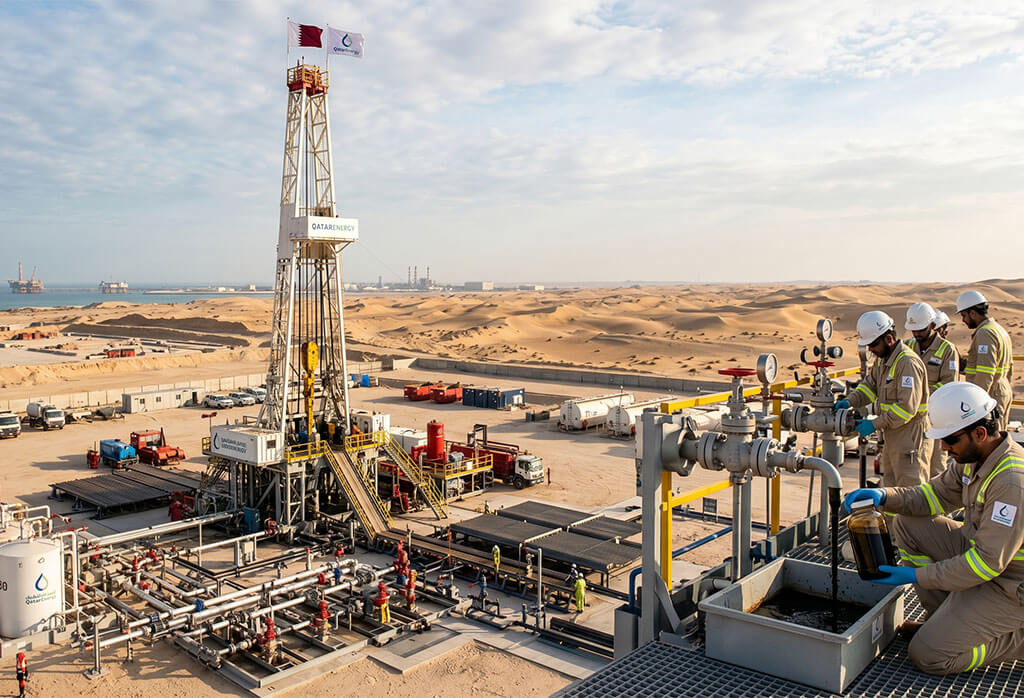
QatarEnergy shared new oil discovery results from the Merlin-1X well offshore Namibia this week. The well sits inside Petroleum Exploration License 39, a block in the Orange Basin. Engineers found good reservoir quality, light oil, and limited associated gas at the site. These early signs point to the strongest subsurface results recorded under this license yet. For energy markets, this result reshapes how you read Namibia’s oil exploration prospects today.

What is the Merlin-1X well found in Namibia

Merlin-1X became the tenth well drilled under this license since the program began here. The well started drilling in April 2026 and reached the deeper Coniacian rock play. Light oil with limited gas signals a cleaner, more valuable target for future development. Shell operates the block and shares ownership with QatarEnergy and the state firm NAMCOR. QatarEnergy holds a 45 percent stake, while Shell holds 45 percent and NAMCOR takes 10. Eugene Okpere, a senior Shell executive, welcomed the results, adding fresh insight into the basin. He said the team follows a disciplined, data-led approach to test real commercial value. Okpere even called the outcome “encouraging” for the broader Orange Basin Namibia exploration effort.

QatarEnergy shared a new oil discovery as Orange Basin hopes grow

When QatarEnergy shared new oil discovery details, attention turned to the basin’s rising potential. This new find follows Graff-1, Venus-1X, and Jonker-1X, three earlier wins in the region. Analysts now compare the Orange Basin to the early oil success seen in Guyana waters. Reported resources across the basin now run into billions of barrels, analysts estimate today. Deep water defines this offshore Namibia oil zone, with depths reaching nearly 3,000 meters. Such depth raises drilling costs, yet strong reservoir quality can offset some of those risks. Supermajors keep moving into the region as fresh results lift overall confidence each year. As I see it, this run of finds turns Namibia into a serious oil contender.

What this result means for you

QatarEnergy shared new oil discovery news while building a wide position across Namibia’s offshore acreage. The company holds stakes in PEL 0039, PEL 0056, PEL 0091, and PEL 0090. Those four licenses together cover close to 34,000 square kilometers of seabed off Namibia. PEL 0039 carries its largest stake and has produced the strongest results so far. Shell plans more drilling in PEL 0039 later in 2026 under a broader appraisal campaign. For you as a reader, these steps signal real momentum behind Namibia’s oil exploration. Commercial output still depends on appraisal wells, drilling costs, and final investment decisions ahead. QatarEnergy has not yet released a public resource estimate for the Merlin-1X exploration well. Investors will watch the next wells before judging the full scale of this find.

The QatarEnergy oil discovery at Merlin-1X strengthens the case for more deep offshore work. Namibia stands to gain jobs, revenue, and a stronger role in global energy supply. Your view of African oil supply should now include this fast-growing Orange Basin story. When QatarEnergy shared new oil discovery results, it added weight to a growing trend. The coming months will test whether these barrels reach real and profitable production levels. For now, the well counts as a clear win for QatarEnergy and Shell together. Watching the next drilling phase will tell you how large this prize truly becomes.

TAGS

EXPLORE MORE ON:

3 million passengers in July

3 million passengers in July will move through Dubai International Airport this month, Dubai Airports data shows. Officials expect the airport to handle the total figure within the first two weeks alone. Daily traffic will cross 200,000 travelers starting on July 2, based on new Dubai Airports figures. July 12 stands out as the single busiest day of the entire month for DXB. Officials expect more than 225,000 travelers to pass through the terminals on July 12. This Dubai International Airport July increase reflects strong demand across several global travel regions this year. Transfer passengers make up almost half of the total traffic moving through Dubai each day.

Regional flight activity keeps recovering steadily after months of disruption earlier this year across the Middle East. A flight from Tehran landed at Dubai International Airport this week for the first time since February. Riyadh Air also launched new routes into Dubai last month, adding fresh regional capacity. These developments point toward a positive outlook for Dubai Airport passenger traffic this summer. Dubai Airports activated summer readiness plans with its oneDXB partner network across every terminal this week. The plan aims to keep passenger flow smooth during the busiest days of the month.

3 million passengers in July put Dubai readiness plans to the test

Officials remind travelers to arrive no earlier than three hours before their flight departure. Online check-in remains the fastest way to skip long lines at busy service counters. Families traveling with children above age 12 can use DXB Smart Gates for faster passport checks. This step shortens wait times at passport control during the busiest hours of the day. Passengers can also pack spare batteries and power banks inside hand luggage only, not checked bags. This rule protects flights from potential battery-related safety risks during every journey this summer.

Smart travel tips for the DXB summer rush

The I Heart DXB installation waits for passengers inside Terminal 3 near Concourse B. Travelers can upload a selfie and join a shared digital portrait of the city. The portrait displays colors from the UAE flag across a large digital wall display. Dubai Airports’ summer travel numbers keep rising steadily into the second half of July. School holidays and family trips continue driving demand across every airport terminal this month.

DXB busiest day 2026 targets and traffic outlook

DXB busiest day 2026 predictions point directly to July 12 as the clear peak. Paul Griffiths, CEO of Dubai Airports, credits strong teamwork for the rising summer demand. He praised “close coordination across the sector and the oneDXB community” for the support. From my standpoint, this readiness reflects months of careful planning across Dubai’s aviation network. 3 million passengers in July confirm Dubai’s position as a leading global travel hub. The airport expects steady growth through the remaining weeks of this busy summer season. Families returning after the school term and residents heading abroad will drive numbers higher. 3 million passengers in July show how strong Dubai’s summer travel recovery has become.

Dubai Airports continues tracking 3 million passengers in July as a key summer benchmark. Travelers should check flight status closely before arriving at either terminal this busy week. Dubai continues strengthening its position as a leading connecting point around the world today.

2026 FIFA World Cup Round of 32

2026 FIFA World Cup Round of 32 fixtures have produced late goals, shocks, and thrilling drama. You can already feel the tension rising across stadiums in the United States and Canada. Canada made history by beating South Africa 1-0 at SoFi Stadium in Los Angeles. Stephen Eustáquio struck a dramatic stoppage-time winner to seal his nation’s first knockout victory. Captain Alphonso Davies returned from injury to inspire the Canadian team in front of home fans. Five-time champions Brazil then survived a brutal late test against a brave Japan side. Kaishu Sano equalized Casemiro’s opener before Gabriel Martinelli grabbed the decisive goal in the 96th minute. The Arsenal star broke Japanese hearts and pushed Brazil safely into the next round.

Penalty shootouts end two European dreams

The biggest shocks of the round arrived from the penalty spot in two thrilling games. Paraguay stunned the four-time champions Germany in a massive upset played in Foxborough, Massachusetts. Julio Enciso scored a spectacular header before Kai Havertz leveled the tie for Germany. After a tense 1-1 draw across extra time, Paraguay won the shootout 4-3 cleanly. Morocco then matched the heroics by beating the Netherlands in another nerve-shredding penalty battle. Issa Diop forced extra time with a stoppage-time goal after Cody Gakpo had scored. The Dutch then lost their nerve as Morocco prevailed 3-2 on the spot kicks. Morocco defender Noussair Mazraoui said afterward, “Morocco never lost belief until the final minute.” Norway also advanced after beating Ivory Coast 2-1 in a tight, physical knockout contest. Antonio Nusa and star striker Erling Haaland scored the goals for the Norwegian side.

2026 FIFA World Cup Round of 32 reshapes the bracket

These early World Cup 2026 results have already reshaped expectations across the entire knockout draw. Fans tracking the World Cup Round of 32 bracket now see fresh names advancing deep. Several 2026 World Cup upsets have removed traditional powers from the race for glory. These 2026 FIFA World Cup Round of 32 results show how quickly fortunes can change. Germany and the Netherlands both exited early, which few experts had predicted before kickoff. More World Cup 2026 knockout stage drama awaits as the remaining fixtures kick off soon. France face Sweden, while Mexico meet Ecuador and England take on a spirited DR Congo. Each of these games promises tension, late goals, and another shot at a famous upset. My analysis suggests these matchups will decide which contenders belong among the favorites now.

Golden Boot race heats up before the next rounds

The World Cup 2026 Golden Boot race has become one of the tournament’s best stories. Argentina’s Lionel Messi leads the chart with six goals before the next round begins. Four players sit one step behind him on four goals each at the moment. Kylian Mbappé and Ousmane Dembélé carry France’s hopes in this fierce scoring chase together. Erling Haaland and Vinícius Júnior round out the chasing group with four goals apiece. You should watch these forwards closely as the stakes climb higher each passing day. The 2026 FIFA World Cup Round of 32 still has plenty of drama left to deliver. You can expect the 2026 FIFA World Cup Round of 32 to crown surprising new heroes.

Base44 launches its own AI model

Base44 launches its own AI model to give users faster app building at lower cost. The Tel Aviv company built this model after Wix bought it for 80 million dollars. Base44 was barely six months old then, with a small team of eight people. You now see the platform roll out Base1 across its main app creation tools. The new model relies on tens of millions of real user interactions for training. Base1 ranks as the first model from a vibe coding platform in live production use. Maor Shlomo, Base44 founder, explains clearly why owning a full model beats renting one.

Founder Shlomo described the payoff during the launch using clear and direct public language. “Having our own model allows us to continuously improve performance and reduce vendor dependency.” Base44 trained Base1 on its own data instead of leaning on outside model makers. You benefit because a focused model often handles app tasks faster than broad rivals. The company calls Base1 a step toward owning its full technical stack end to end. Rivals such as Lovable still rent frontier models from larger outside AI model providers. Shlomo expects more peers to train models once they reach real scale and speed.

Why Base44 launches its own AI model now

Cost pressure pushes many AI firms to rethink how they pay for model compute. Enterprise clients question the return from using top frontier models for every single task. Owning the Base44 Base1 model gives the firm direct control over compute and inference spend. Stronger margins would help the company after Wix announced layoffs across its wider teams. Wix recently confirmed a plan to cut twenty percent of its worldwide staff base. Base44 instead grew its headcount and passed 100 million dollars in annual recurring revenue. You should watch costs because inference fees now drive margins across AI native firms.

Base1 builds on an open-source model, fine-tuned hard for app creation tasks. Shlomo says a frontier model from scratch would cost several billion dollars to build. A narrow tool tuned for one job can beat a broad model on speed. Base44 wants Base1 to feel faster, cheaper, and sharper on real design work for you. The vibe coding platform faces fast-moving rivals on every side of the market. Lovable reached 500 million dollars in annual recurring revenue earlier during this same month. Replit, Bolt, and Figma also chase users inside the same growing app building category.

A bigger test of AI startup defensibility

AI startup defensibility now rests on data, distribution, and a solid owned technical stack. A venture investor at Headline names these three pillars as the core of survival. Base44 now owns all three pillars through its own data, reach, and proprietary LLM. The sharper threat now arrives from frontier labs moving into the vibe coding space. From my standpoint, this race rewards firms with data, scale, and tight cost control. Base44 launches its own AI model at a moment of rising pressure on margins. You will watch closely as Base44 launches its own AI model into a crowded field. Shlomo calls Base1 a long engineering effort with much bigger model versions still ahead. The outcome will shape how you build apps and what each prompt costs you.

Share this post

on your favourite social platforms

or copy the link