

icnlive

ICN.live

Yousef Haddad

  • The Bank of Japan raised its main rate to one percent, a level last seen in 1995.
  • A weak yen and rising energy costs from the Middle East conflict pushed prices higher.
  • Governor Kazuo Ueda missed the meeting because of treatment for an infected liver cyst.
  • Higher rates aim to slow inflation while raising borrowing costs for businesses and the government.

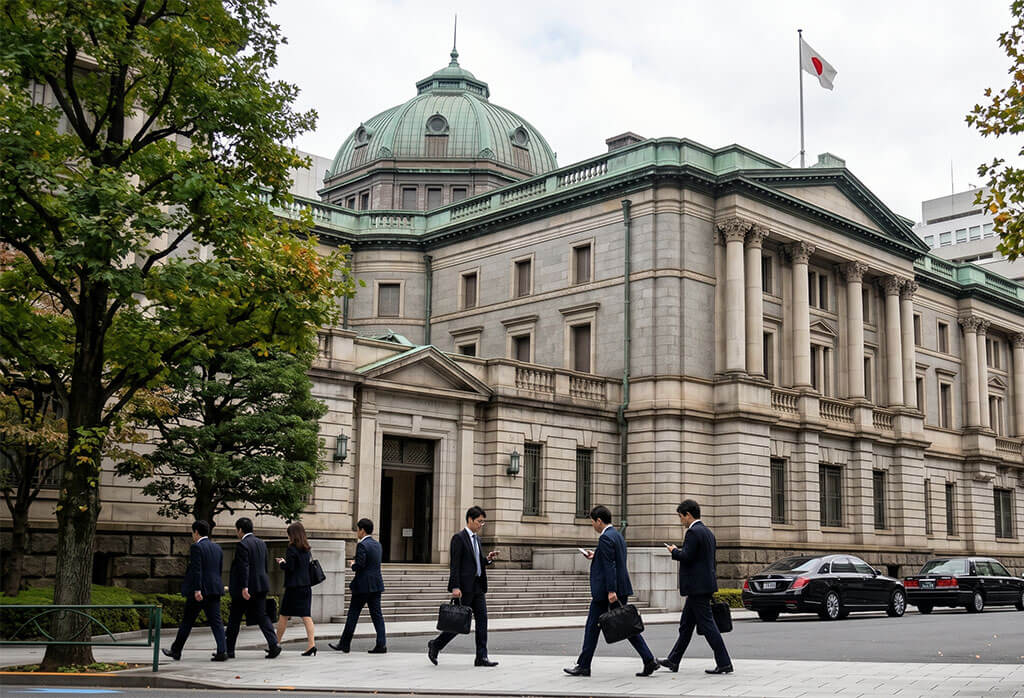
Bank of Japan interest rates climbed to a level not seen since 1995 on Tuesday. The central bank lifted its short-term policy rate to one percent from 0.75 percent. This BOJ rate hike was the first increase since December 2025, when rates reached 0.75 percent. You now watch a Japanese interest rate at a 31-year high reshape borrowing costs across the economy.

Rising energy prices and a weak yen inflation problem forced policymakers to act fast. The conflict in the Middle East drove up oil costs, which hit Japan hard. Japan depends heavily on imported oil and gas, so global price shocks reach consumers quickly. Wholesale prices in May rose over six percent from a year earlier, a three-year peak. Overall inflation reached 1.4 percent in April, still below the central bank’s two percent target.

For you as a reader, these numbers signal a real shift in money policy. Bank of Japan interest rates had stayed near zero for almost two decades before now. Deep rate cuts in the 1990s answered a sharp collapse in property and share prices. Prices fell, and growth stalled, so the economy stayed weak across many of those years.

Why Bank of Japan interest rates matter to you

Higher rates push up the cost of loans for homes, cars, and business spending. The government also pays more interest on its large debt when borrowing costs climb higher. Savers stand to gain because banks start offering better returns on deposits over time. A BOJ policy rate 1% target marks a clear break from years of cheap money. Officials want a normal policy after twenty years of fighting deflation and slow growth.

Governor Kazuo Ueda, Bank of Japan leadership faced a rare test during this meeting. He missed the policy vote while doctors treated him for an infected liver cyst. Eight board members made the call, and they backed the increase by a wide margin. Deputy Governor Ryozo Himino said Japan’s real interest rates still remain at extremely low levels. From my standpoint, this signals more increases ahead despite the leadership gap at the top.

What comes next for the yen and prices

The yen stayed weak this year, which raised import costs for fuel and food. A stronger policy stance can lift the currency and ease some price pressure later. Markets reacted calmly because most investors had expected this move from the central bank. Government steps to ease fuel costs lower the risk of a sharp economic downturn. Bank of Japan interest rates still sit low against most major economies around the world. Analysts expect more steps if inflation stays above the two percent goal for long. You should watch each meeting closely because every decision affects loans, savings, and prices. Bank of Japan interest rates now shape the path for households, firms, and global markets.

The road back to normal policy

The bank started lifting rates in March 2024 after seventeen years without a hike. Each step since then has moved Japan away from emergency measures toward steadier ground. Wage growth gives officials more room to keep tightening without harming the wider economy. Firms keep raising pay and passing higher labor costs into the prices you see. A clear plan helps the bank guide markets while it watches the Middle East risk. Your savings, mortgage, and spending plans all feel the weight of these new decisions.


TAGS

EXPLORE MORE ON:

The Secret Ways To Sell ANYTHING

Joanna Wiebe, a creator with over 20 years in the creative field, explains that the brain doesn’t adopt entirely new ideas, but new versions of ideas it already holds.

Dubai's total diamond trade

Dubai’s total diamond trade reached a new all-time high during 2025 across every major category. Official figures from Dubai Customs place the yearly diamond total at 41.7 billion dollars overall. This result beats the earlier record of 40.9 billion dollars set back in 2011. Traders also moved 359.5 million carats, a volume rising 42.5 percent from last year. DMCC has announced today that, for the first time, the Emirate of Dubai hit record value and record volume in one year. Dubai diamond trade 2025 figures show steady demand across natural stones and coloured gemstones. Total trade value climbed 16.2 percent from the 35.8 billion dollars recorded during 2024.

The market added 5.8 billion dollars in fresh trade across a single twelve-month span. Dubai now works as a key gateway linking mines, cutting hubs, and buyer markets worldwide. Producers ship rough stones here, while cutters and traders prepare them for retail shelves. Retail demand in India, the United States, and Europe keeps large orders flowing steadily. Strong regulation and secure vaults give global buyers real confidence in each recorded deal. Access to finance also helps smaller firms trade larger stone volumes across each season. Grading services and clear customs steps move each shipment through the emirate at speed.

Why Dubai’s total diamond trade reached a new all-time high

Records confirm Dubai’s total diamond trade reached a new all-time high through natural stone strength. Natural diamond trade value hit 39.9 billion dollars, near 95.8 percent of the total. Dubai traded 205.2 million carats of natural rough stones, the second highest volume on record. Rough volume rose by nearly 34 percent, showing strong appetite among global cutting and polishing centres. Polished natural trade reached 18.7 billion dollars, a rise of nearly 25 percent from 2024. Over five years, Dubai’s total diamond trade reached a new all-time high with 139 percent value growth.

Average value per carat rose about eight to nine times across the same five-year window. Ten-year data shows Dubai’s wider diamond trade rose 63 percent by value overall. Volume across the same decade climbed 44 percent, a sign of deeper market roots. Investors read these gains as proof of steady policy and reliable long-term trade rules. Ahmed Bin Sulayem, DMCC’s Chairman and Chief Executive Officer, tied the results to long planning.

He said: “Dubai’s latest diamond trade figures demonstrate the success of a long-term strategy to build the world’s most connected, transparent, and efficient precious stones ecosystem. Since the Covid-19 pandemic in 2020, we have seen trade through Dubai double in physical volume and grow by almost 140% in value. For natural polished diamonds alone, value has grown by 246%. We are the partner of choice for producers, manufacturers, traders, and retailers across the global industry. Through world-class infrastructure, regulatory certainty, access to finance, and one of the world’s most sophisticated ecosystems for precious stones, we will continue to provide the platform the industry needs to grow.”

Leadership and demand behind the record

DMCC’s diamond trade leaders point to strong demand from producers, manufacturers, and global retailers. Buyers worldwide noticed Dubai’s total diamond trade reached a new all-time high last year. From my view, this run signals real staying power for the emirate’s precious stones sector.

Reports on coloured gemstones Dubai handled last year show a record 1.1 billion dollars. This category grew 48 percent, with imports up 68.8 percent and re-exports up 33.5 percent. Synthetic and industrial diamonds now make up nearly 39 percent of total carat volume. DMCC runs the Dubai Diamond Exchange, the region’s largest tender site for precious stones. The Emirate also hosts many tenders and auctions for both rough and polished stones. Each tender draws bidders from Africa, Asia, and Europe onto a single trading floor. You can watch these figures to judge where global diamond demand heads through 2026. The exchange keeps Dubai near the front of the entire world’s diamond trading network.

Licence-Free Access to Nvidia AI Chips

Licence-free access to Nvidia AI chips now reaches the UAE after a major US policy change. The Commerce Department eased US export controls on Friday, opening a faster path for Gulf technology firms. Washington approved this shift to reward a close ally and to grow sales for American chipmakers. You now see a real turn in how the two countries share advanced computing and defense tools.

The new rule moves the UAE into a trusted country group with NATO members and allies. Approved firms like G42 and Core42 no longer need a separate licence for each shipment. Big US names such as Amazon, Google, Microsoft, OpenAI, and xAI gain the same relief. Officials signed the notice under Bureau of Industry and Security Director Jeffrey Kessler last week. This licence-free access to Nvidia AI chips follows the finalized 2025 framework between both nations.

Licence-free access to Nvidia AI chips reshapes ties

The deal caps a decade of security work between the two allies against Iran and its proxies. US officials cited the Emirates’ role during Operation Epic Fury, the recent strikes on Iran. Emirati investment in America now tops one trillion dollars across many industries and key sectors. For readers watching tech, this signals stronger demand for advanced AI chips across the Gulf region.

Andrew Feldman, chief executive of Cerebras, welcomed the decision to ease US export controls on the UAE. “The UAE has been an exceptional ally to the US,” Feldman said on Friday. He added that a sound policy keeps loyal partners firmly inside the American technology system today. Senator Elizabeth Warren attacked the move and called the arrangement corrupt in a public statement. She warned about sensitive technology reaching China through firms with broad Gulf and global reach.

Bigger deals now move faster

The rule sets no cap on how many chips approved UAE buyers can purchase. G42 already seeks powerful chips from Nvidia, AMD, and Cerebras for large computing projects. The firm builds a five-gigawatt data center in Abu Dhabi with OpenAI and Oracle. This licence-free access to Nvidia AI chips lets these projects grow without slow licensing delays. The Commerce Department also plans to review chip requests from the Abu Dhabi fund MGX.

How this affects you and the market

For global markets, this change signals a stronger flow of American chips into the Gulf. Chipmakers like Nvidia and AMD gain a large new market with fewer government hurdles ahead. From my standpoint, this policy trades tight control for faster deals and deeper strategic trust. You should watch how China responds to broader Gulf access under these eased US export controls. The UAE ambassador praised the decision as proof of deep and dependable cooperation between nations. This licence-free access to Nvidia AI chips now shapes trade, security, and technology across the Gulf.

The road ahead for Gulf tech

Supporters believe faster chip access helps the UAE build strong local AI and cloud services. Critics still worry about weak oversight as advanced AI chips flow into private Gulf hands. Warren asked Commerce Department leaders to testify before her committee about the wider security risks. You will see this debate shape US technology policy toward the Gulf for many years.

About NVIDIA

NVIDIA is a dominant semiconductor company specializing in GPUs that power artificial intelligence, high-performance computing, gaming, and data centers. It has become the critical infrastructure layer for the global AI boom.

Strategic Role:

  • Core Revenue Engine: Data center GPUs (AI training & inference)
  • Market Position: Near-monopoly in advanced AI compute hardware
  • Ecosystem Lock-In: CUDA software platform creates high switching costs

NVIDIA controls the most valuable choke point in the AI value chain—compute—capturing outsized margins and demand from hyperscalers and governments.

Share this post

on your favourite social platforms

or copy the link