
icnlive

ICN.live

Amira Khalil

  • TikTok is bringing new AI literacy tools to the Middle East and North Africa and trialing tougher spam detection.
  • The platform removed more than 86 million fake accounts in the first quarter of 2026 and labeled over 3 billion AI-generated videos.
  • New detection systems will first target politics, current events, financial advice, and medical information.
  • TikTok committed $4 million to AI literacy and responsible-use programs with partners including No Filtr and Raspberry Pi.

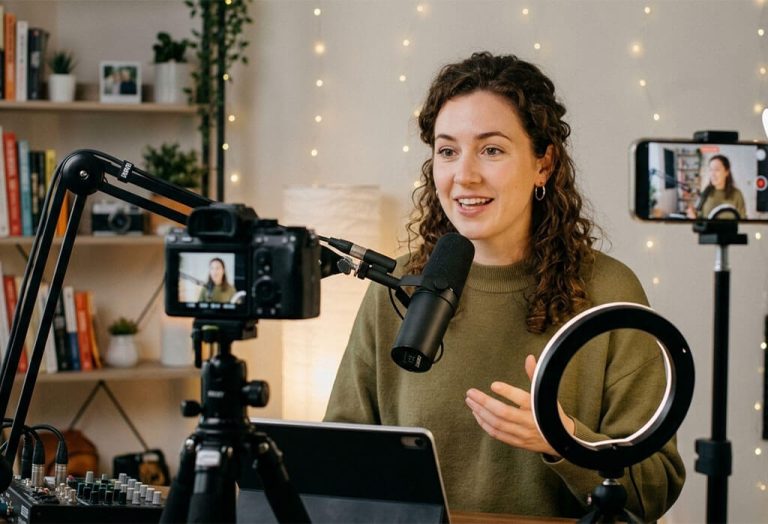
AI literacy in MENA by TikTok now sits at the center of how the platform plans to help people tell real content from synthetic. TikTok said this week it will bring new AI literacy tools to users in the Middle East and North Africa, alongside trials of tougher systems that flag synthetic spam. The move lands as platforms face rising pressure to police AI-generated content. In a statement, the company kept its aim simple. “As artificial intelligence continues to transform the way people create and discover content, TikTok is expanding its efforts to ensure users can confidently navigate AI-powered experiences,” it said.

What TikTok is rolling out

The updates fall into three parts. First come literacy resources built with outside experts, including a new AI literacy guide developed with the National Association for Media Literacy Education and AI specialist Henry Ajder. Second is stronger AI spam detection aimed at accounts that mass-produce synthetic posts. Third are wider partnerships meant to improve transparency across the industry. TikTok said it removed more than 86 million fake accounts in the first quarter of 2026. Beyond that, it labeled more than 3 billion AI-generated videos using Content Credentials, creator disclosure tools, and invisible watermarking.

AI literacy in MENA by TikTok, and who it reaches

Education sits at the heart of AI literacy in MENA by TikTok. The company said creators across the region increasingly use AI for storytelling, teaching, and creative work. To support that, TikTok pledged $4 million toward literacy and responsible-use programs, working with groups such as No Filtr and Raspberry Pi. The point is practical. People who can recognize a synthetic clip get to decide for themselves what to trust. That skill matters most for younger users, who spend the most time inside these feeds.

AI spam detection and the trust problem

Not every use of AI is harmless. TikTok said it will begin testing enhanced detection systems built to spot accounts dedicated to posting AI-generated spam. The first focus is content that can shape public trust or well-being, meaning politics and current events, financial advice, and medical information. Those areas carry the highest risk when false posts spread fast. Better AI spam detection, the company suggests, shields real creators whose work can get buried under machine-made noise. The rollout of AI literacy in MENA by TikTok pairs this enforcement with education. On the transparency side, TikTok joined the steering committee of the Coalition for Content Provenance and Authenticity, a cross-industry effort on content provenance that helps people trace where a piece of media came from.

AI influencers and the disclosure question

The regional picture explains the urgency. According to GroupM’s 2026 analysis, the number of verified AI influencers on Instagram, TikTok, and YouTube grew by more than 40 percent in 2025. That figure could reach about 15 percent of all influencer-marketing spend by the end of 2026. PwC Middle East reported in January 2026 that most Gen Z consumers in Riyadh and Dubai follow at least one AI influencer, with round-the-clock engagement named as a key driver. The message reads clearly for the region. Audiences here welcome AI-generated content, yet they still expect to be told when it is synthetic. That expectation is what AI literacy in MENA by TikTok is meant to serve.

TAGS

EXPLORE MORE ON:

Mahmoud Bartawi The Entrepreneur

From banking to entrepreneurship, Mahmoud Bartawi, a Dubai-based entrepreneur, investor, and business storyteller known for his journey from corporate banking to building successful companies. After gaining experience in the financial sector, Bartawi transitioned into entrepreneurship and co-founded Under500, a healthy food brand that grew into a recognized regional business before becoming part of Kitopi.

His journey represents the transformation of professional experience into entrepreneurial execution. Bartawi has focused on building businesses, understanding customers, and creating scalable models in competitive markets. His experience has positioned him as a valuable voice for founders seeking practical lessons about starting and growing companies.

Building Under500 and Creating Business Impact

Under500 became one of Bartawi’s most recognized ventures, addressing the growing demand for healthier food choices in the region. The company combined convenience, nutrition, and technology-driven operations to serve modern consumers.

The success of Under500 demonstrated Bartawi’s ability to identify market opportunities and develop solutions aligned with changing customer behaviors. The company’s growth also reflected the importance of operational discipline, strong branding, and understanding market needs.

Beyond entrepreneurship, Bartawi expanded his role as a business communicator through the BXB Show, where he interviews founders, investors, and industry leaders to share insights from the world of business.

The BXB Show and Founder Education

Through the BXB Show, Mahmoud Bartawi has created a platform focused on conversations with entrepreneurs and decision makers. The show explores topics including company building, leadership, investment, and personal growth.

His content highlights the realities behind entrepreneurship, offering audiences access to experiences from people who have built companies, raised capital, and navigated challenges. This approach has helped position Bartawi as a bridge between successful entrepreneurs and aspiring founders.

ICN BUSINESS Magazine Official Launch

The official launch of ICN BUSINESS Magazine marks a strategic expansion of ICN Media into premium business storytelling and high-value editorial positioning. The magazine is designed to capture the narratives behind capital, leadership, and company building across the region and global markets.

For its inaugural issue, Mahmoud Bartawi holds the cover, signaling a deliberate editorial choice. His profile reflects execution, scalability, and relevance within the regional entrepreneurial landscape. From building Under500 to developing a media platform through the BXB Show, Bartawi represents a model of operator-driven credibility.

Positioning him as the first cover establishes the magazine’s direction. It prioritizes founders with proven outcomes, disciplined thinking, and measurable impact. ICN BUSINESS Magazine enters the market with a clear thesis: highlight individuals who build, scale, and influence real economic activity, while creating a platform that aligns media with business performance and strategic insight.

AI literacy in MENA by TikTok
Mira Murati's Inkling AI model

Mira Murati’s Inkling AI model arrived this week, and it shifts who gets to shape a frontier system. Thinking Machines Lab posted the full weights on Hugging Face. You can download them, run the model on your own hardware, and rebuild it for your work. That reach sets it apart from the closed flagships sold by OpenAI, Anthropic, and Google.

What Inkling is

Inkling is a Mixture-of-Experts model with 975 billion total parameters. It calls on about 41 billion for any single task, which keeps a very large system faster and cheaper to run. The model handles a context window of up to 1 million tokens. It reads text, images, and audio, and reasons across all three. Thinking Machines trained it on 45 trillion tokens of text, images, audio, and video.

The company is blunt about where the model lands. In its own words, Inkling is not the strongest model available today, open or closed. The pitch runs a different way. Murati’s team wants you to own a base you can adapt, not rent a locked system you cannot see inside.

Why Mira Murati’s Inkling AI model targets builders

Mira Murati’s Inkling AI model is built to be changed. Thinking Machines made it available for customization on the Tinker fine-tuning platform on launch day. You point the model at your own data, train it for your domain, and keep the result. The company also added an Inkling Playground in the Tinker console, so you can chat with the model before committing to a training run.

Controllable thinking effort is the other lever. You can dial how long the model reasons, trading speed for depth depending on the task. A lighter preview, Inkling-Small, runs 12 billion active parameters and aims for strong results at lower cost and latency.

Who Murati is and why it counts

Murati left OpenAI as chief technology officer in 2024. Months later, she founded Thinking Machines Lab, which raised a $2 billion seed round at a $12 billion valuation before it shipped a single product. Inkling is the lab’s first in-house model, built in under a year and trained on NVIDIA GB300 NVL72 systems.

Her open-weight AI model choice carries a history. At OpenAI in 2019, the lab held back the full GPT-2 over misuse fears. Murati now signals a case-by-case path: release openly when the risk looks manageable, hold back when it does not. Open weights this time do not promise open weights next time.

What it means for you

The stakes reach past the research world. If you run a business, an open-weight AI model you can fine-tune keeps your proprietary knowledge in-house instead of feeding it through someone else’s API. Thinking Machines points to work with hedge fund Bridgewater, where a fine-tuned open model scored 84.7 percent on a financial reasoning test. That figure came from the two companies’ own evaluation, not an independent one, so weigh it as a first-party claim until others confirm it.

For developers, Mira Murati’s Inkling AI model widens the menu. You get a large, multimodal base you can inspect, adapt, and deploy through providers like TogetherAI, Fireworks, and Baseten. The Mixture-of-Experts model design keeps running costs down while the parameter count stays high.

Inkling is the first in a planned family from Thinking Machines Lab. More models will follow. Whether each future model ships with open weights is not settled yet.

Share this post

on your favourite social platforms

or copy the link