
icnlive

ICN.live

Salma Al-Tamimi

  • The UAE added six new countries to its visa-on-arrival programme.
  • Eligible travellers need a valid residence permit from an approved nation.
  • Visitors choose between a 14-day and a 60-day visa on arrival.
  • The new ICP UAE visa rules support tourism, business, and global mobility.

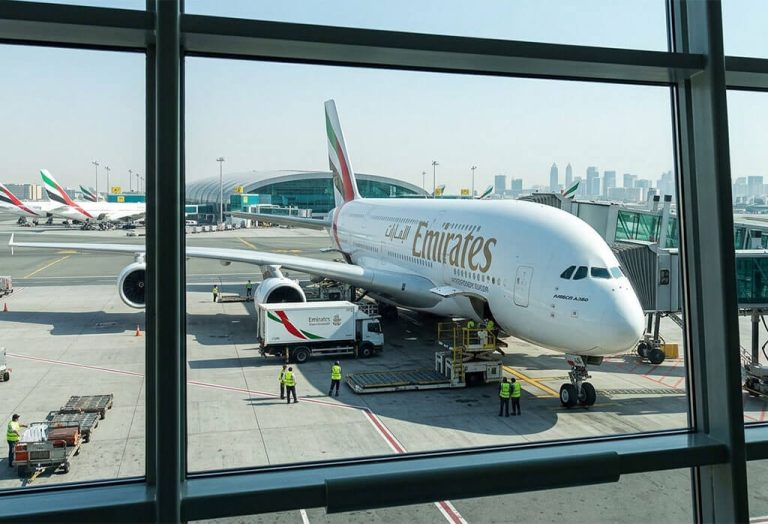
Visa on arrival for six new countries now reshapes how eligible travellers reach the UAE. The United Arab Emirates expanded its programme to welcome nationals from six additional nations. Indonesia, Vietnam, Thailand, the Philippines, Kenya, and South Africa now join the approved list. Ordinary passport holders from these nations qualify under the new residence permit eligibility terms. You gain entry only when you hold a valid permit from an approved country. Approved permits come from the United States, the United Kingdom, and European Union member states. Singapore, Japan, South Korea, Australia, New Zealand, and Canada also issue qualifying residence permits.

How the UAE visa on arrival now works

The UAE visa on arrival comes in two clear options for every qualified visitor today. Travellers receive a 14-day or 60-day visa choice based on their planned trip length. Holders of the 14-day visa can extend their stay once while inside the country. The 60-day visa permits only a single stay and offers no extension at any point. Once your visa expires, you must leave the UAE before any overstay penalty applies. Anyone who stays beyond the limit pays a fine of fifty dirhams each day. The 14-day visa carries a total issuance fee set at one hundred dirhams now. Travellers choosing the longer option pay two hundred fifty dirhams for the 60-day visa.

Why the visa-on-arrival for six new countries matters to you

Visa on arrival for six new countries gives eligible residents a smoother path to Dubai. The change supports the broader visa-on-arrival programme already running across the seven Emirates today. Families travelling together also benefit because accompanying members gain the same clear entry rights. From my standpoint, this move clearly rewards mobile professionals who live and work abroad. You save time at the airport because the process now feels simple and direct.

The ICP UAE visa rules align the country with global best practice in mobility. Officials want easier travel for tourists, investors, entrepreneurs, and the most skilled global talent. The Ministry of Foreign Affairs said the step strengthens bilateral ties with friendly nations. According to the ministry, the policy also builds closer economic and cultural people ties. Visa on arrival for six new countries forms part of this wider national strategy. The new decision strengthens cooperation with partner countries across travel, tourism, and resident mobility.

How to plan your trip under the new rules

Your travel timing matters because the official notice sets the start from late July. Check your residence permit before booking, so you can confirm full residence permit eligibility first. Keep your passport valid and carry proof of your approved residence at the airport. Choose between the 14-day and 60-day visa option based on your real trip needs. Visa on arrival for six new countries opens a faster route for global residents. Plan early, confirm your documents, and your UAE arrival will stay smooth and clear.

What this means for UAE tourism and business

The Emirates wants higher visitor numbers across hotels, airlines, retail, and wider tourism services. Easier entry helps the UAE compete as a leading hub between Asia, Europe, and Africa. Business travellers from the six nations now reach Dubai with far less paperwork stress. You join a clearer system because the UAE visa on arrival keeps entry rules simple. The wider visa-on-arrival programme reflects steady reform across the whole country’s mobility framework today. Plan your visit now, and you gain from one of the region’s smartest entry systems.


TAGS

EXPLORE MORE ON:

HSBC issued an AI adoption

HSBC issued an AI adoption in investing report showing how UAE investors now use these tools. Your money decisions sit at the center of this fast-moving shift across the country. Researchers surveyed 9,993 wealthy people across ten markets, including 703 investors based in the UAE. The numbers place UAE AI adoption right at the top, level with India worldwide. About 98 percent of these investors use AI somewhere in their daily lives right now. Britain sits near 76 percent, while the United States lands close to 75 percent.

What the report shows about the UAE’s habits

Most of these investors lean on AI for research, analysis, and quick idea generation. Around 83 percent apply these tools to finance work, above the global mark of 73 percent. Roughly 78 percent use AI investment tools for research, while 61 percent back a wider strategy. Confidence rises too, since 31 percent feel readier when they talk with their advisers. Another 27 percent compare options faster, and a similar share feels calmer under pressure. The HSBC issued an AI adoption in investing report that tracks these shifts in plain numbers.

Risk appetite also shifts as people gain more trust in these new digital helpers. Some 63 percent say AI helps them weigh calculated risks with much clearer eyes. India leads here at 64 percent, while the global average sits near 49 percent. Western markets trail behind, with the United States at 44 percent and Britain at 39. These investors also tie about 36 percent of recent returns to AI-guided choices. The global figure here sits a little lower, near 33 percent across all markets.

People still want a human voice before the money moves

Trust in human advisers stays strong, even as these smart tools grow more popular. About 56 percent want a hybrid wealth management model blending software and expert people. Nearly 39 percent explore with AI first, then check ideas with a trusted adviser. Barry O’Byrne, CEO of International Wealth and Premier Banking at HSBC, framed the pattern clearly. “Clients are not picking sides,” he said, since they blend speed from AI with human judgment. Craig Worobec, Head of Wealth and Premier Solutions for the Middle East, agreed strongly. He called UAE residents some of the most AI-literate people on the planet today. From my standpoint, this blend gives you speed without losing the calm of human advice.

The HSBC Human-AI Advantage study also tracked daily life well beyond pure portfolio numbers. Around 74 percent feel their quality of life has improved, against a global rate of 63 percent. Many also credit these tools with opening new doors in their careers and skills. Growing use of generative AI in finance ties closely to wider national goals here. The UAE National Strategy for AI 2031 treats the field as a core economic driver. A new Artificial Intelligence and Data Authority now guides data and digital government work. HSBC pairs the trend with tools like Wealth Intelligence, drawing on 10,000 data sources.

The HSBC issued an AI adoption in investing report, pointing to a clear hybrid future. You gain real speed from these systems, yet a trusted adviser still guides big moves. This HSBC report on AI adoption in investing gives you a clear picture of the UAE.

AI theft accusations from Anthropic

AI theft accusations from Anthropic now target Alibaba over a sweeping campaign against Claude AI models. The American firm told US senators about the breach in a June 10 letter. Anthropic claims the secret operation ran between April 22 and June 5 this year. Nearly 25,000 fraudulent accounts produced more than 28.8 million exchanges with the Claude system. Those numbers make this the largest known Claude AI distillation attack on the company. Senators received the warning letter ahead of a planned hearing on artificial intelligence safety. Anthropic shared the detailed figures to clearly show the unusual size of this breach.

Inside the Alibaba Qwen Claude extraction claim

Distillation trains a weaker model on the outputs of a stronger and smarter one. Engineers feed millions of answers into a cheaper system to copy advanced skills fast. Anthropic says the operation aimed to speed China’s race toward its Mythos Preview models. The company tied the whole effort to Alibaba and its Qwen AI research unit. Operators behind the Alibaba Qwen Claude extraction targeted software engineering and agentic reasoning skills. Both of these areas rank among the most valuable frontiers in modern AI today. Anthropic argues this method lets rivals copy advanced systems without the original research cost.

What the AI theft accusations from Anthropic involve

Earlier this year, Anthropic also flagged similar attempts by three other Chinese AI labs. DeepSeek generated over 150,000 exchanges, while Moonshot AI passed 3.4 million with the model. MiniMax then topped 13 million exchanges, making Alibaba’s alleged campaign much larger by comparison. American firms now warn loudly about AI intellectual property theft tied to China today. From my standpoint, this scale of extraction signals a serious shift in competitive pressure. These campaigns grow more advanced each year, the company warned policymakers and cloud partners.

US AI export controls now limit how China reaches Anthropic’s newest and strongest systems. Commerce officials restricted the latest Mythos and Fable models on June 12 this year. Anthropic then disabled global access to those models after the new government directive arrived. In its letter, Anthropic wrote that Alibaba “ignored the Trump Administration’s warnings” during the campaign. Officials also added Alibaba to the Pentagon’s list of Chinese military companies this month. Alibaba is challenging the designation while expanding its Qwen AI work across global markets. Washington has openly accused Beijing of stealing US AI ideas on an industrial scale. Regulators held off blacklisting DeepSeek even after flagging the firm as a security risk.

Why the Anthropic-Alibaba AI theft fight matters to you

These AI theft accusations from Anthropic shape how nations guard their best AI research. Models built through copied outputs often skip the safety checks of their original source. For everyday users, weaker safety controls raise real risks of misuse and false output. Independent experts say these copied models can spread harmful content with fewer working safeguards. Anthropic wants closer threat sharing between AI developers and the US government going forward. Lawmakers will weigh these AI theft accusations from Anthropic during upcoming hearings on policy. Your trust in safe AI tools now depends on how this serious case ends. For now, the AI theft accusations from Anthropic keep global AI competition firmly tense.

UAE Visa on Arrival

Share this post

on your favourite social platforms

or copy the link