icnlive

WATCH LIVE. THINK BUSINESS.

© 2026 ICN.LIVE

ICN.live

  • Dubai scored a perfect 100 on the ranking, with 147 million Instagram tags, 43 million TikTok tags and 3.43 million Google searches a month.
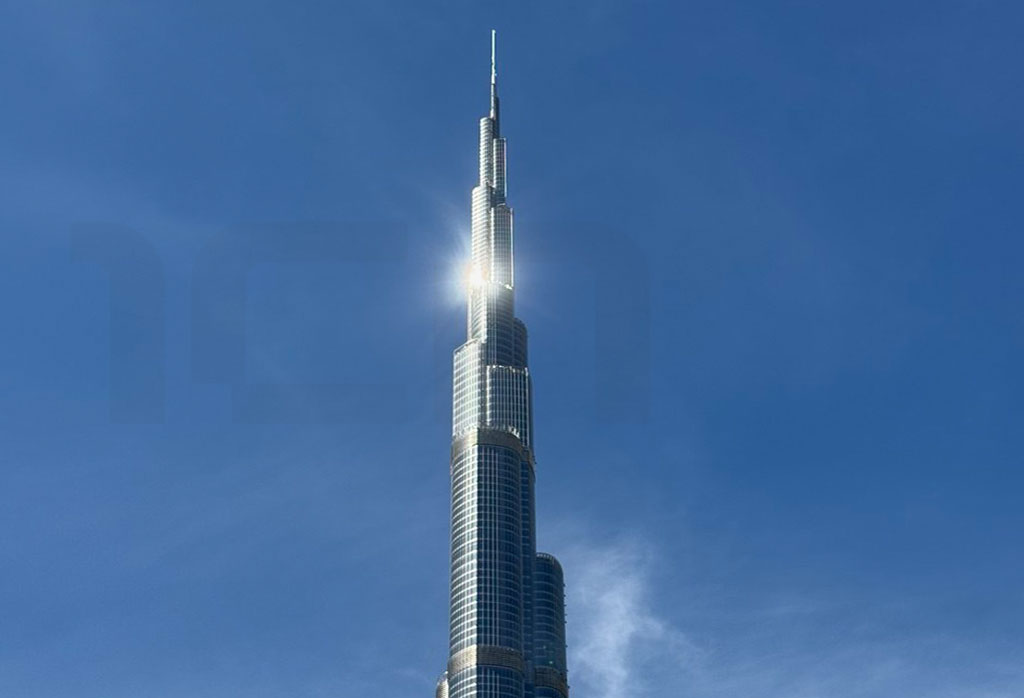
  • The Burj Khalifa is the most tagged and most searched landmark on earth, at 10.1 million posts and 1.1 million monthly searches, ahead of the Grand Canyon (696,000) and the Eiffel Tower (662,000).
  • London posted the highest raw hashtag total of any city at 192.2 million, followed by New York at 165.6 million and Istanbul at 153.7 million.
  • Barcelona’s 23 million monthly searches look inflated by football traffic, and the study has not published the weighting behind its score.

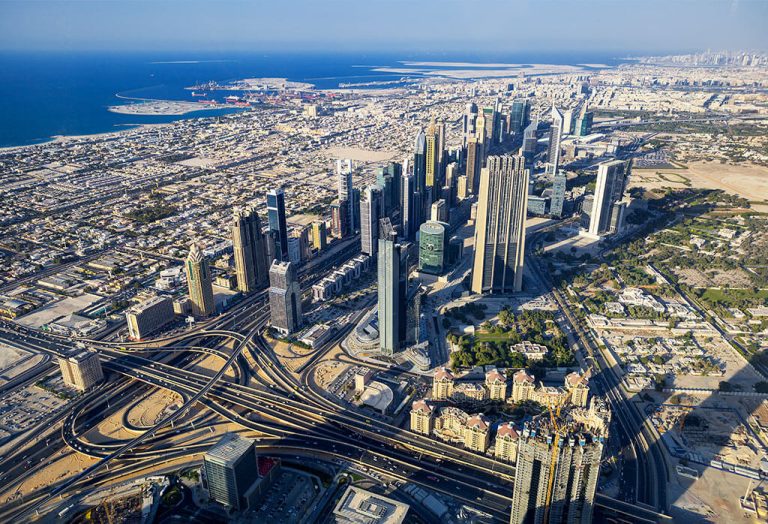
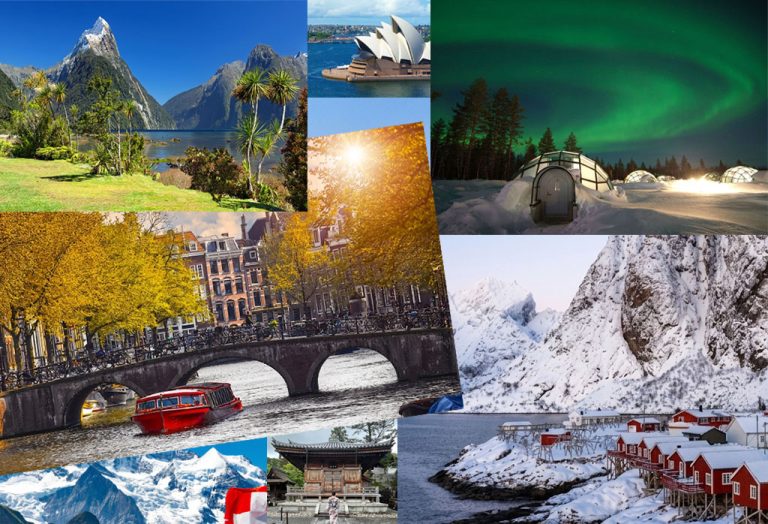
Dubai is the most photographed city in the world, according to a new ranking of how often destinations appear on social media and in search results.

The study comes from Players Time, which built a scoring system it calls an Instagrammability Score. It combines hashtag counts on Instagram and TikTok with monthly Google search volume, then scales the result from 0 to 100.

Dubai scored a perfect 100. The city has been tagged 147 million times on Instagram and more than 43 million times on TikTok. It draws 3.43 million Google searches a month.

The Burj Khalifa took first place in the separate landmarks ranking. The tower has 10.1 million tagged posts and 1.1 million monthly searches. That puts it well ahead of the Grand Canyon at 696,000 searches and the Eiffel Tower at 662,000.

That result is worth sitting with. The Burj Khalifa opened in 2010. It is now photographed and searched more than monuments that have been standing for centuries. The Eiffel Tower came second with a score of 73.22. The Taj Mahal and Machu Picchu both landed in the top group, with search volumes between roughly 854,000 and 928,000 a month.

Europe holds 8 of the top 20 landmark places. The Sagrada Familia and the Colosseum sit in that group, with monthly searches running from about 313,000 to 737,000.

Some places are ranked for the experience, not the building

A few entries in the landmarks list are not really buildings at all.

Shibuya Scramble Crossing in Tokyo generated more than 6.57 million posts. Up to 3,000 people cross at once, and most of the photos are taken from inside the crowd rather than from a viewing point. Times Square in New York works the same way, with 5.82 million posts.

The oddest entry is the DUMBO viewpoint near the Brooklyn Bridge, which has passed 4 million Instagram posts on its own. Search demand for it is modest. People are not planning trips there. They walk past, take the photo, and the number keeps climbing.

London posts more, Barcelona searches more

Among cities, London and Paris follow Dubai. London recorded the highest raw hashtag volume in the study at 192.2 million posts. New York City reached 165.6 million and Istanbul 153.7 million.

Barcelona is the outlier. The city recorded 97 million tagged posts and 23 million monthly Google searches, which is close to seven times Dubai’s search volume.

That figure deserves a caveat the study does not offer. “Barcelona” is also the name of one of the most followed football clubs on the planet. A raw keyword count cannot tell a fan looking for match results apart from a traveller looking for a hotel. The same problem may explain why San Diego, Santiago and Kochi appear in a ranking of visual destinations despite far lower travel profiles.

Players Time has not published the weighting behind its score, so the gap between hashtag volume and search demand is difficult to check independently. Hashtag counts are also self-reported by the platforms and change constantly.

The Dubai finding survives those questions better than most. The city leads on both measures at once, and it does so against capitals that have had a hundred years’ head start on accumulating images. The Burj Khalifa did the same thing at landmark level in sixteen years.

TAGS

EXPLORE MORE ON:

eRedCap live network test

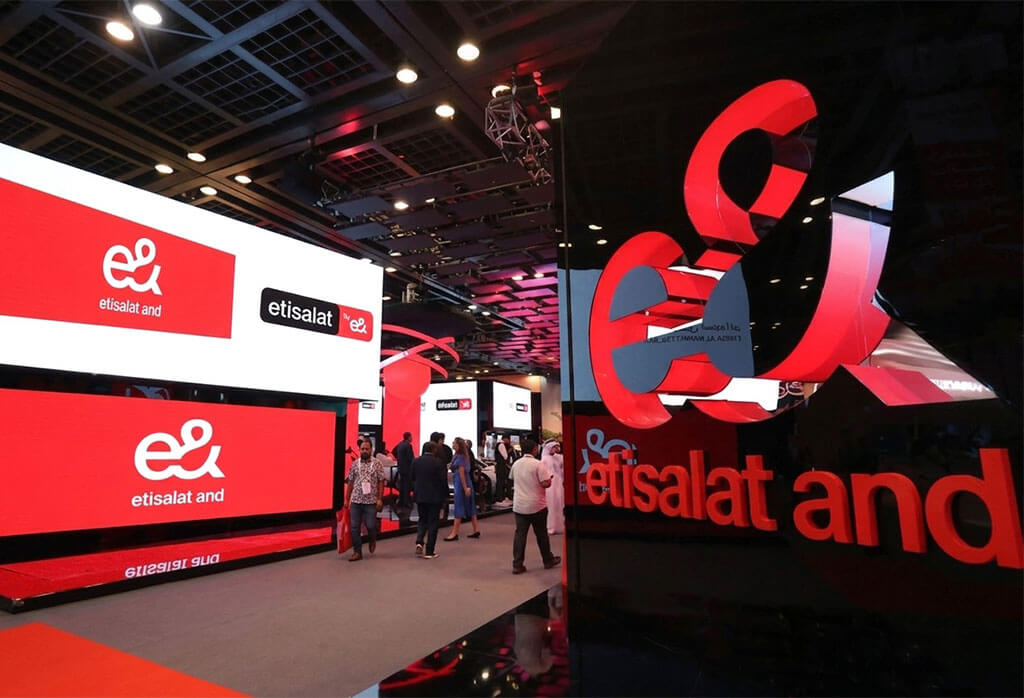
e& UAE has completed an eRedCap live network test on its commercial 5G network, the first such test announced by any telecom operator. eRedCap, short for enhanced Reduced Capability, is a stripped-down version of 5G built for devices that do not need full 5G speed or power. The company said the result gives businesses and public bodies a practical way to move Internet of Things (IoT) equipment off older LTE technology and onto a 5G-native IoT platform.

What the eRedCap live network test showed

The eRedCap live network test ran on e& UAE’s live commercial network, not a lab setup. Engineers reached download speeds of up to 10Mbps on eRedCap devices while using a 5MHz slice of NR-FDD spectrum. A Data Transmission Unit, a module that sends device data across the network, confirmed the service worked from end to end. That narrow 5MHz channel matters. It keeps device hardware simple and cheap, which suits equipment made in large volumes.

eRedCap 5G IoT sits between two extremes. Full 5G handles phones and heavy data. Low-power options like NB-IoT handle slow trickles of data from simple sensors. Many devices fall in the middle. Smart utility meters, industrial sensors, fleet trackers, payment terminals, building systems, and some wearables need steady coverage and long battery life, not top speed. The technology targets that middle band. It runs on a 5G Standalone network, meaning a 5G core rather than one leaning on 4G underneath.

RedCap battery life is already improved on standard 5G. RedCap pushes it further. Because peak data rates stay low and the channel is narrow, a device can run 5 to 10 years on one battery, against 1 to 3 years for RedCap. That figure sits close to the low-power radio technologies many meters use today. On cost, coverage, and battery life, eRedCap matches LTE Cat-1 and Cat-1bis. That makes it an LTE Cat-1 replacement built for 5G, which matters as operators plan to switch off LTE and reclaim that spectrum.

What it means for enterprises

The step builds on earlier work. In 2024, e& UAE became the first operator in the Middle East and Africa to bring Ericsson’s 5G Standalone RedCap into a commercial network. eRedCap extends that effort to an even lower cost and power tier.

Abdulrahman Al Humaidan, Senior Vice President, Access Network Development at e& UAE, said eRedCap brings everyday IoT applications into the 5G era at the right cost, power, and coverage. He said proving the capability on a live commercial network gives utilities, manufacturers, logistics providers, and smart-city operators a credible path to scale connected devices and prepare for the shift beyond LTE. e& UAE’s eRedCap live network test points beyond a single demo.

The practical gain is fewer parallel networks to run. Firms can move more IoT use cases onto 5G Standalone instead of keeping separate paths for high-performance 5G and LTE-based devices. That can simplify how devices are managed over their lifetime and tighten security across large fleets. It also supports the long-term reuse of LTE spectrum, since not every device would need full 5G hardware to make the move. The eRedCap live network test gives that transition an early proof point on a working network.

UAE Islamic finance strategy

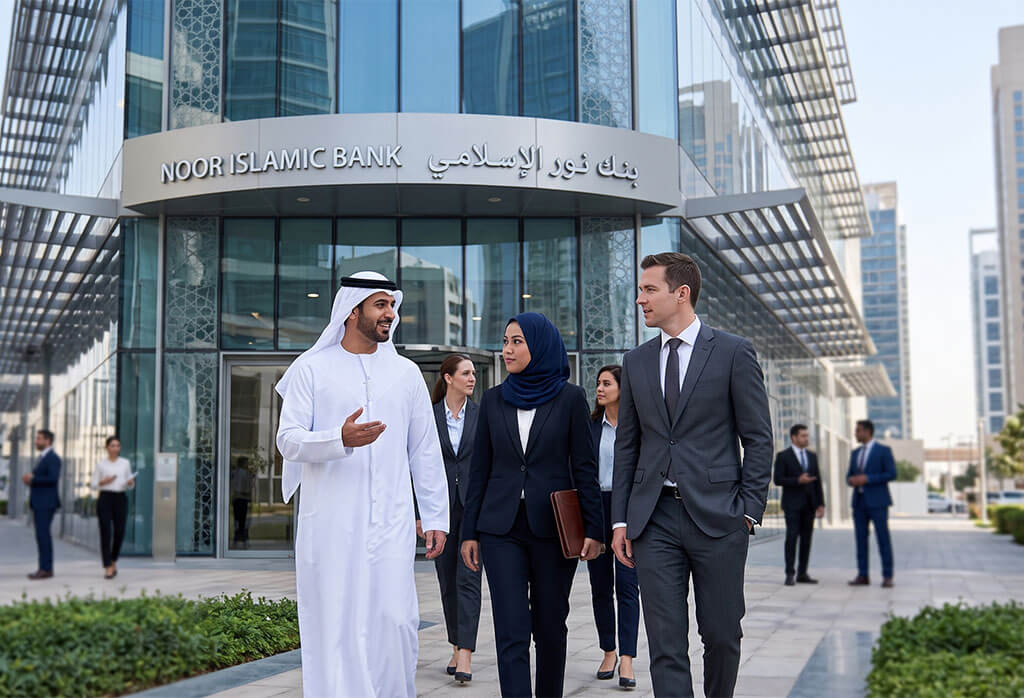
The UAE Islamic finance strategy sets a target of Dh2.56 trillion in local Islamic bank assets by 2031, part of a wider effort to root Shari’ah-compliant finance deeper in the national economy. Islamic banking assets in the country stood at Dh1.4 trillion as of June 2026, and 43 Islamic financial institutions now hold licences. The UAE ranked third worldwide in the Islamic Finance Development Indicator for 2025. Those figures give the plan a base to build from.

Targets under the plan sit inside the UAE Strategy for Islamic Finance and Halal Industry 2025 to 2031, which the Cabinet approved in May 2025. The Central Bank of the UAE is coordinating with federal and local bodies to tie Islamic finance and the halal industry more closely to the broader economic agenda. Two goals run through it. Scale the sector, and give it firmer legal ground.

Clearer rules under the UAE Islamic finance strategy

Much of the UAE Islamic finance strategy turns on legal and Shari’ah certainty. The Commercial Transactions Law, Federal Decree-Law No. 50 of 2022, carries a dedicated chapter on Islamic finance contracts and financing arrangements. It ties parts of the law to Shari’ah standards issued by the Higher Shari’ah Authority and sets out how to read those provisions and settle disputes. Once the Higher Shari’ah Authority approves them, the Central Bank can issue regulations of its own.

The framework works toward clearer rights and obligations, standard Shari’ah interpretations, and fewer legal disputes tied to Islamic financial transactions. For customers and banks alike, that means fewer grey areas.

Costs and supervision

The Central Bank Law, Federal Decree-Law No. 6 of 2025, governs how Islamic financial institutions operate and how supervisors oversee them. Under its terms, these institutions can handle transactions involving real estate and goods where a Shari’ah-compliant structure calls for it. The law also exempts Islamic financial transactions from registration requirements and similar fees or costs. Customer protection ranks among the framework’s stated goals, next to stronger trust in Islamic finance services and a legal setting that supports new products.

Established at the Central Bank in 2018, the Higher Shari’ah Authority works to bring Shari’ah practice into line across institutions. It has issued more than 280 standards and resolutions to govern Islamic financial transactions and narrow differences in interpretation, along with more than nine Shari’ah governance standards. Prudential standards covering financial integrity, risk management and stability complete the supervisory base.

Beyond banking

The UAE Islamic finance strategy reaches past the banks. Plans under it develop the market for sukuk, Islamic money markets and Islamic funds, while backing larger and more competitive institutions. Sukuk issuances form a central part of that ambition. The plan also draws Islamic finance in the UAE closer to the halal economy. It calls for more local production of high-value halal goods, a halal traceability system to support re-exports, and added backing for SMEs and technology startups in the sector.

Set against the region, the direction fits a pattern. Islamic finance in the UAE is shifting from a parallel channel toward a core part of how the economy raises and moves capital. The UAE Islamic finance strategy puts a number and a date on that move, and Dh2.56 trillion is the figure to watch.

Ronaldo and Georgina wedding

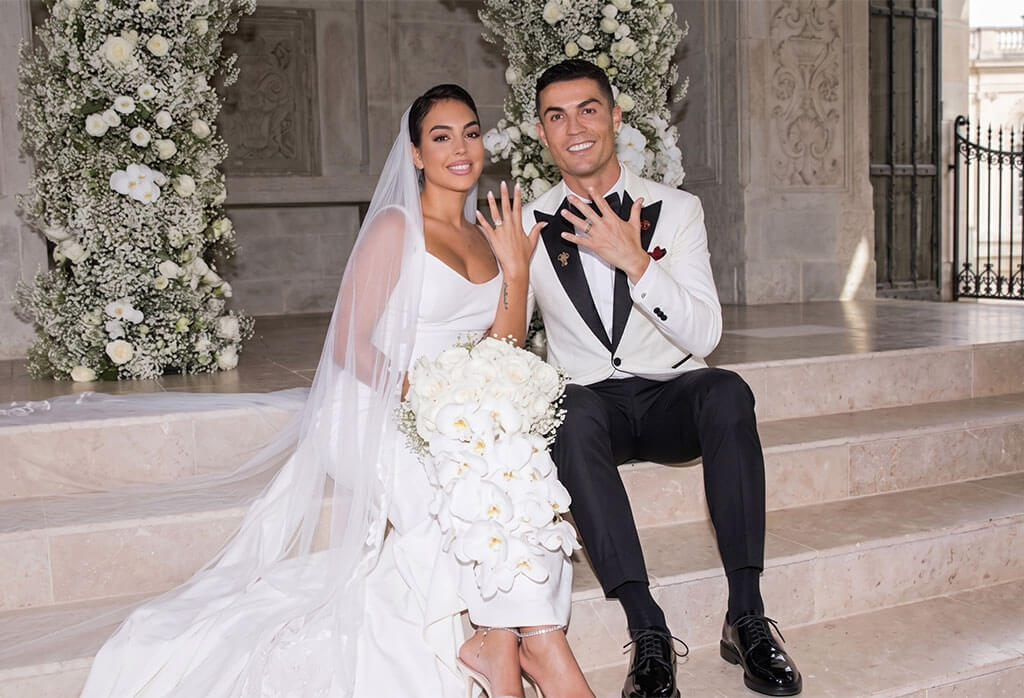
The Ronaldo and Georgina wedding finally happened, and it looked nothing like the spectacle fans expected. Cristiano Ronaldo and Georgina Rodriguez married in a private civil ceremony in Cascais, a coastal town west of Lisbon, on Tuesday, 11 August. Ronaldo’s management team confirmed the news. The couple kept it small. Only their five children were there.

They told the world in one image. Both posted a wedding photo on social media showing their rings. No press. No staged reveal. The picture did the talking, and it drew millions of reactions within hours.

A date with meaning

The timing was not random. The wedding fell exactly one year after Georgina announced their engagement. On 11 August 2025, she shared a photo of her engagement ring on Instagram and confirmed that Ronaldo had proposed. Twelve months later, they made it official. Fans had waited a long time for this. For years, people wondered whether the couple would marry at all.

Their story started in Madrid in 2016. Georgina was working at a Gucci store when the two met. The relationship went public the following year, and they have built a family since. Georgina became a public figure in her own right during those years, known to a wide audience beyond football. The Cristiano Ronaldo and Georgina Rodriguez wedding closes a chapter fans have followed for almost a decade.

The venue mix-up

The Ronaldo-Georgina civil ceremony stayed short and personal. Their two daughters, Alana Martina, born in 2017, and Bella Esmeralda, born in 2022, were present. Ronaldo is also father to Cristiano Jr. and twins Eva and Mateo. All five children stood with the couple.

The family has known loss too. In April 2022, while Georgina was expecting twins, the couple lost their baby son. Bella, his twin sister, survived. That history sits behind the quiet tone of the day.

The Ronaldo and Georgina wedding had fed speculation across Portugal for weeks. Days before the real event, hundreds of people gathered outside Funchal Cathedral in Madeira. Rumours had spread that the pair would marry there. The ceremony at the cathedral belonged to a different Portuguese couple. If you followed the chatter, you were probably watching Madeira. The couple were somewhere else.

Cascais gave them the privacy they wanted. The Ronaldo wedding in Cascais, Portugal, stayed secret until the photo appeared. The town sits about 20 miles from Lisbon and draws visitors for its beaches and quiet streets. It suited a couple who kept the guest list to their own children.

Where Ronaldo stands now

Ronaldo, 41, plays for Saudi Arabian club Al-Nassr. He joined after leaving Manchester United at the end of 2022. He has won the Ballon d’Or five times and has worn the shirts of Sporting CP, Manchester United, Real Madrid and Juventus.

Now Cristiano Ronaldo is married to Georgina, and the two begin their next stage as husband and wife. The Ronaldo and Georgina wedding stayed their own, quiet and close, in a life lived mostly in public.

Share this post

on your favourite social platforms

or copy the link