icnlive

WATCH LIVE. THINK BUSINESS.

© 2026 ICN.LIVE

ICN.live

A newly opened freight corridor now connects two of the busiest logistics hubs in the Gulf, cutting transit times and unlocking fresh capacity for exporters. Operators expect volumes to build quickly through the year, with early bookings already strong across automotive, retail and consumer goods.

Lorem ipsum dolor sit amet, consectetur adipiscing elit, sed do eiusmod tempor incididunt ut labore et dolore magna aliqua. Ut enim ad minim veniam, quis nostrud exercitation ullamco laboris nisi ut aliquip ex ea commodo consequat. Duis aute irure dolor in reprehenderit in voluptate velit esse cillum dolore eu fugiat nulla pariatur. Excepteur sint occaecat cupidatat non proident, sunt in culpa qui officia deserunt mollit anim id est laborum.

Sed ut perspiciatis unde omnis iste natus error sit voluptatem accusantium doloremque laudantium, totam rem aperiam, eaque ipsa quae ab illo inventore veritatis et quasi architecto beatae vitae dicta sunt explicabo. Nemo enim ipsam voluptatem quia voluptas sit aspernatur aut odit aut fugit, sed quia consequuntur magni dolores eos qui ratione voluptatem sequi nesciunt. Neque porro quisquam est, qui dolorem ipsum quia dolor sit amet, consectetur, adipisci velit, sed quia non numquam eius modi tempora incidunt ut labore et dolore magnam aliquam quaerat voluptatem.

TAGS

EXPLORE MORE ON:

Emaar Properties H1 2026 Results

A number sits at the center of the Emaar Properties H1 2026 results, and it is worth pausing on. The revenue backlog reached roughly AED164.9 billion, or about US$44.9 billion, as of 30 June 2026. That figure is money already committed by buyers but not yet booked as revenue. It tells you what the next few years might look like before they arrive.

Emaar reported revenue of AED23.9 billion, up 21 percent against the same period last year. EBITDA rose 24 percent to AED12.9 billion. Net profit before tax reached AED12.8 billion, a gain of 23 percent. These are the headline lines, and they build on a first quarter that already ran ahead of 2025.

The backlog matters because it de-risks what comes next. When a developer sells homes before completion, the cash lands over time as construction hits each stage. Emaar’s backlog grew 13 percent year-on-year, giving the group visibility that many builders lack.

Where the sales came from

Emaar property sales reached approximately AED26.6 billion in the first half, drawn from its master-planned communities and a set of timed launches. The company said pricing held firm across those developments, a sign buyers kept their confidence through the period.

Eleven residential launches went out across Emaar South, Dubai Hills Estate, The Heights Country Club, The Oasis, Rashid Yachts and Marina, and Expo Living. Alongside these, the group announced a new AED200 billion masterplan, adding to a pipeline that already spans a large share of Dubai’s developable land.

The development engine

Emaar Development, the build-to-sell arm, carried much of the weight. It reported revenue of AED13.3 billion, up 34 percent, with net profit before tax of AED7.8 billion, a rise of 41 percent. Counting other UAE operations, Emaar Development revenue from property development in the country reached AED17.7 billion, up 30 percent.

The backlog for UAE development projects stood at AED135.7 billion as of 30 June, up 6 percent on the first half of 2025. Mohamed Alabbar, founder of Emaar, tied the group’s steady footing to Dubai itself. He said the city never stands still, and that its stable, business-friendly environment continues to draw capital and talent even against a more uncertain global backdrop.

The recurring side of the ledger

Beyond selling homes, Emaar runs malls, hotels, and leased space that produce income year after year. That side held its ground. Recurring revenue reached AED5.1 billion, close to the prior year, with recurring EBITDA at AED4.0 billion.

The malls, retail, and commercial leasing portfolio brought in AED3.5 billion, up 9 percent, with occupancy near 98 percent. Hospitality, leisure, and entertainment generated AED1.6 billion, and UAE hotels ran at 60 percent average occupancy. International work, led by Egypt and India, added property sales of AED4.2 billion and revenue of AED1.1 billion, about 4.6 percent of the group total.

Emaar net profit before tax, then, rests on two engines running together. One sells the city as it grows. The other collects rent on what is already built. The Emaar Properties H1 2026 results suggest both kept pace through the half.


TikTok's deal with Disney

TikTok’s deal with Disney puts fan-made videos inside a paid streaming service for the first time. The two companies announced the global content-sharing agreement this week. It is the first of its kind between a major social app and a traditional media company. A pilot will run in the United States over the coming months, and other markets may follow later. If you use Disney+, the shift shows up in a place you already scroll.

Selected clips from participating TikTok creators will appear in the Disney+ Verts feed, the vertical video destination inside the app. Those same videos stay live on TikTok at the same time. Disney built Verts in March 2026 as a mobile-first feed of short clips, made to help you find longer shows and movies without leaving the app. Now fan work fills a large part of it. Reuters reported this is the first time TikTok videos will run on any platform other than TikTok itself. Netflix and Peacock have tested vertical feeds too, so the format is spreading fast.

What TikTok creators get

Fans who opt in gain access to official assets from hundreds of Disney films and series. That library covers Pixar, Marvel, Star Wars and FX. Creators can use approved scenes and characters, so a fan edit no longer sits in a legal gray zone. A fan edit is a short, stylized video that remixes clips from a show or film. TikTok creators keep posting on their home platform while reaching Disney+ subscribers at the same time.

TikTok’s deal with Disney and its ambassador program is the infrastructure of the deal. A joint effort called the Disney Creator Ambassador Program sits at the center of the agreement. Top performers can earn rewards, gain visibility, attend exclusive events and follow career development paths. The program is tiered, so the perks grow as a creator does more. Disney frames this as a way to build ties with the next wave of creative talent.

Why the timing matters

The Disney TikTok deal arrives with the company’s Q3 2026 earnings. Disney reported that its streaming operating income more than doubled to $712 million, up from $329 million a year earlier. Shares rose about 3.6 percent on the day of the news. Fan-created content is one reason the strategy holds up. According to internal TikTok data, people shared an average of 6.5 million film and TV posts each day on the platform last year. Nearly half of surveyed viewers said they went on to watch a movie or show after finding entertainment content on TikTok. TikTok’s deal with Disney gives that behavior a formal home.

Asad Ayaz, Disney’s Chief Marketing and Brand Officer, said the best storytellers are fans first. He described the collaboration as a new bridge between Disney’s stories and the creativity they inspire. Dawn Yang, TikTok’s Global Head of Entertainment, said creators sit at the heart of the platform. She said the partnership brings the community’s authentic expression to Disney+.

What to watch next

TikTok’s deal with Disney starts small, as a US test. Expansion depends on how the pilot performs and how many creators opt in. For now, the move signals that fandom is part of the streaming interface, not a side channel. TikTok’s deal with Disney could reshape how you find the next thing you watch.

How PIF is investing in EVs

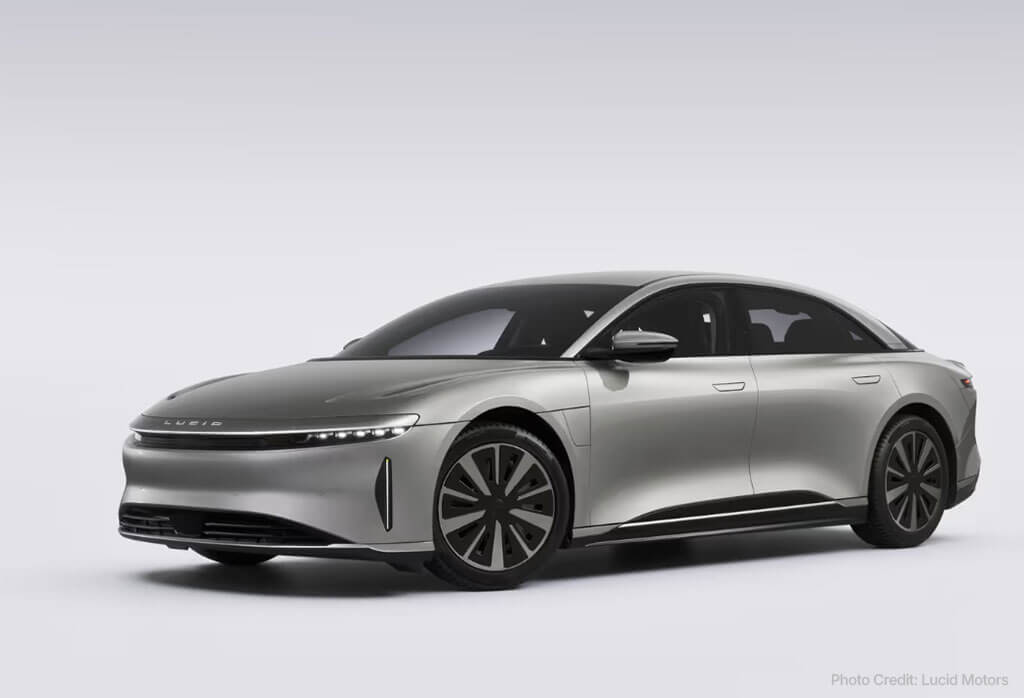
How PIF is investing in EVs comes into sharper focus this week, as Lucid Group laid out a $1.4bn plan to trim cash burn and steady its business. The electric vehicle maker posted second-quarter revenue of $405m, up 56 per cent from a year earlier. It built 4,774 cars and delivered 3,953, gains of 24 and 19 per cent. The results land as the company works to prove it can turn engineering strength into steady sales. Chief executive Silvio Napoli put it bluntly. “Lucid has leading technology, compelling products and deeply committed people, but potential is not performance,” he said. “We are going back to basics, with a clear focus on cash, customers, and culture,” Napoli added.

The plan leans on three areas: cash and cost, customer and quality, culture and team. Napoli also halved the number of people reporting straight to him.

Where the savings come from

Lucid mapped out $1.4bn in cash flow improvements for 2026. Roughly $600m to $800m comes from smaller inventories. Around $500m sits in capital spending, with close to $200m in operating costs. A US workforce cut announced in June should save about $158m a year. The company slowed production on purpose to match output with demand and hold on to cash. It ended the quarter with $3bn in liquidity, which it says covers needs well into 2027.

For newcomers, think of it as a household trimming subscriptions before payday. Less waste now buys time later.

How PIF is investing in EVs through Saudi factories

The Saudi Public Investment Fund owns most of Lucid and has poured more than $8 billion into it since 2018. That backing sits at the heart of PIF’s Lucid investment strategy, and it connects the carmaker to Vision 2030 electric vehicles goals. The fund treats Lucid as a way to diversify a crude-reliant economy and build skills at home. Saudi Arabia wants a homegrown auto industry, and Lucid Group Saudi Arabia operations are a big part of that push.

The clearest sign of how PIF is investing in EVs stands in King Abdullah Economic City. Lucid’s AMP-2 King Abdullah Economic City plant has moved from construction to industrialisation. Crews are installing and testing systems for stamping, body, paint and final assembly ahead of production trials. Lucid says the site will export cars beyond the kingdom as output grows. The Saudi government has agreed to buy up to 100,000 vehicles over a decade.

“The actions underway are intended to strengthen the company’s execution, improve the customer experience, and translate Lucid’s technology and product leadership into long-term value,” chairman Turqi Alnowaiser said.

What comes next

Lucid names four must-win priorities: the $1.4bn savings plan, AMP-2, a robotaxi programme, and a midsize model. The company frames these as the base for its next chapter. The robotaxi work with Uber and Nuro has entered active testing, with close to 100 vehicles running across the San Francisco Bay Area and Houston. Production-validation Gravity cars are already reaching Nuro.

So how PIF is investing in EVs looks less like a quick bet and more like patient money tied to a national plan. The near-term test is simple. Can Lucid turn its technology into steady output and healthier cash? The next few quarters will show whether the reset holds.

Share this post

on your favourite social platforms

or copy the link