
icnlive

ICN.live

Tariq Al-Mansouri

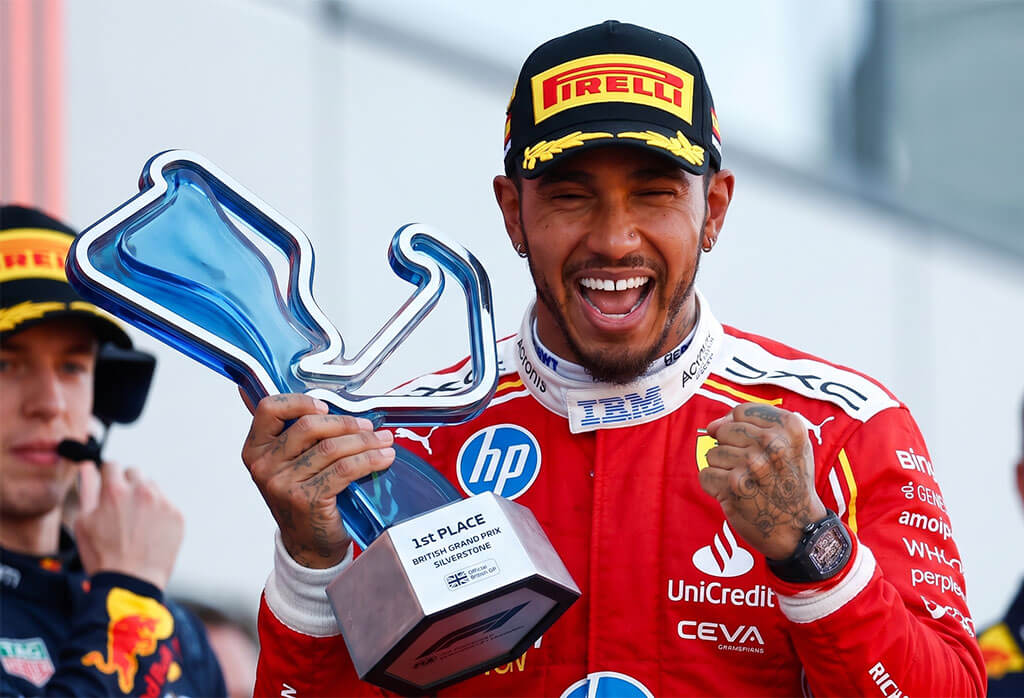
  • Lewis Hamilton took his first Grand Prix win for Ferrari at the Barcelona-Catalunya race.
  • Kimi Antonelli retired late while leading the points, cutting his championship advantage.
  • George Russell finished second and Lando Norris third, the first all-British podium since 1968.
  • Seven cars retired, including Charles Leclerc, in a race full of reliability faults.

Lewis Hamilton and Ferrari, with a Barcelona win, ended the Mercedes winning streak this season. Hamilton crossed the line ahead of George Russell and Lando Norris on Sunday afternoon. Kimi Antonelli failed to finish the race, which handed the leaders a points advantage. You watched a 41-year-old driver take his first top step since the year 2024. The result also brought the first all-British podium since back in the 1968 season. For fans following the title, this race changed the mood around the championship fight.

How the Lewis Hamilton Ferrari win came together

Lewis Hamilton and Ferrari, with a Barcelona win, came from a bold three-stop tyre plan. Ferrari started the Briton on soft tyres, but the opening lap brought no clear lead. Team strategists pitted him early on lap 12 to force the rivals into quick reactions. A Virtual Safety Car then gave Hamilton a free stop at the perfect moment. He delivered fast laps and slowly built a gap over the Silver Arrows pair. Russell settled for second while Norris took third place for the McLaren racing team. Vasseur said his driver would have won the race even without the safety car.

Barcelona win changes the title race

This victory lifted hopes inside the Maranello camp after seasons of frustration and near misses. Lewis Hamilton and Ferrari, with a Barcelona win, also gave the team a needed lift. The win counts as his 106th career victory and the team’s 249th in Formula 1. It arrived at the same track where Michael Schumacher first won in red colours. Hamilton became the oldest race winner since Jack Brabham achieved the feat in 1970. Team boss Fred Vasseur said the win was “a lot about resilience” for the driver. From my standpoint, this success shows real grit after a long and testing wait.

The Hamiltons’ first Ferrari victory rewards an eighteen-month effort full of doubt and patience. Kimi Antonelli held second place late before his car shut down on lap 62. An electrical failure ended his run moments after he passed Russell for the spot. The Kimi Antonelli retirement cut his championship lead over the two chasing drivers sharply. Hamilton now sits 41 points behind the young Italian leader in the drivers’ standings.

What the Barcelona-Catalunya Grand Prix 2026 means next

George Russell’s Barcelona pole came after he topped both practice runs by a whisker. Russell led early but lost track position once Ferrari pitted Hamilton ahead of plan. Lewis Hamilton and Ferrari, with a Barcelona win, now reshape the title fight ahead. Red Bull took fourth and sixth as Max Verstappen finished ahead of Isack Hadjar. Oscar Piastri claimed fifth to bring useful points home for the reigning constructors’ champions. Pierre Gasly took seventh for Alpine after a strong and steady drive all afternoon. Liam Lawson and Arvid Lindblad gained eighth and ninth after a rival drew a penalty.

The Barcelona-Catalunya Grand Prix 2026 also saw seven different cars retire with various faults. Charles Leclerc joined the casualties with a late failure near the front of the field. Aston Martin endured a poor day as both their drivers failed to reach the flag. You should watch Austria next, since momentum and confidence now sit firmly with Hamilton. Vasseur warned his team to stay calm and keep the same approach in Austria.
TAGS

EXPLORE MORE ON:

China’s EV Industry Dominance

China’s electric vehicle industry has evolved into the most powerful force shaping the global automotive landscape. What began as a state-supported industrial push has transformed into a hyper-competitive ecosystem where scale, speed, and cost efficiency redefine market leadership. Today, Chinese manufacturers are not only dominating domestic sales but actively compressing global EV pricing structures through aggressive innovation and vertical integration. From ultra-low-cost urban vehicles to advanced premium electric SUVs, the spectrum of offerings reflects a manufacturing system optimized for mass adoption. As Western automakers struggle to match cost and production velocity, China is setting the benchmark for the next decade of mobility. Now, let’s look at some data and insights about the most powerful Chinese EVs so far, Chinese EVs, and why they are so competitive, and what their best-selling cars are.

China is the dominant global EV market, accounting for ~60% of global EV sales and >45% domestic penetration.

  • Annual EV sales: ~10–12M units (run-rate)
  • Market structure: hyper-competitive, price-compressed, vertically integrated
  • Leader: BYD (volume + cost leadership)
  • Strategic reality: China is exporting deflation to global auto markets

Estimated Impact: Extreme—China will define global EV pricing and margins
Confidence Level: High (multi-source consistency)

MARKET SIZE & CAPITALIZATION

Market Scale

  • ~1.49M EVs sold monthly (May 2026 snapshot)
  • ~63% EV penetration rate (China leads globally)

Aggregate Market Cap (Top Chinese EV Players)

Company Market Cap (USD)
BYD ~$125B
Xiaomi ~$118B
XPeng ~$19B
Li Auto ~$16.9B
NIO ~$12B

Total (Top 5): ~$290B–$320B EV exposure.

NOW LET’S SEE THE TOP 5 CHINESE EV COMPANIES

BYD (Market Leader)

BYD SEAL 7 DESIGNBYD SEALION 7 PERFORMANCEBYD ATTO 8 PERFORMANCE

Overview

  • #1 EV company globally by volume
  • 3.48M EVs sold in China alone (2025)

Best-Selling Models

  • BYD Seagull: ~$10,000–$12,000
  • BYD Dolphin: ~$16,000–$20,000
  • BYD Atto 3: ~$20,000–$30,000

Pros

  • Full vertical integration (battery → chip → assembly)
  • Lowest cost structure globally
  • Massive scale advantage

Cons

  • Lower premium perception vs Western brands
  • Margin pressure due to price wars

Estimated Impact: Dominant global disruptor
Confidence: Very High


Geely (incl. Zeekr)

Geely SUVgeely-is-the-best-chinese-brand-for-2019Geely Sport

Overview

  • #2 in China EV market (~11% share)

Best-Selling Models

  • Zeekr 001: ~$40,000–$50,000
  • Geely Galaxy L7: ~$20,000–$30,000

Pros

  • Strong global portfolio (Volvo, Polestar)
  • Premium + mass-market diversification

Cons

  • Brand fragmentation
  • Less cost-efficient than BYD

Estimated Impact: Strong #2 with global leverage
Confidence: High


NIO (Premium Segment)

NIO PremiumNIO redNIO Car EV

Overview

  • Premium EV positioning (China’s Tesla competitor)

Best-Selling Models

  • NIO ES6: ~$45,000–$60,000
  • NIO ET5: ~$40,000–$55,000

Pros

  • Battery swapping infrastructure (unique moat)
  • Strong brand in premium segment

Cons

  • High burn rate
  • Profitability issues

Estimated Impact: Niche premium player
Confidence: Medium-High


XPeng (Tech-Focused)

Xpeng SUVXPeng SportXpeng interior

Overview

  • Known for autonomous driving tech

Best-Selling Models

  • XPeng G6: ~$25,000–$35,000
  • XPeng Mona M03: ~$16,500

Pros

  • Strong software + AI positioning
  • Competitive pricing

Cons

  • Weak brand vs BYD/NIO
  • Volatile demand

Estimated Impact: Tech upside, uncertain scale
Confidence: Medium


Li Auto (Hybrid-Dominant)

Li SUSLi interiorLI Sub

Overview

  • Focus on EREV (range-extended EVs)

Best-Selling Models

  • Li L6: ~$34,500
  • Li L7/L8/L9: ~$40,000–$60,000

Pros

  • Solves range anxiety (hybrid approach)
  • Strong family SUV positioning

Cons

  • Declining sales momentum
  • Less future-proof vs pure EVs

Estimated Impact: Transitional player
Confidence: Medium


BEST-SELLING EVs IN CHINA (MARKET LEVEL)

Top mass-market winners:

  • BYD Seagull — dominant low-cost urban EV
  • Wuling Mini EV — ultra-cheap segment leader
  • BYD Qin / Song series — high-volume mid-tier
  • Tesla Model Y (China) — premium benchmark

Insight: China’s volume is driven by $10K–$25K vehicles, unlike Western markets.

Chinese EVs are competitive because the entire system is engineered for it. Companies like BYD build their own batteries, chips, and powertrains in-house, stripping out the supplier margins that inflate Western prices. Scale does the rest. Multi-million unit production spreads fixed costs across enormous volume, driving per-car expense down.

The deeper advantage sits in the battery supply chain, which China dominates end to end, from lithium and refining to cell manufacturing. Layer on government policy that aligns subsidies, infrastructure, and regulation to accelerate adoption, plus lower labor costs and faster iteration cycles, and the gap widens further.

Then there is the price war. Domestic hyper-competition compresses margins to the bone, forcing efficiency Western automakers rarely face.

The result is structural, not temporary. China optimizes for volume dominance over margin maximization, producing a durable cost advantage of roughly 20 to 40 percent versus the West. Confidence in that read is very high.

UAE MARKET (200-WORD STRATEGIC OVERVIEW)

The UAE EV market is in an early but accelerating adoption phase, driven by government sustainability targets and a rising fuel diversification strategy. Chinese EV brands are gaining traction due to a combination of aggressive pricing, fast availability, and feature-rich vehicles compared to European imports. Brands like BYD, MG (SAIC), and Geely are expanding distribution networks through local partnerships, targeting mid-income consumers priced out of Tesla and premium German EVs.

Infrastructure remains a constraint but is improving, with Abu Dhabi and Dubai investing in charging networks aligned with UAE Net Zero 2050 goals. Chinese EVs benefit from shorter delivery cycles and lower landed costs, making them highly competitive in fleet, ride-hailing, and government procurement segments.

Consumer perception is shifting from skepticism to value-driven acceptance, especially as build quality improves. The UAE acts as a strategic gateway market for Chinese OEMs to expand into the Middle East and Africa, where price sensitivity is higher.

Key dynamic: Chinese brands are not competing on prestige but on price-performance ratio, which aligns strongly with UAE demand outside luxury segments.

Estimated Impact: High growth, but not yet dominant
Confidence: Medium-High

REVENUE LEVERS (STRATEGIC TAKEAWAYS)

Lever Action Impact Confidence
Distribution Arbitrage Import Chinese EVs into underpenetrated markets (MENA, Africa) Very High High
Fleet Sales Target ride-hailing/logistics fleets with low-cost EVs High High
Charging Infrastructure Invest alongside EV distribution High Medium
Brand Positioning Focus on value, not premium High High
After-Sales Ecosystem Build servicing + parts network High Medium

China’s EV sector is structurally advantaged and globally expansionary. The dominant strategy is not innovation alone, but cost destruction at scale, which Western OEMs are currently unable to match. It will remain an open game on how the rest of the global markets will compete with the Chinese manufacturers, but so far the race has a clear leader ahead. The race is long and can always have unexpected models that will rearrange the list. One thing is obvious, and that is the fact that the end user will always win because, as customers, we have the final vote with our wallets.

OPEC+ oil output increase

OPEC+ oil output increase decisions advanced on Sunday as the group lifted August production targets again. Seven core producers agreed to add 188,000 barrels each day to global markets from August. This latest move matches similar increases the group approved earlier for both June and July. Falling oil prices today shaped the decision as the Strait of Hormuz slowly reopened. Tanker traffic through the busy waterway picked up, easing many months of tight supply. Brent crude oil prices traded near 72 dollars on Friday, down from summer peaks.

Those peaks reached above 120 dollars during the war between the United States and Iran. Prices now sit close to levels seen before the February conflict began this year. Lower Chinese imports and stronger non-Gulf exports also pushed the wider market back down. A record strategic stock release from the International Energy Agency added even more barrels. OPEC+ production quotas have climbed by nearly 800,000 barrels per day since early April. Much of this planned rise stayed on paper while the shipping route stayed closed. Saudi Arabia’s oil production, along with Kuwaiti and Iraqi supply, lost vital export access. Output across the whole group fell sharply during the height of the regional fighting. Group supply dropped to 33.13 million barrels per day in May, official data shows.

Prices Cool As Tankers Return To The Strait

Recovery began in June after Washington helped the UAE and others ship more oil. Flows still sit below pre-war levels, though the daily trend keeps moving steadily higher. Traders now watch how many tankers cross the Strait of Hormuz oil export route. “The group of seven kept unwinding their production cuts as widely expected,” said UBS analyst Giovanni Staunovo. His firm expects the near-term focus to stay on demand and Chinese import recovery. A memorandum between Washington and Tehran also calmed market fears about future supply flows.

Iraq now presses the whole group for a higher quota within these monthly talks. The United Arab Emirates left the alliance in late April to free its capacity. Emirates leaders wanted their output to match capacity without limits set by the group. OPEC+ oil output increase plans now run through a much messier political picture today. Seven producers- Saudi Arabia, Russia, Iraq, Kuwait, Algeria, Kazakhstan, and Oman- still lead policy. These seven nations roll back a 1.65 million barrel cut first agreed in 2023. Reuters math shows about 379,000 barrels of the original cut still remain fully unwound. One more August-sized hike in September would then clear the remaining 2023 supply cut. Group members meet again on August 2 to weigh their next big production move.

OPEC+ Oil Output Increase Faces A Bigger Market Test

Market watchers now link this OPEC+ oil output increase to confidence in the wider economy. From my standpoint, this steady drip of new supply keeps most traders cautious for now. Oil prices today still swing on every fresh headline about the fragile peace process. Brent crude oil prices give you a fast read on how markets judge risk. Watch the tanker counts, the quota talks, and the pace of Saudi Arabia’s oil production. This OPEC+ oil output increase signals confidence, yet real barrels decide the final story.

Alex Eala beats Swiatek

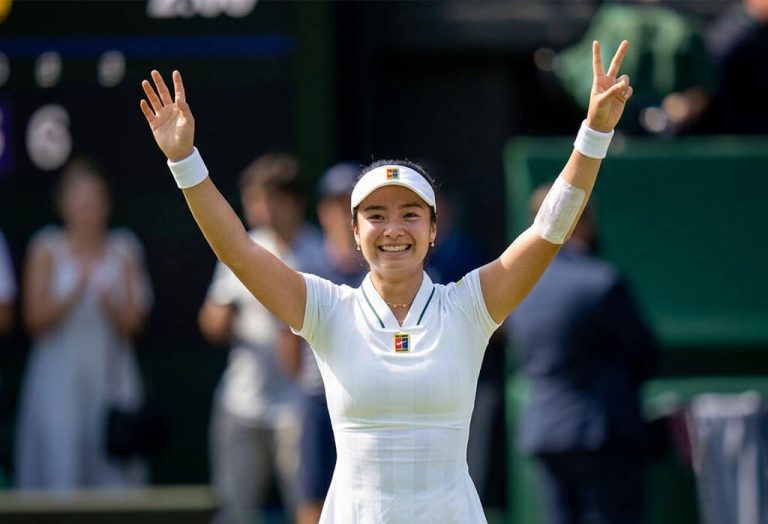
Alex Eala beats Swiatek at Wimbledon, and the Filipina now stands in the last sixteen. The 21-year-old won 7-6(11-9), 6-2 against the defending champion on the famous Centre Court. Iga Swiatek arrived as a six-time Grand Slam champion and the clear pre-match favorite. You might expect nerves from a young player facing a champion of this size. Eala instead played with calm hands and sharp aggression from the opening game onward. She saved two set points inside a tense first-set tiebreak lasting well past normal. The first set alone ran 84 minutes before Eala closed it on Centre Court.

Momentum then swung her way as she raced to a 4-0 second-set lead quickly. Aggressive returns and clean passing shots kept the defending champion under steady constant pressure. Eala finished with 24 winners against only 21 unforced errors across the whole match. Swiatek struck 32 winners but leaked 44 unforced errors under the constant Filipina pressure. The numbers show why this win reads as a full statement and not luck. For fans across the Philippines, the result carried real weight beyond one tennis scoreline. No player from her country had ever reached the second week of a major.

How Alex Eala beats Swiatek at Wimbledon with fearless tennis

This big win did not come from nowhere for the rising Filipina tennis star. She first beat Iga Swiatek at the 2025 Miami Open during her breakout season. Grass gave the rivalry a fresh and far bigger stage in front of millions. Alex Eala beat Swiatek at Wimbledon partly on the growing strength of her serve. She struck four aces and protected her second delivery far better than her rival. Eala won 55 percent of her second-serve points to the champion’s weaker 32 percent. You can see her steady mindset in the way she handled the break points. She saved eight of the eleven break points the champion earned across the match. Eala also converted five of her seven break chances against a fading former winner. Numbers like these show why the upset felt fully earned and not pure chance. The young winner fought back tears during a raw and heartfelt Centre Court interview. “It’s an honour to be able to pave the way for young girls,” Eala said.

The road to the last eight

Alex Eala beats Swiatek at Wimbledon, and now a tougher second-week test clearly awaits. The Eala vs Paolini match opens Centre Court on Monday at 13:30 London time. Jasmine Paolini reached the 2024 final and later won Olympic doubles gold in Paris. You should not dismiss her, yet Eala already owns a clear win over her. Eala beat Paolini in Dubai earlier this year on a hard court, 6-1, 7-6. Grass now tests both players in a new setting at Wimbledon 2026 this week. As I see it, her serve and steady nerve travel well onto quicker surfaces. The young star now holds a strong 7-4 record against the world’s top-ten players. On grass this season, Alexandra Eala has won all three of her top meetings. Alex Eala beats Swiatek at Wimbledon, and her home nation keeps dreaming much bigger. Tennis great Billie Jean King even spent time with her after the historic win. You can watch her next step live from Centre Court this coming Monday afternoon.

Player Profile: The Rise of the Filipina Sensation

Alexandra “Alex” Eala’s triumph at Wimbledon is the crowning achievement of a career defined by rapid progression and historic milestones.

  • Country: Philippines 🇵🇭 (Making history as the first-ever Filipino player to win a senior Grand Slam singles title).

  • Age: 21 years old (Born May 23, 2005).

  • WTA Ranking: Having broken into the Top 30 earlier this year, her live ranking has soared to a career-high No. 28.

  • Grand Slam Tally: This victory marks her first senior Grand Slam singles title. It adds to her phenomenal junior record, where she claimed the 2020 Australian Open Girls’ Doubles, the 2021 French Open Girls’ Doubles, and the historic 2022 US Open Girls’ Singles title.

  • 2026 Season Highlights: Prior to arriving at SW19, Eala put together an exceptionally strong year, reaching the semifinals at the ASB Classic in Auckland, the quarterfinals in Abu Dhabi and Dubai, and the Round of 16 at the WTA 1000 events in Indian Wells and Miami.

The Legacy of Wimbledon: History & Icons

Founded in 1877, the Championships at Wimbledon is the oldest and most widely respected tennis tournament in the world. Played on the meticulously manicured lawns of the All England Lawn Tennis and Croquet Club, it remains the ultimate test of grass-court tennis.

While Eala’s match was a thrilling sprint, Wimbledon history is paved with marathons. The longest singles final ever played occurred in 2019, when Novak Djokovic defeated Roger Federer in an epic block-buster lasting 4 hours and 57 minutes, ultimately decided by a historic 12–12 final-set tiebreak.

Roll of Champions (Last 5 Years)

Year Gentlemen’s Singles Champion Ladies’ Singles Champion
2025 Jannik Sinner Iga Świątek
2024 Carlos Alcaraz Barbora Krejčíková
2023 Carlos Alcaraz Markéta Vondroušová
2022 Novak Djokovic Elena Rybakina
2021 Novak Djokovic Ashleigh Barty

Inside SW19: Fascinating Wimbledon Traditions

Wimbledon’s unparalleled prestige is maintained through strict customs that separate it from any other sporting event on earth:

  • The All-White Dress Code: The tournament enforces an uncompromising dress code. Players must be outfitted almost entirely in clean white from the moment they step onto the court precinct—even off-white or cream tones are strictly forbidden.

  • Strawberries and Cream: The quintessential tournament treat. Spectators consume upwards of 38 tons of English strawberries paired with over 10,000 liters of fresh cream over the course of the fortnight.

  • 8mm Grass Precision: The courts are sown entirely with perennial ryegrass. To maintain the perfect balance of speed, ball bounce, and ground durability, the grass is trimmed to an exact height of 8mm every single day of the tournament.

  • The Purist Aesthetic: In a world dominated by modern sports sponsorships, Wimbledon strictly prohibits commercial advertising banners or digital backdrops around the court boundaries, ensuring the traditional green-and-purple timeless aesthetic remains pristine.

Share this post

on your favourite social platforms

or copy the link