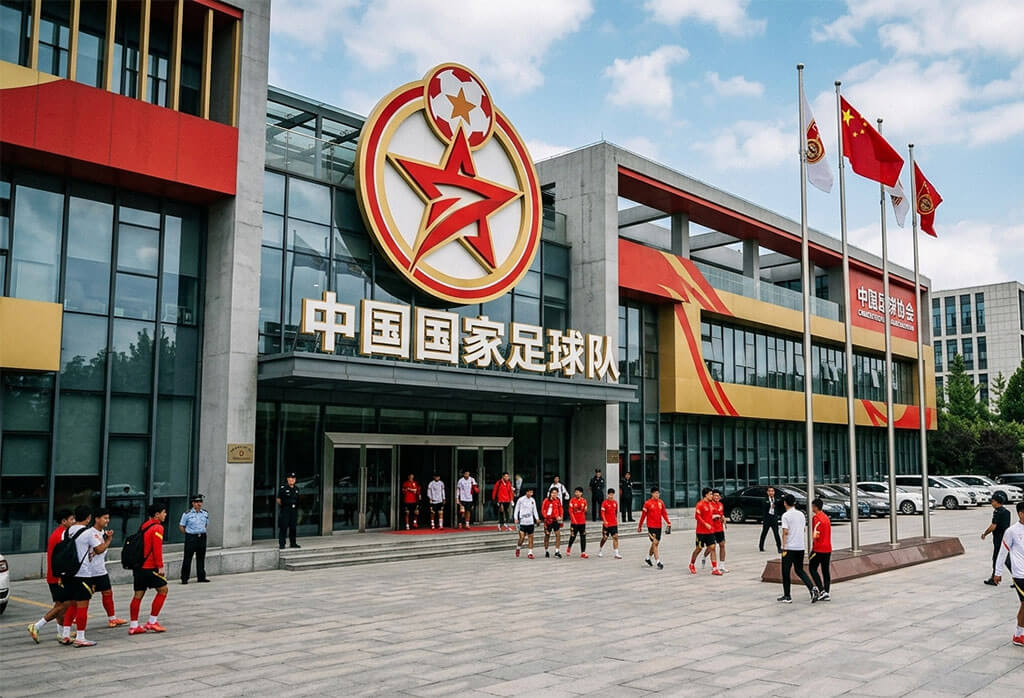



China’s World Cup absence stretches into another summer while North America hosts the biggest football show. You watched the 2026 FIFA World Cup expand from 32 to 48 teams this year. Even with a wider door, the Chinese men’s national team stayed home once again. China reached its first and only World Cup back in 2002 in South Korea and Japan. Since then, the national team has entered every qualifying cycle without earning another ticket. Fans across the country now face the same painful question about football and national pride.
China lost 1-0 to Indonesia in Jakarta during June of last year, ending its run. The defeat left the squad bottom of its Asian group with no route forward. Branko Ivankovic, the team’s head coach, accepted full blame for the failed campaign right afterward. His team finished with six points from nine matches and a weak goal difference. Japan and Iran booked their places early on while China fell far behind them. Nine Asian teams reached the expanded finals this time, including newcomers Jordan and Uzbekistan. China’s huge population passes 1.4 billion people, yet the men’s side keeps falling short.
A dream born right at the top
Xi Jinping placed football near the center of a national ambition more than a decade ago. Before he became president, he named three public wishes for the sport he loved. He wanted the country to qualify, then host, and one day win the tournament. The Xi Jinping football plan took shape in April 2016 with bold national targets. Officials promised 70,000 new pitches and 30 million schoolchildren playing football across China by 2020. A decade later, the real results look quite modest against those large early promises. The men’s national team sat 82nd in the world back in 2016 across global rankings. Today it sits near 91st place out of 211 national teams tracked by FIFA.
China’s World Cup absence and the money years
China’s World Cup absence looks stranger once you study the spending during the boom years. The Chinese Super League drew global stars with enormous wages between 2015 and 2017. Clubs spent about 1.12 billion dollars on transfers across those three heavy-spending seasons. Big names like Oscar, Hulk, Paulinho, and Carlos Tevez traded Europe for Chinese football. Property developers funded most of this spending boom for reasons far beyond sport itself. By 2018, every single top-flight club owner also held interests in the property market. Dr. Tobias Ross studied this scene closely for a new book on the subject.
He interviewed 200 people inside Chinese football to understand the real motives at work. “It was never about football,” Ross told CNN Sports about the owners’ true aims. Owners chased closer ties with local party officials to reach land and bank loans. Officials, in turn, gained real prestige and a stronger case for career promotion at home. The whole model rarely made money, and Ross plainly called it a loss-making business. Guangzhou Evergrande won eight league titles yet still lost huge sums almost every year. Bloomberg reported yearly losses between 155 and 310 million dollars for the club in 2021.
Fans filled stadiums for a while, drawn by famous names and loud matchday shows. None of the current national team players compete for top clubs outside China today. European leagues still shape the best talent, and Chinese players lack such exposure abroad.
When the money and the interest faded
The wild spending spree never rested on a base built for the long term. Cash often dried up soon once developers secured their land or finished their key projects. Local officials chased short wins during limited terms rather than slow, patient team building. A slowing economy and falling birth rate then pushed football down the priority list. Ross notes football no longer sits inside the country’s important central five-year plan today. Local governments also lack spare cash right after the pandemic drained their tight budgets. Priorities shifted toward technology and trade as rivalry with the United States grew sharper.
Corruption also drained public trust across Chinese football here over many difficult recent years. Authorities handed lifetime bans to 73 players and officials over match-fixing earlier this year. Former national coach Li Tie now serves a long prison sentence for taking bribes. Weak oversight let public money slip into the wrong private hands again and again. Investigations reached coaches, referees, and top league bosses across several painful recent seasons here. Trust takes many years to rebuild once fans watch scandal after scandal unfold openly. Several naturalized players left the squad, and this move widened the talent gap further.
No culture to fill the pitches
China’s World Cup absence also traces back to weak roots at the community level. Beijing built many pitches, yet the country lacks a deep football tradition to fill them. Rowan Simons moved to China during the 1980s and later studied the language there. He soon became a well-known commentator and searched for a local club to join. “There were no football clubs then,” Simons told CNN Sports about his early years. Everything ran through the government, and this reality surprised him deeply at the time. In Britain, amateur clubs run on volunteers who mow pitches and drive team buses. China’s grassroots football stays fairly thin without those social clubs and shared community habits. Simons argues real progress needs the whole sport built from the base upward first. China lacks this base, so new pitches sit empty without steady weekend teams around. Volunteers keep local British football alive through shared duties passed down across many families.
The numbers behind the shortfall
China now counts around 980,000 registered players and roughly 40,000 amateur teams in total. England holds a population of around 4.2 percent of the Chinese total, yet fields more. This smaller nation still lists more registered players and three times as many teams. An official report last December ranked football outside the country’s six most popular sports. Badminton and cycling both draw more everyday players than the national football game does. China opened thousands of new school pitches, yet trained coaches stayed in short supply. Good coaching turns raw players into real teams, and China trails on this front.
Simons points to a sharp drop-off he simply calls the cliff in youth football. Children often play in primary school before heavy pressure pulls them off the pitch. The gaokao college exam looms large, and many parents drop sport for study time. State media even calls it the hardest test in the world for good reason. His own club sees heavy dropout among players once they turn 12 years old.
A system built for medals
Simon Chadwick teaches sport at Emlyon Business School and sees an even deeper problem. “Football rewards individual flair,” Chadwick told CNN Sports about stars like Messi and Ronaldo. He argues Chinese society rarely rewards the loose personal creativity strong football clearly demands. Family life, school, and work often follow rather tight and highly shared daily routines. Such a rigid structure leaves little room for the messy street play great talents need. Talented children need free play, and rigid schedules squeeze out such daily freedom fast. China finished a strong second in the medal table at the 2024 Paris Olympics. Chadwick says the Chinese sports system aims mostly toward clear, individual Olympic medal events. Winning a sprint race differs sharply from building a squad for a month-long tournament.
China’s World Cup absence and the road ahead
China’s World Cup absence hangs over every plan for the next generation of players. The China 2002 World Cup run still stands as the peak for the men’s team. Serbian coach Bora Milutinovic guided the side through Asian qualifying without a loss then. The squad lost all three group games in 2002 and scored no goals at all. Sun Jihai played in the 2002 tournament and later joined Manchester City in England. He also became the first East Asian player to score in the Premier League. Today he hopes to coach young players and repair Chinese football from the inside. “Youth coaching offers the fastest path to fix it,” Sun said in one interview.
Foreign coaches came and went, yet none of them fixed the shallow talent pool. From my reading of the evidence, no quick fix will change these deep habits soon. Money alone never built the culture your favorite football nations slowly grew over generations. You can now see why patience matters more than any single wave of hard spending. China owns wealth, ambition, and huge crowds, yet the grassroots base still needs work. Patience, better schools, and real local clubs offer the only honest path back up. Chinese brands still appear across the 2026 FIFA World Cup through large sponsorship deals. So the country shapes the tournament off the pitch while missing the pitch itself. The next qualifying cycle starts fairly soon, and young players carry the country’s hopes. Real change now waits in classrooms, community clubs, and a football culture built over time.