

icnlive

ICN.live

Tariq Al-Mansouri

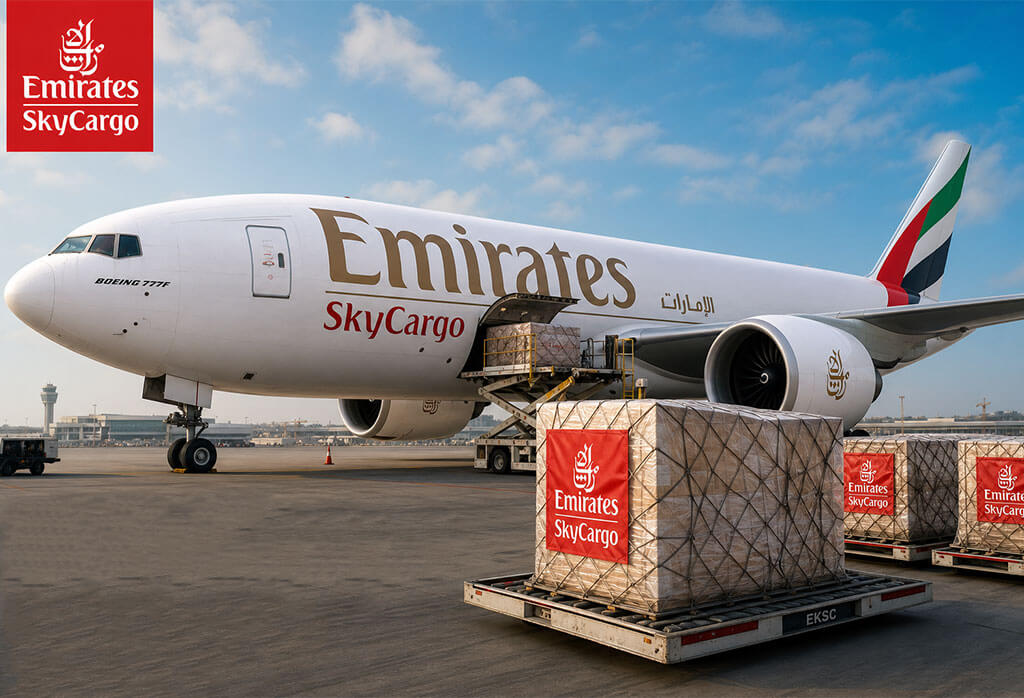
  • Emirates SkyCargo launches its first Central Asia freighter route to Almaty on 16 June 2026.
  • Weekly Boeing 777F flights from Dubai carry over 100 tonnes of cargo each Tuesday.
  • The new route supports the D33 Dubai Economic Agenda and strengthens regional trade links.
  • Emirates SkyCargo plans to operate at least 21 dedicated freighters by the end of 2026.

Emirates SkyCargo has announced a new freighter route connecting Dubai and Almaty, starting 16 June 2026. The freight division of Emirates picks its Boeing 777F freighter for these weekly flights. Almaty becomes the carrier’s first destination in Central Asia, a growing commercial and logistics region. You gain a clear view of how this corridor links the region to global markets. The weekly service runs every Tuesday and offers over 100 tonnes of cargo capacity. Shippers move electronics, perishables, machinery, and consumer goods between Almaty and the wider world.

Badr Abbas, the division’s Senior Vice President, framed the launch as a strategic step. According to Abbas, the flights deliver “rapid wide-body cargo connectivity to a strategic marketplace.” He added that the move supports the carrier’s long-term growth plan across promising new markets.

A new Central Asia trade corridor takes shape

Almaty ranks as Kazakhstan’s largest city and a key economic gateway for the region. The Emirates SkyCargo Almaty link gives local exporters direct access to global supply chains. Local businesses in the region now reach distant customers faster through the Dubai connection point.

You can expect the Dubai logistics hub to gain stronger ties with Central Asia. Emirates SkyCargo’s new freighter route adds Almaty to a global network spanning six continents. You can see how one weekly flight strengthens trade flows across a vast region. Trade across this new Central Asia trade corridor has grown steadily over recent years.

Inside the Boeing 777F freighter behind the route

The Boeing 777F freighter carries up to 102 tonnes across long distances with strong efficiency. This aircraft suits sensitive cargo like pharmaceuticals, electronics, and perishables on demanding global routes. From my standpoint, the choice of aircraft signals a serious long-term intent behind this expansion.

Emirates freighter fleet expansion now moves the carrier toward 21 dedicated aircraft this year. The carrier has taken delivery of four new freighters since March of 2026 alone. Six more freighters will join the growing fleet across the rest of this year. The airline keeps one of the youngest cargo fleets across the entire industry today.

A growing market for goods across the region

Central Asia now shows rising demand for electronics, machinery, and fresh perishable food products. The weekly flight helps local exporters reach buyers in Europe, Asia, and the Americas. Dubai sits within eight hours of flying time from most major global markets today. This position helps cargo from Almaty connect quickly with the rest of the world. You can ship goods through one trusted hub instead of many smaller transfer points. Faster links bring lower costs and shorter delivery times for many regional firms today.

What the Emirates SkyCargo’s new freighter route means for trade

The Emirates SkyCargo new freighter route supports Dubai’s D33 Economic Agenda for foreign trade. This broad agenda works to double the size of Dubai’s economy within one decade. Each new freighter strengthens Dubai’s role as a leading global cargo and trade gateway. You benefit when faster trade routes lower shipping times for goods in your market. The Emirates SkyCargo new freighter route shows how regional trade now reaches much further.

Some analysts still warn about the risk if global cargo demand slows down suddenly. Supporters point to steady e-commerce growth and rising demand for reliable air freight worldwide. The first flight on 16 June will test demand on this fresh trade lane. Almaty now gives the carrier a strong base for future growth across Central Asia.

TAGS

EXPLORE MORE ON:

QatarEnergy shared new oil discovery

QatarEnergy shared new oil discovery results from the Merlin-1X well offshore Namibia this week. The well sits inside Petroleum Exploration License 39, a block in the Orange Basin. Engineers found good reservoir quality, light oil, and limited associated gas at the site. These early signs point to the strongest subsurface results recorded under this license yet. For energy markets, this result reshapes how you read Namibia’s oil exploration prospects today.

What is the Merlin-1X well found in Namibia

Merlin-1X became the tenth well drilled under this license since the program began here. The well started drilling in April 2026 and reached the deeper Coniacian rock play. Light oil with limited gas signals a cleaner, more valuable target for future development. Shell operates the block and shares ownership with QatarEnergy and the state firm NAMCOR. QatarEnergy holds a 45 percent stake, while Shell holds 45 percent and NAMCOR takes 10. Eugene Okpere, a senior Shell executive, welcomed the results, adding fresh insight into the basin. He said the team follows a disciplined, data-led approach to test real commercial value. Okpere even called the outcome “encouraging” for the broader Orange Basin Namibia exploration effort.

QatarEnergy shared a new oil discovery as Orange Basin hopes grow

When QatarEnergy shared new oil discovery details, attention turned to the basin’s rising potential. This new find follows Graff-1, Venus-1X, and Jonker-1X, three earlier wins in the region. Analysts now compare the Orange Basin to the early oil success seen in Guyana waters. Reported resources across the basin now run into billions of barrels, analysts estimate today. Deep water defines this offshore Namibia oil zone, with depths reaching nearly 3,000 meters. Such depth raises drilling costs, yet strong reservoir quality can offset some of those risks. Supermajors keep moving into the region as fresh results lift overall confidence each year. As I see it, this run of finds turns Namibia into a serious oil contender.

What this result means for you

QatarEnergy shared new oil discovery news while building a wide position across Namibia’s offshore acreage. The company holds stakes in PEL 0039, PEL 0056, PEL 0091, and PEL 0090. Those four licenses together cover close to 34,000 square kilometers of seabed off Namibia. PEL 0039 carries its largest stake and has produced the strongest results so far. Shell plans more drilling in PEL 0039 later in 2026 under a broader appraisal campaign. For you as a reader, these steps signal real momentum behind Namibia’s oil exploration. Commercial output still depends on appraisal wells, drilling costs, and final investment decisions ahead. QatarEnergy has not yet released a public resource estimate for the Merlin-1X exploration well. Investors will watch the next wells before judging the full scale of this find.

The QatarEnergy oil discovery at Merlin-1X strengthens the case for more deep offshore work. Namibia stands to gain jobs, revenue, and a stronger role in global energy supply. Your view of African oil supply should now include this fast-growing Orange Basin story. When QatarEnergy shared new oil discovery results, it added weight to a growing trend. The coming months will test whether these barrels reach real and profitable production levels. For now, the well counts as a clear win for QatarEnergy and Shell together. Watching the next drilling phase will tell you how large this prize truly becomes.

Mexico City's challenges as FIFA World Cup host

Mexico City’s challenges as FIFA World Cup host reach far beyond the football pitch. The city opens the FIFA World Cup 2026 tournament on June 11 against South Africa. Fans will fill the historic Estadio Azteca for this record third opening match here. Yet the ground beneath this giant metropolis keeps dropping at an alarming yearly rate. New NASA satellite data show the Mexico City sinking problem is now moving faster than before.

The metropolis rose on the ruins of the Aztec capital, named Tenochtitlan centuries ago. Spanish conquerors drained the five connected lakes and replaced the water with soft clay. Today, crews pump huge volumes of groundwater to supply more than 22 million people. This constant pumping compacts the clay layers and causes severe and permanent land subsidence. Central districts lose 10 to 25 centimeters yearly, while eastern zones lose nearly 50.

You can see this effect best along the famous Paseo de la Reforma boulevard. There stands El Ángel de la Independencia, a stone monument erected in 1910. Engineers drove hundreds of steel and concrete piles 30 to 40 meters into bedrock. The angel still holds firm while the streets and shops around it sink lower. At the 1910 opening, visitors climbed only nine steps to reach the monument base. Today, you must climb 24 steps because the ground sank around the fixed structure.

Why the Estadio Azteca survives the slow collapse

The mighty Estadio Azteca raises a big question for every worried fan and engineer. How does this giant arena in Santa Úrsula avoid the grim fate around it? Builders placed the stadium on a former lava bed from the Xitle volcano eruption. This rocky base stays firm while the marshy area east of the city keeps sinking. For this reason, the venue stays immune to the collapse troubling the wider metropolis. Mexico City’s challenges as FIFA World Cup host include unstable ground across the central districts.

Mexico City’s challenges as the FIFA World Cup host for over a century

Geologists studying the valley predict a slow disaster rather than a sudden, dramatic fall. Enrique Cabral-Cano, a geophysicist tracking the valley, stresses the record-breaking speed of the sinking. He said, “We have one of the fastest velocities of land subsidence in the whole world.” The clay layers below the streets need about 150 more years to compact fully. Eastern and southern districts will drop another 20 to 30 meters during this slow period. Mexico City sinking at this pace threatens pipes, roads, and the metro for decades.

What can slow the steady sinking

City planners now push a bold shift toward the so-called sponge city design model. Crews install large rooftop systems to capture rainwater during the wet season each year. These systems reduce groundwater pumping and let the tired aquifer slowly recover its strength. Founder Enrique Lomnitz of the rainwater group, Isla Urbana, warns that the reservoirs sit empty. Modern buildings use floating box foundations, yet they only slow the Mexico City sinking.

Mexico City’s challenges as FIFA World Cup host now sit beside a deeper survival question. Visitors arriving for the Mexico City World Cup opening match will sense a proud city. Below the cheering stands, though, the ground keeps shifting beneath homes and old roads. As I see it, the city must treat water reform as its real long-term victory. Mexico City’s challenges as FIFA World Cup host will outlast the final whistle this summer.

Emirates SkyCargo's new freighter

Share this post

on your favourite social platforms

or copy the link