

icnlive

ICN.live

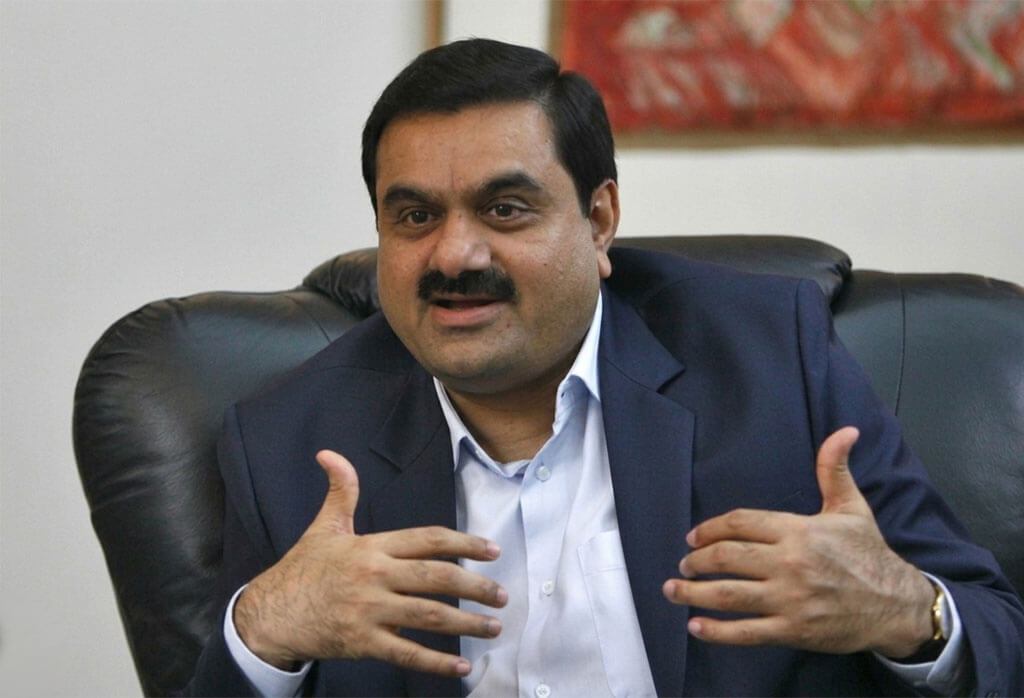
  • Gautam Adani’s group is weighing an entry into flying, two people with direct knowledge told Reuters. No decision has been made.
  • The Indian government has privately pushed business houses to consider starting a carrier after Air India’s safety troubles and IndiGo’s December collapse.
  • A 2006 rule caps Delhi and Mumbai airport operators at a 10 per cent stake in any scheduled airline, and Adani has asked for it to be diluted.
  • Buying into an existing airline is also on the table, a second source said.

Adani Group eyes a new airline in India, and the plan could change what you pay for a domestic ticket. Two people with direct knowledge of the matter told Reuters the ports-to-cement conglomerate is studying an entry into flying. Nothing is settled. The group runs eight airports, carries an $11 billion expansion plan, and had said earlier it wanted no part of running a carrier.

That reversal did not come from nowhere. India’s government has quietly encouraged business groups, Adani included, to look at starting an airline. Two failures drove the nudge. Air India has faced heavy safety scrutiny since last year’s Dreamliner crash that killed 260 people. IndiGo cancelled thousands of flights in December after running short of pilots, stranding passengers and forcing officials to act on a sharp rise in fares.

What an Adani airline launch would mean for fares

For passengers, the question is simple. A third large carrier gives you somewhere to go when one airline breaks down. Right now the exit is narrow. IndiGo holds 65.4 per cent of domestic traffic and Air India about 25 per cent. Regulator data for June 2026 put IndiGo’s share at a record 66.3 per cent, while the Air India group slipped to 23.9 per cent. That IndiGo market share number is the whole argument for a new entrant. An Indian aviation duopoly leaves ticket prices exposed every time one operator stumbles.

Why Adani Group eyes a new airline now

One source framed the thinking as duty rather than profit, saying the group wants to weigh it “in national interest” despite the difficulty of the business. The second source said buying a stake in an existing airline is also under review, with all options open.

A rule stands in the way. Adani has approached the government seeking to dilute a clause that restricts certain airport operators from holding stakes in scheduled airlines, the Economic Times reported. The clause dates to the 2006 privatisation of the Delhi and Mumbai airports and bars their operators from holding more than 10 per cent of a scheduled carrier. The civil aviation ministry has sought the Solicitor General’s opinion on whether the clause can be amended retrospectively, and any change would need cabinet approval. Adani holds 74 per cent of Mumbai International Airport.

Adani Airports built the ground floor first

Jeet Adani, a director at Adani Airports, told Reuters in December the group had no appetite for flying. Margins were thin, and the group lacked the “mindset” for it. Its strength, he said, lay in building “hard assets on the ground” and running them efficiently. Spending on that side has not slowed. Adani Airports said last month it would put more than $2 billion into airport-linked commercial districts across six locations, covering hotels, retail centres and office space.

The risk sitting inside the Indian aviation market

Money has been hard to keep in Indian skies. High taxes, fierce competition and supply-chain problems pushed Kingfisher, Jet Airways and Go First into bankruptcy over the last 15 years. SpiceJet is still working through financial strain. Adani is Asia’s second-richest person, with a net worth of around $89 billion, so funding is not the obstacle. History says funding alone has never been enough.

Rival carriers have a separate worry. Independent aviation analyst Brendan Sobie said airports owning airlines exist in markets such as Kyrgyzstan, Thailand and Vietnam, but a government allowing the operator of a major airport like Mumbai to hold an airline stake would be surprising. Other Indian airlines, he said, would “rightfully be concerned about a possible conflict of interest.”

Adani and the civil aviation ministry did not immediately respond to queries from Reuters. For now, any move depends on a rule change that has not happened.

TAGS

EXPLORE MORE ON:

Adani Group eyes a new airline
Google Fined €890 Million

Brussels fined Google €890 million on Thursday, the first penalty the company has taken under the Digital Markets Act and the sixth EU competition decision against it in under twenty years.

The European Commission split the amount across two separate findings. A €460 million fine covers self-preferencing in Google Search, where the Commission found the company gave its own shopping, hotel, transport and sports results better placement than competing services. The remaining €430 million covers Google Play, where developers were blocked from telling users about cheaper ways to pay outside the store.

Teresa Ribera, the Commission’s competition chief, framed the decision around ranking rather than size. “The best products should succeed because they’re better,” she said, arguing that European consumers have a right to hear from developers about better offers even when the store owner takes no cut.

Google has 60 days to change both practices. It has already said it may go to court.

Google says the fix breaks the product

Kent Walker, Google’s president of global affairs, said compliance will force the company to remove live search features in Europe, including instant hotel pricing and direct availability for flights and restaurants. He called the outcome “product degradation driven by a small group of self-serving complainants” rather than fair competition, and argued that steering users off Google Play carries security risks.

That argument has not landed. Ribera and EU tech chief Henna Virkkunen both used their briefings to restate that the rules apply regardless of where a company is headquartered.

The bigger story is what happens next

The more consequential detail sits below the fine. The Commission said Google has already proposed and begun testing changes to how it displays its own free services in search, and separately to how it presents shopping ads and sports content. Regulators described this as substantial progress and pointed to a constructive dialogue with the company.

In practice, that means daily non-compliance penalties, which can run to 5% of average daily worldwide turnover, are probably off the table. Apple and Meta, fined in April 2025 in the first DMA actions, did not get the same language.

The Commission also said Google may need to apply Thursday’s reasoning to AI Overviews and AI Mode, its generative summaries in search. Talks on that are continuing. For anyone tracking where this regime is heading, that line matters more than the €890 million. It is the first signal that the DMA’s ranking obligations will follow Google into AI-generated answers, where the distinction between a result and a recommendation gets much harder to police.

Politics in the background

The timing is awkward. The Trump administration has repeatedly cast the EU digital rulebook as a trade barrier aimed at American firms and has raised the prospect of retaliatory tariffs. US lawmakers have added their own pressure. Ribera’s answer, when asked, was that the Commission’s obligation is to enforce its own law.

Total EU antitrust penalties against Google now stand at roughly €10.38 billion, including the €2.95 billion adtech fine issued in September 2025 and the €4.34 billion Android decision from 2018.

Alphabet shares traded about 4% lower before the US open, though most of that reflected investor reaction to the AI spending plans laid out in Wednesday’s earnings, not the fine itself.

For businesses in the Gulf, the direct effect is limited. DMA obligations bite on what European users see, so app developers and travel firms operating here will not see Play Store terms change outside the EU. The precedent is what travels.

FTA VAT refund

The VAT refund for UAE nationals building new homes reached Dhs353.5 million in the first half of 2026, the Federal Tax Authority confirmed. About 4,000 applications won approval in that period. Each covered VAT paid during construction of a private residence.

The prior year set a lower base. In H1 2025, the authority approved 3,100 applications worth Dhs284.8 million. Approved applications climbed 27.5 per cent. The value refunded rose 24.1 per cent.

Numbers behind the increase

The gap between the two years is measurable. About 900 more applications cleared approval. Refunds grew by roughly Dhs68.7 million year on year. The average refund per approved application sat close to Dhs88,000 in H1 2026.

Abdulaziz Mohammed Al Mulla, Director-General of the FTA, tied the result to changes in how the scheme runs. He said the authority has added measures to simplify and speed up procedures through its digital refund platform. He also pointed to awareness work across several channels, aimed at showing citizens how the service works and what has improved.

How the VAT refund for UAE nationals now works

The Federal Tax Authority has built a proactive service into the process. A refund application can be generated automatically through the Maskan app once the municipality issues the building completion certificate. Where it applies, the building permit can trigger the same step.

After the application is created, the citizen gets an SMS and an email. Both confirm that a refund application for the residence exists. The messages carry a link or a QR code that sends the citizen to the Maskan app to finish the required steps.

Less manual work for applicants

Invoice details now flow in on their own. Once registered suppliers issue invoices, the details populate the citizen’s account inside the Maskan app. The number of banking-information fields has been cut through integration with the Central Bank of the UAE.

Invoice data is also compiled into one Excel file that holds applicants’ details once typed in by hand. Artificial intelligence checks the accuracy of refund amounts and suppliers’ Tax Registration Numbers. All invoices are consolidated into a single file.

Wider eligibility under the Year of Family

The 2026 designation as the Year of Family shaped one change to the scheme. The FTA expanded the range of eligible expenses that qualify for VAT refunds tied to new residence construction. The authority said the step supports a modern housing system and helps citizens fund a stable family home.

For homebuilders, the practical route runs through two channels. Applicants can file through the EmaraTax portal or the Maskan app, depending on preference. The VAT refund for UAE nationals covers construction VAT, not furniture, appliances, or other non-structural items, based on FTA guidance published earlier in 2026. Claims generally must be lodged within 12 months of completion.

Share this post

on your favourite social platforms

or copy the link