

icnlive

WATCH LIVE. THINK BUSINESS.

© 2026 ICN.LIVE

ICN.live

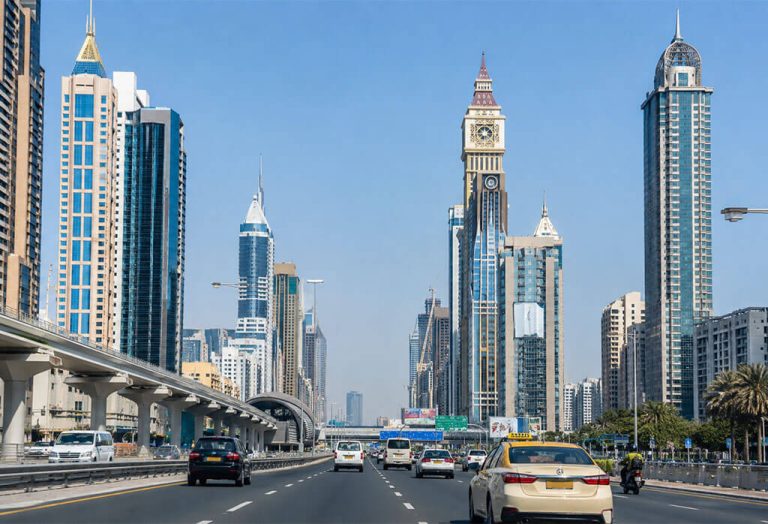
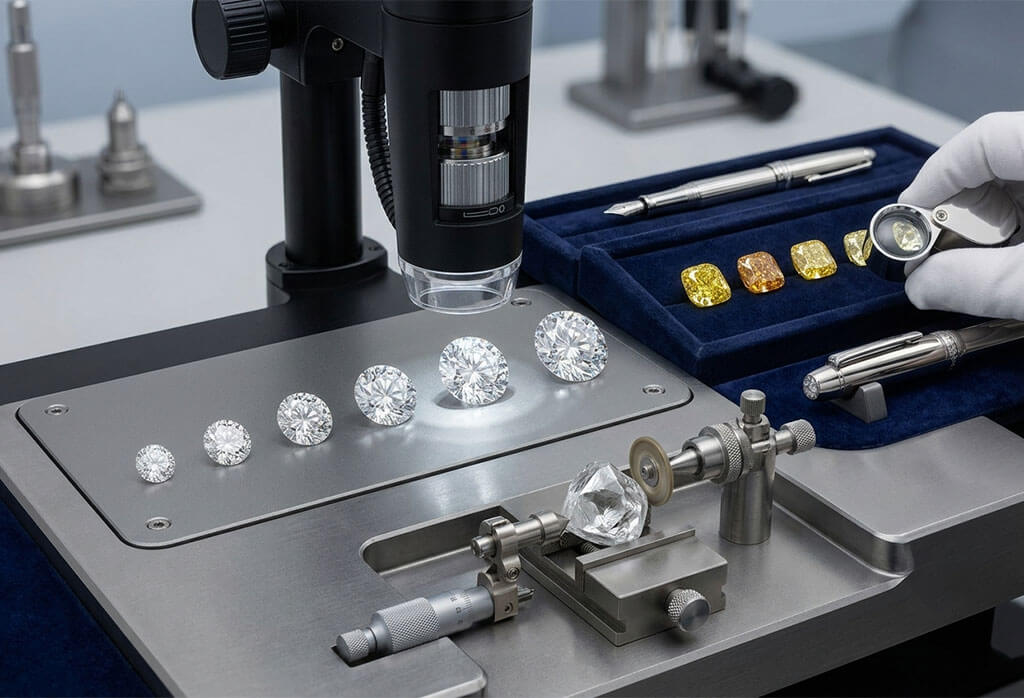
  • Dubai posted 41.7 billion dollars in diamond trade during 2025, a fresh record for the emirate.
  • Traders moved 359.5 million carats, the first time record value and record volume landed in one year.
  • Natural diamonds drove the result, generating 39.9 billion dollars and 95.8 percent of the total value.
  • Coloured gemstones reached 1.1 billion dollars, showing wider strength across Dubai’s precious stones market.

Dubai’s total diamond trade reached a new all-time high during 2025 across every major category. Official figures from Dubai Customs place the yearly diamond total at 41.7 billion dollars overall. This result beats the earlier record of 40.9 billion dollars set back in 2011. Traders also moved 359.5 million carats, a volume rising 42.5 percent from last year. DMCC has announced today that, for the first time, the Emirate of Dubai hit record value and record volume in one year. Dubai diamond trade 2025 figures show steady demand across natural stones and coloured gemstones. Total trade value climbed 16.2 percent from the 35.8 billion dollars recorded during 2024.

The market added 5.8 billion dollars in fresh trade across a single twelve-month span. Dubai now works as a key gateway linking mines, cutting hubs, and buyer markets worldwide. Producers ship rough stones here, while cutters and traders prepare them for retail shelves. Retail demand in India, the United States, and Europe keeps large orders flowing steadily. Strong regulation and secure vaults give global buyers real confidence in each recorded deal. Access to finance also helps smaller firms trade larger stone volumes across each season. Grading services and clear customs steps move each shipment through the emirate at speed.

Why Dubai’s total diamond trade reached a new all-time high

Records confirm Dubai’s total diamond trade reached a new all-time high through natural stone strength. Natural diamond trade value hit 39.9 billion dollars, near 95.8 percent of the total. Dubai traded 205.2 million carats of natural rough stones, the second highest volume on record. Rough volume rose by nearly 34 percent, showing strong appetite among global cutting and polishing centres. Polished natural trade reached 18.7 billion dollars, a rise of nearly 25 percent from 2024. Over five years, Dubai’s total diamond trade reached a new all-time high with 139 percent value growth.

Average value per carat rose about eight to nine times across the same five-year window. Ten-year data shows Dubai’s wider diamond trade rose 63 percent by value overall. Volume across the same decade climbed 44 percent, a sign of deeper market roots. Investors read these gains as proof of steady policy and reliable long-term trade rules. Ahmed Bin Sulayem, DMCC’s Chairman and Chief Executive Officer, tied the results to long planning.

He said: “Dubai’s latest diamond trade figures demonstrate the success of a long-term strategy to build the world’s most connected, transparent, and efficient precious stones ecosystem. Since the Covid-19 pandemic in 2020, we have seen trade through Dubai double in physical volume and grow by almost 140% in value. For natural polished diamonds alone, value has grown by 246%. We are the partner of choice for producers, manufacturers, traders, and retailers across the global industry. Through world-class infrastructure, regulatory certainty, access to finance, and one of the world’s most sophisticated ecosystems for precious stones, we will continue to provide the platform the industry needs to grow.”

Leadership and demand behind the record

DMCC’s diamond trade leaders point to strong demand from producers, manufacturers, and global retailers. Buyers worldwide noticed Dubai’s total diamond trade reached a new all-time high last year. From my view, this run signals real staying power for the emirate’s precious stones sector.

Reports on coloured gemstones Dubai handled last year show a record 1.1 billion dollars. This category grew 48 percent, with imports up 68.8 percent and re-exports up 33.5 percent. Synthetic and industrial diamonds now make up nearly 39 percent of total carat volume. DMCC runs the Dubai Diamond Exchange, the region’s largest tender site for precious stones. The Emirate also hosts many tenders and auctions for both rough and polished stones. Each tender draws bidders from Africa, Asia, and Europe onto a single trading floor. You can watch these figures to judge where global diamond demand heads through 2026. The exchange keeps Dubai near the front of the entire world’s diamond trading network.

TAGS

EXPLORE MORE ON:

Ministry upgrades the online service

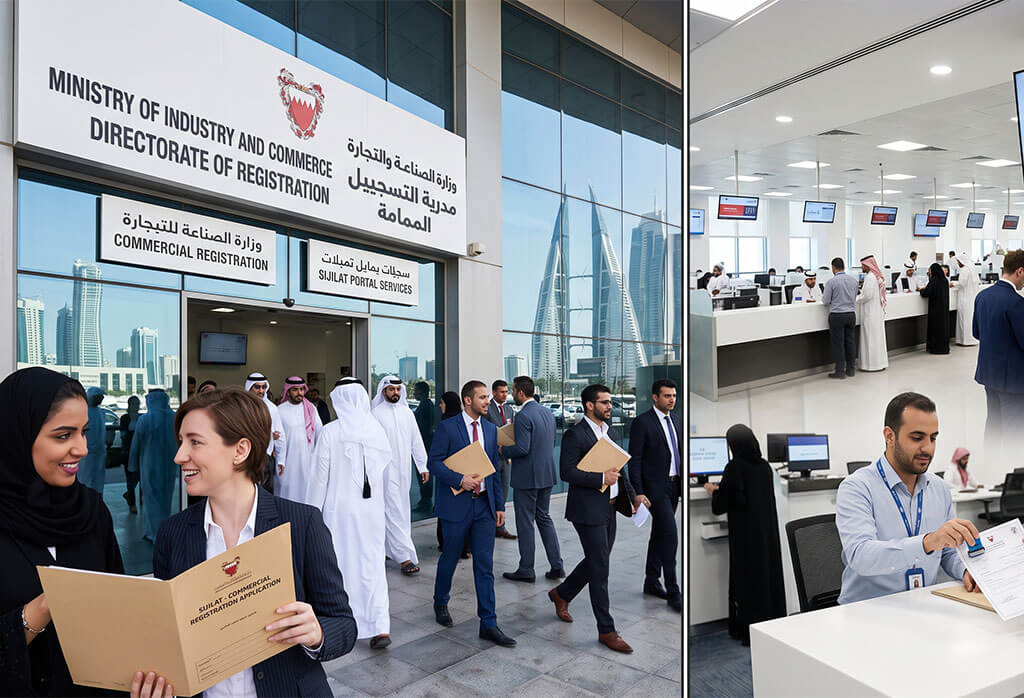
The paper form that once stood between a business owner and a protected brand name has been retired for anyone preparing to register a trademark in Bahrain. Officials at the Bahrain Ministry of Industry and Commerce have rebuilt the service for registering trademarks and service marks in a single class, trimming the documents, approvals, and time an application used to require. An online trademark application now replaces the paper file.

The change looks small. Its reach runs wider than the form it replaced.

Inside the upgraded service

Applications face a technical and legal review first, then move into the later stages of registration. The ministry has simplified the steps, reworked the interface and turned paper forms into electronic ones. It has also standardised service information published across different channels, so an applicant reads the same instructions wherever they look.

Eman Ahmed Al Doseri, Undersecretary of the Ministry of Industry and Commerce, said the upgrade belongs to a continuing review of ministry services and delivery standards, meant to improve efficiency and give customers clearer sight of what each procedure involves. She added that the ministry stays committed to shaping services around what beneficiaries need, while raising service quality and the effectiveness of its work system.

Sound, scent and a single class

Al Doseri explained that applicants can now register a trademark in Bahrain electronically, covering a national trademark or service mark in one class under the Nice International Classification of Goods and Services. Visible marks qualify, including words and images. So do marks nobody can see. Sound marks and scent marks sit inside the service, subject to approved requirements.

The Nice Classification groups goods and services into numbered classes used across most of the world. One class is the boundary here. Bahrain does not accept applications covering several classes at once, so a company selling both software and clothing files twice.

What it takes to register a trademark in Bahrain

Trademark registration in Bahrain runs through the Trademark Office at the Industrial Property Directorate, where nationals and residents of the kingdom file directly, while foreign applicants living outside Bahrain work through IP registration agents or law firms authorised by the directorate. Protection lasts ten years from the application date, and holders can renew it for further terms. 

Legislative Decree No. 11 of 2006 sets the rules. Businesses that register a trademark in Bahrain gain rights they can enforce against unauthorised use, counterfeiting, or imitation. Bahrain also belongs to the Madrid Protocol, so a company can reach the market by extending an international registration rather than filing locally.

After examination, the ministry publishes an accepted mark, and third parties get 60 days to oppose it. Errors made at filing tend to surface at that stage. Where nothing is contested, guides to the process put the wait from filing to registration at roughly six months. 

A wider push on government services

The trademark work sits inside a broader re-engineering of public services. More than 1,300 government services have been documented, translated and published. Around 800 more are being developed and re-engineered across government sectors.

Proposals and feedback shape the queue. They arrive through Tawasul, the national system for suggestions and complaints, through investor feedback, and through secret shopper reports assessing government services. Guidance manuals and service-level agreements have followed.

For a small company weighing whether to register a trademark in Bahrain, the calculation now turns less on paperwork and more on the choice of class and the strength of the mark itself.

Nvidia's $105 billion OpenAI

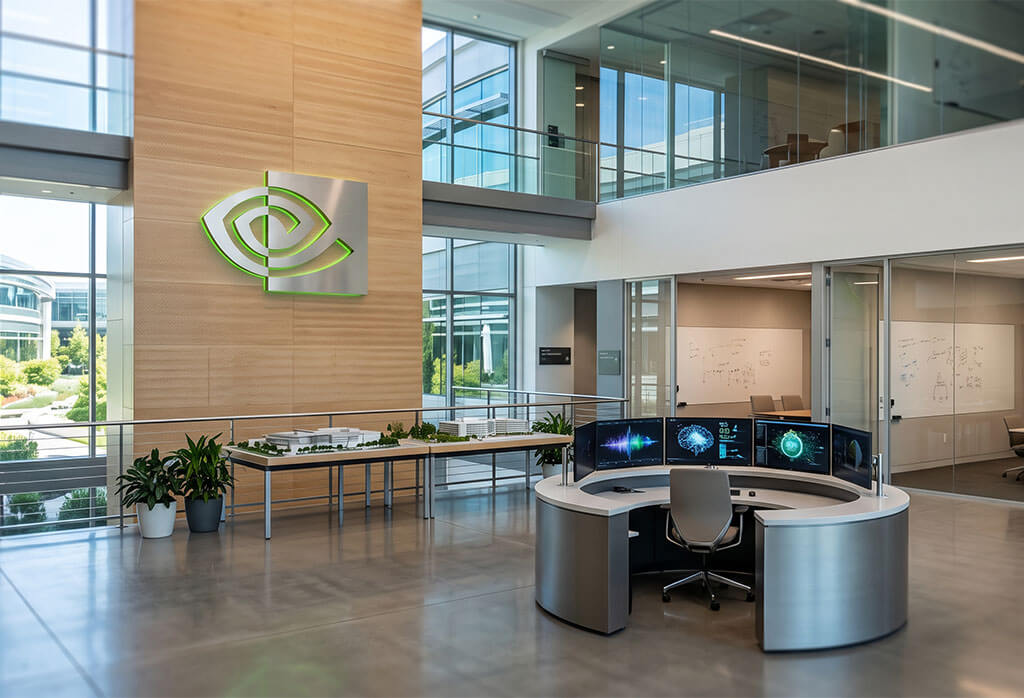
The $105 billion OpenAI deal disclosed in an Nvidia securities filing on Monday commits the chipmaker to standing behind a data center it will neither own nor operate. Credit from Nvidia covers an initial 4.25 gigawatts of computing capacity, with an option on a further 3.75 gigawatts. SB Energy will build and manage the site at the PORTS-Pike Technology Campus in Pike County, Ohio, under a 20-year lease to OpenAI. Capacity is expected to come online in phases from 2028.

Who carries the risk in the $105 billion OpenAI deal?

Three parties sit at different points on the risk ladder. Nvidia supplies the compute and, according to the company, backs defined portions of lease and power payments. OpenAI holds the tenancy and said it will begin paying only as capacity becomes available for lease. SB Energy, backed by SoftBank, owns the asset. Jensen Huang, chief executive of Nvidia, said the company is securing long-lived infrastructure so OpenAI can deploy AI factories that can be upgraded with each new chip generation. Yahoo Finance

Ownership ties run through the structure. OpenAI holds a stake in SB Energy, and Sam Altman invested in the developer at an early stage. Nvidia will now place $1.5 billion into the company as well, deepening a relationship it also underwrites.

A financing model under scrutiny

The Nvidia OpenAI Ohio data center follows a run of financing moves that have drawn questions about AI circular financing, where a supplier funds the customers who then buy its products. Huang rejected that reading, writing that OpenAI will pay the lease. Danni Hewson, head of financial analysis at AJ Bell, said the real test is whether the investments deliver decent returns to everyone putting up cash, a judgement that can only be made later.

Earlier reporting by CNBC put the talks at a backstop of up to $250 billion for a 10-gigawatt project at the same location. The Wall Street Journal reported last week that the figure would be trimmed to less than $120 billion. What was filed came in below both numbers. Days before, Nvidia joined six large asset managers on platforms designed to deploy $500 billion of third-party capital into data center projects.

Power, jobs and the local ledger

The $105 billion OpenAI deal also reshapes the energy question in southern Ohio. SB Energy and SoftBank will build power sources supporting 10 gigawatts and invest at least $4.2 billion in regional grid infrastructure. OpenAI has committed $40 million toward local priorities. The company said the SB Energy data center will support 35,000 construction jobs through 2032 and 2,500 long-term positions. Daily Sabah

Scale is the reason the accounting matters. One gigawatt is roughly enough electricity for 750,000 American homes. Nvidia estimates each generation of systems deployed at the campus could involve about 1.5 million GPUs and $150 billion to $200 billion in revenue. Communities near new load face the practical question of who absorbs the cost of getting power to the site. Stocktwits

What the arrangement secures

For Nvidia, the lease guarantee buys certainty in a market where land and interconnection have become the scarce inputs. For OpenAI, it converts a balance sheet constraint into a tenancy. Huang has acknowledged that frontier labs are growing faster than their balance sheets and credit profiles can support. That admission sits at the heart of the structure.

Greg Brockman, president of OpenAI, told CNBC’s Squawk Box on Monday that compute is a fundamental resource for the industry. He described it as the new oil of the AI age, a limited input rather than an abundant one. Who ultimately pays for it remains an open question.

Sharjah Excellence Award

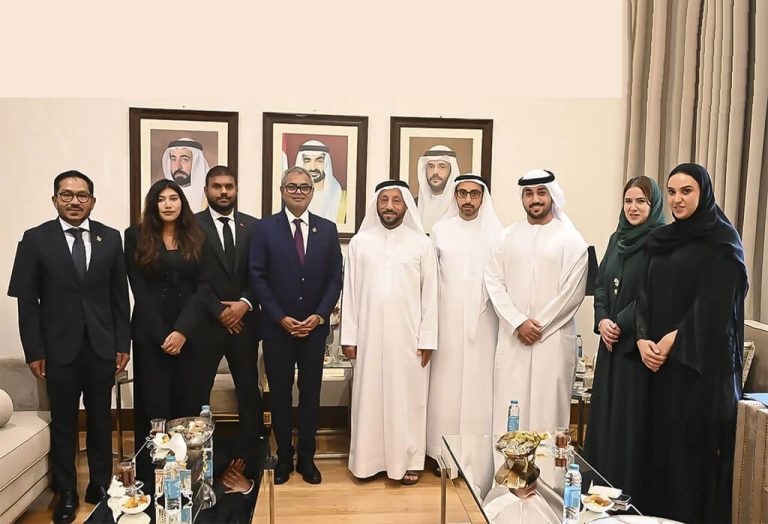
Sharjah Chamber of Commerce and Industry (SCCI) has announced the launch of the 2026 edition of the Sharjah Excellence Award, with the final registration and submission deadline set for the end of January 2027.

Held annually under the patronage of H.H. Sheikh Sultan bin Mohammed bin Sultan Al Qasimi, Crown Prince and Deputy Ruler of Sharjah, the award honours companies, establishments, and individuals that demonstrate outstanding institutional performance, promoting a culture of quality, innovation, and excellence across the business environment.

The Chamber encouraged private-sector companies and entrepreneurs from across the UAE and the wider GCC to participate in the 2026 edition and submit their applications within the specified timeframe.

Participants will have access to a comprehensive programme of awareness sessions, training workshops, and development initiatives delivered by SCCI alongside the award’s evaluation process. The assessment framework will focus on key performance dimensions, including quality, innovation, organisational excellence, and positive social and community impact.

The Sharjah Chamber highlighted that registration is open to all establishments and companies under an advanced global assessment model based on fourth-generation excellence standards. The 2026 Sharjah Excellence Award features categories spanning a broad spectrum of economic, developmental, and corporate social responsibility activities.

These categories include the Sharjah Gulf Localisation Award, the Sharjah Gulf Excellence Award, the Sharjah Excellence Award, the Sharjah Entrepreneurs Award, the Sharjah Small and Medium Enterprises Award, the Sharjah Social Responsibility Award, the Sharjah Entrepreneurs with Disability Award, and the Sharjah Best Security Standards Award.

The Sharjah Excellence Award builds on a strong track record of achievements since its inception, establishing itself as a comprehensive platform for benchmarking and recognising organisational excellence across sectors.

Previous editions have attracted more than 800 participants, with a panel of over 650 assessors evaluating submissions and 80 experienced judges adjudicating them. The award has also expanded its scope to cover more than 30 sectors, reflecting its broad and inclusive assessment framework, which is designed to promote institutional excellence and strengthen performance standards across the business community.

Abdallah Sultan Al Owais, Chairman of SCCI and of the Sharjah Excellence Award’s Board of Trustees, said the award continues to serve as a leading platform for driving performance excellence across the private sector.

He noted that the award’s integrated framework enables businesses and institutions to assess and benchmark their performance against internationally recognised standards, identify strategic areas for improvement, and strengthen their innovation and sustainability capabilities.

He added that the award’s approach is designed to help businesses respond effectively to rapid transformations shaping the business environment, enhance organisational resilience, and strengthen their readiness to meet the evolving requirements of the future economy.

Nada Al Hajri, General Coordinator of the Sharjah Excellence Award, stated that the award continues to leverage digital solutions to deliver a more efficient, user-friendly experience and to enhance the registration and evaluation processes. She noted that this approach supports SCCI’s commitment to developing the award framework in line with internationally recognised standards for institutional practice.

She explained that the Sharjah Chamber has simplified the application process, allowing establishments to register conveniently via the award’s official website by completing the online registration form, selecting the appropriate category, and uploading the required documents. For private-sector establishments, applicants must provide a valid trade licence and an SCCI membership certificate.

Al Hajri added that the Award Office reviews submitted applications and communicates the outcome to applicants. Establishments that meet the eligibility requirements are then provided with the relevant participation file for their selected category, enabling them to proceed with the nomination process within the designated timelines.

Al Hajri noted that the Sharjah Excellence Award is open to private-sector establishments and institutions across the UAE across its various categories, subject to category-specific eligibility requirements. Exceptions include the Sharjah Excellence Award category, which is exclusively open to Sharjah-based private-sector establishments; the Sharjah Gulf Excellence Award, for which winners are nominated by the Award’s Board of Trustees; and the Sharjah Social Responsibility Award, which targets private-sector establishments and government entities based in Sharjah.

She encouraged eligible entities to submit their applications at the earliest opportunity and confirmed that the Award Office remains available to address enquiries.

Welcome to the Sharjah Excellence Award

It is with great pride that we welcome you to the Sharjah Excellence Award, a prestigious initiative launched under the vision of His Highness Sheikh Sultan bin Mohammed bin Sultan Al Qassimi, Crown Prince and Deputy Ruler of Sharjah.

For over three decades, the Award has stood as a beacon of excellence, innovation, and sustainability across the Gulf region, recognizing outstanding organizations and individuals who embody the highest standards of quality, leadership, and social responsibility.

The Award not only celebrates achievement but also inspires continuous growth, empowering businesses and entrepreneurs to contribute to Sharjah’s position as a hub of excellence, competitiveness, and global best practices.

We invite you to explore this platform, discover the remarkable journeys of our honorees, and join us in celebrating a legacy of success that continues to shape the future of business excellence in the region.

Share this post

on your favourite social platforms

or copy the link