
icnlive

WATCH LIVE. THINK BUSINESS.

© 2026 ICN.LIVE

ICN.live

  • Anthropic disabled Claude Fable 5 and Claude Mythos 5 for every user worldwide.
  • The US government issued an export control directive citing national security concerns.
  • Officials point to a reported Fable 5 jailbreak as the main trigger.
  • Anthropic disputes the order and wants public access restored soon.

Claude’s Fable 5 has been suspended by Anthropic after a direct order from Washington. The US government sent the directive late on Friday at 5:21 pm Eastern time. Officials cited national security authorities and singled out the company’s two most powerful models. You now see Claude Fable 5 and Claude Mythos 5 offline for all customers.

Why did the shutdown reach every single user? The directive applies to any foreign national, both inside and outside the United States. Anthropic cannot filter those users from American ones in real time across its systems. So the company turned off both models for everyone to stay within the law. Claude’s Fable 5 has been suspended worldwide, not only for the foreign users named. Access to its other models, including Claude Opus 4.8, stayed fully online without change.

Claude’s Fable 5 has been suspended over a reported jailbreak

Anthropic says the core worry centers on a possible Fable 5 jailbreak technique reported recently. The reported flaw lets a user push the model past a normal safety refusal. Engineers prompt the model to read a codebase and then point out software weaknesses. You find similar power in other public tools, including OpenAI’s GPT-5.5 model, the firm notes. Cybersecurity professionals rely on the same skills every day to defend their own networks. Anthropic argues the narrow risk does not match such a broad and sweeping recall.

An export control fight with real business stakes. The Anthropic export control directive lands at a delicate moment for the growing company. Anthropic plans a public stock listing this year and has built its name on safety. Claude’s Fable 5 has been suspended even though red teams found no universal jailbreak. OpenAI chief Sam Altman earlier mocked the whole approach as plain “fear-based marketing” in April. His point now stings a bit, since loud safety warnings drew sharp federal attention here.

What the Claude Mythos 5 shutdown means for you

The Claude Mythos 5 shutdown removes a tool many security teams used for defense. Anthropic had shared Mythos with about fifty vetted firms under a program called Glasswing. Those partners include Amazon, Apple, Google, Microsoft, and the cybersecurity firm CrowdStrike, among others. Many of those firms patch flaws in software you rely on every single day. Losing this access slows some defensive work, so the timing worries many security leaders. As I see it, the broad shutdown punishes ordinary users for a narrow technical risk.

The road back for the suspended models

Claude’s Fable 5 has been suspended for now, yet Anthropic wants access back fast. The company calls the order a misunderstanding and points to its strong layered safeguards. Independent classifier systems run apart from the model and still block the worst outputs. For now, you can move your workloads to Claude Opus 4.8 without much trouble. You should watch this Anthropic national security order, since it sets a wide precedent. The next federal ruling will shape how every AI maker ships powerful new models.

TAGS

EXPLORE MORE ON:

eRedCap live network test

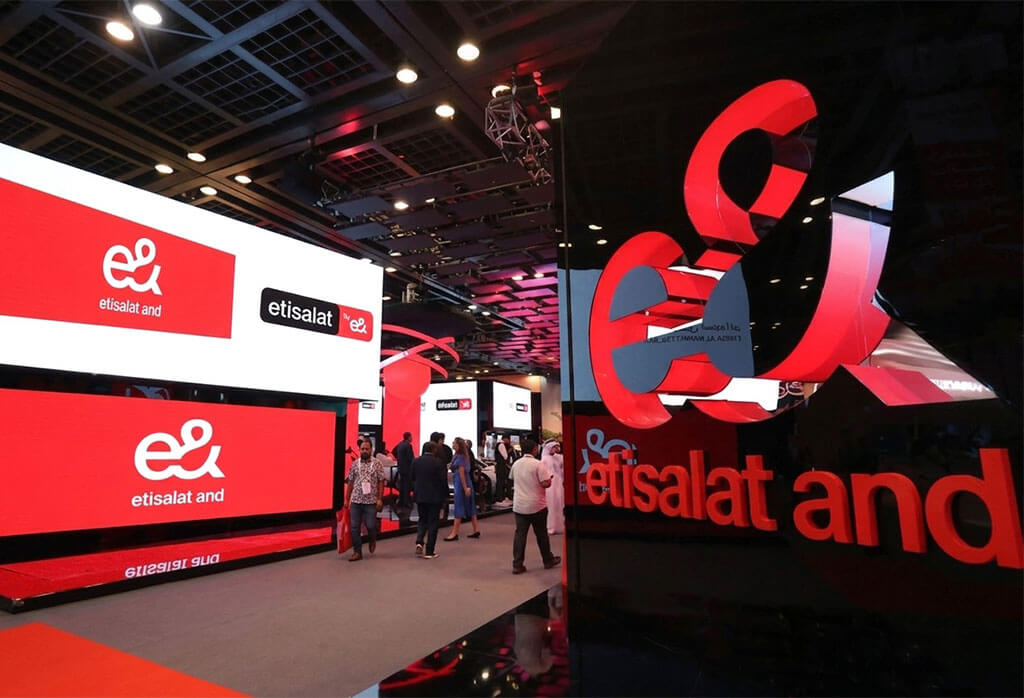
e& UAE has completed an eRedCap live network test on its commercial 5G network, the first such test announced by any telecom operator. eRedCap, short for enhanced Reduced Capability, is a stripped-down version of 5G built for devices that do not need full 5G speed or power. The company said the result gives businesses and public bodies a practical way to move Internet of Things (IoT) equipment off older LTE technology and onto a 5G-native IoT platform.

What the eRedCap live network test showed

The eRedCap live network test ran on e& UAE’s live commercial network, not a lab setup. Engineers reached download speeds of up to 10Mbps on eRedCap devices while using a 5MHz slice of NR-FDD spectrum. A Data Transmission Unit, a module that sends device data across the network, confirmed the service worked from end to end. That narrow 5MHz channel matters. It keeps device hardware simple and cheap, which suits equipment made in large volumes.

eRedCap 5G IoT sits between two extremes. Full 5G handles phones and heavy data. Low-power options like NB-IoT handle slow trickles of data from simple sensors. Many devices fall in the middle. Smart utility meters, industrial sensors, fleet trackers, payment terminals, building systems, and some wearables need steady coverage and long battery life, not top speed. The technology targets that middle band. It runs on a 5G Standalone network, meaning a 5G core rather than one leaning on 4G underneath.

RedCap battery life is already improved on standard 5G. RedCap pushes it further. Because peak data rates stay low and the channel is narrow, a device can run 5 to 10 years on one battery, against 1 to 3 years for RedCap. That figure sits close to the low-power radio technologies many meters use today. On cost, coverage, and battery life, eRedCap matches LTE Cat-1 and Cat-1bis. That makes it an LTE Cat-1 replacement built for 5G, which matters as operators plan to switch off LTE and reclaim that spectrum.

What it means for enterprises

The step builds on earlier work. In 2024, e& UAE became the first operator in the Middle East and Africa to bring Ericsson’s 5G Standalone RedCap into a commercial network. eRedCap extends that effort to an even lower cost and power tier.

Abdulrahman Al Humaidan, Senior Vice President, Access Network Development at e& UAE, said eRedCap brings everyday IoT applications into the 5G era at the right cost, power, and coverage. He said proving the capability on a live commercial network gives utilities, manufacturers, logistics providers, and smart-city operators a credible path to scale connected devices and prepare for the shift beyond LTE. e& UAE’s eRedCap live network test points beyond a single demo.

The practical gain is fewer parallel networks to run. Firms can move more IoT use cases onto 5G Standalone instead of keeping separate paths for high-performance 5G and LTE-based devices. That can simplify how devices are managed over their lifetime and tighten security across large fleets. It also supports the long-term reuse of LTE spectrum, since not every device would need full 5G hardware to make the move. The eRedCap live network test gives that transition an early proof point on a working network.

UAE Islamic finance strategy

The UAE Islamic finance strategy sets a target of Dh2.56 trillion in local Islamic bank assets by 2031, part of a wider effort to root Shari’ah-compliant finance deeper in the national economy. Islamic banking assets in the country stood at Dh1.4 trillion as of June 2026, and 43 Islamic financial institutions now hold licences. The UAE ranked third worldwide in the Islamic Finance Development Indicator for 2025. Those figures give the plan a base to build from.

Targets under the plan sit inside the UAE Strategy for Islamic Finance and Halal Industry 2025 to 2031, which the Cabinet approved in May 2025. The Central Bank of the UAE is coordinating with federal and local bodies to tie Islamic finance and the halal industry more closely to the broader economic agenda. Two goals run through it. Scale the sector, and give it firmer legal ground.

Clearer rules under the UAE Islamic finance strategy

Much of the UAE Islamic finance strategy turns on legal and Shari’ah certainty. The Commercial Transactions Law, Federal Decree-Law No. 50 of 2022, carries a dedicated chapter on Islamic finance contracts and financing arrangements. It ties parts of the law to Shari’ah standards issued by the Higher Shari’ah Authority and sets out how to read those provisions and settle disputes. Once the Higher Shari’ah Authority approves them, the Central Bank can issue regulations of its own.

The framework works toward clearer rights and obligations, standard Shari’ah interpretations, and fewer legal disputes tied to Islamic financial transactions. For customers and banks alike, that means fewer grey areas.

Costs and supervision

The Central Bank Law, Federal Decree-Law No. 6 of 2025, governs how Islamic financial institutions operate and how supervisors oversee them. Under its terms, these institutions can handle transactions involving real estate and goods where a Shari’ah-compliant structure calls for it. The law also exempts Islamic financial transactions from registration requirements and similar fees or costs. Customer protection ranks among the framework’s stated goals, next to stronger trust in Islamic finance services and a legal setting that supports new products.

Established at the Central Bank in 2018, the Higher Shari’ah Authority works to bring Shari’ah practice into line across institutions. It has issued more than 280 standards and resolutions to govern Islamic financial transactions and narrow differences in interpretation, along with more than nine Shari’ah governance standards. Prudential standards covering financial integrity, risk management and stability complete the supervisory base.

Beyond banking

The UAE Islamic finance strategy reaches past the banks. Plans under it develop the market for sukuk, Islamic money markets and Islamic funds, while backing larger and more competitive institutions. Sukuk issuances form a central part of that ambition. The plan also draws Islamic finance in the UAE closer to the halal economy. It calls for more local production of high-value halal goods, a halal traceability system to support re-exports, and added backing for SMEs and technology startups in the sector.

Set against the region, the direction fits a pattern. Islamic finance in the UAE is shifting from a parallel channel toward a core part of how the economy raises and moves capital. The UAE Islamic finance strategy puts a number and a date on that move, and Dh2.56 trillion is the figure to watch.

Ronaldo and Georgina wedding

The Ronaldo and Georgina wedding finally happened, and it looked nothing like the spectacle fans expected. Cristiano Ronaldo and Georgina Rodriguez married in a private civil ceremony in Cascais, a coastal town west of Lisbon, on Tuesday, 11 August. Ronaldo’s management team confirmed the news. The couple kept it small. Only their five children were there.

They told the world in one image. Both posted a wedding photo on social media showing their rings. No press. No staged reveal. The picture did the talking, and it drew millions of reactions within hours.

A date with meaning

The timing was not random. The wedding fell exactly one year after Georgina announced their engagement. On 11 August 2025, she shared a photo of her engagement ring on Instagram and confirmed that Ronaldo had proposed. Twelve months later, they made it official. Fans had waited a long time for this. For years, people wondered whether the couple would marry at all.

Their story started in Madrid in 2016. Georgina was working at a Gucci store when the two met. The relationship went public the following year, and they have built a family since. Georgina became a public figure in her own right during those years, known to a wide audience beyond football. The Cristiano Ronaldo and Georgina Rodriguez wedding closes a chapter fans have followed for almost a decade.

The venue mix-up

The Ronaldo-Georgina civil ceremony stayed short and personal. Their two daughters, Alana Martina, born in 2017, and Bella Esmeralda, born in 2022, were present. Ronaldo is also father to Cristiano Jr. and twins Eva and Mateo. All five children stood with the couple.

The family has known loss too. In April 2022, while Georgina was expecting twins, the couple lost their baby son. Bella, his twin sister, survived. That history sits behind the quiet tone of the day.

The Ronaldo and Georgina wedding had fed speculation across Portugal for weeks. Days before the real event, hundreds of people gathered outside Funchal Cathedral in Madeira. Rumours had spread that the pair would marry there. The ceremony at the cathedral belonged to a different Portuguese couple. If you followed the chatter, you were probably watching Madeira. The couple were somewhere else.

Cascais gave them the privacy they wanted. The Ronaldo wedding in Cascais, Portugal, stayed secret until the photo appeared. The town sits about 20 miles from Lisbon and draws visitors for its beaches and quiet streets. It suited a couple who kept the guest list to their own children.

Where Ronaldo stands now

Ronaldo, 41, plays for Saudi Arabian club Al-Nassr. He joined after leaving Manchester United at the end of 2022. He has won the Ballon d’Or five times and has worn the shirts of Sporting CP, Manchester United, Real Madrid and Juventus.

Now Cristiano Ronaldo is married to Georgina, and the two begin their next stage as husband and wife. The Ronaldo and Georgina wedding stayed their own, quiet and close, in a life lived mostly in public.

Share this post

on your favourite social platforms

or copy the link