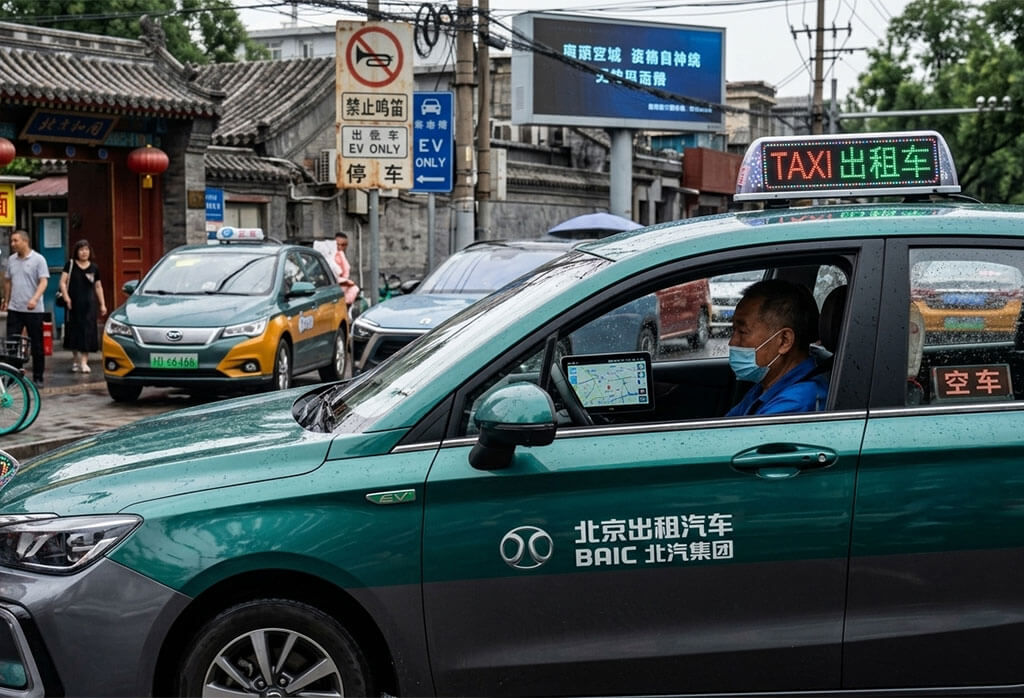



China moves against Hormuz’s oil price shocks by leaning on a growing electric taxi fleet. Across big cities, you now see more riders picking cabs over their own petrol cars. People took 3.05 billion trips in May, a 6% rise since the Iran war. Fares keep falling even while pump prices climb steadily across the whole country right now. A wave of new drivers and cheap electric cars pushes those low prices even lower. Many workers chase ride-hailing jobs in a slow economy, so competition among drivers grows. Cheaper fares then pull in more riders who want to skip their rising petrol bills.
Li, a 36-year-old Beijing driver, says fares fell 10% to 15% in six months. He told Reuters at a charging station how tough the competition now feels for drivers. Yang, a 45-year-old car owner, now prefers a taxi when petrol prices run high. She skips parking hunts and fuel costs on trips too far to reach by bike. Social media posts since March show riders swapping their own cars for cheaper cab trips. This small daily choice, repeated millions of times, reshapes national fuel demand quite fast.
China moves against Hormuz’s oil price shocks with a cleaner fleet
About half of China’s 1.3 million taxi fleet already runs on electric power today. In major cities, China’s electric taxis reach nearly the entire working fleet on the road. Didi added 2 million more electric or hybrid cars to its fleet last year. Its non-fossil fleet now totals 8 million cars, with EVs doing 75% of mileage. You can see the clear payoff in the national fuel numbers from May this year. China burned 10% less gasoline and 14% less diesel than the same month last year. Road freight still rose 2%, and holiday travel hit an all-time high in May.
As fuel prices have gone up, people are driving their own petrol cars less, said Daizong Liu. He leads East Asia work at the Institute for Transportation and Development Policy in China. Overall travel demand keeps rising, so more trips shift to taxis and the subway. Subway ridership also climbs as many commuters trim spending on their own petrol cars. Each cheap electric trip shows how China moves against Hormuz’s oil price shocks in practice.
Strait of Hormuz oil pressure meets a shifting travel habit
This shift helps explain how China’s oil imports fell 41% in June from last year. Beijing managed this steep drop without heavily draining its own large strategic oil reserves. Freed cargoes then eased a tight global market and kept oil prices in check. An oil price shock hits importers hardest when they cannot swap fuel for power. Analysts read the EV ride-hailing China trend as a real national energy defense right now. Greenpeace expects 90% of taxi and rideshare mileage to run on electricity by 2035.
From my standpoint, this dual trend reshapes how markets should price China’s oil demand. J.P. Morgan says the conflict left China less dependent on oil than markets assumed. You should watch this pattern as fuel prices settle back toward pre-war levels again. China moves against Hormuz’s oil price shocks in a way few big importers can match.