

icnlive

WATCH LIVE. THINK BUSINESS.

© 2026 ICN.LIVE

Sheikh Khaled chairs Abu Dhabi Council, and its latest meeting placed an agentic AI platform inside government decision-making for the first time.

Trending Economy

FTA VAT refund now

The VAT refund for UAE nationals building new homes reached Dhs353.5 million in the first half of 2026, the Federal Tax Authority confirmed. About 4,000 applications won approval in that period. Each covered VAT paid during construction of a private residence.

The prior year set a lower base. In H1 2025, the authority approved 3,100 applications worth Dhs284.8 million. Approved applications climbed 27.5 per cent. The value refunded rose 24.1 per cent.

Numbers behind the increase

The gap between the two years is measurable. About 900 more applications cleared approval. Refunds grew by roughly Dhs68.7 million year on year. The average refund per approved application sat close to Dhs88,000 in H1 2026.

Abdulaziz Mohammed Al Mulla, Director-General of the FTA, tied the result to changes in how the scheme runs. He said the authority has added measures to simplify and speed up procedures through its digital refund platform. He also pointed to awareness work across several channels, aimed at showing citizens how the service works and what has improved.

How the VAT refund for UAE nationals now works

The Federal Tax Authority has built a proactive service into the process. A refund application can be generated automatically through the Maskan app once the municipality issues the building completion certificate. Where it applies, the building permit can trigger the same step.

After the application is created, the citizen gets an SMS and an email. Both confirm that a refund application for the residence exists. The messages carry a link or a QR code that sends the citizen to the Maskan app to finish the required steps.

Less manual work for applicants

Invoice details now flow in on their own. Once registered suppliers issue invoices, the details populate the citizen’s account inside the Maskan app. The number of banking-information fields has been cut through integration with the Central Bank of the UAE.

Invoice data is also compiled into one Excel file that holds applicants’ details once typed in by hand. Artificial intelligence checks the accuracy of refund amounts and suppliers’ Tax Registration Numbers. All invoices are consolidated into a single file.

Wider eligibility under the Year of Family

The 2026 designation as the Year of Family shaped one change to the scheme. The FTA expanded the range of eligible expenses that qualify for VAT refunds tied to new residence construction. The authority said the step supports a modern housing system and helps citizens fund a stable family home.

For homebuilders, the practical route runs through two channels. Applicants can file through the EmaraTax portal or the Maskan app, depending on preference. The VAT refund for UAE nationals covers construction VAT, not furniture, appliances, or other non-structural items, based on FTA guidance published earlier in 2026. Claims generally must be lodged within 12 months of completion.
ADNOC Umm Shaif Gas Cap

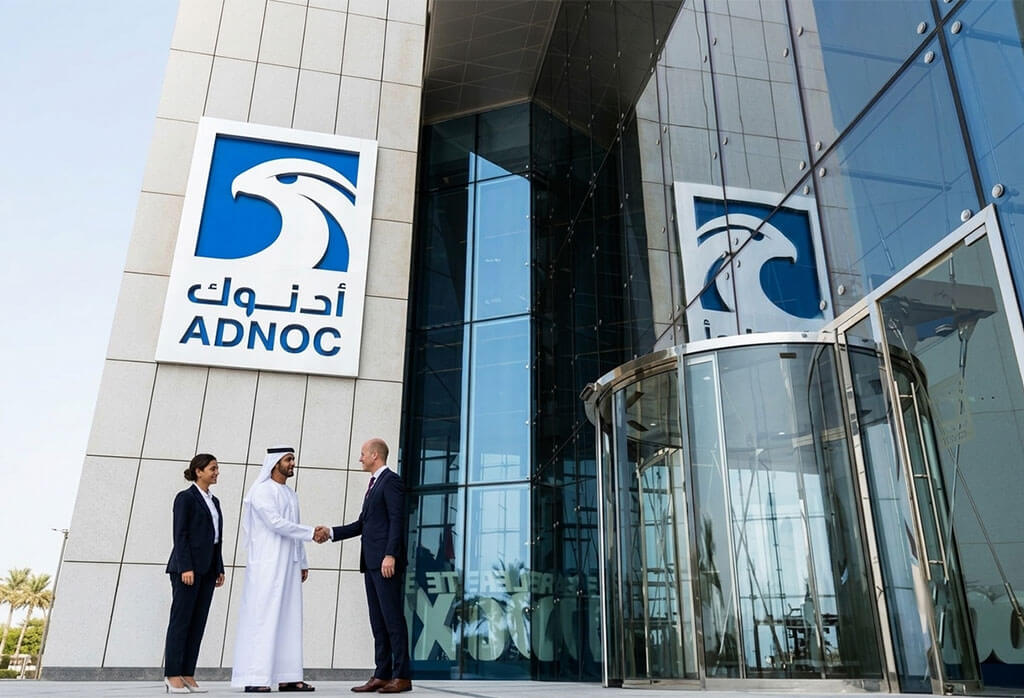
The ADNOC Umm Shaif Gas Cap has moved from a plan to a funded project, with a $6.2 billion final investment decision now signed. ADNOC will develop the offshore field alongside TotalEnergies, Eni and China National Petroleum Corporation. The deal carries a headline figure of AED22.6 billion. It targets first output by 2030.

What the ADNOC Umm Shaif Gas Cap deal delivers

The development will add more than 600 million standard cubic feet per day of natural gas and associated gas liquids. That equals close to 10 percent of what the UAE burns in a day right now. For a country holding the world’s seventh-largest gas reserves, the math matters. Rising UAE natural gas production feeds homes, factories, and the power-hungry data centres behind artificial intelligence growth. You can read this as a bet on demand staying strong.

The Umm Shaif Gas Cap FID sits inside a wider push. ADNOC has been expanding its liquefied natural gas reach and firming up UAE energy security at the same time. Global demand for lower-carbon gas keeps rising, which raises the stakes. Both goals point the same direction.

Who is building it and how

Contracts back up the ambition. ADNOC awarded three engineering, procurement and construction packages worth a combined $5.1 billion, or AED18.8 billion. Consortiums of UAE and international contractors won the work, which covers large-scale offshore infrastructure. A separate $365 million programme, AED1.3 billion, funds 14 wells. ADNOC Drilling will run that campaign over 18 months using three rigs it already owns. No new rigs join the field.

Dr. Sultan Ahmed Al Jaber, Minister of Industry and Advanced Technology and ADNOC Managing Director and Group CEO, tied the move to the company’s broader plan. “The Umm Shaif Gas Cap FID is another important milestone in delivering this strategy and reinforcing ADNOC’s position as a reliable gas supplier,” he said. Umm Shaif is Abu Dhabi’s longest-operating offshore field, so this builds on decades of work.

The field runs deep in the emirate’s history. It hosted Abu Dhabi’s first offshore well and fed the emirate’s first oil exports back in 1962. Six decades on, it now anchors a gas plan aimed at near self-sufficiency by 2030.

The bigger gas play

This Abu Dhabi offshore gas project does not stand alone. The ADNOC Umm Shaif Gas Cap follows a concession award for the Bab Gas Cap from the Supreme Council for Financial and Economic Affairs. That field is expected to add another 1.5 billion standard cubic feet per day of gas and liquids. Stack the two, and the supply picture grows fast.

There is a trading side too. A new ADNOC LNG platform now sits in Abu Dhabi Global Market. The venture is chasing 47 million tonnes per annum of marketable LNG capacity by 2035. That scale would place it among the largest LNG traders anywhere. The ADNOC Umm Shaif Gas Cap fits neatly into that goal, feeding molecules into a growing export machine.

My read: the ADNOC Umm Shaif Gas Cap is Abu Dhabi buying insurance and market share at once. Demand for reliable, lower-carbon gas keeps climbing, and ADNOC wants to be the name buyers trust when they place long orders. The 2030 timeline gives partners room to build. Watch the drilling pace over the next 18 months for the first real signal.

China moves against Hormuz's oil price shocks

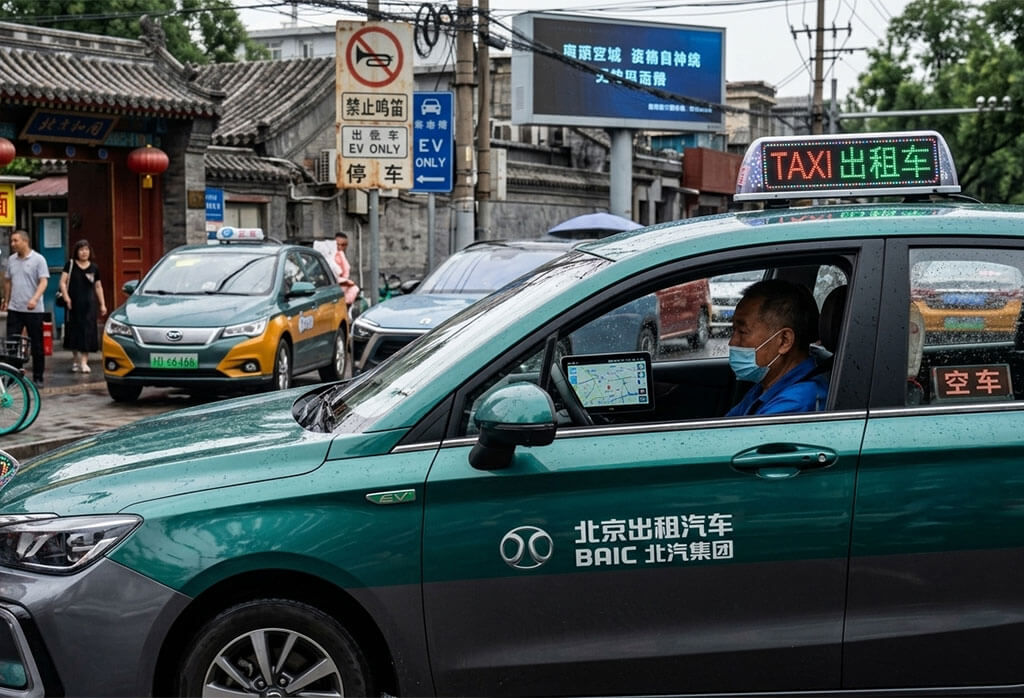
China moves against Hormuz’s oil price shocks by leaning on a growing electric taxi fleet. Across big cities, you now see more riders picking cabs over their own petrol cars. People took 3.05 billion trips in May, a 6% rise since the Iran war. Fares keep falling even while pump prices climb steadily across the whole country right now. A wave of new drivers and cheap electric cars pushes those low prices even lower. Many workers chase ride-hailing jobs in a slow economy, so competition among drivers grows. Cheaper fares then pull in more riders who want to skip their rising petrol bills.

Li, a 36-year-old Beijing driver, says fares fell 10% to 15% in six months. He told Reuters at a charging station how tough the competition now feels for drivers. Yang, a 45-year-old car owner, now prefers a taxi when petrol prices run high. She skips parking hunts and fuel costs on trips too far to reach by bike. Social media posts since March show riders swapping their own cars for cheaper cab trips. This small daily choice, repeated millions of times, reshapes national fuel demand quite fast.

China moves against Hormuz’s oil price shocks with a cleaner fleet

About half of China’s 1.3 million taxi fleet already runs on electric power today. In major cities, China’s electric taxis reach nearly the entire working fleet on the road. Didi added 2 million more electric or hybrid cars to its fleet last year. Its non-fossil fleet now totals 8 million cars, with EVs doing 75% of mileage. You can see the clear payoff in the national fuel numbers from May this year. China burned 10% less gasoline and 14% less diesel than the same month last year. Road freight still rose 2%, and holiday travel hit an all-time high in May.

As fuel prices have gone up, people are driving their own petrol cars less, said Daizong Liu. He leads East Asia work at the Institute for Transportation and Development Policy in China. Overall travel demand keeps rising, so more trips shift to taxis and the subway. Subway ridership also climbs as many commuters trim spending on their own petrol cars. Each cheap electric trip shows how China moves against Hormuz’s oil price shocks in practice.

Strait of Hormuz oil pressure meets a shifting travel habit

This shift helps explain how China’s oil imports fell 41% in June from last year. Beijing managed this steep drop without heavily draining its own large strategic oil reserves. Freed cargoes then eased a tight global market and kept oil prices in check. An oil price shock hits importers hardest when they cannot swap fuel for power. Analysts read the EV ride-hailing China trend as a real national energy defense right now. Greenpeace expects 90% of taxi and rideshare mileage to run on electricity by 2035.

From my standpoint, this dual trend reshapes how markets should price China’s oil demand. J.P. Morgan says the conflict left China less dependent on oil than markets assumed. You should watch this pattern as fuel prices settle back toward pre-war levels again. China moves against Hormuz’s oil price shocks in a way few big importers can match.