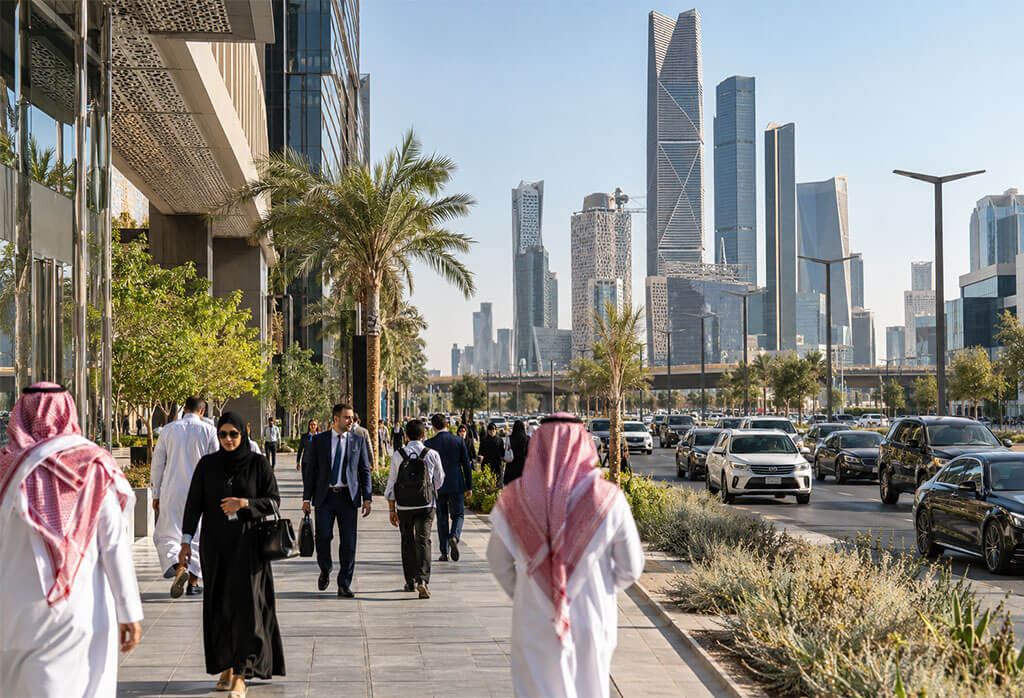



Saudi Arabia’s annual inflation rate remained unchanged at 1.8 percent in August, according to the General Authority for Statistics, known as GASTAT. It is the fourth consecutive month the figure has held there, matching the pace recorded in May, June and July. Consumer prices rose just 0.1 percent from July, pointing to a month of largely uneventful price movement across the Kingdom.
For a household in Riyadh or Jeddah, a headline number like 1.8 percent can feel abstract. What matters more is what is actually getting more expensive, and by how much.
Housing remains the main pressure point
Housing, water, electricity, gas and other fuel prices rose 3.9 percent year over year in August, making housing the single largest contributor to the overall inflation rate. Actual rents climbed by the same 3.9 percent. That is still a meaningful annual increase for anyone renewing a lease, but it marks a slowdown from July, when housing costs rose 4.2 percent and rents climbed 4.3 percent.
Housing alone contributed 0.8 percentage points to Saudi Arabia’s inflation rate in August, more than double the 0.3 percentage points each attributed to food and beverages and to transport. The category has been the most persistent source of price pressure in the Kingdom, driven largely by strong demand for housing in major cities.
Saudi Arabia introduced a five-year freeze on rent increases for new and existing residential and commercial contracts within Riyadh’s urban boundaries. Rental prices tend to respond to policy shifts slowly, since many tenants are locked into existing contracts with their own renewal timelines. That means the freeze’s full effect on Saudi Arabia’s inflation rate may not show up clearly for another few quarters yet.

Food, transport and the categories that moved
Food and beverage prices rose 1.4 percent from a year earlier, while transport costs increased 2 percent. Personal care, social protection and other miscellaneous goods and services posted a sharper 3.5 percent annual rise. Inside that category, prices for personal effects other than clothing jumped 13.3 percent, pushed up by a 14.4 percent rise in jewelry and watch prices. Recreation, sport and culture prices rose 2.8 percent, helped along by a 4.7 percent increase in holiday package costs.
Not every category moved higher. Furnishings and household equipment prices fell 0.6 percent year over year, and clothing and footwear dropped 0.5 percent. On a monthly basis, personal care and miscellaneous goods posted the largest rise at 0.8 percent, while restaurants and accommodation services fell 0.4 percent, the steepest monthly decline among the main CPI groups.
Wholesale prices tell a different story
Away from the checkout counter, price pressure looks stronger. Saudi Arabia’s Wholesale Price Index rose 4.6 percent year over year in August, though that pace eased from 5 percent in July. An 8.2 percent rise in other transportable goods drove much of the increase. Basic chemical prices jumped 51.4 percent annually, a striking outlier within the wholesale data, while refined petroleum products rose 4 percent. Agriculture and fishery products increased 4.8 percent, and metal products, machinery and equipment rose 2.2 percent. Ores and minerals were the exception, falling 1.8 percent. Monthly wholesale prices slipped 0.2 percent, with ores and minerals down 2 percent.
What the IMF expects next
The International Monetary Fund projects Saudi Arabia’s inflation rate will average 2.2 percent across 2026, up from 2 percent in 2025, according to its most recent Article IV assessment. The Fund pointed to higher shipping and insurance costs as a source of upward pressure, but expects those to be partly offset by softer rent inflation and price caps on some fuel and food items. So far, the Kingdom’s actual monthly readings have stayed below that full-year forecast, and the housing slowdown gives some early support to the IMF’s view that rents will help keep prices in check.
For now, Saudi Arabia’s inflation rate sits comfortably below global norms, and the fourth straight month of stability suggests the Kingdom’s price environment has settled into a predictable rhythm, at least until the rent freeze’s effects become fully visible.