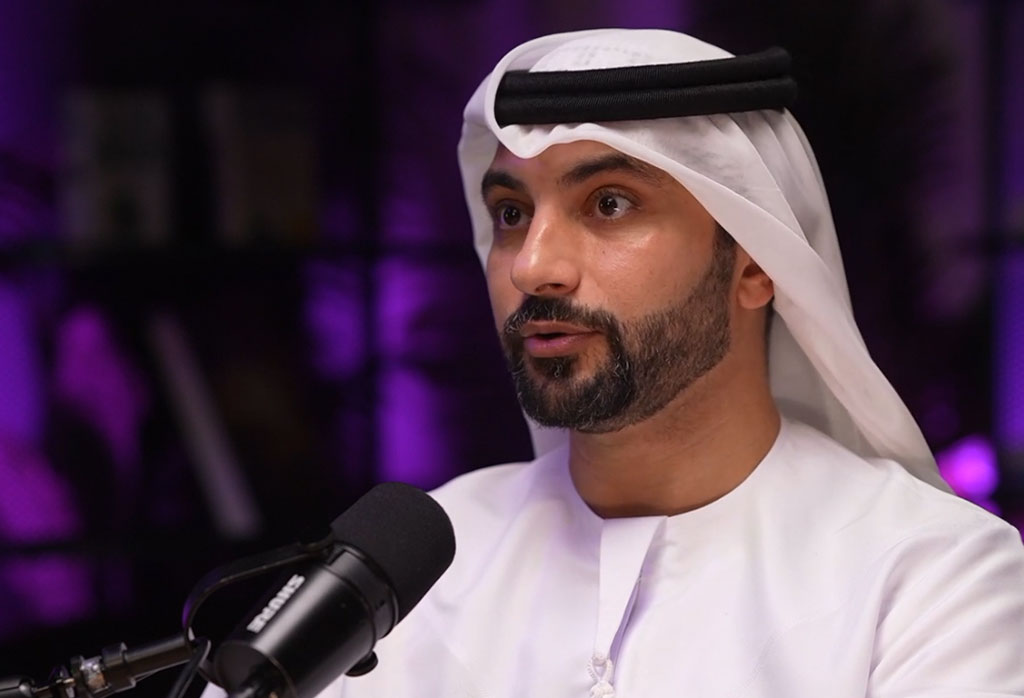
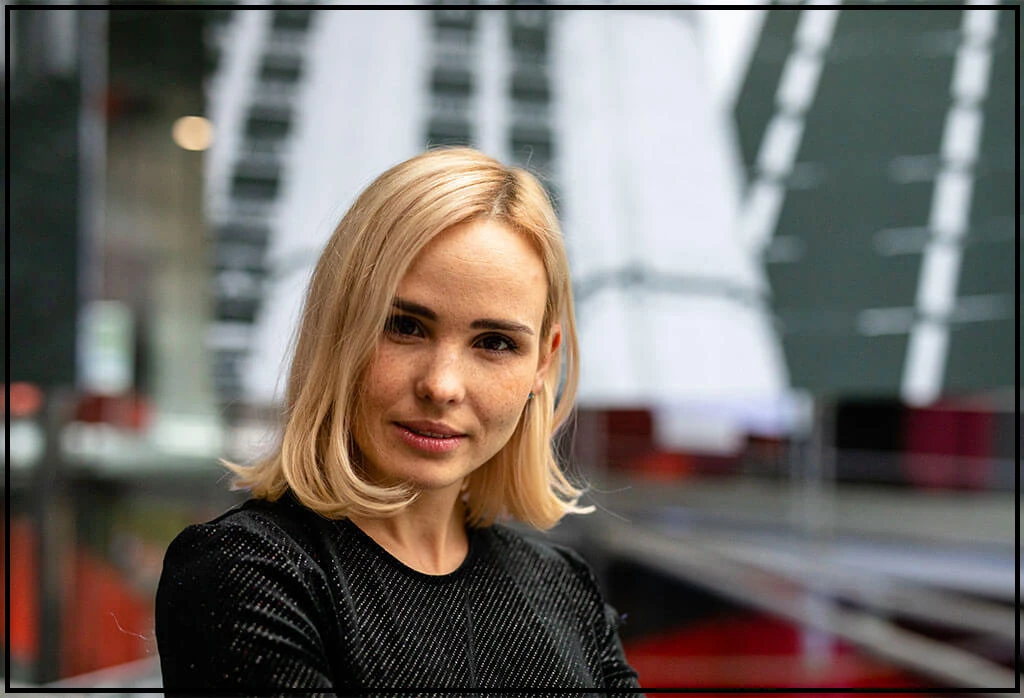


Mahmoud Bartawi built the healthy-food brand UNDER500 from a side hustle into a business operating in six countries, then sold it. What followed was not relief but an identity crisis, and eventually a podcast of his own. In this episode of ICN.talks Business, he sits down with host Dani Topala for a long and unusually candid conversation about how companies are really built.
The talk moves from the discipline of the earliest months to the mechanics of choosing co-founders and investors, the real cost of branding, and why he believes attention has become a founder’s most valuable currency. Midway through, the roles quietly reverse, and Bartawi turns the questions back on Dani and the story behind ICN Media. In the transcript below, Q is the host, Dani Topala, and A is the guest, Mahmoud Bartawi. Enjoy!
Q: In my feed, in my social media accounts, you came, somehow, from nowhere. It’s been a year since you came out and published your first podcast, but then you came like a storm, with a lot of valuable content. I liked it so much. What is it that you do?
A: For all of us, there’s some emotional thing that happened, or something or someone we want to prove to. I had a father who is no more. I grew up with my father, and for me, all of my life, definitely my childhood, was trying to prove to my father that I’m number one. I grew up in a family with four brothers and a sister. Every day we’d have a fight, a physical fight, and I think all of it in the end was to prove that you can stand up, that you can do something different. My father was the ultimate authority at home; my mom wasn’t in the picture, so I always wanted to prove that to him. When I look back at why I won this, why I tried to win the 100-meter at school, why I wanted to become a table tennis champion at school, it all goes back to that: wanting to prove something to my father.
For a while I thought it was money. But then you get the money and you realize, no, now I want more. I started a company, I took it to six countries, I sold it, and I thought that would be it. If money is the answer, then at that point you should be feeling like, I’m done. But what happened was that the next three months were actually more chaos for me, because in my mind I lost identity. You build something for eight years, and then you sell it, and now you’re no more Mahmoud UNDER500. You’re only Mahmoud.
Q: So what is it, then, that drives you?
A: When I start looking at myself, there’s this hunger to just want to build something, to build a system that other people can use, to prove. But then, when I look, that hunger, that emotional hunger, it has to tie back to some story. So for me, I wish my father was around. It would be, for me, just to have a conversation with him, and for him to see. That’s kind of what drives me.
Q: I’m sure he can see you in this position right now, and he’s very happy with what you have achieved. I want to ask you, because you’re a guy who has seen everything, building from scratch, taking your business into six countries, and then the exit. Where do you put more weight in business: mindset or execution? Is it the technique, or is it the attitude?
A: I think the technique can be learned very fast. But the mindset is to do the boring thing in ambiguity every day, knowing that it aligns in a quarter, it doesn’t align in a day. In a day, you might feel bad, but to put those emotions aside and have the discipline to do it. It can be, for example: I want to play padel; I want to become good at padel. You go and play with a few friends, and by chance you hit one good shot. That’s how it starts, right? Someone notices, “Hey, you, that was nice.” and now you excel at things you’re good at. When someone else validates you, you take a step forward. So that’s the drive to learn. Then how do you learn? Do you go and learn from a book or online? You might learn the rules online. But what actually gets you to move forward is you committing every day: I will wake up, I will go play padel, I will try to find a group, I’ll download an app, find some friends that play, join a community. And that applies to everything, to building a business. The hard thing is the mental discipline to wake up and stick to your plan, even though at the minute it might not feel like you need to do it.
And I know it’s the most boring thing to say. My dad used to say to me, to wake up at a certain time, you need to sleep at this time; you need to do things at these times. As a child, I always loved to rebel and say, “He’s not cool.” The easiest way for me to dismiss him. But the truth is, when I look back now and look at everything I’ve done, it was the discipline to not give up at the time that other people maybe would have given up, or expected you to give up. And that’s the kind of discipline we have in our daily habits. It’s just about taking more of a long-term view.
I was watching a very interesting conversation. They had Jeff Bezos talking, and he said, “People see us in the meeting, and they think we’re talking about what the next quarter’s results are going to be.” He said, “That’s not true.” He said: “We spend a lot of our time in the future. We discuss what’s going to happen in a future quarter, down the line in a few years.”
Q: The next quarter was discussed in last year’s meeting.
A: And when I look at it, I also sit on the board of a 75-year-old contracting company. What makes this different than any startup I’ve run is that in this one there’s legacy. There’s legacy, and there’s change. When you want to make change in a startup, there’s no history. When it’s a legacy company, you always have friction, because you need to create a board, and things take time for a change to happen. As a board member, I might impact it two years down the line. And that’s just strategy, because not everyone at the table thinks the same way. I don’t know why I think this is relevant, but when it comes to discipline, to run such a thing, the question is: do you have the discipline to manage structure and push emotion out of the way? If you can do that in your life, you can achieve anything you want.
So if Jeff Bezos is planning in the future, I’m just someone that sees something like that and tries to implement it. For all of us to get to, how did I learn this? This is actually a lesson that came to me when I was a child. I used to have a sports teacher at school, Mr. Lawless. Now he’s there; I hope he listens to this. One day I go to him and say, Mr. Lawless, I want to win the 100-meter running race. And he says to me, why? The race is next month; the old one just passed, and the next one is in a month. Why do you want to win? And I said, I need to win this race. I said, Abd Rahman is the fastest guy in class, and I need to become number one.
So he tells me, “Fine, show up tomorrow at a certain time after school.” So I’m now the only kid after school, standing with the sports teacher, and he takes out this old clock, he pressed the button, it starts turning around, and he looks at me and says, “I want you to look at the goal, go in a straight line at full speed, and don’t look left and right. You’re not going to think about Abd Rahman.” And every day for two weeks, that’s exactly what I did, that discipline. After two weeks, I did the race, I won it, and I realized it wasn’t about winning the race; it was about having that discipline. And that kind of gave me that. I knew then that if I wanted to do something, I could do it if I followed a strategic implementation and I mentally accepted it before the physical. You look at any structural change that happens, let’s talk about any event in the world, the new…
Q: Before that, stay with me, because I have something I want to draw out of you.
A: Let’s go.
Q: When you start the business, your first baby steps in business. In my opinion, I’ll share my angle, and then you can have your take on this. The faster you reach a point where, when you just start and have just an idea, from that idea to literally having a business running, there’s a lot of chaos. You need to acquire multiple skills, you need to have certain connections, you need to get in touch with suppliers, you need to have your team in place, at least the first people, and all these things. So my experience is, the faster you can fulfill this gap, and this one is backed by a lot of discipline obviously, but the easiest and faster way to be efficient with this, to reach this point where you can delegate faster, everyone knows exactly what should be done, you build this relationship, then it’s a different vehicle already. What’s your take on this, for founders when they are at this very early stage?
A: Very early. Are you talking about a company?
Q: Yeah, I’m talking specifically about this stage.
A: So what is a company? A company is two people together. What creates a company is a rhythm. Two people meet every Saturday, and they have a meeting. The minute the rhythm breaks, you don’t have a company. So let’s establish what a company is: it’s a rhythm set by the leader. The leader can speak a certain way today; tomorrow, the people who join the company follow that, those are called values. So any two people that have a rhythm is a company.
So you start a company; two people get infatuated with an idea. They think, we heard this idea about a barbershop down this road; no one else has one; we’re going to kill it. They go, and with this idea they decide to do what? Three months. It’s the same three months for everyone. Whether you’re writing a book, whether you’re a lawyer, whether you’re setting up a company, it’s all the same rules. You need to interrogate everybody in that network, in that industry. How do you interrogate everyone in that industry? You pretend, you don’t pretend; you actually want to learn. And one way of doing it is maybe setting up a podcast and interviewing everyone in that industry. What if you asked a leader in that industry, ” What is the biggest misconception about running a barber shop?”, and he told you all the big problems with it? And then he told you he actually wanted to partner with someone who would start in that location, and he liked the way you were presenting and the amount of network you had. That’s three months of you learning with discipline. It can be through a podcast, through interviews, through getting to know them on LinkedIn, commenting on them, building relationships. If you’re writing a book, you’d need to follow the same path. A lawyer, an FBI agent looking for someone, does the same thing. So how do you become the…
Q: So we can call this stage the collection stage.
A: Collection stage. You want to understand the industry, the big players in the industry.
Q: Collecting data.
A: Collecting data. You want them to know you. And this same skill you need throughout your company, because you can’t have a closed-door policy anymore. You need to be meeting people in the industry. That’s how you learn.
Q: Do you see that this stage is the stage where, like, 95% get killed?
A: Yeah. Because you need to build your consistency. You need to have those weekly meetings. Let’s talk about three months. Three months is 4, 8, 12, 16 weekly meetings. You need to have them. In those meetings, who assigns tasks to whom and who else joins the company, all of that gets figured out. But if you do it week by week, which is how startups run, it’s very different than a legacy business that does it quarter by quarter. In a startup, it’s week by week. So every week you show up, you have to show up. That’s the rhythm of the company, the heartbeat, that can’t go off. If that goes off for too long, there’s no more company, because that will ripple everywhere.
So a community, a rhythm that defines it, that’s called structure. And in every structure there’s an emotional authority. There’s one person that guides the structure, one person that people come to for, is this right, how do they feel. They decide. And you need to establish those power dynamics between founders early. The best ones are founders who obviously have the same values, but their core competencies are different. An example could be: Dani trusts Mahmoud; they’re friends to a certain extent, they respect each other, and there’s an idea, but Dani is very different; his craft is very different than Mahmoud’s. Mahmoud’s a great storyteller; Dani is a great execution guy. You tell him to go and do something, he’ll do it in 24 hours; he’s the person that gets things done. And you have those two personalities, and usually it’s not the same person. When you look at the S&P 500, 94% of companies, or 96% of companies, were started with co-founders. The Elon Musks of the world are 4%.
Q: Who do both?
A: So if you’re in the majority of people and you want a company, you need to start by attracting good people, and you can start by being a good person, having good values. So you find someone with good values and with core competencies. If two people are lawyers and they’re both very introverted and no one can tell stories, it becomes hard to make it work. You have the same 20% overlapping in the company.
Q: It’s a nice one. So we have this stage, incredibly full of tasks that you have to deliver, you have to get done. We call it the collection stage, right? What’s coming after? How do you develop further? I want to have a masterclass in business, because you built it from scratch. Who better to talk about this?
A: So when a problem comes to the founders in the beginning, there are three boxes. The first one is proof of concept. There’s proof of concept, there’s product-market fit, and there’s proof of scale. So for example, a problem comes to them. Someone says that Mahmoud and Dani are building a barbershop, and they find out that you can bring the chairs cheaper from somewhere else. When you buy 10 pieces, you save 20%. That’s a great problem and a great discussion. But it’s a problem of scale. We are not at scale. We are a startup today, and we don’t even have one shop. No attention goes to that problem. You do the weekly meeting, and the weekly meeting it’s there, but you both decide that it’s not something we need to know now. Today we might need the fastest person who can deliver a quality leather chair, whatever chair that’s designed for the shop. So it’s about prioritizing tasks.
Q: And you prioritize. You might have only three main tasks for the week: Dani gets the license, Mahmoud finds and interviews three people, maybe another task could be one of them finds the location.
A: Okay. So prioritize the task that has the biggest impact tomorrow. Get things done tomorrow. We need to see some progress next week. We don’t talk now about where the 25th location is. Dani and Mahmoud go and split the tasks. Everyone comes back after a week to the weekly meeting. Dani presents his task. If he needs more time, he says so. If Mahmoud has a task and needs more time, he says so.
Q: When you have one idea, how much time do you spend in the research stage? Like, okay, I want to see a little bit more about this market. I think I have a good idea, but let’s see if someone else is doing it already. Maybe who is there, who is building, what is the size of the market, and all these things.
A: You just touched upon the most important point, which is competitor analysis. When any investor gets a pitch deck, the first page they go to, they look at the name of the company and all that, then they go right away to the market analysis and look at all the competitors who already exist, so that they can build an association and say, oh, so you’re like Super Trims. And then we say to the investor, no, no, we’re a bit different, we have this. So the investor, the first thing he looks at in the pitch deck is the logo of the company he knows, which is usually your competitor.
And if he looks at that and understands where your competitor is, you usually put it on an axis. And you mentioned, my competitors are here, other people are doing this, we are the north star. We are aiming to do haircuts in 20 minutes for a very reasonable price. Our strategy is command and conquer: every corner of every block in the city. And I think a big vision is what really gets people excited. But for you to start, you need to start with your competitor analysis. It’s the same three months. That’s actually the three months, the most important one: the first competitor analysis that you do, and you interview everyone in the market and find out where the gaps are, why are they not doing this. And that’s where you start building your idea, refining your idea.
Q: If everything looks good to you, what percentage, if I can call it that, do you consider enough to start? Do you go into this research loop until you go crazy, like, I want to know every single thing about all competitors? Or at a certain point do you go, okay, maybe there’s something I don’t know yet, but with what I have I’m confident I can start?
A: Timing is everything. Timing is the most important thing. So I would take a step back and look at the industry and think about what you want to change. You take one step back, look at the full industry. What is the problem with haircuts?
Q: They take too long.
A: What if there was a technology to solve it, to give you exactly what you’re looking for in a shorter amount of time? So that could be something you want to bring to the industry. And that’s the first view you need to have. If you just want to open a barber shop just because your friends told you to, you shouldn’t be doing it. So my honest answer: if you have a long-term view for an industry and you’re thinking about a way to get in, and you’re doing an analysis to get in, then yes. But if you get stuck in a place where you’re doing analysis, you have too much advice, you don’t know where to start because you don’t have a vision, your vision is too small, you’re not getting enough people to buy into you and want to work with you, because your thinking is limited and they know, fine, this looks like it’s not been thought through.
But if you are doing that research, which is the tip, but you have the full picture, you understand what domination looks like, what monopoly looks like, what your competitors look like, you’re not thinking I want to do one shop. Your one shop is your MVP, your minimum viable product. Now your conversation, you can sit with better people, higher up, who have done things, who have probably exited a shop and want to enter your city and are looking for someone to work with. That could be someone you attract. The market study is super important, but what you think, and where you think the industry should go, and how big the industry is, is just as important. And you need to have some change, some vision for the future, a problem that you see that you can fix, that this company you want to build can fix.
Q: Is it mandatory to be an expert in your field? Every company has an operator, and they have someone who runs the board. So would you invest in a company where the founder is not an expert in his field?
A: When I started my company, I wasn’t an expert in my field. I was a noob. I was working at the bank. This was about 2015. I was working at the bank, and I was ordering from meal plans. So, with a subscription, you get your food pre-cooked. Pre-cooked tastes funny after a few hours. I don’t know if anyone has tasted salmon after being in a box for nine hours, but I can guarantee you it’s not like cooked.
So, being someone who was an employee in a bank in my late 20s, thinking, all right, how do I get healthy food? This meal plan is not working for me. So I went to Subway and said, “Can I franchise your branch and bring it closer to where I live, because there’s no Subway here?” Subway said, “No, you don’t have any experience.” I went to another local place close to my house and said, “Can I franchise somewhere else?” I want to learn about healthy food and this business. They said no. So after getting rejected twice, I thought, okay, fine, I still want to do healthy food. But how can I get the experience if no one wants to give me a franchise? So I became a franchisee in a non-healthy food brand. Ran it for one year; it was called German Doner Kebab, and then I gave it back to the franchisor. I was the first franchisee in their system. So I convinced the owner to make me the franchisee, and I said I was just going to copy-paste everything he did, because I didn’t want the business risk, I just wanted to learn. And after a year, I gave it to him at break-even; I got the experience.
Q: Break-even for him, but for you it was so much value.
A: So much value. Can you imagine how much…
Q: Beautiful. Amazing.
A: This was a side hustle. I had my full-time job still. And then I got my experience and I still didn’t know how to do the brand. So I went to a branding guy. I said, look, I have kitchen experience, I have the numbers, I know what it’s going to look like, but I don’t know how to do branding. And the branding person turned out to be a really cool guy. I knew him from before, but vaguely. And we worked together for two months on the project. And we established that we enjoyed working on a project together. Two months gives you a good sense of someone’s values: do they show up or do they not show up on the weekend? Do both of you work on the weekend, or both of you work on the weekend, and are you both aligned with that way of thinking? So in my case, I’m a workaholic, obviously. I was doing a full-time job and doing this on the side, so I had to work weekends, and he also had an agency and was doing this. And within a couple of years we got rid of everything else and focused full-time on our vision.
And when we started, we established a rhythm, and we decided to co-found the company together. I was lucky that the timing of healthy food was right. Timing is super important. As part of my research project, I had gone and interviewed people who had tried and failed as well, and I realized that timing was something important. At the same time, what was happening for us- that I call luck because it’s not in my control- was that you had all these delivery aggregators show up. Aggregators might be a complicated word, but something like food delivery apps. Deliveroo, Talabat. So they start showing up, we start delivering on them, and there were no other healthy food options. The entire chain line.
Q: You have $50,000 to start with. How much do you spend on branding? I’m talking about the entire package. You need a logo in place, your decks in place, your website in place, let’s say some packaging if you have a food-delivery company. How much do you spend on that?
A: It depends on what kind of company it is. Is this a B2C company or a B2B company? Am I dealing with companies, or am I trying to sell to people? Because…
Q: No, it’s B2C.
A: B2C. Then my branding is my communication. It’s important to spend and to have a good brand. So it’s how…
Q: How much do you spend? You have this graphic designer, it costs you, he’ll tell you, I’ll do everything for you for $200. And you have the second guy who is explaining to you the entire process of branding development and why you should pay attention to the fonts, to everything, and he’ll charge you $10,000.
A: Are you selling premium, or are you selling low-income?
Q: I have products that are high-ticket, let’s say a $2,000 package on a monthly basis with a lot of benefits, but I also have a low…
A: Oh, $2,000. Yeah, I would definitely invest in branding. You’re looking at $5,000, $10,000 safe. You need to have good communication. If you’re going B2C and you want to sell something at $2,000, you’ve got to look like you’re $2,000. So the question is, when you start thinking to spend a lot of money on branding, it’s a matter of who you’re talking to, and timing. Because if you spend $2,000 when you don’t even have any idea what product you want to build…
Q: No, let’s say, okay, I want to do food delivery, this is my company, I have the name, I have everything…
A: You need to have one; that’s your communication. You need to start spending; you need to show up.
Q: So then how much do you spend? The question actually is, how important do you think it is?
A: Everything. It’s super important.
Q: Is everything aligned, or do you just go, okay, pay someone on Fiverr, create me a logo, I just want to start, then I’ll see?
A: What I realized with the Fiverr stuff is that the problem with the people on Fiverr is that they don’t understand how things work locally. A logo starts in a place; a company starts in a place and at a time, and at that time there are things happening, there are colors that are around. I would look at the Fiverr stuff and then realize it’s good if you want to build a global company, but you can always change your logo for global later. You need to first build locally and get a base of people.
Q: I think even if it’s the initial network, that logo needs to speak to them.
A: I would put emphasis on finding something that speaks to people. I say this because it’s not my strong skill. I pay someone else to do it, or I co-found with someone who has that as their main skill. They’re creative, and their job is to do a logo. Someone in design, someone creative, has a creative way of thinking. They see in colors; they taste in a different way. I see numbers; I see frameworks. I’m a very logical person. So I would pay a good price for branding. I don’t know how much it costs, but I would definitely, for a B2C company selling products at $2,000, I would invest in branding, because that’s how I stand out. I would do that.
Q: I would invest in my personal brand. I think people believe in people more than they believe in a logo. When you analyze competitors, what’s the first thing you look at?
A: I was a judge on a panel. There’s a company called Gulf Business, and Gulf Business gives awards to the top companies in the UAE. They got me as a judge for their program and said, “Tell us what you think; here are all the companies and the categories.” So I had to answer, and some of these companies had a lot of their employees fill in votes. So one thing is votes: how many people in this company love their leader. The second one was the personal brand of the leader himself. And this is the one I really focused on. For me, people follow people.
Q: They follow leaders.
A: And if I’m looking at someone’s personal brand in the last three years and it’s skyrocketing, I would rather give an award to someone who’s going to grow, because then you can always tag that. But if you’re going to give it to a company that, yes, dominates today, but the personal brand of the guy doesn’t grow, he’s not interested.
Q: He’s not showing up anymore.
A: LinkedIn doesn’t have a profile picture. It doesn’t show up anywhere. I would look at the startup with the guy who’s going full speed, because he’s looking in that direction, and fortune favors the bold.
Q: Putting yourself out there is not easy.
A: So you want to understand, okay, this guy, my competitor, is big but is not moving. He’s been sitting there in his chair for the last three years doing nothing. Still the biggest, but not moving. But this other guy is not as big as the biggest, but he’s coming like crazy. This guy is a horse; they deliver, they’re non-stop, they’re everywhere, they’re running on gas. This is a more dangerous player. Attention is currency today. In 2025, attention is currency. The person that has attention has currency. The person that doesn’t have attention, especially with social media and all these tools to enhance your brand. You can just be an operations guy. You’re not going to be making deals if you don’t show up, and you’re not going to be showing up every day in an office with the best deal-makers. You need to talk about something. So you need to trade information for credibility. And credibility is validation from attention.
Q: You get attention by showing up. Do you believe that some people are meant to be the second all their lives, and they’ll be the best second ever?
A: If you’re talking about…
Q: Leadership. I’m talking, some guys are meant to be number one, you can see they have something, their uniqueness, that’s why they’re leaders, they have that small percentage on top of everyone else. But there’s another guy who is the second. He can never be a leader; he’s not the front-end guy, but as the second, he’s the best. You cannot replace him.
A: Yeah. But I don’t see it as number one or number two. I see it as everyone working together in a framework. So we look at someone like Elon Musk and you think, okay, he’s doing all of this by himself. But no, he has a huge crew behind him and people that have a stake in him. And even in Tesla, he actually doesn’t have the majority share. There are investors within.
Q: Yeah. All of them have less than 20%.
A: But yeah, and they’re all investors. So they’re not in the front. Some are supporting as investors, some as the key guy behind him. Every podcast has someone in the back, an editor who does a lot.
Q: But that guy is not necessarily number two.
A: I see it as just that he prefers to be in the back. I actually respect people a lot who know what they like to do. I was one day a branch manager in a bank. Jumeirah Beach Road, a beautiful branch, the biggest branch there. It was the biggest bank here; I wouldn’t say the name. I sat there in my office, and I had a big problem. My sales were doing amazing. We had people come in, and we would meet them. But my operations had a vacancy. I needed to hire an operations person. So I sat with different people. The first person I sat with said, I’m good at everything. And I say, wait, what do you mean you’re good at everything? I need someone for operations. He says, I can meet customers, and I can do scheduled tasks, operations. Okay, next, next, next. Nine interviews had passed.
And my manager calls me from Abu Dhabi saying, “What are you doing? Hire someone.” And I said, “Just give me the 10th person, let me meet them, there’s a structure. I need to finish 10 people; I can’t hire before.” He said, all right. So me patiently waiting, and the 10th person came in front of me: a girl who was super introverted and didn’t say anything more than I asked. If I asked her how she was, she said, ” Fine. I asked her, “What do you like to do?” She said, “Operations, I love it. Sales, zero. Don’t ask me ever to sit in front of a customer; don’t ask me about sales. But if you give me an operational target, I will sit down and not leave work until everything is finished.”
Q: Done.
A: And I was like, bingo. That’s the opposite of me. I was someone who was closing deals as a branch manager. I met customers, and she was the one on the back end that I needed as support. I didn’t see her as number two. When we spoke to each other, we both knew we were supporting the same structure. If I moved, she would fall. If she didn’t do her part, I would fall. And I think that’s collaboration. Now, on the outside, it might look like I’m the branch manager and she’s the operational manager, but that’s just formality. The truth is, we actually depend on each other just as much. If I got replaced by another manager who wanted her to do sales, she would be compromised. If I got replaced by an operations person who didn’t get operations, I would then have to do that work.
Q: Yes, it makes sense. We can think about it like Formula 1. The pilot is there in the car, running the race. He’s obviously the front-end guy, but we can only imagine what’s happening behind- the entire team, these guys at the pit stop. Without them, you’re just useless. Yeah, I agree with you. It was just an analogy. You, as a leader, building businesses at scale, if you want to go big, there’s obviously no reason to try even alone. There’s no path to building without other great people. And I think this is the most important thing, I literally put it as the top priority for you as a founder: to onboard, to call next to you, in your vision, to execute the business, the right people in the right department. To find them, this is your job. You have only one job: find the right guy, put him in the right place. Do you agree with that?
A: 100%. And then the capital follows, because you have all the job descriptions and you have two, three months working together, and if you have more history, the better. The more people working on the idea, the better. The bigger the idea, the better the people you can get. The bigger the change you want to make in the industry, the bigger the people you can get. Also, the bigger the change you want to make in the industry, the bigger the investor you get. And an idea could be, let’s go buy a company that’s already there, because when you start thinking this way, there are people already doing what you want to do, but they’re probably not testing new stuff. You can buy someone with running operations. Much easier to get an investor.
I know investors who only buy when a company is five years old. It’s just their mandate. He only buys; he takes a board seat; he buys a minimum of 25%. But he needs to be sitting there, and the company needs to be five, six years old. And when you ask him, he says, I don’t believe anyone can be successful in less than five to six years. I need to see that the team made it after five years. What changes happened? But he’ll invest a big amount, take a board seat, and he wants control. So there are different kinds of investors. His first question would be industry. So if you’re looking for that kind of investor, you answer the question: what am I going to change in the industry? Fine, you want to take my money and buy a company that’s been running for five years, but what change is that company making that the other competitors are not? Where’s the gap? Do you have any data to show it?
Early investors in Uber. There’s a great book called How to Build a Billion Dollar App. I read this a few years ago, and it was talking about the case of Uber, where the three co-founders were sitting down and didn’t know if they had to develop the customer app first or the app for the drivers- the egg or the chicken. So they basically decided to put their effort into developing the app for the drivers, so the driver could tell another driver if they see traffic or people, and they just pin them so the other person could come pick up the customer. That’s how they created it in the beginning. So, back to my point: structure is super important, and deciding who joins you on the team. Being a co-founder is very different than being an investor. If you can take the money from someone and you don’t want them, then they’re an investor. If you want someone with the money or without the money, then you have to look at them. Actually, they’re a super-investor, I would say, or a co-founder if you’re putting money in as well. That’s someone who can move, has the same values, and is not just giving you money. And those are rare. That’s someone who really believes and is willing to put money in if they have it. If they don’t, they’re willing to do the work with you and have the same values.
Q: I would add another layer to everything you just said. It’s to be from your field as well. If you want to look for investors, let’s say you run a restaurant; ideally, your investor is running another 10 restaurants. You can have money from the guy sitting in Bali on the beach: I can throw you $2 million, okay, you have the capital now; you can move, you can execute the business. But if you have only half a million dollars from a guy who is running 10 restaurants, he can fill that $1.5 million gap in capital with a lot of valuable knowledge and mistakes that you’re going to avoid, just because he’s 10 steps ahead. And I want to ask you now about, okay, you exited UNDER500. Who was Mahmoud the next day? What did you find, and how do you see yourself right now, in this version that’s building in media? Where do you see yourself shooting next?
A: Nice, great question. After I left my startup, my baby that I was working on, the next day it felt like I had identity loss. I woke up, and my phone wasn’t ringing as much as it used to. All these people from different countries who were calling don’t call anymore. And it made me realize that it wasn’t the brand; it was my identity that needed attention. So I first went through chaos. I remember becoming more burnt out, and I became burnt out. When you imagine burnout, it’s like a car stuck in a desert: the more gas you step on, the deeper you go, because the wheel just keeps turning. And that’s exactly how I felt.
So I ended up getting on a plane to Europe to clear my mind. On the plane, I read a couple of books, one on the plane and one when I got there. It was Atomic Habits and The Third Door. One of the books said to make a list of 25 things you’re working on. And I made that list, and it took me a week to make. One was, you know, buy something in Ghana for the carbon credits, fly there and see it. And like that, I was working on so many different things to get an identity, because I had lost my identity. And burnout became so deep for me that when I got on this plane trip and realized I had to make a list of 25 places and cut 20 and only focus on five, that’s when I realized I wanted to do something I loved. Back from my banking days, back from the restaurant business that I ran and sold, and back to where I am today, the thing I would do if I didn’t have money was to meet interesting people. So I decided to start a podcast. I had done some investments, I’d continued to do that.
And then I said, let me start a podcast, meet interesting people who have ideas, who have done interesting things, and find out from them what success is really like, and more: what did it cost? Are you someone who has had failure? How did you overcome that failure? These are things I would ask as a banker, as a friend. These are genuinely interesting questions for me to find out about someone.
Q: So it’s more the psychological, less the logical part.
A: And I realized that the logical part, at some point everyone kind of gets it, but it’s the emotional part. When you watch, and you’re sitting there thinking you can’t do it, but then you see another person going through that similar emotion, and it clicks with you that we’re not so different.
Q: We can also think one level above; we can also do it. What do you think is that very tiny difference that makes the difference?
A: Limiting belief. That’s why media is so powerful, because when you start seeing someone who looks like you and talks like you and is also normal, and they can do what you’re doing, then you realize, hey, I can do it too. And that’s why I see media as so powerful. Media is usually the people who write the narrative. All of us are in boxes. We go to work nine to five in a box; we have someone to manage that time. And the way I think about it is, if you don’t control your own narrative, you’re giving a chance for someone else to write it for you. Some narratives you can’t control, like where you’re born, your passport. Those are all your identity, our external identity. But then you also can have your own narrative. You can be someone who talks a certain way; you can have a certain tone; you can speak in short sentences or long sentences; you can influence people or not influence people. But I’m saying, you’re still young; you can still dream. And when you look at media, you create that narrative. So for me, when I sit with someone on a podcast and ask them those questions, it’s about bridging that gap. So the person there doesn’t feel that they have limiting beliefs. It goes away; it becomes relative.
When I start seeing it, they say, “You are the product of the five people you surround yourself with.” What if I surround myself with five really good podcast hosts and I listen to their content and the questions they ask, and I learn from them? And soon I’ll realize all the people around me also start to change, because my topics become boring for the person I’m talking to. They say, I always talk about business, or I always talk about football, but I’m watching a soccer podcast. I love soccer players. Soon your friends start becoming those people. You might end up sitting with a soccer player at some point.
I always believe it goes back to running a legacy family business. When you see family and the emotions of people, you realize that structural change always happens after emotional change. There’s a point in every meeting where power transfers, where something happens, where an emotion changes. If you pay attention to that pattern recognition, that’s much more beneficial than the structural part. The structural part is in the books; you can learn it from people. It’s the emotional one that really controls the emotional temperature of the room; that dictates where things are going. Now, you have rhythm, you have timing, and you have the way you speak. I believe that every single person in this world has two lives, and the second one starts when you realize there is only one. And that one starts when you understand that your limiting beliefs are not yours. And then you go, oh, this is not me. Okay, I’m going in this direction all the time, but this is not me; this is not who I am. Why did I react like that? And then you can literally start an unbelievable journey from there.
Q: You said a very powerful word there. Don’t react. Jensen Huang, the CEO of Nvidia, the highest-value company in the world today, said the most important quality you can have is not to react. Because if you become in a reactive state and everything around you is a trigger, then everyone else is controlling you through your emotions.
A: But imagine you had a three-month plan and a one-week plan, and you stop reacting and you’re following your plan. You need to call 10 people, you call 10 people. You need to call five people, you call five people. You need to visit, you need to do, you need to execute. And the less reactive you become, someone sends you a message, why do you need to reply right away? What if you took two days and thought about it and replied? And what if that person said something negative and got you to reply faster? Now you’re replying in less than two minutes, you’re arguing with someone. What if you removed yourself from the reactive state? What if you understood it structurally and emotionally? What does this person want from me? Okay, I want to keep in touch. What do I want from this? Who am I in this? Do I even want this person in my life, who’s bothering me with messages all the time that I’m reacting to? So it’s not about the other person. It’s very easy for us to blame other factors.
Q: And like you said, the minute you realize it’s not all happening to you, you’re making everything happen. You’re reacting to everything. This is another big one. When you become aware that you are in charge of 100% of every single thing that’s happening to you in your life, then you have a chance. There is no other gate. This is the gate you have to go through. You have to understand that you own everything. If you did something wrong to me, it’s because I positioned myself in a situation to meet you, to give you credit, to give you access. I allowed you to have certain actions over certain areas in my life. So I’m in charge. I did that.
A: Imagine this. You see the CEO of a huge company, huge, the biggest company you can think of, and he’s walking by, and you think, this guy has it together; he’s an authority, he dominates his industry. But then you see some person next to him saying something, a fool perhaps. And this person reacts to them. What do you think about two fools arguing? So that’s again the power of not being reactive. And just to reframe it, we all are people of consequence, and it’s just about us deciding: are we the one that is shaping things, or are we falling into frames? There are frames we can’t avoid, but there are frames we can control, like what time we wake up, what sport we play, what we do. Is there discipline in our life, or no discipline? What habits are we creating? Those are the disciplines. So it always goes back to discipline, and that’s the hardest thing. I’m not here saying that I don’t have bad days, that I don’t want to show up. We all have those days.
Q: But it’s about, are you winning 54% of the time? Which is just 4% more than half.
A: Then you’re ahead. You just need to win a little bit more than you lose, have that discipline, and keep that for long enough till the change you want happens. You don’t need to win 100%. You’re not going to get every customer you call to say okay. You just need to win enough, incrementally.
Q: And that’s the discipline that’s so hard for all of us as human beings. It’s hard in those very tough moments when you don’t see it, you tried and it’s not working, you call and no one’s answering, you ask and no one’s replying. In this execution, in business, we’ve been there. You can’t avoid it somehow. I don’t know why, but there is, hopefully only one time, but it’s multiple times, in that particular moment of the day, you just need to keep going. That’s it. Forget about that day, forget about all these 10 disaster calls you had, the mistakes or the rejections, just delete them, they don’t exist. And the new day is coming, you start again, you start calling again. This is how you win. There is no other way.
A: I was 16 years old and I wanted to buy a motorbike and my father wouldn’t give me the money. So I got a part-time job in a company that was new in Dubai. I was about 16 years old. This is about 20 years-plus ago. And it was a company called Showtime. So I show up there four hours a day and they give me a list of people and I have to call these customers. And I’ll never forget this one phone call. It was the first rejection. The guy picked up the phone, he must have been in another GCC country, and I say, hi sir, what do you think about Showtime and our service? He says, don’t call me again, this is a bad time, who do you think you are, your Showtime is X, you are X. And he hung up. And I put my phone down and took my headset off and went downstairs, sitting by myself thinking I’m…
Q: Took it personally.
A: And then my manager comes looking for me. He’s like, where did Mahmoud go? So he comes down and picks me up, and I think it’s very important at that point who guides you. Someone can make you feel worse, and someone can pick you up out of the trash, put you back on your seat, and tell you, this was the first time it happened, it’s going to happen every day for you till you learn that it’s okay. And I’m like, what do you mean it’s okay? This happens to you too? He said, dude, come listen to my calls, I’m getting rejected all the time. And you realize rejection is the cost of learning. But why is this so powerful? The moment you hear that it happened to him as well, oh my god, I’m so relaxed. I became so confident. My mind is in a different state immediately, suddenly, instantly. Like, now I…
Q: Why is this confirmation, that it happens to others, so powerful for our mind? How do you explain it?
A: Humans think in frames, and this goes back to our ancestors. When you see loss on TV, we all feel loss in our heart. Loss means something to everyone, and you can feel something even if you never experienced it. There are experiments on this, I wouldn’t go into scientific detail, but we see six or seven different emotions, and as a viewer we put ourselves in the story, in the seat of the person in that story, when it’s relative to us. So now, if I’m an Emirati going to university here in Dubai, I’m 25 years old, and I’m looking at this podcast and I see another Emirati guy who’s successful, sitting there talking about how he got rejected, and now I’m just facing rejection in my life, I realize then that it’s not only me. And that’s the reason media is powerful, because it bridges that gap. It gives the other person a lift. They realize, hey, you’re not alone, it’s okay. Now I make phone calls, I get a much higher acceptance rate than when I was 16. But it had a journey to go through.
Q: Exactly.
A: And now it’s coming out in all its power, with building ICN Media. When was the moment you knew that media was for you?
Q: I’m a huge lover of media. Obviously, I’m a marketer, so I love media. It was there in my heart all the time. I understood it coming from entrepreneurship. I sold my businesses in e-commerce and then started investing in other businesses, and I realized I’m not ready for that, because being an investor is a totally different avatar than being an entrepreneur. You need to acquire all other types of skills to become a good one, a great investor. But then I said, okay, how can I connect with great investors, because I’m not there yet? So the answer was media. I said, okay, I need to run a podcast, because if I call Mahmoud, let’s talk about business, in a Zoom call, the conversion is very low, close to zero. But inviting you into a professional studio, five cameras on us, then publishing on six platforms, everyone wants that. So the conversion went through the roof, and I had access to players, investors, and minds that otherwise wouldn’t have been possible.
A: Had it not been for the podcast.
Q: And then, sorry…
A: If it wasn’t for the podcast.
Q: Yeah. And then I understood, okay, I have to do it. Did I know how to do it? No. I just started.
A: And you didn’t have any experience in media before that?
Q: No. No panels, no speakers.
A: Now you have 50k-plus subscribers. That’s proof that there are people listening.
Q: I want to give credit to certain individuals, particularly Yat Siu from Animoca, because he is one of the greatest investors in blockchain, in digital assets, running Animoca Brands, a $5 billion investment. He accepted to come on the podcast when we had only, I don’t know, 200 views or something like that. He was on stage at an event in Ras Al Khaimah. So I saw him coming off stage, I went to the security line saying, please, I just need to shake hands, and then, suddenly, like that, I put my hands out and said, hey, Yat, I’m Daniel, I’m doing this, one, two, please come on my show. And he accepted. He’s a super humble guy, amazing. And he brought the channel to thousands of views, and he came a second time and brought the channel to tens of thousands. So somehow he’s the guy who had the biggest input. But again, of course, to all the other guests, I appreciate and I’m grateful for it, but they allowed me to connect, to access their minds, to understand the industry better, to have access. Because based on that, I started receiving emails and calls: you’re invited here, you’re invited there. So literally my network exploded after I started the podcast, after a certain period, after I think 10 or 15 episodes, because I interview a lot of great individuals here. So it worked very well. It’s a very powerful marketing weapon.
A: Awesome that you see that. I think the world of podcasting is just getting started.
Q: I see, yeah. You know, President Trump went on Joe Rogan and then he became president. It’s a very powerful execution once you add this media layer in front of your ecosystem. It doesn’t matter if you’re an investment fund or you’re bitcoin mining, whatever. The moment you come to the front and put either a media department or just a partnership with media companies to run certain things for you, you need to have this media layer. You need to come and communicate and tell people how you do it, what you do, all these things. Because when other big players from outside want to come and build here, they look at who is talking, who is in the front row. Or if you’re a judge on a panel trying to evaluate the best companies in Dubai, you look at the leaders who are posting, who are growing their social profile, so when you give them an award, your award gets seen by more people. These are all my conversations nowadays with our clients, our customers.
A: You know the real reason is because all the operational stuff has become commoditized. You have something like ChatGPT that takes away jobs, the normal copywriters and all that soft stuff. And now lawyers too, because if you want to draft something between you and a friend, an agreement, you don’t need a lawyer. Okay fine, maybe not the detailed, I don’t know, criminal case, but at some point you can look it up, you don’t need to pay thousands. And also, the business was only for the very rich who could afford a lawyer and an accountant. Today you don’t even need both of those. You can start a business, prove a product, get some guys to buy it, and then, with the lowest of money, you might spend a bit on branding, which I really believe is important.
Q: Stay five years with that guy, see what happens. And then, as you mentioned earlier, I want to see you guys running the business for five years, then we talk.
A: Then we talk. I think I have that. And then I also think about startups, and startups are a little bit different. If somebody has done something before and has proof they can achieve hard things, and maybe even a really good idea and the eagerness to do it. I think sometimes, personally, I wear different hats. It depends. I used to be a banker for 10 years. We used to look at no company below three years, balance sheet audited, because I was in tier-one capital, looking at government and semi-government companies. So in terms of business, it’s on that line, and the smaller the business, the higher the potential. So a small company can eat a big company. A big company can also eat a small company, but the potential there is much less in terms of growth. And I think if we all start by asking ourselves: what is the real change we want to make in the industry? I wanted, for example, as basic as when I did my business, just healthy food for everyone, something I could afford every day, that’s all around me, pretty much. And then we bought rights to 80 countries, we ended up reaching six, and got bought out. But that’s pretty much it. You just have to infuse a little bit of…
And someone will tell you that, just in your path of rejection, people will give you messages. It’s very important to write down what emotion changed after, and what logical thing changed. For example: Mahmoud sent a message to Dani. Dani didn’t write back after that message. Mahmoud needs to go and see that message. Forget that Dani is not a good guy and he didn’t listen to me. Maybe you built that up. Maybe there’s something you said. Maybe you’re not talking about something he’s interested in. Maybe what you have a problem with is not a problem for him.
Q: Maybe he’s just busy this week. You’re not his top priority. Just wait. Another angle.
A: 100%. Just take yourself out of the victim mindset, and be less reactive.
Q: In a very squeezed version, based on my view: you need to strongly avoid being controlled by words, and this one is in messages, in conversations, because with words, you become an easy target. It’s the easiest thing in the world to produce a bad word, there’s nothing easier. So you strongly need to avoid that. That’s the foundation, and then you can move forward.
A: You know, I used to always…
Q: But we need to wrap it up, because it is what it is. I have only one question at the end: tell me, in a short version, your north star right now in the media field. What do you want? What’s your ideal picture in the media right now? Where do you want to go?
A: I really support business conversations. Dubai is a huge place that’s growing for business, and I see interesting people, amazing people, coming here. If I could grow a community of people who are interested in listening to business talks, and realize that this is actually the innovation capital, it’s in the minds of people, and if the minds of people can get just something from every conversation, just one thing, one learning, I think the world can move up, and it will fit perfectly with the logistics of the region and all the expansion that’s growing. So just the focus on the business community, that’s what’s needed, and my north star is to expand that business community. At the same time, I sit on the board of a few companies. Some are startups and a couple are big ones. And for me to see those companies do well and grow with the exposure as well.
Q: Nice. This is what’s happening when the vibe is cool and the conversation is great. I didn’t have even one question about you in Dubai, you being local. So we’ll keep it open for the part two.
A: Yeah, let’s see when that will happen. But there is. Look, we’re sitting in Dubai, we’re safe in Dubai, our families are safe in Dubai. I’ve been in Dubai for 41 years. I just gave away that I was here when Sheikh Zayed Road had two lanes.
Q: Today you have nine lanes on each side, fully packed. And I think the city is transformed. And the beautiful thing is, when you’re in a place where you see a building show up here, a metro show up there, you realize that dream you have, you can make it happen too. It’s not so far away. You…
A: Be part of the dream.
Q: You be part of it. You are a part of it. We are making history now, sitting and recording in Dubai, being in a safe place and talking about it.
A: I agree with you. I love Dubai so much.
Q: I appreciate your presence, and I want to see you building great things. And thank you very much for staying with us till the end. See you again on the next one. Thank you.
A: Nice one, Dani. Thank you very much. You’re a good host.
———————————
Watch the full episode with Mahmoud Bartawai on ICN.talks Business