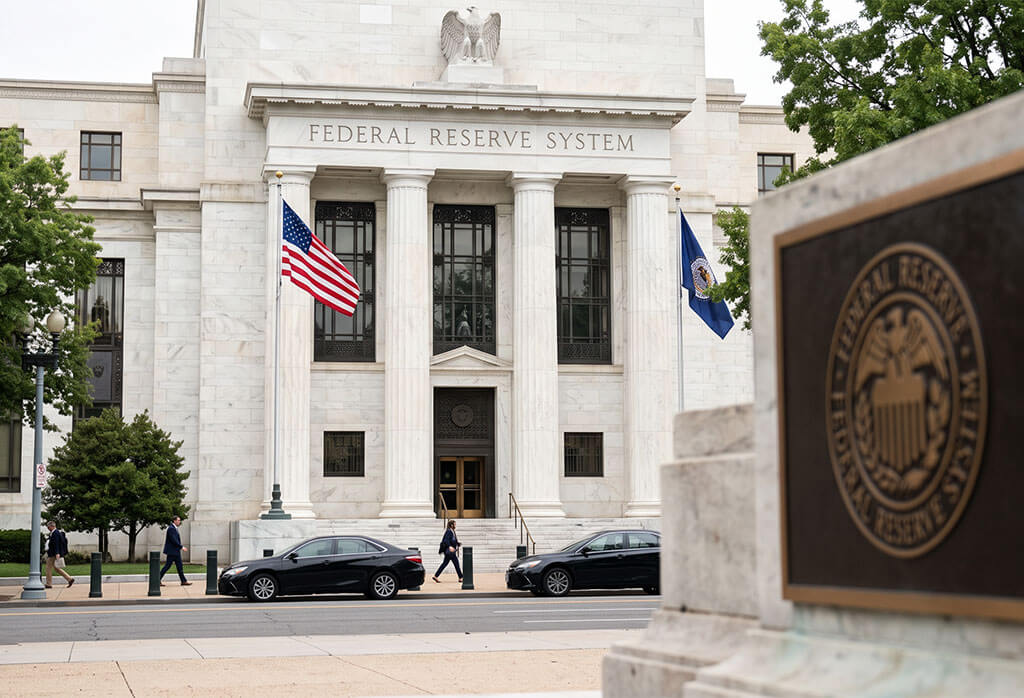



The next Federal Reserve rate decision now looks less settled after a weak September jobs report pointed to a cooling US labor market. Employers added 29,000 jobs last month, well short of the 90,000 economists had expected. The slowdown hands policymakers a reason to wait before lifting borrowing costs again.
Hiring slows before a crucial vote
The figures arrived as the clearest read on the labor market before November, when voters decide whether President Donald Trump’s Republican Party holds both chambers of Congress. Earlier payroll gains for July and August were revised lower. The US unemployment rate edged up to 4.2 percent from 4.1 percent, and wage growth eased. Each signal points the same way. Growth continues, but the pace of hiring has thinned.
That shift carries weight. Last month the Fed said it would likely deliver at least one more Fed rate hike this year, provided the labor market stayed firm. A softer jobs picture loosens that condition. Policymakers set their course on employment and prices together, and one half of that picture has started to wobble.


What the Federal Reserve rate decision now hinges on
Markets repriced within hours. Before the data, traders had bet on a brisk run of increases, and longer-term bond yields reached a 24-year high on Thursday. Mortgage rates climbed above 7 percent. After Friday’s report, interest rate futures showed only about a one-in-six chance of a move at the October 27 to 28 FOMC meeting, down from more than one-in-four a week earlier.
Two influential officials shaped that turn. Fed Vice Chair Philip Jefferson said a decision on whether to raise the benchmark rate may take more time. New York Fed President John Williams saw no pressing need to follow last month’s quarter-point increase with another so soon. Their caution reset expectations for the next Federal Reserve rate decision and left December as the more probable moment for action.
Inflation still sits above target
The argument for higher rates has not disappeared. In September, the Fed lifted the federal funds rate by a quarter point, moving the range to 3.75 to 4.00 percent, its first increase in more than three years. Fed Chair Kevin Warsh has tied that move to a firm commitment on prices. Inflation by the Fed’s preferred measure ran at 3.4 percent in August, well above the 2 percent goal the central bank has defended for years. Supply shocks, including the energy effects of the war with Iran, have kept price pressures elevated.
The committee faces a familiar bind. Raise too slowly, and inflation risks settling in. Act too fast against a weakening jobs market, and the strain reaches households already stretched by the cost of living.
A central bank caught between its mandate and the calendar
Here the story moves from numbers to governance. The Fed answers to a dual mandate, stable prices and full employment, not to an election timetable. Yet the October meeting lands days before the vote, and the result will shape how borrowing costs feel to families and firms across the country. That proximity tests the line between independent policy and political consequence.
Voters have soured on the handling of the economy. Elevated inflation and higher borrowing costs have raised the cost of living, even as overall output held steady. The mood weighs on incumbents, and it places the central bank’s independence under a sharper light. Whatever the next Federal Reserve rate decision delivers, officials will want it read as a verdict on data, not on the ballot. Accountability, in this reading, means showing the reasoning plainly enough that neither party can claim the outcome as its own.
The data that matters before late October
Economists warn that the September jobs report is not the last word. Fresh inflation readings reach policymakers before the committee meets, and those numbers could still tip the balance. Fifth Third economist Bill Adams argued that the coming consumer and producer price reports, fuel costs, and geopolitical events carry more weight for the next move than the latest employment figures.
More signals are close. The minutes of the September meeting land this week, and the September consumer price index follows in mid-October. Each gives the committee a cleaner view of where prices are heading. For now, the balance has tilted toward patience. A December increase still looks likely to most traders, even as October odds fade. The US unemployment rate and the next inflation prints will tell policymakers whether the labor market can carry tighter policy. Until then, the central bank looks set to wait, watch, and let the evidence decide who the rules are meant to serve.