

In the economics of the twenty-first century, the real wealth of nations can no longer be measured solely by natural resources, financial reserves, infrastructure, or geographic advantages. Increasingly, sustainable competitiveness is determined by the quality of a country’s human capital: the knowledge, skills, creativity, productivity, entrepreneurial capacity, and leadership qualities embedded within its people.
For the Kingdom of Bahrain, this principle has increasingly moved beyond policy language into institutional practice. One of its clearest manifestations is Youth City 2030, an initiative that has developed over fifteen editions from an ambitious youth-development project into what can increasingly be regarded as a national human-capital development platform.
The significance of Youth City 2030 is therefore greater than the number of workshops it conducts or the thousands of young Bahrainis passing through its programs. Economically, its value lies in helping create the future supply of skilled labor, entrepreneurs, innovators, leaders, and productive citizens upon whom Bahrain’s next stage of economic development will depend.
That is particularly important at a time when Bahrain’s economic structure is becoming increasingly diversified. In 2025, Bahrain’s real GDP expanded by 3.5%, while non-oil activities grew by 4.1% and represented approximately 85.8% of real GDP. Financial and insurance activities alone contributed 17.6% of real GDP, while manufacturing accounted for 15.1%. Professional, scientific and technical activities recorded growth of 6.4%, while financial and insurance activities expanded by 5.6%.
These figures demonstrate a fundamental economic reality: Bahrain’s future prosperity will increasingly depend upon human capability rather than resource extraction.
And this is precisely where Youth City 2030 becomes strategically important.
From an Initiative to Human-Capital Infrastructure
Youth City 2030 began in 2010, evolving over fifteen years into one of Bahrain’s most recognizable national youth initiatives. Its development has been closely associated with the vision and leadership of His Highness Shaikh Nasser bin Hamad Al Khalifa, Representative of His Majesty the King for Humanitarian Work and Youth Affairs and Chairman of the Supreme Council for Youth and Sports.
From its inception, the initiative sought not simply to occupy young people’s time during the summer, but to discover talent, build capabilities, encourage creativity, and prepare Bahraini youth for the responsibilities and opportunities of the future.
The philosophy corresponds closely with the principles of Bahrain Economic Vision 2030: competitiveness, sustainability and fairness, supported by a productive private sector and a workforce equipped with skills that generate higher economic value.
Over time, Youth City has progressively moved towards what economists might describe as a skills-formation ecosystem.
Its programs now cover leadership and entrepreneurship, science and technology, arts and culture, media and digital innovation, sports and health. The 2026 edition offered exposure to artificial intelligence, cybersecurity, space technologies, game development, digital manufacturing, 3D printing, financial awareness, entrepreneurship, media production, content creation, leadership and other disciplines directly associated with the evolving labour market.
Such diversification is important because future competitiveness will not depend upon one narrow category of technical knowledge.
The successful employee or entrepreneur of tomorrow will require a portfolio of capabilities: digital literacy, critical thinking, financial awareness, communication, leadership, creativity, adaptability and technological fluency.
Youth City 2030 provides an environment where these capabilities can begin developing long before young Bahrainis enter full-time employment.
The 2026 Edition: Scale Becoming Economic Impact
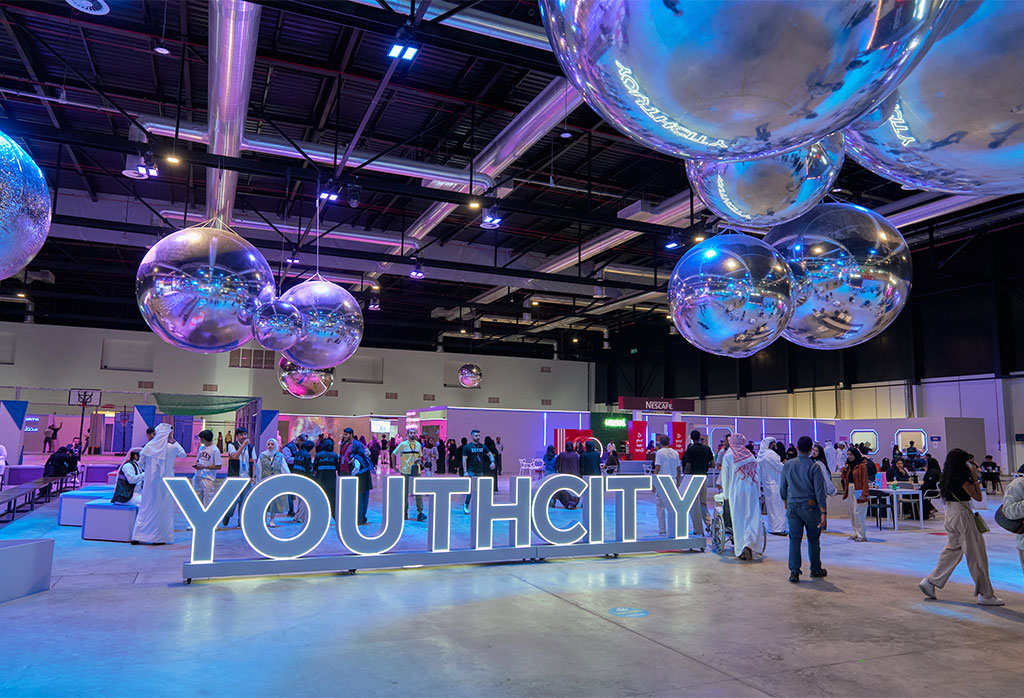
The fifteenth edition demonstrated just how far Youth City 2030 has developed.
At the beginning of the 2026 program, organizers planned for more than 6,000 participants, with 256 programs providing 10,650 training opportunities, including more than 150 new programs.
By the time His Majesty visited the City in August, the indicators presented to His Majesty showed that the initiative had expanded to more than 324 training programs, more than 10,000 training opportunities, 9,635 participating young men and women, and 204 local and international partnerships.
These are important numbers.
The participation level significantly exceeded the originally anticipated 6,000-plus participants, illustrating both strong demand among young Bahrainis and the increasing national visibility of the initiative.
But the more economically significant figure may be the 204 partnerships.
Human-capital development becomes far more effective when responsibility is shared between government, businesses, educational institutions, specialized organizations and international partners.
This creates what economists call knowledge spillovers: young participants do not only receive theoretical information but gain exposure to different industries, professionals, employers, technologies and operating environments.
The involvement of the Labor Fund Tamkeen as strategic partner further reinforces this economic dimension by connecting the initiative with Bahrain’s broader employment, enterprise and private-sector development architecture.
Youth City therefore operates increasingly at the intersection of education, training, employability, entrepreneurship and economic development.
His Majesty’s Visit: More Than a Royal Visit — A Strategic Signal
The visit of His Majesty King Hamad bin Isa Al Khalifa to Youth City 2030 on 15 August 2026 should, in my view, be regarded as one of the most significant moments in the City’s fifteen-year journey.
Its importance extended considerably beyond protocol.
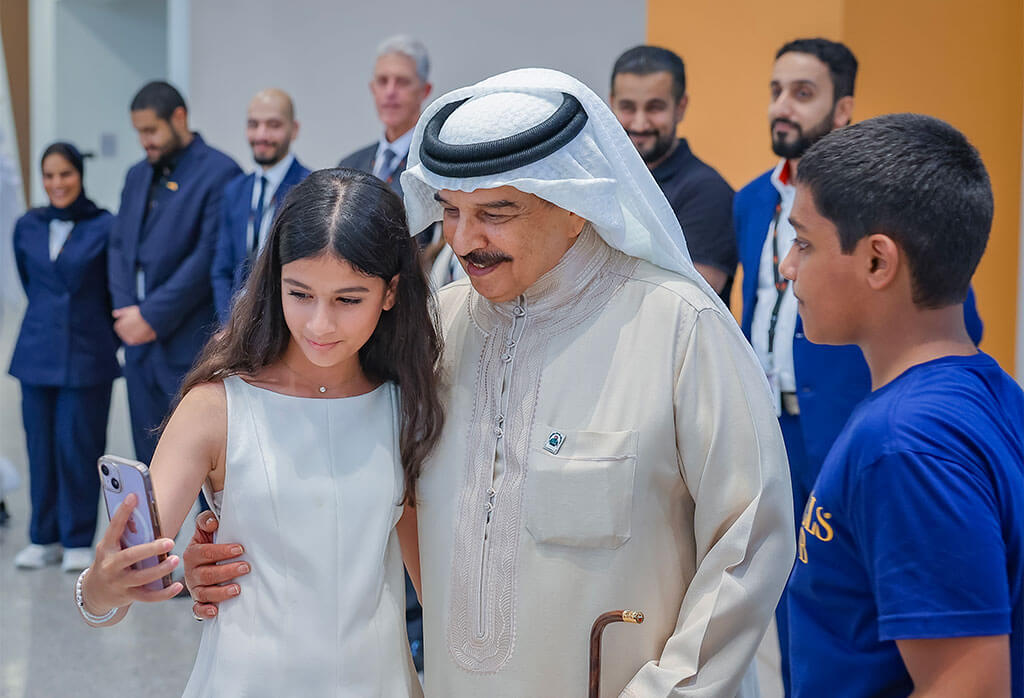
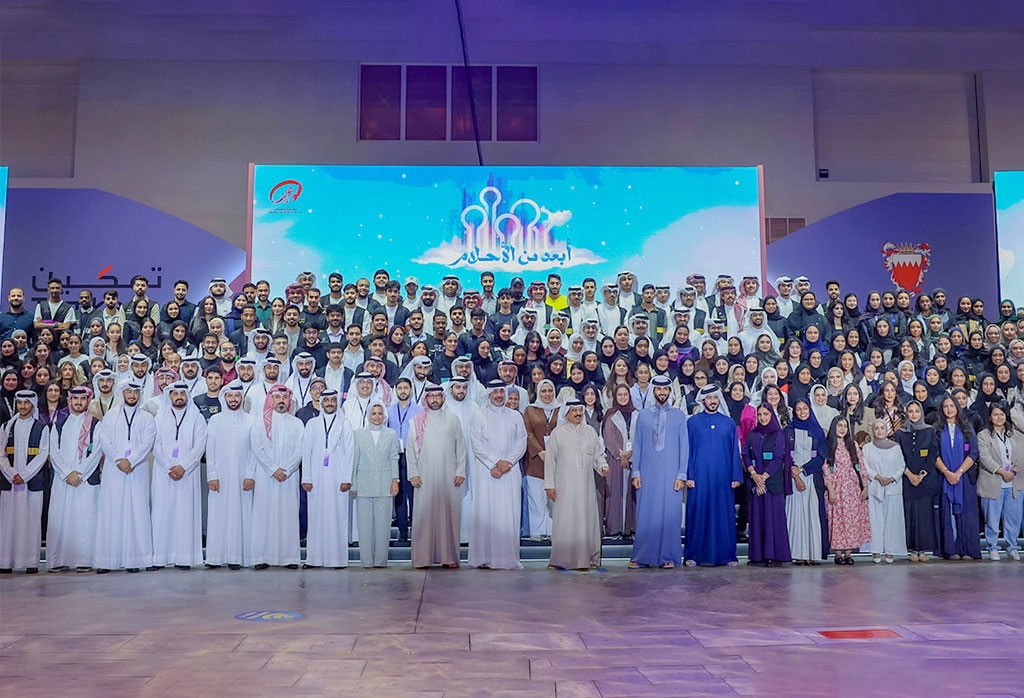
His Majesty personally reviewed the program and initiatives, examined the science and technology, arts and culture, leadership and entrepreneurship, media and entertainment, and sports centers, met participating young Bahrainis and observed their work.
Importantly, His Majesty also visited the Young Trader projects, listened directly to younger participants explaining their entrepreneurial ideas and experiences, and viewed the talents and practical outputs being produced inside the City.
That direct engagement carries enormous significance.
For a young student who has developed an idea, a young entrepreneur experimenting with his or her first business concept, or a participant learning an emerging technology, receiving direct attention from the country’s highest leadership fundamentally changes the perceived value of that experience.
It tells them that their ideas matter. Parents that investing time in developing their children’s capabilities matters.
It tells educators and trainers that their work is contributing to national development.
And it sends a powerful message to private companies and institutions that youth development is not peripheral social expenditure; it is a national economic priority.
In economic terms, leadership creates a powerful signaling effect.
When the national leadership visibly places youth innovation, training and entrepreneurship at the center of its attention, it reduces uncertainty regarding national priorities and encourages institutions to allocate greater attention, partnerships and resources towards the development of young people.
His Majesty’s visit therefore acted as both a motivation multiplier for participants and a strategic validation of the Youth City model.
His Majesty’s words were equally powerful.
Addressing Bahraini youth, His Majesty said:
“Just as those before you served Bahrain, you will continue the journey.”
His Majesty further expressed confidence that witnessing the work, achievements, and conversations of Bahrain’s youth provided reassurance regarding Bahrain’s future.
This carries a profound economic and national-development message.
Youth are not being prepared simply to obtain jobs.
They are being prepared to inherit responsibility for the productive economy itself.
They will manage companies, establish enterprises, lead institutions, develop technologies, make investment decisions, enter public service, create intellectual property, represent Bahrain internationally and ultimately determine the country’s future productivity and competitiveness.
His Majesty described young people as Bahrain’s most valuable national wealth and emphasised the importance of continuing to encourage, empower and qualify them to lead the national development process.
That philosophy places youth development where it belongs: at the centre of economic strategy.
A Royal Vision That Converts a Demographic Asset into an Economic Asset
Young populations can create what economists call a demographic dividend, but youth alone do not automatically generate economic growth.
A demographic dividend only materializes when young citizens possess the education, skills, productivity, entrepreneurial ambition, and employment opportunities necessary to contribute meaningfully to the economy.
Otherwise, demographic potential remains underutilized.
The vision of His Majesty King Hamad bin Isa Al Khalifa towards Bahraini youth recognizes this fundamental distinction.
Investment must begin before young citizens assume leadership positions.
They must be given opportunities to experiment, fail safely, learn, innovate, communicate, lead teams, and transform ideas into practical outcomes.
Youth City represents exactly this form of early-stage human-capital investment.
Its return should consequently not be measured only through immediate financial revenue.
Its return emerges later through higher employment productivity, stronger labor-market participation, more competitive Bahraini professionals, successful businesses, innovation, leadership capability, and reduced skills mismatches between education and employment.
These are forms of social and economic return on investment whose value compounds over decades.
Shaikh Nasser bin Hamad: Turning Vision into an Institution
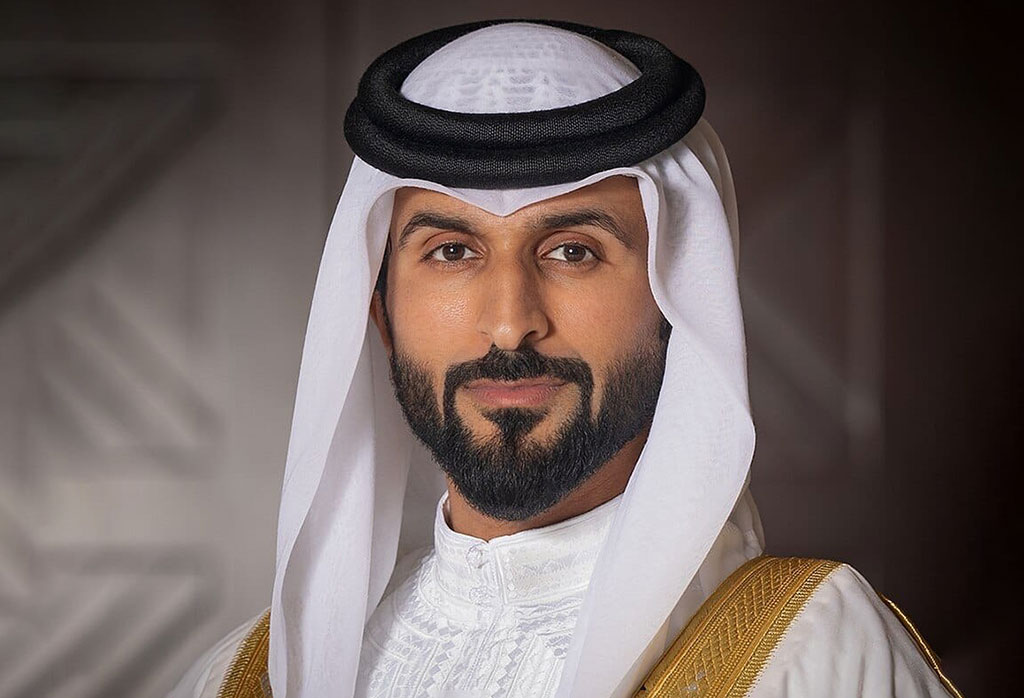
If His Majesty’s vision provides the strategic national foundation, His Highness Shaikh Nasser bin Hamad Al Khalifa has played a central role in translating that philosophy into a sustainable youth-development model.
His Highness’s role has been particularly important because Youth City has not remained static.
The initiative has continuously evolved according to changing economic realities, technological developments, and the aspirations of new generations.
His Highness has repeatedly emphasized that Bahraini youth are not merely leaders of tomorrow; they are partners in building Bahrain today. During his 2026 visit, His Highness highlighted the City’s evolution into an integrated experience combining learning, practical application, and real participation, alongside growing national and international partnerships.
This reflects sophisticated human-capital policy.
In rapidly changing economies, traditional qualifications can become outdated relatively quickly. Countries consequently need continuous mechanisms through which young people develop adaptive capabilities, particularly in technology, entrepreneurship, digital communications and innovation.
Shaikh Nasser’s leadership has helped Youth City remain close to those emerging trends.
The result is an initiative that has survived fifteen editions because its programs change while its strategic purpose remains constant: finding talent, strengthening capabilities and converting youth potential into national productive capacity.
From Students to Entrepreneurs: Building the Future Private Sector
One particularly important element is Youth City’s increasing engagement with entrepreneurship.
Economic diversification cannot be achieved solely by preparing young citizens to become employees.
It also requires creating individuals capable of becoming employers, founders, innovators and investors.
The Young Trader projects viewed by His Majesty are therefore more important economically than their initial size might suggest.
A small student project today may be the first stage in developing commercial awareness: identifying customers, pricing products, managing costs, explaining value propositions, understanding risk and learning how markets operate.
This experience builds what economists describe as entrepreneurial capital.
Not every participant will eventually establish a company, nor should they.
But exposure to entrepreneurship develops initiative, accountability, problem-solving, and commercial thinking—skills that are equally valuable within existing companies.
This is how a youth initiative can contribute gradually to increasing Bahrain’s entrepreneurial density, strengthening the SME pipeline and widening the future base of private-sector economic activity.
Alignment with Bahrain’s Changing Economic Structure
The relevance of Youth City becomes even clearer when viewed against Bahrain’s economic transformation.
With non-oil activities already representing approximately 85.8% of real GDP, Bahrain’s growth model increasingly depends on sectors where knowledge, services, technical capability and innovation are fundamental productive inputs.
In 2025, professional, scientific and technical activities grew by 6.4%, financial and insurance activities by 5.6%, construction by 5%, and transportation and storage by approximately 4.7%.
These are precisely the conditions in which a country benefits from developing young citizens with multidisciplinary skills.
Artificial intelligence and cybersecurity training contribute to digital competitiveness.
Financial-literacy programs strengthen economic decision-making.
Leadership programs improve organizational capability.
Entrepreneurship programs increase business formation capacity.
Media and content-production skills respond to the rapid expansion of the digital economy.
Science and technology programs increase what economists call the economy’s absorptive capacity—its ability to understand, adopt, and ultimately produce new technologies.
Seen collectively, Youth City is therefore not simply developing individuals.
It is strengthening components of Bahrain’s future national innovation system.
A Bahraini Model with Gulf and Regional Relevance
Bahrain’s experience also offers lessons beyond its national borders.
GCC economies face many common strategic priorities: diversification beyond hydrocarbons, increasing productivity, creating private-sector opportunities for nationals, developing entrepreneurship, strengthening digital capabilities and preparing citizens for industries that may look very different ten or twenty years from now.
Youth City 2030 demonstrates how these objectives can be integrated within a single national ecosystem.
There is already evidence of regional interest.
On 17 August 2026, Kuwait’s Minister of State for Youth and Sports, Dr Tariq Hamad Al-Jalahma, visited Youth City 2030 and reviewed its training tracks, programs, youth projects, and initiatives designed around future requirements.
This regional engagement is significant.
Bahrain may have developed not merely a successful domestic program but a potentially exportable model of youth-policy innovation.
The lesson for other countries is not necessarily to duplicate Youth City identically, but to replicate its underlying principles: leadership support, public-private partnership, demand-driven skills development, early exposure to entrepreneurship and technology, and continuous adaptation to changing labor-market requirements.
The Next Stage: Measuring the Economic Return
After fifteen editions, Youth City 2030 now has an opportunity to enter another stage of institutional maturity.
The next step could be to measure its longitudinal economic impact.
Rather than measuring only participants, programs, and training opportunities, future performance indicators might track:
- how many former participants enter priority economic sectors;
- how many establish businesses or startups;
- how many obtain professional or technical qualifications;
- how many projects move from training environments into incubators and accelerators;
- employment outcomes and salary progression;
- employer satisfaction with graduates’ skills;
- intellectual-property or innovation outputs;
- participants who later become mentors, investors or program leaders.
Such information would allow Bahrain to eventually calculate a more sophisticated social return on investment for youth development.
It would also create an integrated pipeline connecting:
schools → Youth City → universities and vocational institutions → Tamkeen → incubators and accelerators → employers and investors → leadership positions.
That would represent not merely a youth program but a genuine national talent-development value chain.
Investing in Youth Is Economic Policy
The history of Youth City 2030 demonstrates an important principle: investment in youth is not separate from economic policy. It is economic policy.
Roads, ports, telecommunications networks and industrial zones are recognized as infrastructure because they increase the productive capacity of an economy.
Human-capital development should be viewed in exactly the same way.
A trained engineer is infrastructure.
A digitally capable student is future infrastructure.
A young entrepreneur capable of creating employment is economic infrastructure.
A confident future leader capable of making informed decisions is national infrastructure.
Bahrain’s success in the coming decades will increasingly depend upon the productivity, creativity and leadership of its citizens.
The vision of His Majesty King Hamad bin Isa Al Khalifa has made investment in Bahraini people a fundamental pillar of national development. The programs supported by His Royal Highness Prince Salman bin Hamad Al Khalifa, Crown Prince and Prime Minister, continue to translate this strategic direction into economic and institutional action.
And through the sustained leadership of His Highness Shaikh Nasser bin Hamad Al Khalifa, Youth City 2030 has become one of the most visible examples of how this vision reaches young Bahrainis directly.
His Majesty’s visit in August 2026 gave that journey renewed momentum.
For thousands of participating students, volunteers, innovators and young entrepreneurs, the visit represented something deeper than recognition.
It represented trust.
Trust that their ideas have value. Talents deserve investment.
And that they are capable of taking responsibility.
And trust that they will continue the national development journey begun by generations before them.
This may ultimately be the greatest economic contribution of Youth City 2030.
Its success should not be measured only by the 324 programs, 10,000-plus training opportunities, 9,635 participants, or 204 partnerships achieved in its fifteenth edition.
Its true success will be measured in the years ahead—in the companies established, technologies developed, jobs created, institutions led, innovations produced, and economic value generated by the young Bahrainis whose ambitions were strengthened within it.
As Bahrain moves beyond Economic Vision 2030 and begins shaping the economic priorities of the decades that follow, one strategic conclusion becomes increasingly clear:
The Kingdom’s most sustainable competitive advantage will not be located beneath its land, but within the knowledge, skills, ambition and leadership of its people.
And when a nation invests systematically in its youth, it is not merely preparing them for the future.
It is preparing the future itself.