icnlive

ICN.live

Khaled Darwish

  • Poland plans to ban mobile phones for students under 16 in primary schools from September 1, 2026.
  • Prime Minister Donald Tusk says the rules protect children from addiction to platforms and games.
  • A separate bill demands stronger age verification for pornography sites without using biometric data.
  • A proposed social media ban under 15 follows, risking conflict with major United States technology firms.

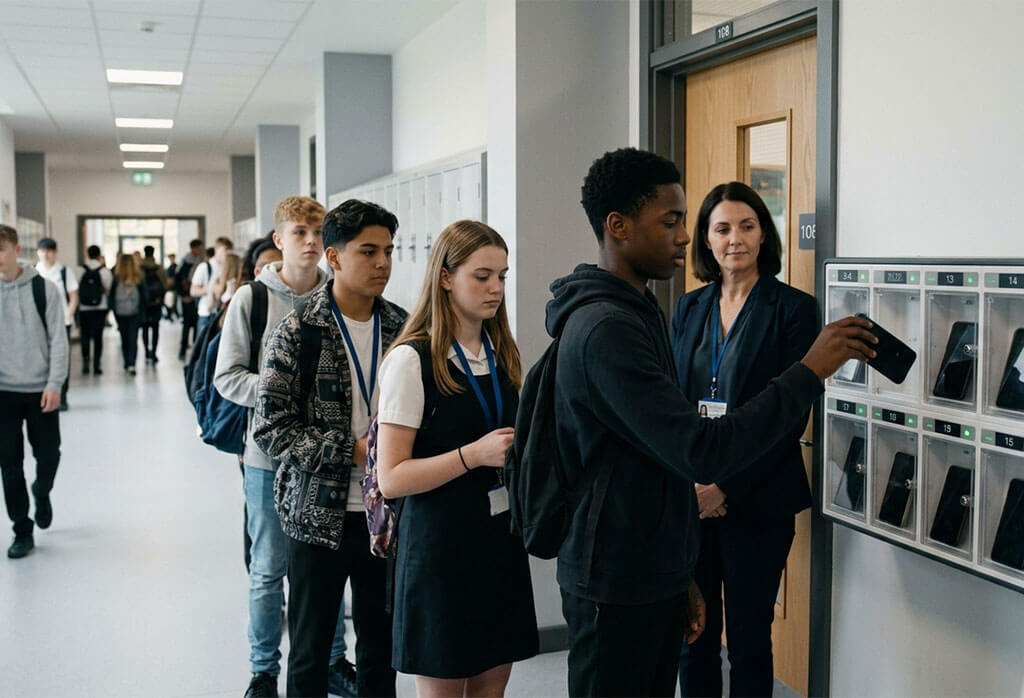
Poland phone-ban in schools will start on September 1 across primary schools nationwide. Children aged 7 to 15 cannot use phones during lessons or even during short breaks. Prime Minister Donald Tusk announced the rules on Tuesday after months of internal debate. You see Poland joining nations like the Netherlands, South Korea, and Italy on this issue. These countries banned smartphones in schools over rising worries about concentration and student behaviour. The proposed mobile phone ban gives schools legal grounds to set up phone storage points. Teachers and parents gain a clear tool to manage screen time during the school day.

Tusk framed the move as a response to a deep problem facing young people. He warned about addiction to platforms and games among the youngest citizens across the country. This addiction can bring disastrous consequences for children’s lives and for the country, Tusk argued.

A separate bill targets websites offering pornography with new duties to block underage access. Officials designed the age verification pornography rules around strict privacy and data protection standards. You will also see a planned social media ban under 15 moving through parliament soon. Education Minister Barbara Nowacka outlined the social media plan back in February this year. Her proposal opens the door to a clash with major United States technology firms.

Tech firms push back against the limits

Technology companies argue the focus should fall on how children use devices, not bans. They point to parental controls and targeted limits as better routes than total restrictions. Firms also highlight benefits of smartphones for learning, communication, and student safety each day. Poland’s phone ban in schools still needs approval from parliament before it becomes a binding law. President Karol Nawrocki must also sign off on the package once lawmakers pass it. The government holds a majority, so passage through parliament looks likely in the months ahead.

Several European nations now act after Australia passed a world-first ban for under-16s. Spain, France, Denmark, and Norway weigh similar limits on young people and social platforms. From my standpoint, the Polish phone ban in schools signals a wider shift in child protection. Parents and teachers gain real authority to limit phones inside primary schools every day. You should watch how courts and tech giants respond to the new age limits. The mobile phone ban affects every primary school pupil in the country from autumn. The Polish phone ban in schools shows how policy now touches even daily classroom routines.

Poland’s phone ban in schools heads for a final vote

Schools will decide how to store devices, perhaps in lockers or sealed deposit boxes. Pupils get their phones back at the end of each school day under the rules. Donald Tusk stressed protection from harmful content as the single goal of the package. Critics say enforcement remains hard because teachers cannot police every pupil during busy breaks. Supporters reply with a strong point about a clear national law backing staff far better. The age verification pornography measure also avoids biometric data to guard each user’s privacy. Lawmakers want the social media ban under 15 to take effect by early 2027. Fines for platforms reach up to six per cent of their global revenue under the plan. Your view of phones in primary schools will shape this debate in the coming months.


TAGS

EXPLORE MORE ON:

Apple's big Siri update arrives

Apple’s big Siri update arrived this week, and the harder work starts right now. The company announced Siri AI on Monday during its yearly developer conference in California. This revamp targets a 15-year-old assistant and pushes it into today’s heated AI race. Siri AI will operate apps, read your screen, and use personal context in answers. You will get the new assistant through a beta release arriving later this year. The assistant also brings a standalone app for revisiting your past chats and results. Siri AI can take actions inside apps, including drafting emails based on your notes.

The assistant reads onscreen content, so it can answer questions about what you see. Personal context lets Siri pull useful details from your messages, photos, and calendar events. For years, Apple trailed rivals like OpenAI and Google in building strong AI tools. Investors now want proof that the company can turn this technology into real product sales. Apple Intelligence powers the new features, yet many phones cannot run all of them. Barclays analysts called the changes more evolutionary than revolutionary in a recent research note. They wrote that the firm still views Apple as a laggard with weak monetization plans.

Why iPhone AI features face a tough test

Apple did not reply right away to questions about its plans for charging users. Older models matter here because more than half of them cannot support Apple Intelligence today. Even buyers of new iPhones this fall will likely chase battery life or speed. Paul Schell, an AI analyst at ABI Research, doubts AI drives upgrade cycles now. He told CNN makers had hoped AI would push more people toward new phones. Still, this week gave a preview of how AI might pull buyers toward pricier models. Apple’s big Siri update locks some of its functions to top-tier iPhone models only. More accurate voice dictation needs an iPhone Air, iPhone 17 Pro, or Pro Max. A custom and more expressive Siri voice also requires one of those newer phones. Morgan Stanley estimates that over 1.3 billion active iPhones lack the power for both features.

Apple’s big Siri update and the money question

Some Apple Intelligence tools will sit behind an iCloud+ subscription instead of being free. Higher image generation limits and smart home camera summaries will fall under paid plans. The real test asks whether you will pay for AI baked into daily tasks. Apple built the new system on a deeper architecture after early versions fell short. Several lawsuits piled up while the delayed features missed their first promised release windows. From my standpoint, Apple holds the hardware base, yet the pricing path looks unclear.

What Apple’s big Siri update means for you

Siri AI beta access begins later this year, giving early users a first look. The Apple AI race now centers on whether features can earn loyal paying customers. Google now pushes Gemini hard, so Apple cannot afford a slow, quiet rollout here. You can expect the competition to stay fierce as Google and OpenAI keep moving fast. For you, the payoff depends on owning a phone strong enough to run everything. Apple’s big Siri update gives the company a clear story to tell nervous investors. The next several months will show whether buyers reward the effort with their wallets.

Shakira opening ceremony audience

Shakira’s opening ceremony audience numbers reached 1.2 billion people during the World Cup launch. The Colombian star performed on Thursday at the Estadio Azteca World Cup 2026 venue. More than 80,000 fans filled the stadium while billions more watched from screens worldwide. You likely saw clips of the dance routine across social media feeds this week. The performance opened the first match between Mexico and South Africa in dramatic fashion.

Shakira, Burna Boy, and Dai Dai marked the official song choice for this tournament edition. The two artists shared the stage in yellow outfits before a roaring home crowd. Dancers in traditional Mexican attire joined them and filled the field with bright color. Your view of the show likely came through one of several global broadcast feeds. Fox, Telemundo, and other major networks carried the ceremony to fans across many countries.

A record audience that left American sports far behind

Shakira’s opening ceremony audience figures dwarfed the recent Super Bowl halftime numbers by a wide margin. The Shakira vs Bad Bunny Super Bowl audience gap stretched to nearly ten times. Bad Bunny drew around 125 million viewers at Super Bowl LX earlier this year. Those numbers cover the live United States broadcast of the biggest American sports night. The contrast shows how football reaches viewers far beyond one single national television market.

Music and football have shared a long history at every recent World Cup tournament. Shakira knows this giant stage well after her famous 2010 anthem in South Africa. Her song Waka Waka became one of the most loved World Cup tracks ever. You can hear echoes of those moments in this new performance with Burna Boy. Some viewers raised questions about her look, since she wore sunglasses on the grass. The 49-year-old singer answered any such doubt with sharp energy across her full set. Bad Bunny still set his own records during a strong Super Bowl halftime run. Yet the World Cup easily reaches Africa, Europe, Asia, and South America at once. One simple fact explains the wide gap between the two huge audience totals here. Football clearly remains the biggest sport on the planet by almost every honest measure.

What does the Shakira opening ceremony audience signal for FIFA

The huge World Cup 2026 opening ceremony viewers count gives FIFA real bargaining power. Sponsors and broadcasters watch these figures closely before they sign their next big deals. Shakira’s opening ceremony audience strength also proves the clear value of star music partnerships. From my standpoint, this single show reset clear expectations for future football opening events. The tournament now runs across 11 cities in the United States, Mexico, and Canada. This edition now features 48 national teams and 104 matches across three host nations. Fans can still watch the remaining ceremonies on Fox, Telemundo, and several streaming platforms. Each host city brings its own performers, culture, and energy to the global broadcast. You will see more huge ceremonies as the World Cup moves through its schedule. Shakira returns again later to co-headline the final halftime show alongside Madonna and BTS. Their July show should draw another massive global crowd to close this historic tournament.

SpaceX IPO

SpaceX IPO excitement fills Wall Street as banks prepare for a record stock debut. JPMorgan Chase plans a Friday party while bankers finalize the company’s huge capital raise. The offering targets a June 12 trading debut on Nasdaq, using the ticker SPCX. Bankers set the price near $135 per share across about 556 million total shares. The deal seeks $75 billion at a company valuation close to $1.75 trillion overall. SpaceX’s largest IPO in history would beat every prior record on Wall Street. A wide 21-bank syndicate runs the offering under one internal name, called Project Apex. Goldman Sachs leads the deal, with Morgan Stanley and JPMorgan also taking top roles.

Retail investors win a bigger slice than usual

SpaceX IPO retail investors gain rare access through one of the biggest public allocations. The company reserves close to 30% of the offering for ordinary buyers, sources say. This level reaches three times the normal allocation seen in a giant company listing. At $75 billion, retail buyers might receive roughly $22.5 billion in newly available shares. Jamie Dimon, the JPMorgan CEO, said Musk is treating small buyers like big institutions. Even so, requesting shares never guarantees an investor will win a full final allocation.

How to buy the SpaceX IPO through your broker

Several major brokerages now offer entry, including Charles Schwab, Fidelity, Robinhood, E-Trade, and SoFi. Fidelity lets customers request shares with as little as $2,000 in a brokerage account. Charles Schwab requires a higher bar, asking clients to hold at least $100,000 first. If you want to learn how to buy SpaceX IPO shares, start with your brokerage app. You submit a conditional order, then confirm it before the listing morning deadline arrives. Robinhood recently won approval to act as an underwriter on future public stock offerings. The Robinhood app pushes its IPO Access feature to attract younger, first-time market participants.

SpaceX IPO price and the fight for shares

Demand for SpaceX shares looks set to top the supply in the pre-IPO pool. Many buyers will receive fewer shares than requested when their orders pile up fast. The SpaceX IPO price sits at $135, yet early demand signals point much higher. On Hyperliquid, pre-IPO futures price the stock near 20% above the listed entry level. Renaissance Capital strategist Matthew Kennedy warned about weak signals from a soft first-day return. He said a gain under 10% would show the deal runs less hot than hoped.

What the SpaceX IPO means for you

Musk keeps tight control, owning about 42% of equity and 85% of voting power. Public buyers, therefore, enter a company where one single person holds clear final authority. Lockup rules block most insiders from selling for about 90 to 180 full days. Selling within 15 days, known as flipping, can limit your future IPO deal access. Stocks have wobbled lately, with the S&P 500 down about 3% over five days. From my standpoint, the weak market raises the stakes for this record stock debut greatly. You should request shares early, yet plan for a smaller fill than you want. Watch the pricing after Thursday’s close, then track the first Nasdaq trades on Friday.

Share this post

on your favourite social platforms

or copy the link