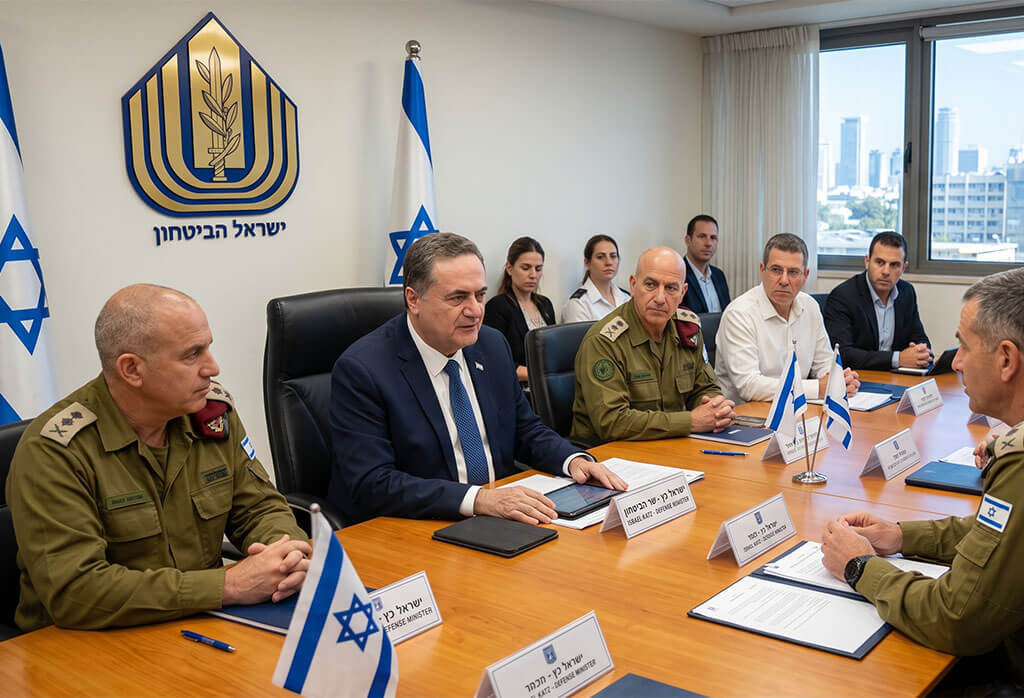



Israeli forces continue to clash in Lebanon while officials in Jerusalem set no timeline for withdrawal. Defense Minister Israel Katz confirmed troops stay inside zones across Lebanon, Syria, and Gaza. Katz spoke at a memorial event honoring soldiers killed during the 2006 Lebanon war. He said Israel’s Lebanon security zones will stand until Hezbollah loses its weapons entirely. Katz also renewed a stern warning toward Iran over any future attack against Israel. This Israel-Iran full-force warning promises a heavy response for any strike linked to Lebanon operations. Israel and Lebanon signed a new framework agreement last week under United States sponsorship. The deal aims to build lasting peace and fully disarm the Iran-backed group Hezbollah. Prime Minister Benjamin Netanyahu ruled out any troop withdrawal from southern Lebanon so far. Officials say full withdrawal will happen only once Hezbollah gives up its complete arsenal.
Israeli forces continue to clash in Lebanon as security zones expand
Hezbollah pulled Lebanon into the wider Middle East war during early March rocket fighting. Fighters fired rockets aimed at Israel to avenge the death of a senior leader. Israel answered with heavy air raids and a wide ground push into southern Lebanon. Lebanon’s health ministry reports nearly 4,300 deaths from Israeli strikes since the fighting began. The Israeli military counts 38 soldiers and one civilian contractor lost across Lebanon operations.
Analysts note the IDF Lebanon Syria Gaza withdrawal debate stays unresolved after months of talks. Israeli jets have kept striking targets inside Syria since rebels removed longtime ruler Bashar al-Assad. Commanders say they want a fully demilitarized zone across the country’s entire southern border. Inside Gaza, Israeli troops now hold close to 70 percent of the entire territory. Hamas and Israel each accuse the other side of breaking the active truce terms.
Israel Katz Hezbollah statement adds pressure across the region
This ceasefire took hold last October and still guides current daily military ground operations. The Hezbollah disarmament ceasefire question now shapes talks between Washington, Beirut and Jerusalem daily. Katz said, “We will not withdraw from the security zones,” during his Wednesday remarks. Israeli forces continue to clash in Lebanon each week despite the newly signed agreement. This Israel Katz Hezbollah statement signals continued pressure on armed militants inside Lebanon today. Israeli forces continue to clash in Lebanon while diplomats push for a lasting deal. From my standpoint, this dual pressure campaign slows diplomacy and raises overall regional risk.
Israeli forces continue to clash in Lebanon, and the security zone policy shows no change. Hezbollah leader Naim Qassem demands a full and unconditional Israeli pullback from Lebanese soil. Beirut officials say the disarmament process needs firm guarantees before any real troop exit. Washington mediators keep pushing both sides toward a durable and lasting regional peace deal. Investors watch these tensions closely since regional stability shapes energy prices and market confidence. Lebanese civilians near the border face daily uncertainty amid continued strikes and shifting front lines. Regional leaders now call for renewed talks to prevent a broader regional escalation cycle. The coming weeks likely decide whether this fragile framework holds together or collapses entirely.