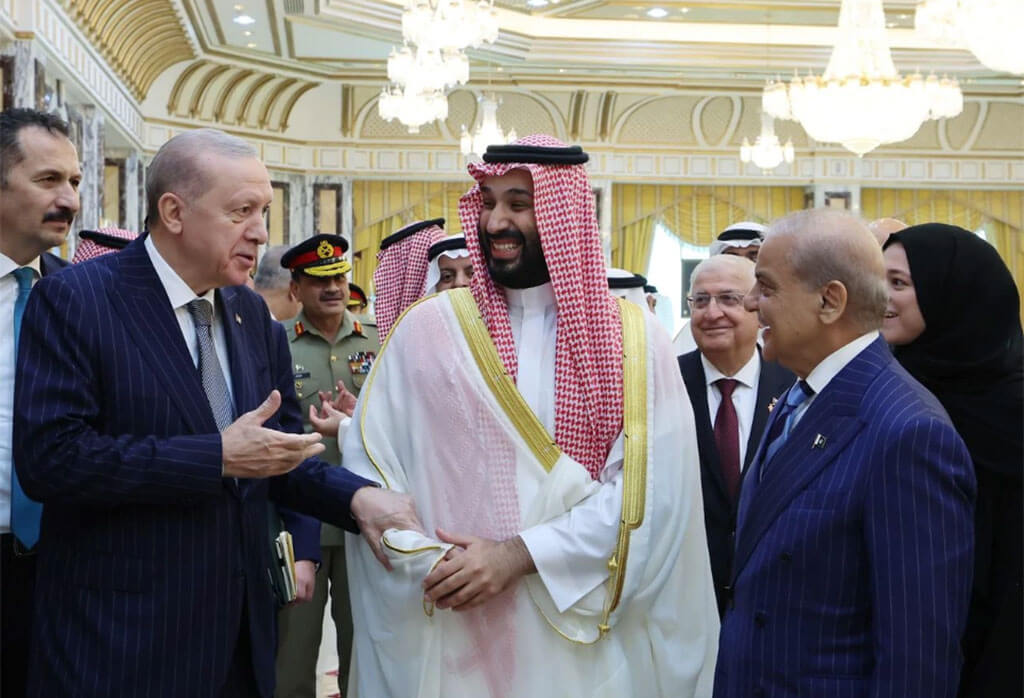



The Türkiye, Saudi Arabia, and Pakistan defense pact became official on Friday in Mecca, binding three of the Muslim world’s largest militaries to one promise. An armed attack on any of the three now counts as an attack on all of them. President Recep Tayyip Erdogan and Pakistani Prime Minister Muhammad Shehbaz Sharif traveled to Saudi Arabia at the invitation of King Salman bin Abdulaziz Al Saud. Crown Prince and Prime Minister Mohammed bin Salman received both leaders at Al-Safa Palace. There, the three signed what they call the Mecca Joint Defense Agreement.
Pakistan’s Ministry of Foreign Affairs released the official statement. It said the leaders reviewed relations and several shared concerns before signing. Long historical ties and shared strategic interests form the ground the deal stands on, the text says. Its stated goal is plain. The agreement strengthens collective deterrence against any act of aggression and widens defense cooperation across all three states.
What the Türkiye, Saudi Arabia, and Pakistan defense pact commits each side to
The core clause reads like the one at the heart of NATO. Each country now treats aggression against a partner as aggression against itself. That mutual-defense language mirrors Article 5, which is why analysts describe the arrangement as a NATO-style mutual defense pact. The three governments have not used that label themselves. A Turkish official told Reuters the deal is defensive and points at no single actor. It stays open to other regional states, and it does not cancel any existing bilateral or multilateral arrangement the three already hold.
Speaking to Al Jazeera, another Turkish official said no other country will join for now. He added that states such as Qatar and Egypt should sign on, and that the partners want more members to build a regional alliance and stronger deterrence.
Why a Saudi Arabia, Pakistan, and Turkey alliance took shape now
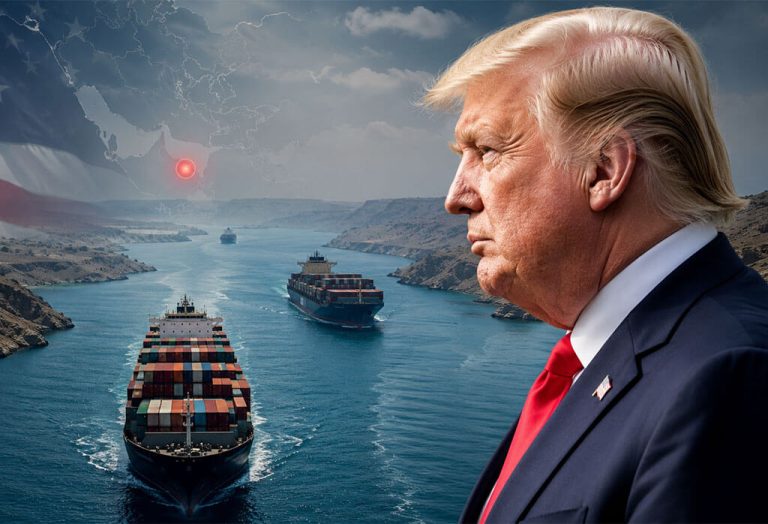
Timing explains a lot. Iran and its allies have fired on Saudi Arabia and other Gulf states, and blocked their energy shipments, since the U.S. and Israel attacked Iran on February 28. That war has pushed missile fire onto Gulf oil exporters and rattled energy markets. The Türkiye, Saudi Arabia, and Pakistan defense pact gives each member a wider shield at a tense moment. A Saudi Arabia, Pakistan, and Turkey alliance also pools rare strengths. Saudi Arabia holds deep oil wealth. Pakistan is the only nuclear-armed Muslim country. Türkiye fields one of NATO’s largest armies and a growing defense industry. Both Pakistan and Türkiye have also backed a Saudi plan for a maritime coalition to guard regional shipping and energy routes.
The deal builds on an earlier one. In September 2025, Saudi Arabia and Pakistan signed a Strategic Mutual Defense Agreement in Riyadh, pledging that aggression against one would be treated as aggression against both. Türkiye’s entry widens that two-way pledge into a three-way framework. Coverage across outlets has attached the phrase “Islamic NATO” to the idea, though none of the three governments describes the Türkiye, Saudi Arabia, and Pakistan defense pact in those terms. Reuters reported that officials from the three countries had worked on the draft for months before the signing.
How the region is reading the Türkiye, Saudi Arabia, and Pakistan defense pact
Reaction from Tehran came fast. Ebrahim Rezaei, a member of the Iranian parliament’s national security committee, wrote on X that the deal will not guarantee Saudi security. The pact also lands against a wider Middle East war and renewed fighting in Yemen, on Saudi Arabia’s southern border. For readers, the point is simple. Three U.S.-allied Muslim states have tied their security together, and they have left the door open for others to follow.