

icnlive

WATCH LIVE. THINK BUSINESS.

© 2026 ICN.LIVE

ICN.live

  • FAB is issuing the Jaywan debit card, the UAE’s homegrown payment card, for domestic use.
  • The card runs on the UAE national card scheme, managed by Al Etihad Payments and backed by the Central Bank of the UAE.
  • It works at shops, on UAE websites, and at ATMs, with Chip and PIN and 3D Secure built in.
  • Eligible FAB customers can apply through the FAB Mobile app or at a branch.

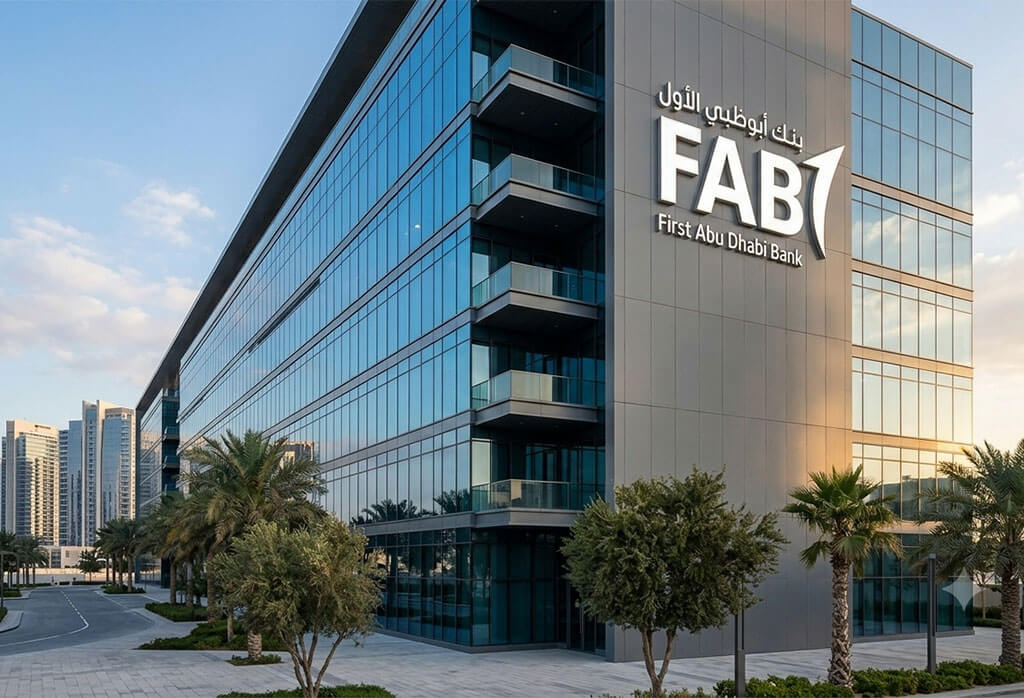
FAB launches the Emirati Jaywan Debit Card, and the country now has a homegrown card sitting inside its biggest bank. The card is live for domestic use. It runs on the UAE national card scheme, the local rails managed by Al Etihad Payments and backed by the Central Bank of the UAE. First Abu Dhabi Bank is the largest lender in the country by assets. So this reads as a real signal, not a pilot.

What the Jaywan debit card does

Here is what you get. The Jaywan debit card handles everyday payments and cash access across the UAE. Tap or dip at local merchant outlets. Online, it works on UAE-based platforms. ATMs nationwide handle cash withdrawals. The card also links to digital wallets through tokenised wallet integration, so your card details get swapped for a secure token on supported devices.

Security sits at the core. The card uses Chip and PIN for in-person buys and 3D Secure authentication online. Your four-digit PIN confirms you are the real cardholder at the till. For a domestic scheme handling millions of daily taps, this layer counts.

Why FAB launches the Emirati Jaywan Debit Card now

Timing tells the story. FAB launches the Emirati Jaywan Debit Card as the national rollout moves from plan to practice. The card is integrated with the FAB Mobile app, so you manage it where you already bank. You watch transactions, handle your account, and run digital servicing from one screen. Al Etihad Payments built Jaywan to localise card payments and cut transaction costs. Keeping this flow inside UAE borders also strengthens national data sovereignty, a point FAB made plainly.

Two names carried the message. Futoon Al Mazrouei, Group Head of Personal, Wealth and Business Banking at FAB, tied the card to trust and customer focus inside the UAE’s financial system. Andrea Ciancetti, Chief Products Officer at Al Etihad Payments, called the FAB launch “a critical milestone for the roll-out of the scheme,” and thanked the bank for making Jaywan real for people nationwide.

How to get the Jaywan debit card

Getting one is simple if you already bank with FAB. Apply through the FAB Mobile app or at a FAB branch. No account with the bank yet? Open an eligible one first, then apply. Elite and Private Banking clients can go through their relationship managers. FAB has not disclosed fees, account tiers, or rewards, so check those points before you commit.

Jaywan is bigger than one card. The scheme, launched in 2024, is the first UAE national card scheme, built to localise payments and lower costs for merchants and banks. First Abu Dhabi Bank is one of the early issuers, with other lenders lining up prepaid and debit products over the coming months. Al Etihad Payments has also signed global networks for co-badged cards, so travel use can follow the domestic base. For now, the FAB card stays inside UAE borders.


IMPORTANT: CONTENT SUBMITTED BY THE CLIENT. THIS IS A PRESS RELEASE ARTICLE. PLEASE READ THE INFORMATION BELOW.

ICN.live neither validates nor guarantees the accuracy, reliability, or quality of the information, promotional materials, or products mentioned herein. Readers are encouraged to conduct independent due diligence before making any decisions related to the featured company. ICN.live bears no responsibility, directly or indirectly, for any harm, loss, or consequences that may result from reliance on or interaction with the content, services, or offerings described in this release.

The details shared in this announcement do not constitute financial, trading, or investment guidance. Readers are strongly advised to carry out independent research and seek advice from a qualified financial professional before making any investment or cryptocurrency-related decisions.

TAGS

EXPLORE MORE ON:

UAE music licence for businesse

A UAE music licence for businesses will soon shape the cost of playing a song in public. From December 2026, restaurants, cafes, hotels, malls, gyms and airlines that play music must hold one. The Ministry of Economy and Tourism set out the rules in a new guide on music rights. The guide covers a wide list of venues. Radio stations, TV channels, concerts and similar events fall under it too. Each licence lasts one year and can be renewed. Fee brackets depend on how the music is used and how big the business is.

Who collects the UAE music licensing fees?

Two Ministry-approved bodies will handle the UAE music licence for businesses. The Emirates Music Rights Association and Music Nation UAE act for the rights holders. That pool includes composers, singers, record producers and publishers. They will issue the permits and take in the money.

The Ministry did not publish exact fee amounts. What it did confirm is the shape of the fees. Live music and DJ sets tend to cost more. Smaller venues with background music should pay less. Not every place has to pay. Schools and academic bodies are exempt. Government offices, national events and private, non-commercial parties also sit outside the rules. The Ministry can add more exempt groups later.

Why the UAE music licence for businesses matters now

Abdullah bin Touq Al Marri, Minister of Economy and Tourism, tied the move to the wider economy. He said the UAE backs its music and creative sectors as it works to widen its income. The minister called the guide one step toward a full system for copyright and related rights. It fits the goals of UAE Vision 2031.

Here is the practical read. The commercial use of music UAE venues rely on is now a paid, tracked activity. Pressing play on a home streaming app and hoping no one asks carries real risk. If you run a venue, this is your cue to check your setup. The framework rests on the UAE copyright law. Back in 2021, the country reshaped that law with fresh rules on copyright and neighbouring rights. Those rules created public performance rights across the country. Now the guide gives them a way to be enforced and paid.

The guide also sets up a Cultural Support Fund in the Field of Music. It will give money, technical help and artistic support for writing, production and live shows. Support targets new talent, including children, youth and people of determination. The fund will also carry Emirati music abroad. Ten per cent of all fees collected will feed this fund. A joint team from the Ministry of Economy and Tourism and the Ministry of Culture will run it. The collecting bodies must keep a separate bank account for the fund’s share.

Oversight and disputes

The Ministry will watch the licensed bodies for compliance with the UAE copyright law. Checks include field visits and reviews of financial and technical records. Complaints from rights holders will be handled too, with calm settlements sought or action taken where needed.

One line stands out. The Ministry keeps the right to change licence terms when the rules or public interest call for it, and licensees must comply at once. For venues, the UAE music licence for businesses is now a fixed cost of running a room with a soundtrack. My read: firms that move early will feel the least pain.

Superintelligence for everyone

Superintelligence for everyone is the bet Mark Zuckerberg placed this week. On August 10, the Meta chief published an essay titled The Future is for Everyone, and his argument runs simple. The most advanced AI should sit in your hands, not inside a handful of labs. What matters most, he wrote, is not who builds the strongest system first. It is who gets to use it.

The three ideas behind the plan

Zuckerberg built his case on three ideas. People, not big institutions, create prosperity. AI’s real value lies in helping you invent things rather than replacing your job. And safety comes from spreading power widely, so no single company or government can dominate. He calls his preferred version personal superintelligence, and he wants Meta to lead in building it.

Think of it this way. If one person owned a superintelligent lawyer, they could win in court even when they were wrong. Give everyone that same lawyer, Zuckerberg argues, and the system gets fairer. That thought experiment sits at the center of the Mark Zuckerberg AI vision laid out in the essay.

What Meta says it will build

Superintelligence for everyone starts, in Meta’s telling, with a personal assistant. Meta wants to put personal AI agents in front of billions of people. Zuckerberg described an assistant that works around the clock on your behalf, helping with your health, career, finances, relationships, and home. He said it would run with strong privacy, modeled on the encryption Meta uses in WhatsApp, so your information stays yours.

Cost sits at the heart of the pitch. Meta plans free versions for billions of users, plus a paid tier for people who want more computing power. Zuckerberg also said Meta superintelligence work now runs through Meta Superintelligence Labs, and the company will resume releasing some open-source AI models soon. No firm dates appear for when these tools reach users.

“Everyone will have an exceptionally capable personal agent that understands you, your goals, and everything you care about. Your agent will work 24/7 on your behalf to improve your relationships, health, career, finances, home management, hobbies, and more. It will free up time for the things you enjoy, and help you accomplish more than you could otherwise.”, Mark said.

Why the finance crowd is watching

Zuckerberg frames invention, not automation, as the real prize. He predicts new kinds of work, from one-person studios making custom products to small teams running sizable companies with a capable agent. That prediction rests on people gaining skills as fast as machines gain them. Whether that holds is uncertain, and he admits the transition could be hard for many workers.

The essay also answers a common worry about who benefits. Meta points to Richland Parish, Louisiana, where it is building a large data center. Teachers there received a 50,000 dollar bonus this year from the added tax revenue, the company said. Local promises like these form what Meta calls a community compact, backed by a fund for the towns it builds in.

Superintelligence for everyone, or a Meta pitch?

The essay reads as philosophy more than product news. It names no launch dates and no specific models. Superintelligence for everyone is the frame, yet the plan still runs on Meta’s platforms, Meta’s compute, and Meta’s terms. For readers weighing the promise, that tension is worth watching. The idea of superintelligence for everyone sounds open by design. Delivery, for now, sits with one company.

Abu Dhabi free visa

The Abu Dhabi free visa for Indian travellers is here, and the rules are refreshingly plain. Book a holiday of at least three nights in the emirate, and your UAE entry visa comes at no extra cost. The Department of Culture and Tourism, Abu Dhabi, known as DCT Abu Dhabi, covers the fee. That charge runs Dh285, or roughly $77 a person.

The offer began on August 1 and runs through October 31, 2026. During this pilot window, DCT Abu Dhabi will support up to 20,000 visas.

Who can claim it

Treat this as a targeted deal, not an open door. The Abu Dhabi free visa for Indian travellers applies to Indian passport holders who depart from India. You need to book through a participating travel partner or an online travel agency. Your stay must run at least three consecutive nights at a hotel in Abu Dhabi. A return flight from India is also required.

One detail matters here. Travellers cannot apply on their own. The free UAE visa for Indian tourists flows only through approved partners, so the package is the key.

Behind the scenes, travel companies have two ways to process the visa. One route uses a Destination Management Company appointed by DCT Abu Dhabi. Pick this path, and the department pays the visa cost directly.

The second option lets partners keep their existing destination management companies. Under this route, DCT Abu Dhabi reimburses Dh285 for every visa issued. Either way, you receive a UAE entry visa without paying more, and the Abu Dhabi holiday package carries the cost.

The math adds up fast. At 20,000 visas and Dh285 each, the pilot represents about Dh5.7 million, close to $1.5 million in direct travel support.

Why Abu Dhabi is targeting India

India sits near the top of Abu Dhabi tourism priorities. The Abu Dhabi free visa for Indian travellers extends a longer effort to strengthen air links and build closer ties with the travel trade. Cheaper entry means an easier yes for a family weighing a trip. Indian nationals also form the UAE’s largest expatriate community, nearly 35 percent of the population, with about 800,000 living in Abu Dhabi alone.

Abdulla Yousuf, Director of International Operations at DCT Abu Dhabi, framed the goal in market terms. He said India remains one of the destination’s most important international markets, and the department wants to keep making Abu Dhabi more accessible for Indian travellers.

Yousuf gave a second reason too. By covering the visa, he said, the department hands travel partners another strong reason to recommend the emirate. He pointed to longer stays as the payoff, with visitors spending more time across the emirate’s culture, entertainment, hospitality and natural attractions.

What travellers should check

So where does this leave you? If a three-night Abu Dhabi trip already sits on your list, the Abu Dhabi free visa for Indian travellers trims a real cost from the total. Ask your travel partner whether they take part before you pay. Book early. The 20,000 cap could fill before October, and once it does, the free window closes.

Share this post

on your favourite social platforms

or copy the link