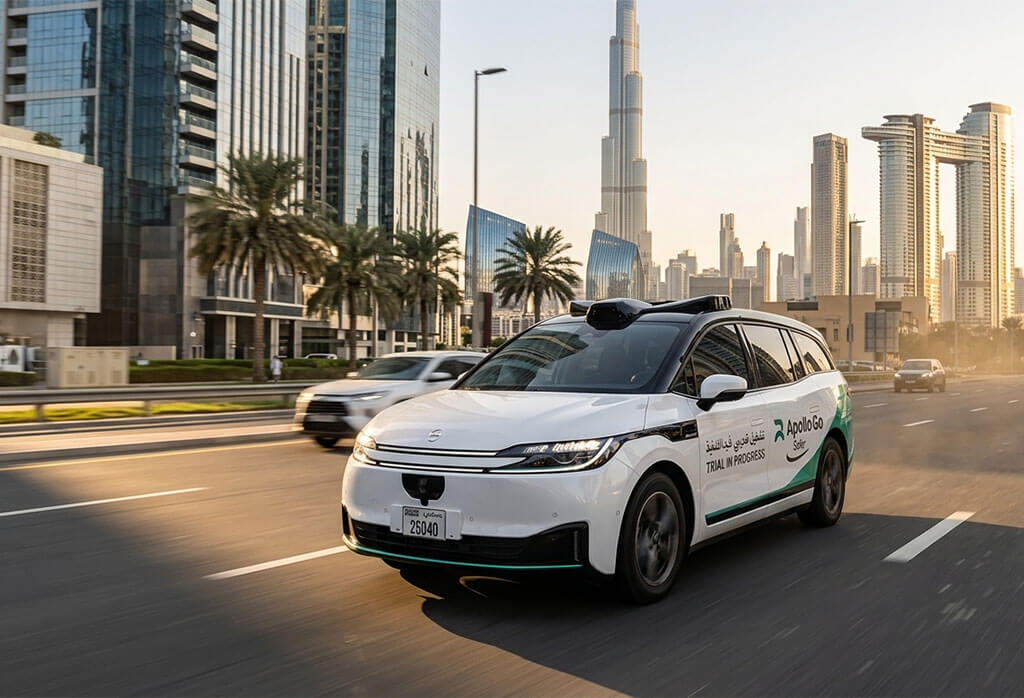



A single line on the RTA’s social feed told residents their next ride might arrive with no one at the wheel. Dubai is ready with a free autonomous taxi service, and the offer began in two neighbourhoods that hug the coast. The Roads and Transport Authority opened public rides in Umm Suqeim and Jumeirah, both close to the beaches, on July 15, 2026.
Riders reach the vehicles through two apps rather than an RTA channel. Uber customers pick the Autonomous option and receive a WeRide car when one is free nearby. Apollo Go users book inside that company’s own app. Fleet allocation depends on how many vehicles sit inside the active zone at the time.
The split behind the wheel is worth noting. Tawasul Transport handles dispatch and operational control for WeRide taxis booked through Uber. Dubai Taxi Company manages local fleet needs for Apollo Go. The technology firms run the driving systems. The licensed operators handle the ground work under RTA supervision.
This Dubai driverless taxi rollout removes something the earlier trips carried. When Uber first offered WeRide rides in December 2025, a vehicle specialist sat inside. The current free service drops that specialist and completes the move to fully autonomous operation.
From testing to public roads
The path here was slow and deliberate. RTA started commercial operations on March 30, 2026, after trials on set roads. By September 2025, more than 60 vehicles from Apollo Go, WeRide and Pony.ai were already running in Jumeirah and Umm Suqeim.
Apollo Go Dubai began with 50 RT6 vehicles used for testing and data collection. Agreements signed in April 2025 made Dubai the company’s first operating market outside mainland China and Hong Kong. Each RT6 carries 40 sensors and detectors. By April 2025, Apollo Go had logged more than 150 million kilometres of safe driving and over 10 million autonomous trips across several cities.
WeRide ran about 150 autonomous vehicles across the Middle East by December 2025, including more than 100 robotaxis. Anyone asking how to book driverless taxi Dubai rides will find the answer sits inside apps they already use.
What the cars actually do
The autonomous taxi Dubai fleet leans on artificial intelligence, high-definition maps and deep learning. Onboard systems read the road in real time and make driving choices without a person. The software handles intersections, signals, pedestrians and nearby cars while following road rules. These vehicles share open roads with live traffic.
The bigger target
Every robotaxi Dubai adds points toward one number. Dubai’s Self-Driving Transport Strategy aims for autonomous operation across 25 per cent of all journeys by 2030. The strategy covers several transport modes, not taxis alone.
Mattar Al Tayer, Director General and Chairman of the Board of Executive Directors at RTA, named licensing, infrastructure and operating rules as core requirements back in April 2025. Dubai’s population passed four million residents by December 2025, which lifts demand for taxis and app-based mobility.
The free window has limits Dubai has not spelled out. RTA has not disclosed operating hours, wider route boundaries, or an end date for free pricing. Published plans place 100 vehicles in the first phase and up to 1,000 Apollo Go units within three years. Later reporting suggests a Dh5 fare has since appeared on Apollo Go, a sign the free period may be short. Coverage will widen as demand, service quality and regulatory readiness allow.