
icnlive

ICN.live

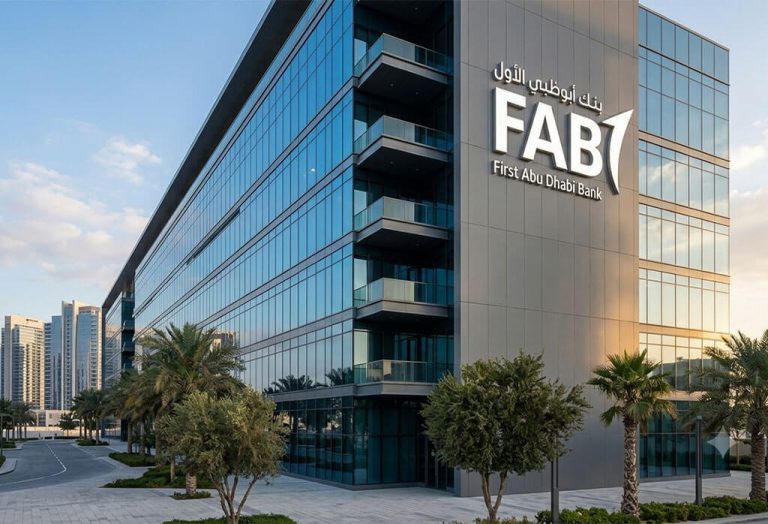
  • Finance House Group launched the Dhabi Bank inside the Abu Dhabi Global Market this week.
  • The bank works as the first full banking institution built within the ADGM free zone.
  • You gain current accounts, savings products, and fixed deposits through one digital platform.
  • Mohamed Abdullah Alqubaisi chairs the bank and targets borderless, customer-first global banking.

Dhabi Bank launch gives you a new way to manage money across many global markets. Finance House Group announced the new bank inside the Abu Dhabi Global Market this week. The bank wants to serve people and firms who work and live across borders. Its digital tools let you open accounts, save funds, and send money with ease. Dhabi Bank ADGM operates as the first full bank built inside this financial free zone.

You gain access to current accounts, savings products, and fixed deposits in one place. Both individuals and businesses can build their wealth through a single connected banking platform. Finance House Group has worked in the UAE financial sector for more than two decades. The group brings strong infrastructure and proven systems to support this new banking brand. Still, the bank follows an independent path with its own clear goals and vision. Digital banking UAE customers want speed, safety, and full control over each daily transaction.

Dhabi answers this demand with secure tools built around trust, safety, and full transparency. You can manage, transfer, and grow your funds from almost anywhere in the world.

Why the Dhabi Bank launch matters for you

The Dhabi Bank launch arrives as global financial needs shift with greater worker mobility. More people now live, work, and earn across several different countries during their careers. Traditional banks often struggle to serve clients who hold money across many global markets. This Abu Dhabi Global Market bank targets exactly these modern and cross-border banking needs today. From my standpoint, this model fits how people now earn and spend their income.

Each account stays connected, so you watch your full balance in one simple view. Mohamed Abdullah Alqubaisi chairs the new bank and founded Finance House Group many years ago. “We built a platform for those who see opportunity across the world,” Alqubaisi said. Alqubaisi added that the bank sets a new benchmark for borderless banking from Abu Dhabi. Abu Dhabi keeps growing as a strong global financial and business center each year. The bank blends global ambition with strong regional links across nearby high-growth markets. Its leaders focus on you, the customer, within every product and service design decision.

A board of experienced leaders now guides the bank during its early setup phase. These specialists come from many sectors and help shape the long-term strategic direction together.

Strong leadership behind the Abu Dhabi Global Market bank

A skilled management team supports the board and runs daily operations across the bank. They work to deliver the full vision through fresh banking products and smart services. For you, the Dhabi Bank launch means simpler control over money across many borders. Each service builds on trust, security, and clear transparency for every single account holder. The Dhabi Bank launch gives the UAE a fresh model for borderless personal finance.

You now have a banking option built for life and work without fixed borders. The bank plans to grow its products as customer needs change over the coming years. Watching its next moves will help you judge its value for your own goals.
TAGS

EXPLORE MORE ON:

Kuwait $6 billion bond sale

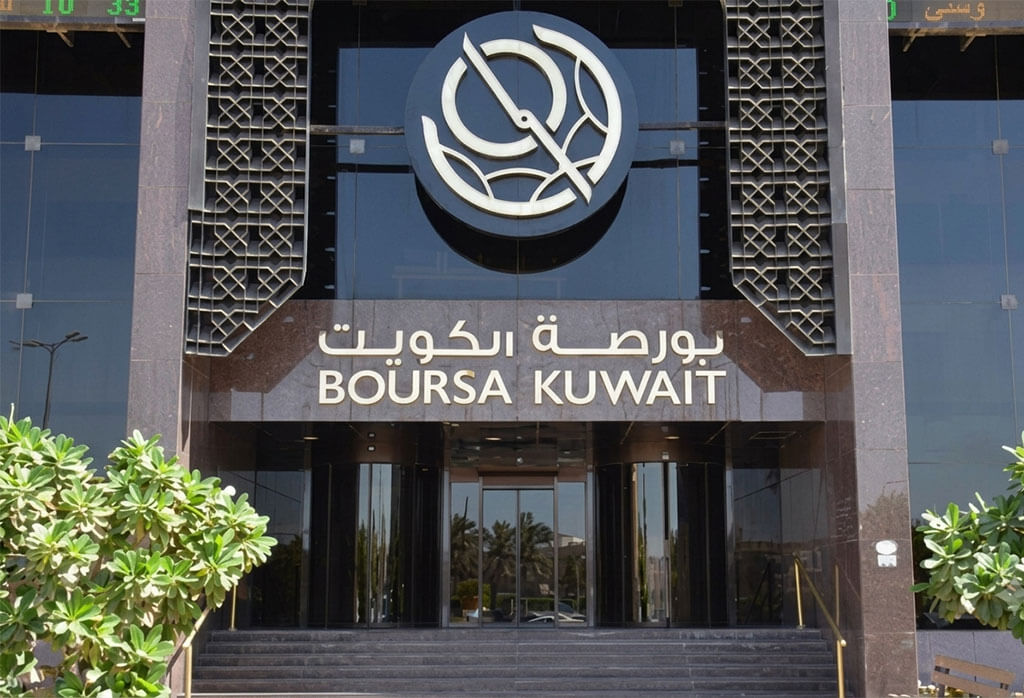
The Kuwait $6 billion bond sale closed this week with an order book the finance ministry calls one of the largest for a multi-tranche sovereign deal in 2026. Three tranches went out. Investors took $3 billion in three-year paper, $1.5 billion in five-year notes and $1.5 billion at 10 years. Final spreads landed at 70, 75 and 85 basis points over US Treasuries. It was the country’s first international issuance since October last year.

Pricing tells you more here than the headline number does. Kuwait tightened 25 basis points across all three tranches from its opening levels, according to a person familiar with the deal cited by Bloomberg. Buyers do not give up that much yield to a borrower they distrust.

Demand for the Kuwait $6 billion bond sale came in two versions. The finance ministry put total orders above $18 billion, more than three times the issue size. Bloomberg reported books near $14.8 billion at final terms. Peak interest and final interest are different numbers, and both can be accurate.

Who bought the Kuwait $6 billion bond sale?

American accounts took 48 percent of the allocation. The UK and Europe followed with 28 percent, then the Middle East and North Africa at 16 percent. Asia took 4 percent, and other international markets took the rest. Finance minister Yaqoub Al-Refaei said the result shows investor confidence in Kuwait’s credit position and financial standing.

The short end did the heavy lifting. Half the total sat in the three-year tranche, which points to buyers who want yield without long duration risk. Five- and 10-year paper gives other Kuwaiti borrowers a benchmark to price against.

Geography matters more than usual on this one. JPMorgan reclassified Kuwait as a developed market in February 2025 and removed it from its emerging market bond index. That move stripped out index-driven demand the country once attracted by default. Pulling almost half the book from the Americas without that support is a real result for a Kuwait sovereign bond issuance.

War risk barely moved the price

Iranian attacks have hit US military assets in Kuwait and Bahrain in recent weeks. Fixed income desks priced the three-tranche bond sale anyway. Gulf sovereign bonds already went through this test once, falling to lows in mid-March before climbing back through late April. Traders have a reference point now, and they used it.

Why Kuwait keeps borrowing

The arithmetic is plain. Kuwait’s 2026-27 budget forecasts revenue of KD16.3 billion against spending of KD26.1 billion. That leaves a Kuwait budget deficit of KD9.8 billion, up from KD6.3 billion the year before. Oil was expected to supply close to 80 percent of budgeted revenue, so disruption around Hormuz cuts straight into the top line.

Access came back through legislation. The Kuwait public debt law, approved in March 2025, set the borrowing ceiling at KD30 billion, roughly $97.4 billion, and allowed maturities out to 50 years. Political gridlock had kept the country out of the sovereign market for eight years before that. Since the law passed, Kuwait raised $11.25 billion in October 2025 and another $2 billion in May.

Kuwait is building a yield curve, and curves need repeat business. Each deal hands domestic banks and corporate borrowers a pricing reference they did not have. I read the Kuwait $6 billion bond sale as a curve-building exercise first and a cash-raising one second. The deficit is real. So is the sovereign wealth sitting behind it. What global investors bought this week was the legal framework and the balance sheet, not the news cycle.

DXB launched new Smart Gates service

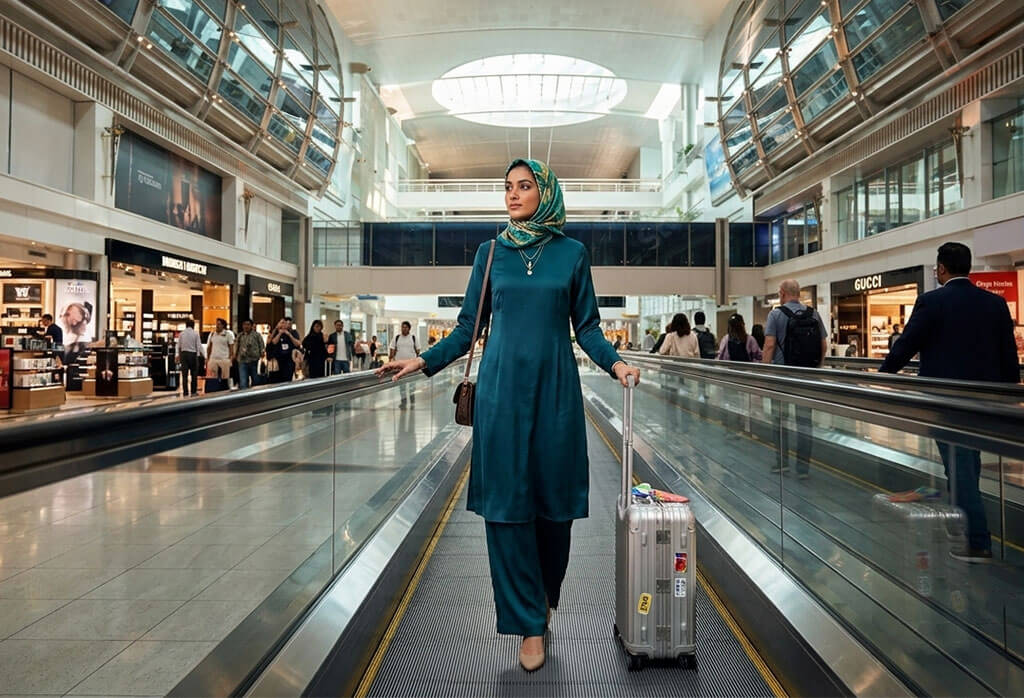
Dubai Airports launched a new Smart Gates service on Friday, letting travellers run a Smart Gates eligibility check before they reach passport control. Dubai Airports developed the tool with the General Directorate of Identity and Foreigners Affairs in Dubai. The operator calls it the Smart Gates Eligibility Pre-Check. Passengers reach it through the Pocket Flights app or by scanning QR codes placed across every terminal and gate.

A traveller scans a passport and gets an answer in seconds. Those who clear it can head straight for the automated lanes. Anyone who does not can plan for a staffed counter instead. Dubai Airports said the point of the change is “making the journey through the airport more seamless for our guests.”

GDRFA runs the gates themselves. Dubai International Airport biometric gates read facial and passport data at the barrier, so there is no stamp and no officer check. Eligible groups include UAE and GCC citizens, UAE residents, and visa-on-arrival guests with biometric passports. Many travellers are enrolled the first time they pass through immigration at DXB, which means some queue at the counters without knowing they already qualify. Anyone wanting a second confirmation can use the GDRFA Dubai smart gate registration inquiry on the directorate website, entering an Emirates ID, a file number, or a passport number with nationality.

Why Dubai Airports launched new Smart Gates services

Record volume explains why DXB launched new Smart Gates service now. Dubai International handled 95.2 million passengers in 2025, up 3.1 percent year on year, the highest annual international traffic recorded at any airport. The operator forecasts 99.5 million for 2026. By the end of last year, the airport connected to 291 destinations across 110 countries, served by 108 international airlines.

DXB passport control has held up so far. In 2025, 99.35 percent of departing passengers cleared it in under ten minutes, and 98.8 percent of arriving passengers were processed within 15 minutes. Paul Griffiths, chief executive of Dubai Airports, said in February that record traffic had become part of the airport’s operating reality rather than an exception.

What the pre-check is meant to solve

Passport control is one of the parts of an airport that cannot be widened quickly. Halls are fixed, gate counts are fixed, and staffing has limits. So the operator is working on how passengers sort themselves before they arrive at the hall. A traveller who knows the answer in advance picks the right lane the first time. Across close to 100 million journeys a year, small gains of that kind carry weight.

Capacity beyond DXB

The larger answer sits at Al Maktoum International, where Dubai is building a terminal project valued at about 35 billion dollars. First-phase capacity is expected by 2032, at 150 million passengers a year. Full build-out would take the site to 260 million. Until that capacity arrives, DXB has to find room inside the space it already uses.

DXB launched a new Smart Gates service as part of that pattern. The operator has spent recent years moving checks earlier in the journey and cutting the number of decisions a passenger makes inside the terminal. DXB launched the new Smart Gates service without changing the gates, the enrolment rules, or the biometric system behind them. It changed what the traveller knows before walking up to them.

Adnan Al-Jaziri covers the Gulf economy for ICN.live, with nearly a decade of reporting on finance and economic transformation across the region.

Ajman-Arbitration-Centre

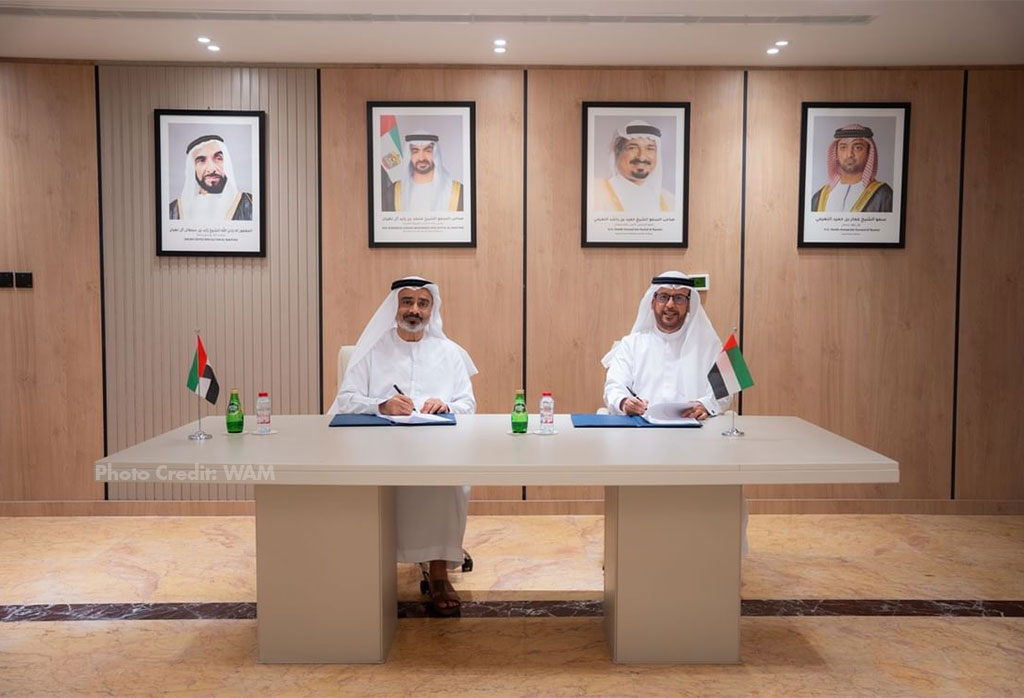
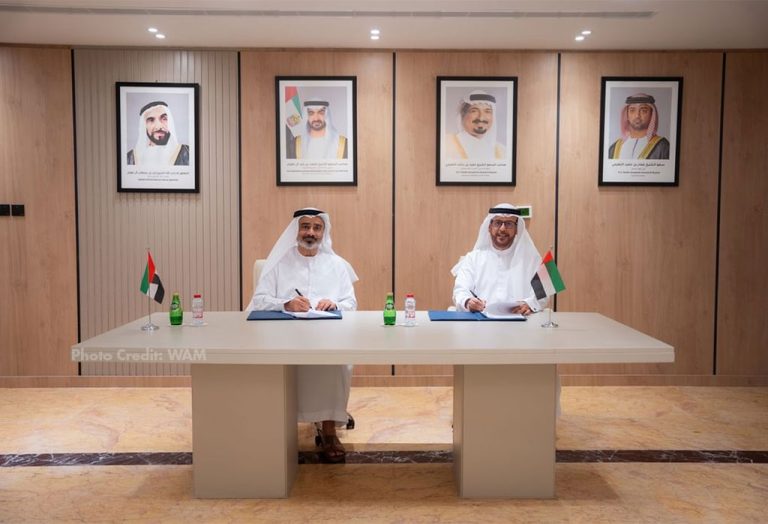
The Ajman Arbitration Centre at the Ajman Chamber has signed a Memorandum of Understanding (MoU) with the Emirates Association for Lawyers and Legal Professionals and its training arm, the Higher Institute for Legal Training, to foster scientific and professional cooperation in legal fields, enhance joint efforts in developing the arbitration system and alternative Dispute Resolution methods, promote legal awareness, and qualify national competencies in the fields of arbitration.

The MoU was signed by Eng. Abdullah bin Mohammed Al Muwaiji, Chairman of the Board of Directors of the Ajman Chamber, and Counsellor Zayed Saeed Al Shamsi, Chairman of the Board of Directors of the Emirates Association for Lawyers and Legal Professionals, at the chamber’s headquarters.

The signing ceremony was attended by Mahmoud Othman Abu Al Shawareb, Member of the Board of Directors of the Ajman Chamber; Hindi Obaid Al Matrooshi, Secretary-General of the Ajman Arbitration Centre; and Dr. Salam Al Issa, Director General of the Higher Institute for Legal Training.

Al Muwaiji commended the efforts of arbitrators and legal professionals in bolstering the competitiveness of the national economy. He also praised their pioneering role in delivering effective legal and arbitral solutions that accelerate commercial Dispute Resolution, thereby instilling confidence within the business community and fostering a secure and stable investment environment.

He emphasised that the Ajman Arbitration Centre is committed to broadening its partnerships and enhancing cooperation with various entities. This aims to reinforce its role as a sustainable and reliable arbitration platform for commercial and economic Dispute Resolution, keeping pace with the rapid growth across various economic sectors in accordance with the latest arbitration practices.

He commended the existing partnership between the Ajman Arbitration Centre and the Emirates Association for Lawyers and Legal Professionals, which contributes to raising awareness of the importance of arbitration and promoting its culture as an effective tool for facilitating business operations and Dispute Resolution with efficiency and flexibility.

Counsellor Al Shamsi provided an overview of the efforts and services of the Emirates Association for Lawyers and Legal Professionals, and the entities affiliated with the Association, including “the Higher Institute for Legal Training, the Emirates Centre for Legal Studies, the Emirates Centre for Human Rights Studies, and the Media Centre.”

The MoU stipulated enhancing joint cooperation between the two parties in legal training and qualification, and arbitration; cooperating in developing the professional capacities of legal professionals; enhancing awareness of relevant local and international best practices and standards; organising specialised legal conferences, seminars, and forums; preparing and implementing qualification programmes for arbitrators and experts; and exchanging scientific and practical expertise in the legal and arbitration fields.

The partnership will also introduce professional and specialised arbitration diploma programmes, qualification courses for arbitrators and experts, specialised workshops, and legal conferences and seminars. These programmes will target lawyers, legal advisers, arbitrators, experts, employees in the public and private sectors, academics, researchers, law students and others interested in arbitration and alternative dispute resolution.

The two sides exchanged commemorative shields following the signing ceremony.


IMPORTANT: CONTENT SUBMITTED BY THE CLIENT. THIS IS A PRESS RELEASE ARTICLE. PLEASE READ THE INFORMATION BELOW.

ICN.live neither validates nor guarantees the accuracy, reliability, or quality of the information, promotional materials, or products mentioned herein. Readers are encouraged to conduct independent due diligence before making any decisions related to the featured company. ICN.live bears no responsibility, directly or indirectly, for any harm, loss, or consequences that may result from reliance on or interaction with the content, services, or offerings described in this release.

The details shared in this announcement do not constitute financial, trading, or investment guidance. Readers are strongly advised to carry out independent research and seek advice from a qualified financial professional before making any investment or cryptocurrency-related decisions.

Share this post

on your favourite social platforms

or copy the link