

icnlive

WATCH LIVE. THINK BUSINESS.

© 2026 ICN.LIVE

ICN.live

PUBLISHED BY ICN PRESS

  • New Priority Banking and Private Banking clients can earn 1 per cent cashback, up to Dh100,000.
  • The reward needs a first account funded with at least Dh500,000 for ninety days.
  • Cashback rises in tiers, from Dh10,000 up to a maximum of Dh100,000.
  • Eligible clients also gain a Relationship Manager, an investment advisor, and wealth support.

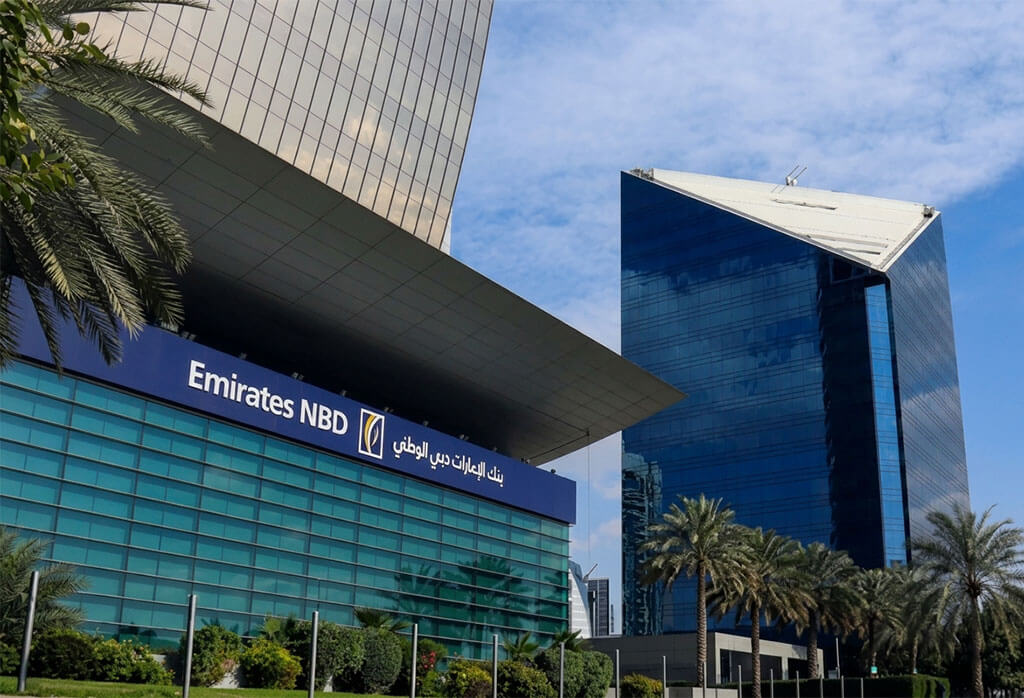
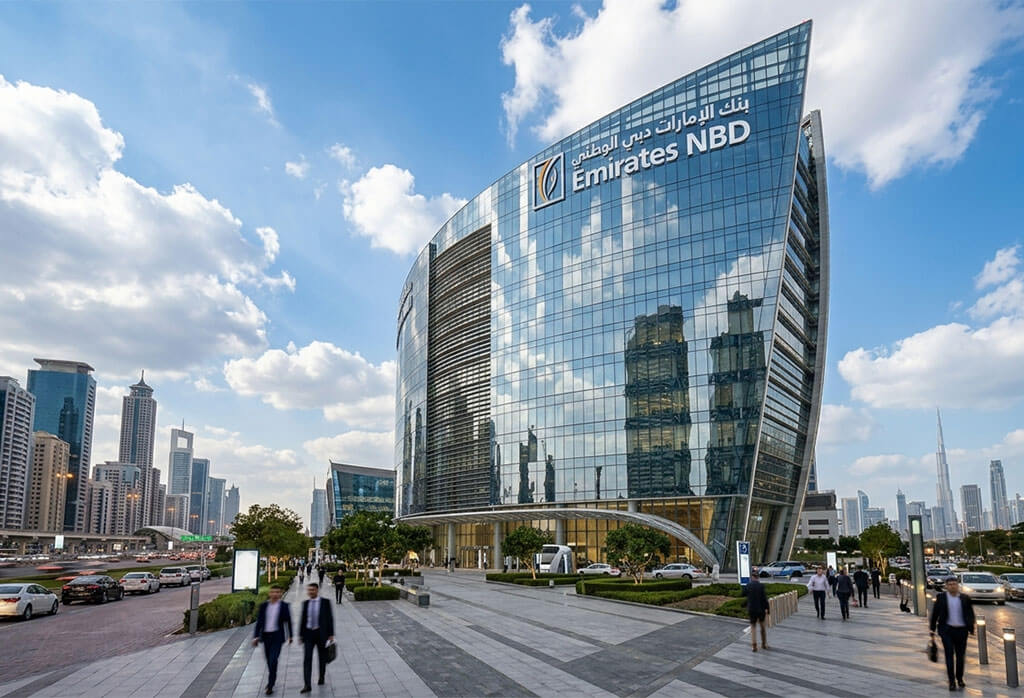
Dh100,000 cashback from Emirates NBD gives new account holders a strong reason to start banking here. The Emirates NBD Mega Cashback campaign rewards people who open and fund their first account. Eligible new Priority and Private Banking clients earn one per cent on their qualifying balance. This 1 per cent cashback account balance reward applies once you meet the funding rules. You can receive rewards worth up to Dh100,000 based on your ninety-day average balance. Emirates NBD wants long-term relationships here, not a single one-time reward for new savers. This offer runs for a limited time, so quick action protects your place in it. The plan pairs real money back with access to premium banking and wealth help. As I see it, the offer blends real cash rewards with genuine wealth support today. You start the relationship with money back and a clear path toward wider goals.

A rewarding start with Dh100,000 cashback from Emirates NBD

Your reward depends on the average balance you keep across the full ninety-day window. Balances from Dh500,000 to Dh999,999 can earn you up to Dh10,000 in total cashback. Holdings from Dh1 million to Dh4,999,999 can return up to Dh50,000 for eligible clients. Clients who keep Dh5 million or more receive the top prize of Dh100,000 in cashback. Every tier gives you a clear, guaranteed figure, so planning your deposit stays simple. The bank guarantees this cashback, so you know your reward before you even apply. Fixed deposits, Plus Saver, and Millionaire accounts stay outside the terms of this promotion. This Priority Banking cashback UAE offer suits new-to-bank customers Emirates NBD hopes to keep.

Exclusive banking and private banking wealth services UAE clients value

You also gain access to a dedicated Relationship Manager for your daily banking support needs. This person helps you handle everyday banking tasks with more speed and greater confidence overall. A dedicated investment advisor then builds clear strategies around your goals and personal risk appetite. Your advisor reviews options across cash, bonds, and equities before shaping any final plan. You can plan for growth, diversify holdings, or find opportunities across many asset classes. Experienced professionals guide each choice, so your money works toward the future you want. This mix of cashback, advice, and relationship support builds stronger financial foundations for you. Emirates NBD places the customer relationship, not a single product, at the real centre.

How you qualify for Dh100,000 cashback from Emirates NBD

To join, you apply for a new current or savings account during the campaign period. You then fund the account with a minimum of Dh500,000 to meet the entry rule. Keep the required ninety-day average balance from the month right after your account first opens. Your final reward depends on the balance tier you reach under the campaign terms. Watch the balance each month, since the ninety-day average decides your final reward amount. Read the terms and conditions closely, since small details shape your eligible cashback amount. For ambitious savers, Dh100,000 cashback from Emirates NBD builds a strong banking start today. You gain guaranteed cashback, private banking access, and personal wealth support in one package. Act within the promotion window to turn a large deposit into a lasting reward. Speak with the bank early to confirm your account type qualifies for this campaign.

About Emirates NBD

Emirates NBD is one of the largest banking groups in the Middle East, headquartered in Dubai and majority-owned by the government of Dubai. It provides retail, corporate, Islamic, and investment banking services across the UAE and international markets.

Official Website: https://www.emiratesnbd.com/en

Strategic Role:

  • Revenue Engine: Diversified income streams (retail lending, corporate finance, fees)
  • Market Dominance: Strong UAE footprint with regional expansion (MENAT, Türkiye)
  • Digital Edge: Heavy investment in fintech and digital banking platforms

Emirates NBD is a systemically important financial institution with stable cash flows, government backing, and strong positioning to capitalize on regional economic growth.

TAGS

EXPLORE MORE ON:

Turkiye Exports to Islamic Countries

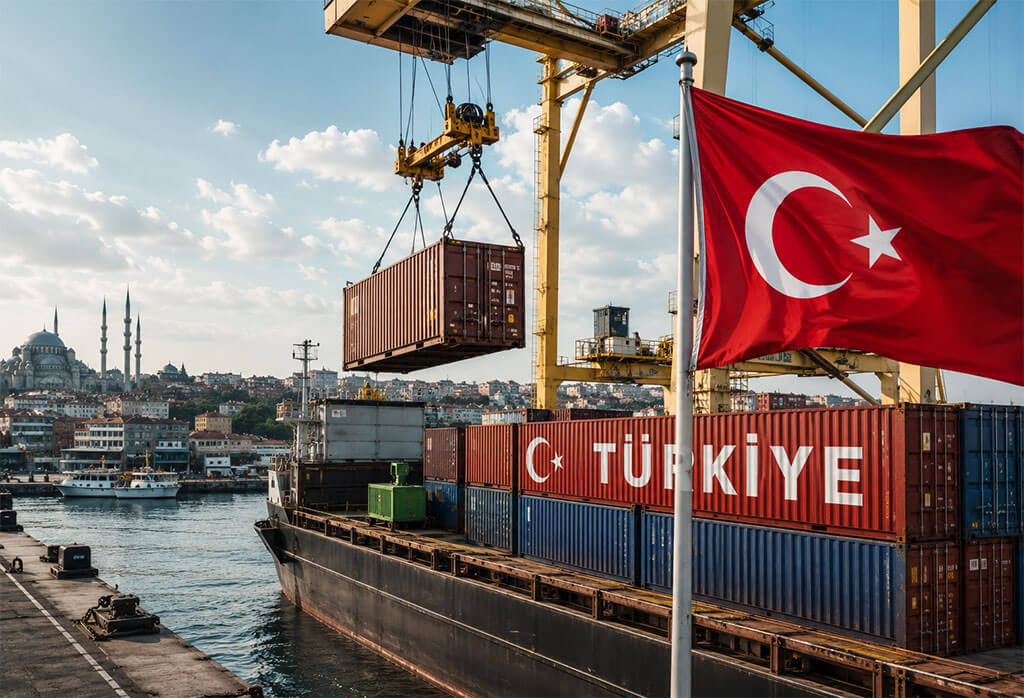
Turkey’s exports to Islamic countries reached $41.5 billion in the January to July period of 2026, according to figures released by the Trade Ministry on Monday. The total marks a rise of $345.7 million, or 0.8%, from the same period a year earlier. Growth was modest in percentage terms, but the underlying trade relationship with the Organization of Islamic Cooperation continues to widen.

Total foreign trade volume between Turkiye and OIC member states climbed 2.2% year over year to $69.2 billion over the same seven months. That figure includes both exports and imports, and it points to a broader commercial relationship than exports alone suggest. The ministry framed the numbers as part of a longer structural push rather than a single seasonal gain.

A strategy years in the making

The export growth sits inside a formal government plan. The Trade Ministry’s Strategy for Developing Exports with OIC Members is built into Turkiye’s 2026-2028 Medium-Term Program, and it sets a specific target. Ankara wants the share of OIC countries in Turkiye’s total exports to rise from 27% today to 30% by 2028. That is not a large jump in percentage points, but it represents billions of dollars in additional trade if achieved on the current export base.

To get there, the ministry studied the economic and commercial data of OIC members and picked out 21 countries for first-phase focus. The list spans Azerbaijan, Bahrain, Bangladesh, the United Arab Emirates, Algeria, Indonesia, Morocco, Ivory Coast, Qatar, Kuwait, Libya, Malaysia, Egypt, Nigeria, Uzbekistan, Pakistan, Senegal, Saudi Arabia, Tunisia, Jordan and Oman. These markets were chosen because ministry analysis flagged them as holding the strongest near-term commercial potential for Turkish exporters, based on existing trade patterns and demand signals in each economy.

The OIC itself provides the backdrop for why this matters at scale. Founded in 1969 to strengthen cooperation and solidarity among Islamic countries, the organization now counts 57 members. Together they represent close to a quarter of the world’s population, yet only about one-tenth of global income. That gap between population share and income share is the commercial opportunity Ankara’s strategy is built around.

A decade of steady expansion

Turkiye’s trade volume with OIC countries has followed a long upward path. It stood at $87.6 billion in 2013 and reached $119.1 billion by 2025, an increase of roughly 1.4 times over twelve years. That is gradual growth rather than a sudden surge, consistent with a trade relationship built on expanding market access and diplomatic engagement rather than one-off deals.

In 2025, three countries anchored Turkiye’s OIC trade. The United Arab Emirates led at about $19 billion, followed by Iraq at $14.3 billion. Egypt and Kazakhstan each accounted for roughly $7.9 billion. Those four relationships alone made up a substantial share of Turkiye’s total commercial activity with the OIC bloc last year.

Where 2026 gains concentrated

The first seven months of 2026 showed uneven movement across individual markets, with some countries posting sharp increases even as the overall growth rate stayed modest. Egypt recorded the largest rise in Turkish exports by value, climbing $522.2 million to reach $2.8 billion. Libya followed with an increase of $438.5 million, bringing its total to $2.2 billion.

Exports to Syria rose $296.8 million to $2.1 billion, a notable figure given the country’s ongoing reconstruction needs. Jordan rounded out the top gainers, with exports climbing $227.5 million to $1.3 billion. These four markets, Egypt, Libya, Syria and Jordan, drove much of the incremental growth in Turkiye’s exports to Islamic countries this year, even as the aggregate 0.8% rise reflects a more mixed picture across the full 21-country list.

The pattern fits the wider structural shift the ministry has been describing. Turkiye is not chasing volume in its largest existing markets alone. It is building depth across a broader set of economies, betting that population growth and rising income across the Muslim world will keep expanding demand for Turkish goods through the rest of this decade.

UAE's First Transition Finance Framework

UAE’s first transition finance framework has arrived, and it changes how carbon-heavy companies in the country can access funding for their shift away from fossil-heavy operations. Emirates NBD built the framework specifically for corporate and institutional clients whose businesses cannot yet meet the strict criteria of green finance, but who are taking real, measurable steps to cut emissions.

Why this gap needed filling

Think of green finance as a club with a strict entry test. A solar farm gets in easily. A steel plant working to cut its carbon footprint does not, even if it is making genuine progress. That plant still needs capital to fund the changeover, and until now, the UAE market had no dedicated structure for financing it. UAE’s first transition finance framework fills that gap by defining what counts as credible transition activity, rather than requiring businesses to already be green.

The framework applies to high-emitting and hard-to-abate sectors: manufacturing, mining, power and energy, real estate, transport and storage, agriculture and information technology. These industries share a common problem. They are often complex, capital-intensive, or lack a commercially viable zero-carbon alternative right now. A cement producer cannot simply swap its kilns for clean equivalents overnight. Emirates NBD’s methodology gives lenders a consistent way to assess which projects in these sectors deserve transition funding, based on emissions reduction, energy efficiency gains, and adoption of cleaner technologies.

Built on international standards

Emirates NBD did not write this framework in isolation. It drew on the ICMA Climate Transition Finance Handbook, the ICMA Climate Transition Bond Guidelines 2025, and the Loan Market Association’s Guide to Transition Loan Finance 2025. That grounding matters for credibility. A framework built only on internal judgment invites skepticism from investors who want proof that “transition” labels mean something real, not a marketing gloss on business as usual.

To back that credibility, the bank commissioned DNV Assurance to deliver a second-party opinion on the framework. An outside assessor reviewing the methodology gives clients and investors a check beyond the bank’s own claims. Vijay Bains, Chief Sustainability Officer and Group Head of ESG at Emirates NBD, said the framework builds on the bank’s existing sustainable finance and sustainability-linked financing tools, and will help support the transition of the real economy across the UAE and the wider region.

Part of a larger target

UAE’s first transition finance framework does not stand alone. It sits inside Emirates NBD’s broader push to mobilize $30 billion in sustainable and transition finance by 2030. The bank said the new structure will help channel capital toward decarbonization, industrial transformation and long-term resilience projects, giving it another instrument alongside existing green and sustainability-linked products.

The initiative also connects to a bigger regional goal. Emirates NBD is supporting the UAE Banking Federation’s ambition to mobilize AED 1 trillion in sustainable finance by 2030. That figure covers the entire national banking sector, and frameworks like this one are the mechanism through which individual banks contribute their share.

What clients get from it

For a company in one of the covered sectors, the practical benefit is clarity. Before this framework, a business pursuing decarbonization had few consistent signals on which projects would qualify for transition financing versus standard corporate lending. Now, clients get defined criteria covering emissions reduction, energy efficiency upgrades, cleaner technology adoption and shifts toward lower-carbon business models. Investors benefit too, since a shared methodology makes it easier to compare transition claims across borrowers rather than evaluating each one from scratch.

The framework does not promise instant transformation of the region’s heaviest emitters. What it offers is a structured entry point, one that treats credible progress as fundable even when a business has not yet reached green status. For sectors that make up a large share of the UAE’s industrial base, that distinction could shape how quickly decarbonization investment actually moves.

UAE Insurance Sector Growth 2025

Start with the profit line. AED2.6 billion became AED4 billion in a single year, a jump of roughly 54 percent that sits at the center of the UAE insurance sector growth story for 2025 now taking shape in the Central Bank’s latest figures. Numbers like that rarely move alone. Behind them sits a year of premiums outrunning claims, assets outgrowing liabilities, and a health insurance mandate that reshaped demand across five emirates almost overnight.

The Central Bank of the UAE insurance report, released as the sector’s annual statistical review, lays out the mechanics plainly. Total assets reached AED164.9 billion by the close of 2025, up 6.1 percent from AED155.5 billion the year before. Of that balance sheet, AED96.4 billion sat in invested assets, close to 58 percent of the total. Insurers in the UAE are not simply underwriting risk anymore. They are managing a pool of capital large enough to matter to the broader economy, and the Central Bank’s numbers treat that role as central rather than incidental.

Premiums, claims and the widening gap

UAE insurance gross written premiums rose 14.9 percent in 2025, reaching AED74.8 billion against AED65.1 billion a year earlier. Paid claims grew too, up 11 percent to AED46.2 billion, but at a slower pace than premium income. That gap between what insurers collected and what they paid out is where the profit growth originates. Technical provisions, the reserves insurers hold against future claims, rose a more modest 4.4 percent to AED96.3 billion, a sign that liabilities grew in step with prudence rather than in step with premium growth.

The premium retention ratio tells a related story. It climbed to 56 percent from 54.9 percent, meaning insurers kept a larger share of the risk they wrote rather than passing it to reinsurers. Retaining more risk while claims grew slower than premiums is not a coincidence. It reflects underwriting discipline holding steady even as the book of business expanded.

Health coverage reshapes the policy count

The clearest driver of new demand came from outside the balance sheet entirely. The UAE’s mandatory basic health insurance scheme, extended to private sector employees and domestic workers across the Northern Emirates from January 2025, pulled hundreds of thousands of previously uninsured residents into the market. UAE health insurance policies rose 26.1 percent over the year, the single largest movement among all reported metrics. Total active policies across the sector reached 17.3 million by year-end.

Insurance density, a measure of average spending per resident, reached around AED6,500. That figure sits alongside UAE insurance sector total assets and premium growth as evidence that coverage is widening, not just deepening among existing policyholders. Fifty-eight insurance companies now operate in the UAE, supported by 515 registered insurance-related professions, a spread that points to a market with more moving parts than its headline figures suggest.

The Central Bank’s Report

Capital adequacy closed out the picture. Available capital across the sector stood at 455 percent of the minimum regulatory requirement, a buffer far beyond what regulators typically demand. For a sector absorbing a sudden wave of new mandatory policyholders while growing its investment book, that cushion matters. It gives insurers room to write new business without straining the reserves that back existing claims.

None of these figures move in isolation. Premium growth funded profit growth. Profit growth strengthened the capital base. The capital base gave insurers room to absorb 26.1 percent more health policies without visible strain. Read together, they describe a sector that expanded on most fronts at once, a pattern the Central Bank’s report frames as continuity from prior years rather than a single standout event.

Share this post

on your favourite social platforms

or copy the link