


icnlive

WATCH LIVE. THINK BUSINESS.

© 2026 ICN.LIVE

The World Bank grants $100 million to Syria to rebuild the foundations of a financial system worn down by more than a

Trending Capital

Warren Buffett ends donations to the Gates Foundation

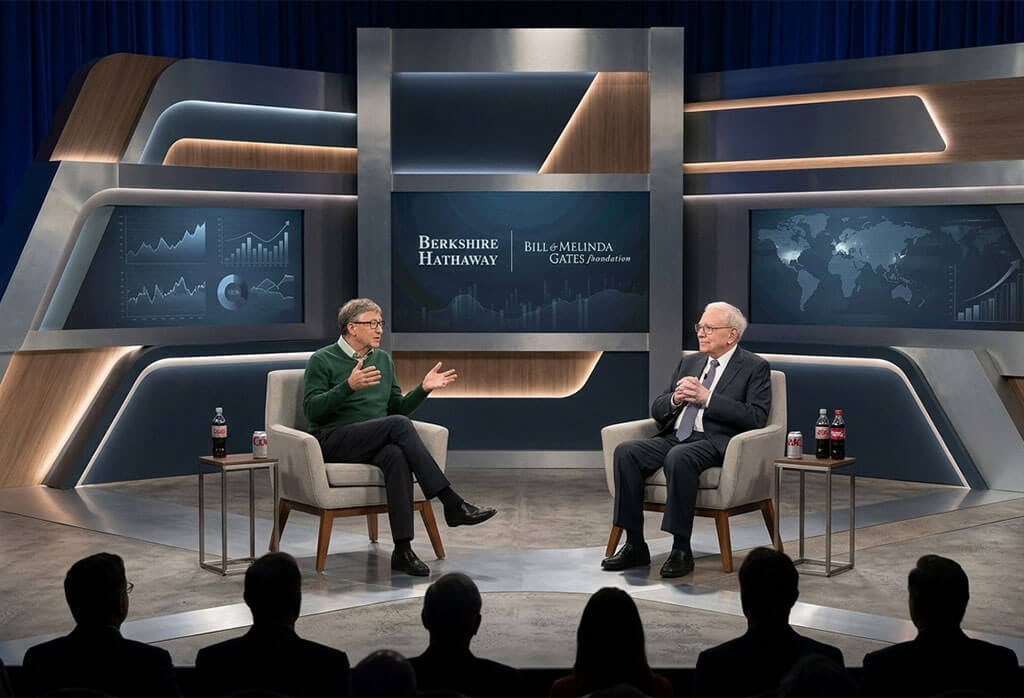
Warren Buffett ends donations to the Gates Foundation after nearly two decades of loyal support. The 95-year-old former Berkshire Hathaway CEO gave nothing to the charity this donation cycle. Instead, he moved 12 million Class B Berkshire Hathaway shares, worth nearly $6 billion, to family. Every share went to four Buffett family foundations run by his three grown children. This decision ends a giving partnership worth roughly $48 billion over the past 19 years. You are watching one of the largest shifts in modern American philanthropic giving unfold.

Inside the Warren Buffett Gates Foundation break

Buffett first pledged his fortune to the Gates Foundation back in the year 2006. He called the promise irrevocable while either Bill or Melinda Gates stayed active there. Gifts flowed every summer as Berkshire stock climbed and the charity expanded its reach. Their friendship began in 1991 and later produced the Giving Pledge for wealthy donors. You once saw the two men praised together as models of generous, disciplined wealth. Cracks appeared in 2021 when Gates ended his marriage to philanthropist Melinda French Gates. Buffett resigned as a foundation trustee two months after the couple announced their split. The rift widened as fresh questions rose about the Microsoft founder and old contacts. Watchers ask why Warren Buffett ended donations to the Gates Foundation after such loyalty.

Bill Gates Epstein ties deepen the split

Bill Gates Epstein ties became the biggest strain on this long philanthropic relationship recently. Justice Department files this year detailed how Epstein cultivated many people close to Gates. Gates told a House committee he deeply regretted ever meeting the disgraced financier Epstein. He has denied any role in the financier’s crimes throughout the entire public inquiry. Reporters say the review by law firm WilmerHale should finish its work this summer. The firm looks at Epstein’s decade-long push to reach advisers around the whole foundation. Buffett paused his usual midyear gift while he waits for those findings to arrive.

He told CNBC back in March he had not spoken with Gates for months. Records show Buffett sent the Gates Foundation more than $47 billion in stock overall. Last year Buffett still sent the Gates Foundation about $4.6 billion in Berkshire stock. My analysis indicates the Epstein cloud pushed Buffett toward a cleaner, family-only giving plan.

Why Warren Buffett ends donations to the Gates Foundation now

Warren Buffett ends donations to the Gates Foundation and now backs his own family instead. The Susan Thompson Buffett Foundation takes 9 million shares worth about $4.5 billion today. Buffett founded the charity in 1964 and named it for his late wife Susan. The foundation has funded reproductive health work and college scholarships for many years now. His daughter Susie chairs the board and also runs the separate Sherwood Foundation now. Two sons, Howard and Peter, each guide a foundation receiving 1 million shares apiece. Buffett said, “My goal is to dispose of all of my Berkshire shares within about eight years.”

By the end of 2034, his whole Berkshire stake should reach these four groups. The Gates Foundation thanked Buffett and said it will stay strong for its work through 2045. For everyday readers, the message shows how personal trust now shapes giant charity choices. As Warren Buffett ends donations to the Gates Foundation, you see priorities turn fully homeward.

ADNOC in a $1 billion deal

ADNOC will take over Shell’s downstream network across South Africa. The Abu Dhabi fuel retailer signed the agreement on Tuesday with Shell South Africa Holdings. This now sees the biggest overseas purchase in the company’s history to this point. ADNOC Distribution values the assets at an implied enterprise figure of about $1 billion today. This headline figure sits before any adjustment for net debt and working capital terms.

Why the South Africa fuel retail move matters

The purchase hands ADNOC Distribution a network of 580 company, and dealer-owned stations. These sites cover mobility, convenience, lubricants, aviation, marine, and commercial fuel operations across the country. You gain a clear sense of scale from the 2025 sales and store figures. The brand moved close to 3.5 billion liters of fuel across the 2025 year. Around 360 convenience stores traded under the Shell name during the same 2025 period. ADNOC expands its network by roughly 55 percent. The company will run about 1,600 sites once the sale reaches its full completion. Analysts see the ADNOC Shell deal as the retailer’s largest overseas purchase to date.

How ADNOC in a $1 billion deal reshapes the growth plan

South Africa becomes the fourth country on the growing ADNOC Distribution operating map today. The retailer already runs fuel stations in the UAE, Saudi Arabia, and Egypt markets. You can trace this push back to the 2023 stake in TotalEnergies Marketing Egypt. Saudi Arabia entered the plan back in 2018 with the first retail fuel stations. ADNOC Distribution wants a much stronger fuel retail presence across the wider African region. Al Lamki said the company stays still hungry for growth while it looks abroad. He named Africa and Southeast Asia as the next main target regions for expansion.

The ADNOC Shell deal and local ownership rules

A local empowerment partner and staff plan will take a 28 percent stake later. This share sale follows completion of the Shell Downstream South Africa acquisition next year. ADNOC Distribution will keep a 72 percent majority after the local sell-down step. The move aligns closely with the country’s Broad Based Black Economic Empowerment legislation goals. You should also note the focus on energy security, jobs, and inclusive economic access. ADNOC will retain the Shell brand under a long license. Customers will still see the same trusted service at retail and lubricants outlets nationwide.

What the ADNOC South Africa acquisition means for shareholders

The ADNOC South Africa acquisition gives the group a fresh base on the continent. Management expects earnings per share to rise 6 percent in the first full year. Leaders also see EBITDA climbing about 13 percent across the same first full period. You can expect the return on investment to beat the firm’s internal hurdle rate. The deal also supports the firm’s stated dividend policy through the year 2030 target. A regulated pricing system gives the South African fuel retail sector steady public demand. From my standpoint, the regulated pricing model gives you steadier margins than open markets. The government sets South African pump prices under a fixed national framework each period. This structure gives ADNOC Distribution margins per liter close to its home UAE market. ADNOC now builds a firm base for African growth. You will watch for the 2027 closing date for the final regulatory green light ahead.

About ADNOC

The Abu Dhabi National Oil Company (ADNOC) is one of the world’s largest energy producers, managing the UAE’s oil and gas reserves across upstream, midstream, and downstream operations. It is a core revenue engine for Abu Dhabi and a key player in global energy markets.

Strategic Role:

  • Scale & Reserves: Controls vast hydrocarbon assets with low production costs

  • Integrated Model: Exploration → refining → distribution → petrochemicals

  • Capital Strategy: Monetizes assets via IPOs, joint ventures, and international partnerships

ADNOC is a high-cash-flow, state-backed energy powerhouse with global influence and a growing role in energy transition investments.

Official Website: https://www.adnoc.ae/

China’s EV Industry Dominance

China’s electric vehicle industry has evolved into the most powerful force shaping the global automotive landscape. What began as a state-supported industrial push has transformed into a hyper-competitive ecosystem where scale, speed, and cost efficiency redefine market leadership. Today, Chinese manufacturers are not only dominating domestic sales but actively compressing global EV pricing structures through aggressive innovation and vertical integration. From ultra-low-cost urban vehicles to advanced premium electric SUVs, the spectrum of offerings reflects a manufacturing system optimized for mass adoption. As Western automakers struggle to match cost and production velocity, China is setting the benchmark for the next decade of mobility. Now, let’s look at some data and insights about the most powerful Chinese EVs so far, Chinese EVs, and why they are so competitive, and what their best-selling cars are.

China is the dominant global EV market, accounting for ~60% of global EV sales and >45% domestic penetration.

  • Annual EV sales: ~10–12M units (run-rate)
  • Market structure: hyper-competitive, price-compressed, vertically integrated
  • Leader: BYD (volume + cost leadership)
  • Strategic reality: China is exporting deflation to global auto markets

Estimated Impact: Extreme—China will define global EV pricing and margins
Confidence Level: High (multi-source consistency)

MARKET SIZE & CAPITALIZATION

Market Scale

  • ~1.49M EVs sold monthly (May 2026 snapshot)
  • ~63% EV penetration rate (China leads globally)

Aggregate Market Cap (Top Chinese EV Players)

Company Market Cap (USD)
BYD ~$125B
Xiaomi ~$118B
XPeng ~$19B
Li Auto ~$16.9B
NIO ~$12B

Total (Top 5): ~$290B–$320B EV exposure.

NOW LET’S SEE THE TOP 5 CHINESE EV COMPANIES

BYD (Market Leader)

BYD SEAL 7 DESIGNBYD SEALION 7 PERFORMANCEBYD ATTO 8 PERFORMANCE

Overview

  • #1 EV company globally by volume
  • 3.48M EVs sold in China alone (2025)

Best-Selling Models

  • BYD Seagull: ~$10,000–$12,000
  • BYD Dolphin: ~$16,000–$20,000
  • BYD Atto 3: ~$20,000–$30,000

Pros

  • Full vertical integration (battery → chip → assembly)
  • Lowest cost structure globally
  • Massive scale advantage

Cons

  • Lower premium perception vs Western brands
  • Margin pressure due to price wars

Estimated Impact: Dominant global disruptor
Confidence: Very High


Geely (incl. Zeekr)

Geely SUVgeely-is-the-best-chinese-brand-for-2019Geely Sport

Overview

  • #2 in China EV market (~11% share)

Best-Selling Models

  • Zeekr 001: ~$40,000–$50,000
  • Geely Galaxy L7: ~$20,000–$30,000

Pros

  • Strong global portfolio (Volvo, Polestar)
  • Premium + mass-market diversification

Cons

  • Brand fragmentation
  • Less cost-efficient than BYD

Estimated Impact: Strong #2 with global leverage
Confidence: High


NIO (Premium Segment)

NIO PremiumNIO redNIO Car EV

Overview

  • Premium EV positioning (China’s Tesla competitor)

Best-Selling Models

  • NIO ES6: ~$45,000–$60,000
  • NIO ET5: ~$40,000–$55,000

Pros

  • Battery swapping infrastructure (unique moat)
  • Strong brand in premium segment

Cons

  • High burn rate
  • Profitability issues

Estimated Impact: Niche premium player
Confidence: Medium-High


XPeng (Tech-Focused)

Xpeng SUVXPeng SportXpeng interior

Overview

  • Known for autonomous driving tech

Best-Selling Models

  • XPeng G6: ~$25,000–$35,000
  • XPeng Mona M03: ~$16,500

Pros

  • Strong software + AI positioning
  • Competitive pricing

Cons

  • Weak brand vs BYD/NIO
  • Volatile demand

Estimated Impact: Tech upside, uncertain scale
Confidence: Medium


Li Auto (Hybrid-Dominant)

Li SUSLi interiorLI Sub

Overview

  • Focus on EREV (range-extended EVs)

Best-Selling Models

  • Li L6: ~$34,500
  • Li L7/L8/L9: ~$40,000–$60,000

Pros

  • Solves range anxiety (hybrid approach)
  • Strong family SUV positioning

Cons

  • Declining sales momentum
  • Less future-proof vs pure EVs

Estimated Impact: Transitional player
Confidence: Medium


BEST-SELLING EVs IN CHINA (MARKET LEVEL)

Top mass-market winners:

  • BYD Seagull — dominant low-cost urban EV
  • Wuling Mini EV — ultra-cheap segment leader
  • BYD Qin / Song series — high-volume mid-tier
  • Tesla Model Y (China) — premium benchmark

Insight: China’s volume is driven by $10K–$25K vehicles, unlike Western markets.

Chinese EVs are competitive because the entire system is engineered for it. Companies like BYD build their own batteries, chips, and powertrains in-house, stripping out the supplier margins that inflate Western prices. Scale does the rest. Multi-million unit production spreads fixed costs across enormous volume, driving per-car expense down.

The deeper advantage sits in the battery supply chain, which China dominates end to end, from lithium and refining to cell manufacturing. Layer on government policy that aligns subsidies, infrastructure, and regulation to accelerate adoption, plus lower labor costs and faster iteration cycles, and the gap widens further.

Then there is the price war. Domestic hyper-competition compresses margins to the bone, forcing efficiency Western automakers rarely face.

The result is structural, not temporary. China optimizes for volume dominance over margin maximization, producing a durable cost advantage of roughly 20 to 40 percent versus the West. Confidence in that read is very high.

UAE MARKET (200-WORD STRATEGIC OVERVIEW)

The UAE EV market is in an early but accelerating adoption phase, driven by government sustainability targets and a rising fuel diversification strategy. Chinese EV brands are gaining traction due to a combination of aggressive pricing, fast availability, and feature-rich vehicles compared to European imports. Brands like BYD, MG (SAIC), and Geely are expanding distribution networks through local partnerships, targeting mid-income consumers priced out of Tesla and premium German EVs.

Infrastructure remains a constraint but is improving, with Abu Dhabi and Dubai investing in charging networks aligned with UAE Net Zero 2050 goals. Chinese EVs benefit from shorter delivery cycles and lower landed costs, making them highly competitive in fleet, ride-hailing, and government procurement segments.

Consumer perception is shifting from skepticism to value-driven acceptance, especially as build quality improves. The UAE acts as a strategic gateway market for Chinese OEMs to expand into the Middle East and Africa, where price sensitivity is higher.

Key dynamic: Chinese brands are not competing on prestige but on price-performance ratio, which aligns strongly with UAE demand outside luxury segments.

Estimated Impact: High growth, but not yet dominant
Confidence: Medium-High

REVENUE LEVERS (STRATEGIC TAKEAWAYS)

Lever Action Impact Confidence
Distribution Arbitrage Import Chinese EVs into underpenetrated markets (MENA, Africa) Very High High
Fleet Sales Target ride-hailing/logistics fleets with low-cost EVs High High
Charging Infrastructure Invest alongside EV distribution High Medium
Brand Positioning Focus on value, not premium High High
After-Sales Ecosystem Build servicing + parts network High Medium

China’s EV sector is structurally advantaged and globally expansionary. The dominant strategy is not innovation alone, but cost destruction at scale, which Western OEMs are currently unable to match. It will remain an open game on how the rest of the global markets will compete with the Chinese manufacturers, but so far the race has a clear leader ahead. The race is long and can always have unexpected models that will rearrange the list. One thing is obvious, and that is the fact that the end user will always win because, as customers, we have the final vote with our wallets.