
icnlive

WATCH LIVE. THINK BUSINESS.

© 2026 ICN.LIVE

ICN.live

PUBLISHED BY ICN PRESS

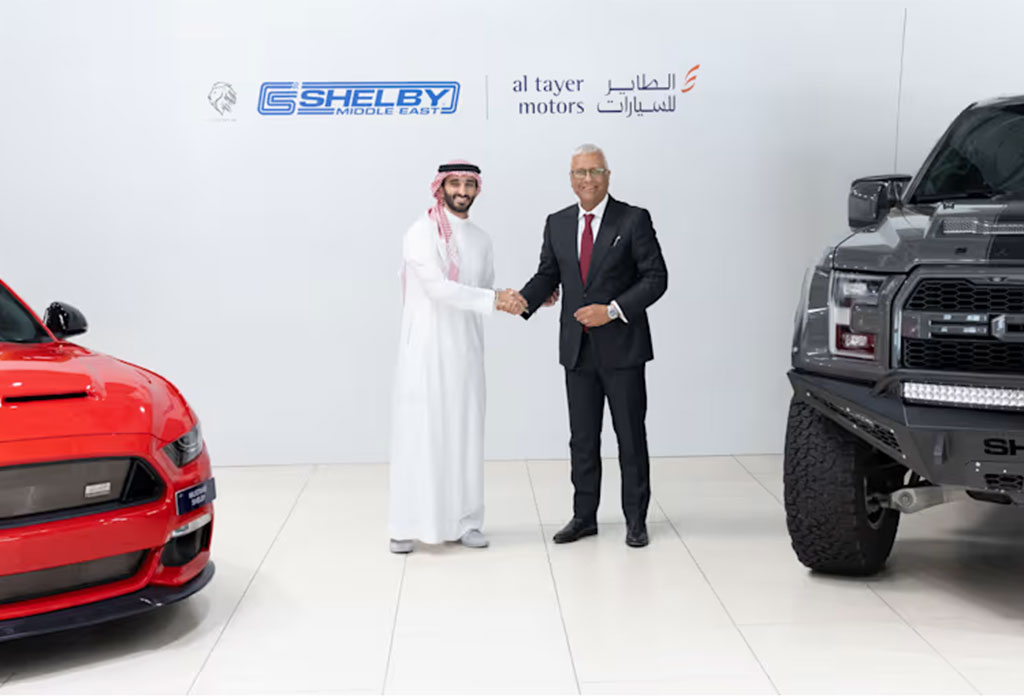
Al Tayer Motors is launching Shelby in the UAE, bringing a major new option for performance car buyers across the country. The move gives local drivers direct access to Shelby models through a trusted automotive group with a strong national footprint. For collectors and enthusiasts, this launch adds a simpler path to owning rare American performance cars with local support and service.

The new agreement links Al Tayer Motors with Shelby Middle East under an exclusive retail and service partnership. Through this deal, customers will gain access to Shelby-modified Ford performance vehicles across Al Tayer Motors showrooms and service centres. The first vehicles will begin arriving in September, with the Shelby Mustang Super Snake expected to lead the early rollout.

This matters because the UAE already has a strong demand for premium vehicles with heritage, identity, and strong road presence. Shelby fits that space well. The brand carries deep roots in American performance culture and holds lasting appeal among muscle car fans worldwide. With this launch, buyers in the UAE will no longer need to rely on difficult overseas routes to experience the brand.

“Shelby is an iconic name in high-performance motoring, and we are excited to bring these vehicles to motoring enthusiasts in the country,” said Ashok Khanna, Chief Executive Officer at Al Tayer Motors. “As a company deeply committed to delivering exceptional automotive experiences to our customers, partnering with Al Najdiyah General Trading to represent Shelby vehicles aligns perfectly with our vision.”

In the UAE market since 1982

Al Tayer Motors also brings a major advantage through its broad local network and experience in premium automotive retail. The company has served the UAE market since 1982 and represents major global automotive brands. Its reach across Dubai, Sharjah, Abu Dhabi, Ras Al Khaimah, and Fujairah gives Shelby a stronger foundation from the start. That reach should help buyers feel more confident about ownership after the sale.

A major part of the value lies in after-sales support. Customers will receive access to genuine Shelby parts, certified Shelby performance upgrade programmes, and dedicated performance specialists. For many buyers, this support is as important as the vehicle itself. High-performance ownership becomes more attractive when service, maintenance, and technical guidance are available through a known local network.

The Shelby Mustang Super Snake will likely draw the most attention during the launch phase. The model already holds a strong status among enthusiasts who follow iconic American performance cars. Its mix of design, power, and name recognition gives it natural appeal in a market that values standout vehicles. The arrival of Shelby trucks should also create interest among buyers looking for a different kind of performance statement.

“Our partnership with Al Tayer Motors in the UAE marks the first step in our broader vision to establish and grow the Shelby brand across the Middle East,” said Yousef Alsulaiman, CEO, Al Najdiyah General Trading (Shelby Middle East). “This is more than introducing high-performance vehicles. It is about building a long-term presence. Our priority is not only to deliver the exceptional cars and trucks that define Shelby, but also to ensure our customers receive world-class service, full warranty support, and an ownership experience that reflects the strength of the brand.”

Al Tayer Motors brings trust, infrastructure, and customer reach

This launch also strengthens the market position of Ford performance vehicles in the UAE. Shelby vehicles are built on Ford platforms, yet deliver a more exclusive and more focused driving experience. That connection will likely resonate with enthusiasts who already appreciate Ford’s performance heritage and want something more distinctive.

For fans of UAE muscle cars, the timing feels important. Buyers want not only power, but also peace of mind. They want specialist support, parts access, and a clear ownership path. Al Tayer Motors is launching Shelby with those needs in mind, which gives the partnership more depth than a simple showroom addition.

The broader significance is clear. The UAE performance segment continues to value strong brands with real legacy and local service credibility. Shelby brings emotional weight, collector appeal, and proven character. Al Tayer Motors brings trust, infrastructure, and customer reach. Together, they create a more complete offer for drivers who want bold American performance cars without compromise.

As I see it, this launch should attract both serious collectors and new buyers entering the segment for the first time. The mix of heritage, support, and product excitement gives Shelby a promising entry into the next stage of the UAE market. When the first vehicles arrive in September, many eyes will be on the Shelby Mustang Super Snake and the wider line-up that follows.

TAGS

EXPLORE MORE ON:

Hub71 Expands Initiate Programme

Hub71, Abu Dhabi’s global tech ecosystem, is expanding Initiate, its early-stage founder programme, after attracting more than 5,500 applications since launch. A startup has already been selected to begin its venture-building journey with Initiate at Hub71, receiving support to refine its products, validate market demand and prepare for commercial growth.

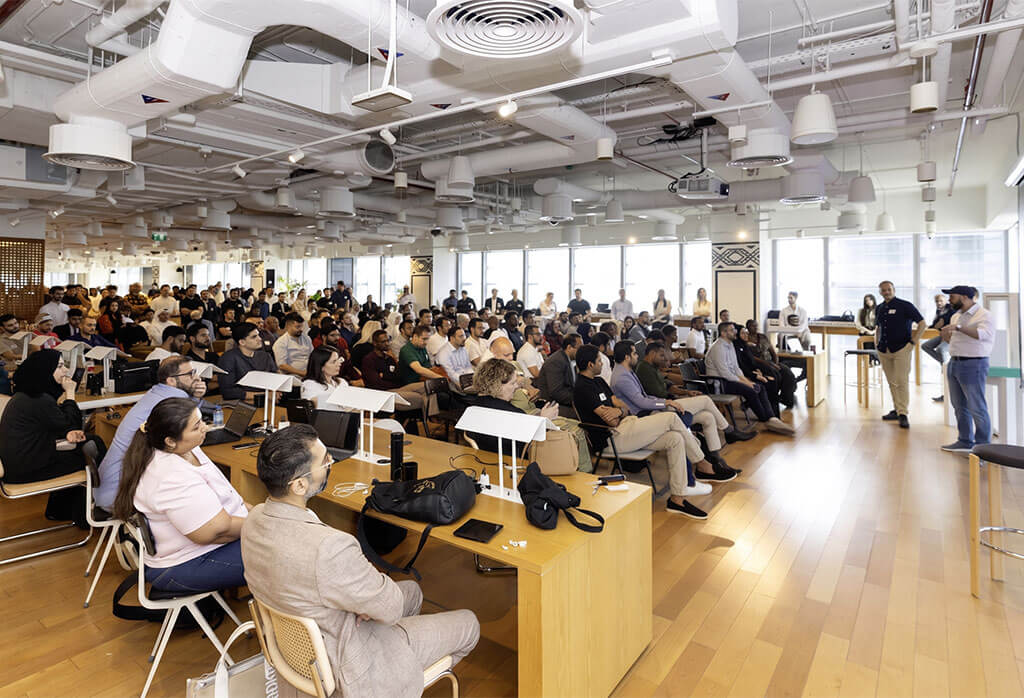
Through Initiate, Hub71 is combining venture builder expertise with practical founder development. Founders receive hands-on support to refine ideas, validate opportunities and build new ventures, while aspiring entrepreneurs can access workshops designed to develop the skills, networks and confidence needed to take their first steps towards building a startup.

Initiate has attracted almost 5,500 applications, reflecting strong demand from aspiring founders looking to turn early-stage ideas into viable ventures. This momentum has extended into the programme’s workshop series, with 500 aspiring founders attending seven sessions across July and August focused on problem validation, customer discovery, venture-building and co-founder identification. Delivered by Hub71 partners, the workshops equip aspiring founders with practical tools, industry insights and opportunities to build connections within Abu Dhabi’s startup ecosystem, helping them turn ideas into viable ventures.

Hub71 has also added Disrupt.com and TMC2 MEA to Initiate’s venture-builder network, expanding founders’ access to technical, commercial and investor expertise across a wider set of sectors.

Mohammad Alkhoori, Head of Startup Journey and Communications, Hub71, said: “Demand for early-stage support in Abu Dhabi is growing quickly. Every founder’s journey starts with an idea, but turning that idea into a successful startup requires the right guidance at the right time. Through Initiate, we are giving aspiring entrepreneurs and early-stage founders access to experienced venture builders and a collaborative ecosystem that helps them validate ideas, build ventures, and take their next steps with confidence.”

Marking an early milestone for the programme, Hub71 has selected a startup to advance through Initiate, aligned with a priority sector for Abu Dhabi’s economy. Prism56, an AI-driven platform developed by Fikra Ventures to automate venture capital deal evaluation and investment committee workflows, has progressed from concept to minimum viable product and will now move into validation and pilot deployment. As a studio-led startup, Prism56 will continue to receive tailored venture-building support, mentorship and resources from Fikra Ventures to support its path to commercialisation. The startup will also receive licensing and office space support from Hub71 for one year, alongside access to its wider ecosystem of over 150 corporate, government and investment partners, service providers and founder community.

Through Initiate, Hub71 supports founders at the ideation and pre-seed stages by combining venture builder expertise with practical founder development, helping them validate ideas, develop business models and prepare their ventures for growth. Startups completing Initiate are positioned to progress into Hub71’s Access Programme, forming a clear pathway from idea to growth within Hub71’s broader tech ecosystem.

By supporting more founders as they build scalable ventures, Hub71 is strengthening Abu Dhabi’s pipeline of high-growth startups and reinforcing the Emirate’s position as a global hub for innovation and entrepreneurship.

About Hub71

A global tech ecosystem championing startup growth from Abu Dhabi. The extensive ecosystem brings together renowned corporations, national champions, and prominent investors to help founders grow and scale disruptive technology companies globally from the UAE capital. The aim is to shape a future that knows no bounds.

Meta's Bombastic $17 Billion

Meta’s bombastic $17 billion settlement closes one of the largest child safety fights the tech industry has faced. The company agreed to pay $16.68 billion after 47 states and U.S. territories accused it of designing Instagram and Facebook to hook young users. State attorneys general said Meta built features meant to “entice, engage, and ultimately ensnare youth and teens.” Meta denies wrongdoing. Still, the numbers tell their own story here.

Think of the child safety settlement as a bill for a decade of design choices. Executives built products that kept teens scrolling. Regulators decided that came at a price. That price now stretches across ten years of payments, plus a new rulebook for how Instagram and Facebook must treat anyone under 18.

New Limits Reshape Instagram and Facebook for Teens

Under the deal, under-18 users face a firm two-hour daily cap on Facebook and Instagram. Push notifications go dark during school hours. Access shuts off completely between midnight and 6 a.m. Age checks get tougher too, closing gaps that let younger kids slip past sign-up screens.

The Instagram and Facebook teen restrictions go further than time limits. Teen accounts will no longer show likes or other engagement counts. That single change targets a mechanism long tied to teen social media addiction lawsuit claims: the pull of watching a number climb. Strip away the number, and the pull weakens. Meta also agreed to tighten controls around content that promotes eating disorders or self-harm.

Regulators leaned hard on COPPA violations as part of their case. The Children’s Online Privacy Protection Act bars companies from collecting data on kids under 13 without parental consent. States alleged Meta gathered that data anyway, and that some of it fed machine learning and generative AI systems. That claim links Meta’s bombastic $17 billion settlement to a bigger question: how AI training pipelines treat data from underage users across the industry.

TikTok and YouTube Hold the Next $5 Billion

Here’s the twist. About $5 billion of the total stays locked unless TikTok and YouTube sign onto similar rules, including one-hour daily limits, nighttime curbs, and stronger age verification. Each platform would owe roughly $5 billion of its own if it joins.

Meta published an open letter urging both rivals to come aboard, arguing teens who get limited on one app simply hop to another. That’s a fair point. A single-platform curfew doesn’t mean much if the crowd moves next door anyway. Real TikTok and YouTube teen protections would need to land across the entire industry to change teen behavior at scale.

For now, Wall Street shrugged. Meta shares rose about 1 percent on the news, which suggests investors see this as a manageable cost rather than a real threat. Put that $17 billion against Meta’s $201 billion in 2025 revenue, and the settlement equals roughly 8.5 percent of one year’s sales. Spread over a decade, the yearly hit shrinks further.

Meta’s bombastic $17 billion settlement isn’t only about the check it writes. It’s the products it now has to rebuild. Time limits, curfews, hidden like counts, tougher age gates: these become permanent fixtures on two of the world’s largest social apps. Whether TikTok and YouTube follow will decide if this becomes an industry standard or stays a Meta-only fix.

OpenAI's executive departures continue

OpenAI’s executive departures continue, and the newest one hits a corner of the company that decides how fast its AI can grow. The Wall Street Journal reported that Chris Malone, the OpenAI head of data centers, left last week. He joined in March 2025 after more than a decade at Google and nearly five years at Meta, so his run at the lab stayed short.

Picture what that seat holds. Every AI model needs computing power, and that power needs buildings packed with servers. The person steering that work holds one of the most watched jobs in the field. When they leave, people pay attention.

A short-lived reorganization?

Before Malone left, OpenAI changed the shape of his role. He stopped reporting to president Greg Brockman and began reporting to vice president Sachin Katti, who took over the group. In a statement, OpenAI said it had “recently reorganized” its infrastructure organization to match the scale and pace of its work. The company said it keeps a deep data center team with clear leadership.

Several leaders now share the load. Uday Ruddarraju runs the data center team. Brent Mayo handles build and delivery. Spas Lazarov, a veteran of the data center and energy sectors, leads all data center engineering.

Why OpenAI’s executive departures continue to draw scrutiny

Malone is not walking out alone. His exit follows a long run of OpenAI executive departures, and Business Insider counted 13 in 2026, with several in the past month. These are not junior staff. They sit near the top. OpenAI’s executive departures continue at a pace few large companies would shrug off.

Two weeks ago, OpenAI replaced chief revenue officer Denise Dresser after roughly eight months. Days before that, longtime chief operating officer Brad Lightcap said he would leave to “start something new,” though he shared no plans. About a month earlier, Fidji Simo stepped down as the company’s second-in-command to recover from a “chronic illness.” She stays on as an adviser.

The safety and ethics side has thinned too. OpenAI lost its head of ethics, Chloé Bakalar, in July. Reports also said the company disbanded its preparedness team, the unit that studied whether its models could cause catastrophic harm. Some leaders left because their projects closed. Bill Peebles, who ran the shuttered image tool Sora, was one. Kate Rouch, the former chief marketing officer, left in April for health reasons.

What the OpenAI executive exodus means before the IPO

The company plays down the OpenAI executive exodus. Brockman has said the bright spotlight on the company means every exit gets picked apart in a way rivals avoid. There is truth in that. Even so, the pattern raises real questions.

Reporting from CNBC and Bloomberg points to a shift in strategy. The company has leaned less on the Stargate project and moved toward leasing data center space from cloud providers. That change helps explain the reshuffle around Malone’s team.

Timing sharpens the worry. OpenAI’s public listing, once expected this year, is now reported to be pushed to 2027. A looming OpenAI IPO in 2027 brings a hard look at the numbers. Reporting has questioned whether the company is overvalued and whether its profit can match the huge sums flowing in. As OpenAI’s executive departures continue, investors will weigh what the churn says about the company, while the people still inside keep the work moving.

Share this post

on your favourite social platforms

or copy the link