
icnlive

ICN.live

Amira Khalil

  • Swatch seeks $170 million in damages from Samsung over alleged trademark infringement.
  • A London High Court found Samsung liable in 2022 for disputed third-party watch apps.
  • The apps let users copy luxury designs from Omega, Tissot, and other Swatch brands.
  • The pending ruling should open the door to a parallel Swatch claim in America.

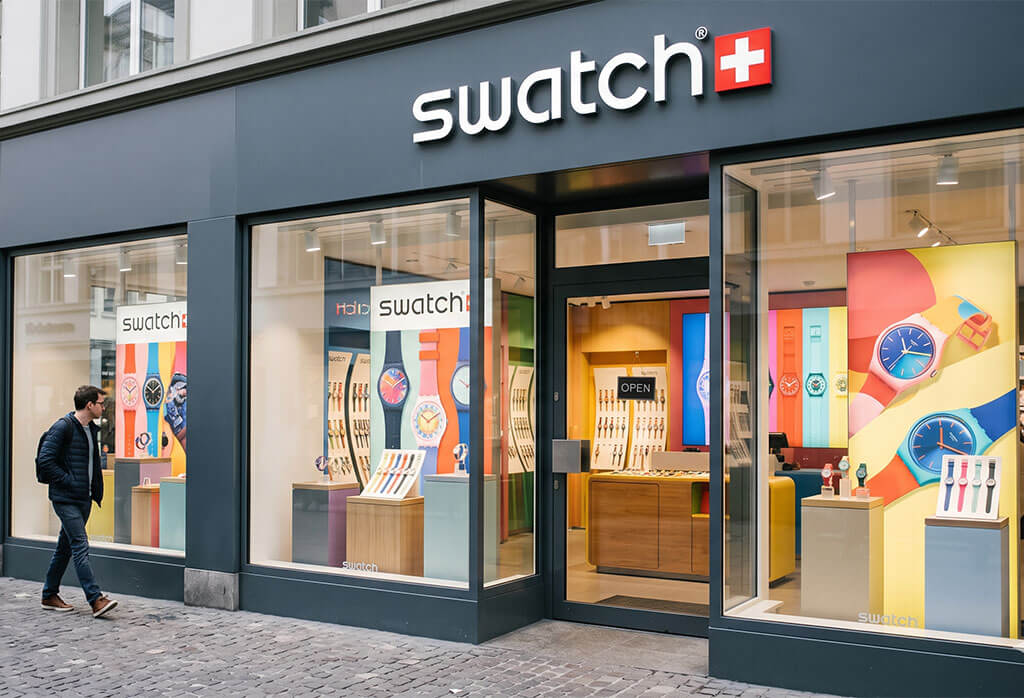
Swatch trademark infringement claim now seeks $170 million in damages from Samsung in London. The Swiss watchmaker says Samsung allowed digital clones of its watches on its smartwatches. Financial Times reporters reviewed the court documents and shared the key details last Friday. A British judge will rule on the damages soon after closing arguments wrap up.

Inside the Swatch Samsung lawsuit

The High Court in London found Samsung liable for trademark infringement back in 2022. These third-party apps let users replicate popular models from several famous Swatch-owned luxury brands. Owners then used the apps to make their smartwatch screens look like luxury dials. The court counted twenty-six digital watch faces closely resembling the group’s protected brand designs. Shoppers downloaded these Samsung smartwatch watch faces around 160,000 times across Britain and Europe. The Swatch trademark infringement claim covers the period from October 2015 to February 2019. Reporters at the Financial Times called this Britain’s largest trademark case of its kind.

How the Swatch trademark infringement claim reached this point

A British appeals court backed the Swiss watchmaker once again at the end of 2023. Judges ruled that the outside developers behind the apps did not change Samsung’s legal responsibility. Swatch lawyers built the $170 million damages demand on a set of hypothetical licensing fees. Those fees span ten Swatch brands and reflect the portfolio’s reputation and drawing power. The Omega Tissot watch apps drew the sharpest criticism from the watch group’s leaders. Tissot chief executive Sylvain Dolla warned the practice can kill the value of the fine Swiss watch. He described smartwatches as cheap commodity items beside genuine luxury timepieces from Swiss makers.

Samsung lawyers called the damages demand extravagant and far out of touch with reality. The company argued that Swatch suffered no real financial loss from the disputed watch apps. Samsung also said it gained no meaningful benefit from these disputed watch face listings. Executives noted the firm removed the apps soon after learning about the whole problem. Swatch and Samsung both declined to comment further on this ongoing legal process.

Where Swatch stands on smart devices

Watchmaker Swatch builds timepieces from cheap plastic models up to luxury pieces worth thousands. The group sells connected products like the SwatchPAY! Yet it avoids full smartwatches for now. This careful stance keeps the brand focused on traditional watchmaking and tight design control. Lawyers first began the dispute in 2019, before Britain formally left the European Union. Justice Marcus Smith will now hand down the damages judgment at a later date.

What the Swatch trademark infringement claim means for you

The outcome of this Samsung-Swatch lawsuit reaches well beyond one single London courtroom. A ruling for Swatch should clear the path for a parallel United States claim. Swiss watchmakers now face rising pressure from Apple, Huawei, and Samsung in connected watches. A clear win for Swatch would send a strong signal to other technology firms. Brand owners across fashion and luxury sectors will study this London result quite closely. As I see it, this case shows how brand value can shift onto small screens. You should watch how the judge weighs brand prestige against the real market harm here. The final verdict will shape how courts treat digital copies of physical luxury products.


TAGS

EXPLORE MORE ON:

Swatch trademark infringement claim
Iran-US ceasefire accusations

Iran-US ceasefire accusations now dominate headlines as both governments blame each other for fresh violence. Tehran said on Saturday it struck American sites across the Persian Gulf in response. Washington had earlier hit Iranian weapons sites on Friday, raising the stakes for everyone. American aircraft targeted missile storage and coastal radar posts during the Friday operation near Iran. Those strikes answered an Iranian drone attack on a Singapore-flagged container ship last Thursday. The vessel crossed the Strait of Hormuz when the drone struck its upper deck. No crew members suffered injuries, and the ship kept moving along the Omani coast. US officials called the attack an unwarranted strike against free movement through the waterway.

Pressure builds over the Strait of Hormuz attack

Iran’s foreign ministry called the US action a clear breach of the signed memorandum. You should know that the memorandum of understanding that Iran signed aimed to ease maritime tension. The deal promised open shipping lanes and fresh nuclear talks in exchange for sanctions relief. Iran’s Revolutionary Guard claimed it hit US positions, yet it offered no firm evidence. Past Iranian retaliation claims stayed unconfirmed, so caution shapes how you read these reports. US Central Command stayed silent when reporters asked them directly about the Iranian claims.

Iran-US ceasefire accusations test a fragile peace

Iran-US ceasefire accusations now threaten the fragile calm seen across the wider region recently. A US official told CNN the Friday strikes did not signal full combat for now. Vice President JD Vance said the United States honored the deal it signed with Tehran. On X, Vance wrote, “violence will be met with violence,” warning Tehran against further attacks. Some progress appeared in Lebanon, where Israeli forces fight the Tehran-backed armed group Hezbollah. The two sides and the US signed an early deal meant to build lasting peace.

When the US strikes Iran, oil markets often react fast to the rising risk. You feel the effects through fuel prices and broader market confidence over the coming weeks. Trump warned he would resume military action if Iran breaks the agreed terms again. The 60-day truce covers vessel passage and nuclear talks tied directly to sanctions relief plans. As I see it, this dual strategy slows trust between the two wary governments. Each Iranian ceasefire violation claim pushes both nations closer to wider open conflict again. Reports show the Iran-US ceasefire still holds in parts despite the new strikes.

Why Iran-US ceasefire accusations matter for global trade

Iran-US ceasefire accusations affect oil flows through one of the world’s busiest trade routes. About one-fifth of global oil moved through the strait before the conflict began. Traders watch each new strike because supply shocks lift prices quickly across world markets. You should track these events closely if your costs depend on a stable energy supply. Bahrain reported Iranian drone attacks on its land, which hosts an American military base. Kuwait said it intercepted incoming attacks while sirens warned its worried residents to hide. These wider attacks show how fast a small clash can spread across the Gulf. For now, both sides keep talking while still trading strikes near the contested waterway. The coming weeks will show whether this fragile deal survives the rising public anger.

The 5 Best Online Banks in the UAE now

The UAE’s digital banking market has matured quickly. Account opening that once took weeks now takes minutes, branch visits are optional, and the competition has split cleanly into business-first players and everyday personal accounts. This guide covers the five strongest online banks in the country right now, what each does best, and the trade-offs to weigh before you commit.

1. Wio Bank: Best for Entrepreneurs, Freelancers, and SMEs

Official site: https://wio.io

Description

Wio Bank is the UAE’s standout choice for anyone running a business. Jointly owned by ADQ, Alpha Dhabi, e&, and First Abu Dhabi Bank, and regulated by the Central Bank of the UAE, it pairs the credibility of major backers with a genuinely app-first experience. Its business proposition is the clearest in the market: roughly one in three new SMEs in the UAE now bank with Wio, drawn by digital onboarding, multi-user access, invoicing, payroll tools, and free USD, EUR, and GBP accounts. Freelancers and small companies typically use the Essential plan, while the Grow plan suits larger operations, and a guaranteed AED to USD rate makes cross-border invoicing predictable.

In January 2026, Wio launched the UAE’s first account built specifically for content creators, with a free twelve-month business account, automated invoicing, and unlimited virtual cards. On the personal side, Wio offers multi-currency accounts, up to 2% cashback on Wio Credit, flexible savings spaces, and built-in investing in thousands of UAE and US securities. The trade-offs are modest. There are no branches, so cash runs through FAB ATMs, and the Personal Standard plan costs AED 25 a month unless you keep AED 3,000 as an average balance. For founders, freelancers, and creators who want banking, payments, and investing in one place, Wio is hard to beat in 2026.

Pros

  • Fully digital business and personal accounts, with onboarding that can take minutes to a few working days
  • No minimum-balance penalty on Wio Business (a flat monthly plan), and the Personal Standard fee is waived above an AED 3,000 average balance
  • Free multi-currency accounts in AED, USD, EUR, and GBP, plus a guaranteed AED to USD rate for cross-border work
  • Built-in investing across more than 2,000 UAE and US stocks, ETFs, and fractional shares from as little as one dollar
  • Up to 2% cashback on Wio Credit, with strong SME tools like invoicing, payroll, and multi-user access

Cons

  • No physical branches, so cash is handled through First Abu Dhabi Bank ATMs rather than a Wio network
  • Wio Business carries a flat monthly subscription that very small side projects may not need
  • The Personal Standard plan costs AED 25 a month unless you keep AED 3,000 as an average balance
  • The Plus plan requires a high AED 35,000 average balance to unlock its full benefits
  • Onboarding can be declined for certain higher-risk business categories

2. Liv by Emirates NBD: Best for Everyday Personal Banking and Young Professionals

Official site: https://www.liv.me

Description

Liv, launched by Emirates NBD in 2017, was the UAE’s first digital bank and remains the easiest entry point for everyday personal banking. It is built for the salaried professional who wants a clean app, no balance anxiety and the reassurance of a major banking group behind the scenes. The core account runs on a zero-balance structure, with no minimum-balance penalty and free salary deposits, which is why so many expats moved to it to escape traditional maintenance fees. Opening takes minutes through the Liv X app with no paperwork, and the app reaches well beyond a basic current account.

Inside it, you will find goal-based savings, instant-interest fixed deposits, a Millionaire prize account, UAE equities, IPO access, digital gold and personal loans, alongside AANI instant transfers that need only a mobile number. For heavier users, the paid Liv Max subscription unlocks free remittances, a first-year-free cashback credit card and priority support, with the fee waived if you keep AED 30,000 or more a month.

There are limits worth noting. The experience is tuned for salaried customers, so freelancers and business owners are better served elsewhere, and from May 2026, Liv moved live chat and transactions off WhatsApp and fully into the app. For young professionals and first-time UAE residents who want simple, secure, mobile-first banking with room to grow into investments, Liv is the natural starting point.

Pros

  • Zero-balance everyday account with no minimum-balance penalty and free salary deposits
  • Backed by Emirates NBD, the UAE’s largest banking group, for full-bank security and reach
  • Fast, fully digital opening with no paperwork through the Liv X app
  • Deep in-app product range: goal savings, fixed deposits, UAE equities, IPOs, digital gold and personal loans
  • AANI instant transfers by mobile number, plus lifestyle deals and prize draws

Cons

  • Built around salaried users, with a minimum salary expectation of about AED 6,000 for full benefits
  • Premium perks like free remittances and priority support sit behind the paid Liv Max subscription
  • The Liv Max fee is only waived if you hold AED 30,000 or more a month
  • WhatsApp banking transactions and live chat were withdrawn from May 2026, pushing everything into the app
  • Less suited to freelancers or business owners without a payroll salary

3. Mashreq Neo: Best for High-Interest Savings and Salary Accounts

Official site: https://www.mashreq.com/en/uae/neo/

Description

Mashreq Neo is the digital arm of Mashreq, one of the UAE’s oldest private banks, and it is the strongest pick for anyone focused on savings and salary perks. Where rivals compete on simplicity, Neo competes on returns. Its Neo Plus Saver account advertises up to 6.25% per annum when you transfer your salary, or 5% per annum if you hold AED 50,000 or more without a salary transfer, which ranks among the highest rates available in the country. On top of that, moving your salary across can earn cashback running into several thousand dirhams, paid over the following months.

The Neo Current Account needs no minimum balance once a salary of AED 5,000 or more is earned, and Neo Plus customers enjoy waived local and international transfer fees, free worldwide ATM withdrawals and a free chequebook. Everything runs through the Mashreq mobile app, consistently rated among the best in the UAE, with 24/7 in-app support and AI fraud monitoring.

The catch is that the headline benefits are conditional. The best rates and fee waivers require a salary of AED 10,000 or more, or an AED 50,000 balance, and a basic Neo Savings account without those conditions carries a small monthly fee. Closing within 180 days triggers a fee of around AED 100 plus VAT, and some older perks are being retired in 2026. For salaried savers who want their money to work harder, Neo is the value leader.

Pros

  • Among the highest advertised savings rates in the UAE: up to 6.25% per annum on Neo Plus Saver with salary transfer
  • Generous salary-transfer cashback, advertised in the thousands of dirhams, paid in instalments
  • No minimum balance on the Neo Current Account once a salary of AED 5,000 or more is credited
  • Neo Plus waives local and international transfer fees and worldwide ATM fees, plus a free chequebook
  • Backed by Mashreq, with a top-rated app and 24/7 in-app support

Cons

  • The best rates and fee waivers require a salary of AED 10,000 or more, or an AED 50,000 balance
  • A basic Neo Savings account without those conditions carries an AED 20 plus VAT monthly fee
  • Early closure within 180 days triggers a fee of around AED 100 plus VAT
  • Some older perks, such as home-loan cashback, are being phased out in 2026
  • Interest only accrues once you actively open and fund a Neo Plus Saver account

4. YAP: Best for Budgeting, Spending Control and Simple Everyday Use

Official site: https://www.yap.com

Description

YAP is the UAE’s best-known app of its kind for people who care most about budgeting and day-to-day control rather than complex products. The structure matters here: YAP itself is a financial technology platform, not a licensed bank, and the regulated banking sits with its partner, now Ruya Community Islamic Bank, under Central Bank oversight. What YAP does very well is make money management feel effortless. Sign-up takes around thirty seconds using your mobile number and a facial scan, with no minimum balance, no minimum salary and no paperwork.

Once inside, you get a Mastercard debit card, multiple virtual cards for safer online shopping, detailed spending analytics, bill payments with reminders, bill splitting and instant fee-free transfers to other YAP users. A multi-currency setup lets you spend abroad in local currencies on a single IBAN, and remittance corridors are priced competitively for the region. The limitations follow from its model. YAP is deliberately lean, so you will not find mortgages, loans or a deep investing suite, and the account has historically been non-interest-bearing.

Premium card designs and perks sit behind paid plans, cash deposits rely on the partner bank’s ATM network, and an account left unused for a year can be deactivated. For students, young expats, frequent bill-splitters and anyone who wants a clean, low-cost spending hub without the weight of a full bank, YAP remains one of the most user-friendly options in 2026.

Pros

  • Sign up in around 30 seconds, with no minimum balance and no salary requirement
  • Strong money-management tools: spending analytics, bill splitting, reminders and card controls
  • Physical and multiple virtual cards for safer online shopping
  • Instant fee-free YAP-to-YAP transfers and competitively priced remittance corridors
  • Multi-currency Mastercard for spending abroad in local currencies on one IBAN

Cons

  • YAP is a financial technology app, not a bank; banking is delivered through a licensed partner (now Ruya Community Islamic Bank)
  • Limited product depth, with no mortgages or loans and historically non-interest-bearing accounts
  • Premium card designs and perks sit behind paid plans
  • An account left unused for a year can be deactivated
  • Cash deposits depend on the partner bank’s ATM network

5. Zand Bank: Best for Businesses and Digital-Asset-Forward Banking

Official site: https://www.zand.ae

Description

Zand Bank holds a unique position as the UAE’s first fully licensed, all-digital bank, serving personal and business customers on a single cloud-built platform with no branches at all. Its strongest appeal is credibility combined with a forward view of where finance is heading. Zand carries an investment-grade BBB+ rating from Fitch and holds ISO 27001, ISO 27701 and SOC 2 Type II certifications, the first bank in the region to extend that coverage to Web3 services. For everyday users, personal accounts come with no minimum balance and no salary requirement, alongside competitive savings and fixed deposit products managed entirely in the app.

Where Zand really separates itself is the business and digital asset side. It is built to connect traditional and decentralised finance, having launched a regulated AED-backed stablecoin and institutional-grade digital asset custody, and it is now expanding across the Gulf and Africa. That focus is also its main trade-off for ordinary customers. Zand is weighted heavily toward corporate, institutional, fintech and wealth clients, so its retail proposition is lighter than Liv or Mashreq Neo, and public retail pricing is less transparent.

If your priority is a simple salary account with lifestyle perks, others do that better. But if you run a modern business, value institutional-grade security, or want a bank that takes blockchain and tokenisation seriously, Zand is the most future-facing name on this list, and one of the most interesting to watch as it scales beyond the UAE.

Pros

  • The UAE’s first fully licensed, all-digital bank, covering both personal and business
  • Strong credibility: an investment-grade BBB+ rating from Fitch, plus ISO 27001, ISO 27701 and SOC 2 Type II certifications
  • No minimum balance and no salary requirement on personal accounts
  • Competitive savings and fixed deposit products managed entirely in the app
  • A forward view on digital assets, including a regulated AED-backed stablecoin and institutional crypto custody

Cons

  • Heavily weighted toward corporate, institutional, fintech and wealth clients
  • Personal banking is leaner and lower-profile than Liv or Mashreq Neo
  • No branches and a smaller everyday-banking ecosystem
  • The digital-asset focus may be irrelevant to ordinary salary-account users
  • Public retail pricing and rates are less transparent than those of competitors

At a Glance

Bank Best for No minimum balance Headline strength
Wio Bank Entrepreneurs, freelancers, SMEs Conditional Business tools and investing
Liv Everyday personal banking Yes Simplicity and ENBD backing
Mashreq Neo Savings and salary accounts Conditional Up to 6.25% p.a. savings
YAP Budgeting and spending control Yes Money-management app
Zand Bank Business and digital assets Yes Institutional-grade, future-facing

Note: banking fees, interest rates and benefits change often. Treat every figure below as a starting point and confirm the current terms in each bank’s app before opening an account.

Share this post

on your favourite social platforms

or copy the link