
icnlive

ICN.live

Yousef Haddad

  • The psychology of money, backed by research on money scripts, shapes results more than salary does.
  • Loss aversion, measured by Kahneman and Tversky in 1979, makes losing feel about twice as painful as winning feels good.
  • Sorting assets vs liabilities and buying back time move money in the right direction.
  • Three books, from Morgan Housel to Daniel Kahneman, map the field for readers who want depth.

The psychology of money decides more about a person’s finances than their salary ever will. Two people can earn the same and land in different places because the beliefs steering their choices differ. Financial psychologists have studied these patterns for decades. Some form in childhood. Others come from fear wired into the brain across thousands of years. The eight principles below pull from that research and from hard practice. Each names a habit that keeps people broke and the shift that turns it around. The last principle points to three books that go deeper than any short summary can. Read to the end for those.

Money scripts run before a person notices them

Every financial choice runs through a script most people never wrote. Researchers sort these subconscious beliefs into four money scripts. The first, money avoidance, treats wealth as something dirty, so a person undercharges and feels guilt about earning. Worship flips that, treating cash as the cure for every problem, so the chase never ends. Status ties self-worth to net worth, which pushes overspending to keep up appearances. Last comes vigilance, steady saving next to steady worry, even with plenty in the bank. Most people carry a blend, with one script leading. Each forms in childhood, often before a kid can define money at all. A child who hears that rich people are greedy stores that line and acts on it decades later. In the psychology of money, spotting the dominant script is step one, because a belief nobody can see keeps steering the wheel without any resistance.

Self-image sets a wealth ceiling

Limiting beliefs about money set a ceiling on income that ability alone cannot break. A person who sees themselves as a $100,000 earner tends to defend that number without meaning to. Earn more, and lifestyle rises to swallow the extra. Fall short, and effort climbs until the familiar level returns. A $200,000 opening slips past anyone still picturing a $50,000 version of themselves. The cap sits in the self-image, not the market.

The psychology of money treats this ceiling as a belief, not a fact. Changing it starts with one honest sentence. Write down the current financial identity, whether that is overspender, chronic saver, or someone scraping by. Beside it, write a truer target, such as a person who builds and manages wealth with ease. Read both before each money decision. As the self-image widens, income tends to move with it. The shift is slow, and it holds.

Assets pay their owner; liabilities charge them

Robert Kiyosaki reduced wealth to one test in Rich Dad Poor Dad. An asset puts money in a pocket. A liability pulls money out. The wealthy stack assets. Middle-class buyers collect liabilities and file them under assets by mistake. A car loses value the moment it leaves the lot, then bills its owner for fuel, insurance, and repairs. Living in a home brings a mortgage, taxes, and upkeep with nothing coming back. A rental property pays every month. Skill courses pay back through higher earnings later. Judging assets vs liabilities before each purchase is where a working money mindset begins. Idle cash carries a quiet cost too. Money parked in a low-rate account loses ground to rising prices year after year. Even savings, left to sit, can slide toward the liability column. The question that reorders spending is short: will this pay back, or drain over time?

A scarcity mindset makes decisions worse

A scarcity mindset does more than sour the mood. When money feels finite, mental bandwidth shrinks and judgment drops. The brain fixes on the next bill and loses the long view. That wiring made sense long ago, when food supplies could run out. Money works differently. It is created every day, and the supply is not fixed. An abundance mindset asks a sharper question. Instead of how to protect what exists, it asks how to create more. That single reframe moves a person from defense to offense. Fear says wait. Possibility says invest. The switch does not come naturally, since humans lean toward caution by default. Training helps. Each time the mind reaches for I cannot afford this, the stronger move is to ask how the thing could be afforded at all. Small reframes, repeated, widen what feels possible.

Every loss can work as tuition

Loss aversion keeps more people poor than bad luck does. Daniel Kahneman and Amos Tversky measured it in 1979, and the finding still holds. Losing $100 hurts about twice as much as gaining $100 feels good. Kahneman later won the 2002 Nobel Prize in economics for the wider work. That imbalance explains a lot of stuck lives. People grip losing stocks and pray for a rebound instead of cutting the loss. Some sit in dead-end jobs because quitting feels like defeat. Others skip raises and dodge investing, since the fear of losing beats the pull of gaining. The cost can be steep.

A person might stay in a draining job two years too long, losing income, energy, and health, all to avoid the feeling of a loss. One fix reframes the setback. A failed venture becomes tuition for a lesson that pays later. Once the loss reads as a receipt for learning, it stops running the show.

Time matters more than money saved

Money multiplies. Time does not. That gap is why saving every dollar can quietly cost a fortune. Consider a worker worth $100 an hour. Two hours spent cleaning to avoid a $50 fee does not save $50. It burns $150, once the lost earning time is counted. Wealthy people run the math the other way. They hire help, buy back hours, and steer that time toward work worth far more. The habit does not require millions to start. Hiring a first assistant early frees a founder to chase revenue instead of chores. The rule scales down as much as up. Someone earning $60,000 a year works out to about $30 an hour, so low-value chores are worth handing off. Anyone can find the number. Divide annual income by roughly 2,000 working hours, and the rate appears. From there, the test is simple. Any task worth less than that rate belongs to someone else.

A new money mindset gets written down first

A money mindset does not change by wishing. It changes on paper, through a small daily act. The method is plain. Write the earliest money memory, then note what parents said and did with cash. That memory usually holds the original script. Once it sits in plain view, a new line can replace it, such as money is a tool for freedom and for helping more people. The same trick works for identity and for spending. List the last ten purchases, then mark each one as an asset or liability with full honesty. Patterns show up fast. Reading these notes before decisions retrains the reflex over weeks, not minutes. The point is not a burst of motivation. Repetition rewires the default, so the calm choice starts to feel normal. Behavior follows the script it is fed, so a better script pays off in time.

The three books worth reading on the psychology of money

Short summaries can point the way, but three books map the whole field. The Psychology of Money by Morgan Housel, published in 2020, sits at the top. It runs on 19 short stories and one core claim: that behavior beats intelligence when it comes to wealth. The book has sold more than 10 million copies worldwide. Thinking, Fast and Slow by Daniel Kahneman comes next. Kahneman, the Nobel laureate behind loss aversion, lays out the two mental systems that drive every money call, one fast and emotional, the other slow and deliberate.

The third pick is Your Money and Your Brain by Jason Zweig, from 2007. Zweig ties neuroscience to investing and shows why the brain chases risk and panics at the wrong moments. None of the three sells a slogan. Each leans on evidence, from Nobel-winning research to market history. Together, they cover the beliefs, the biases, and the brain chemistry behind spending and saving. The psychology of money makes far more sense after reading all three. One honest read can shift the next decision more than any raise.


TAGS

EXPLORE MORE ON:

NBQ's 2026 half-year profit

NBQ’s 2026 half-year profit came in at AED271 million for the six months to 30 June. Behind that figure sit the depositors, borrowers and staff who keep the lender running. The National Bank of Umm Al Qaiwain results point to steady footing at a small bank that families and businesses in the northern emirates lean on for everyday needs.

What NBQ’s 2026 half-year profit shows

The bank credited its first-half showing to a wider mix of income and a broader balance sheet, paired with tight cost control. Total interest income reached AED503 million over the period. Net interest income held about flat at AED310 million, against AED309 million a year earlier. That flat line matters more than it looks. Interest rates fell over the year, so keeping core income steady took real work on both pricing and funding.

For a customer, this shows up in small ways. Your deposit stays safe. Loan terms stay predictable. A bank that earns steadily can keep the lights on for the people who bank with it.

Balance sheet growth and deposits

NBQ total assets rose to AED24.1 billion by the end of June, up 5 percent from December and 20 percent from a year earlier. Customer deposits did much of the heavy lifting. They climbed 29 percent to AED17.1 billion, a sign that more people trusted the bank with their money. Net loans and advances grew 4 percent over the year to AED8.7 billion. Shareholders’ equity reached AED6.4 billion, up 3 percent from June 2025.

Deposit growth on that scale tells a human story. When savers move money into a bank, they place a bet on its stability. That trust gives the lender room to fund loans for homes, shops and small firms across the emirate.

Capital strength and asset quality

The capital adequacy ratio stood at 31 percent, well above the floor the Central Bank of the UAE sets under Basel III rules. Put simply, the bank holds a thick cushion against shocks. The non-performing loans ratio came in at 0.4 percent, up slightly from 0.3 percent at the end of 2025 but far below the 2.2 percent seen a year earlier. Fewer bad loans mean fewer customers in distress and a cleaner book. NBQ net profit after tax landed at AED271 million on the back of these numbers.

Adnan Al Awadhi, Chief Executive Officer of NBQ, said the bank delivered solid results despite geopolitical uncertainty and lower interest rates. He pointed to a diversified model, careful balance sheet management and a focus on lasting growth. Al Awadhi said the bank kept strong capital and liquidity while supporting customers and the wider economy through prudent risk management and better asset quality.

He added that NBQ kept investing in digital tools to improve the customer experience and to make its platforms safer and more reliable. Partnerships would widen its services further, he said. Al Awadhi also restated the bank’s pledge to Emiratisation, leadership development, sustainability and community work.

Why NBQ’s 2026 half-year profit matters to customers

Numbers like these can feel far from daily life. Yet a stable bank shapes real choices for real people. NBQ’s 2026 half-year profit gives the lender the means to keep lending, keep hiring and keep serving the towns it calls home. For anyone who banks there, that steadiness is the point.

e& completes Vodafone stake sale

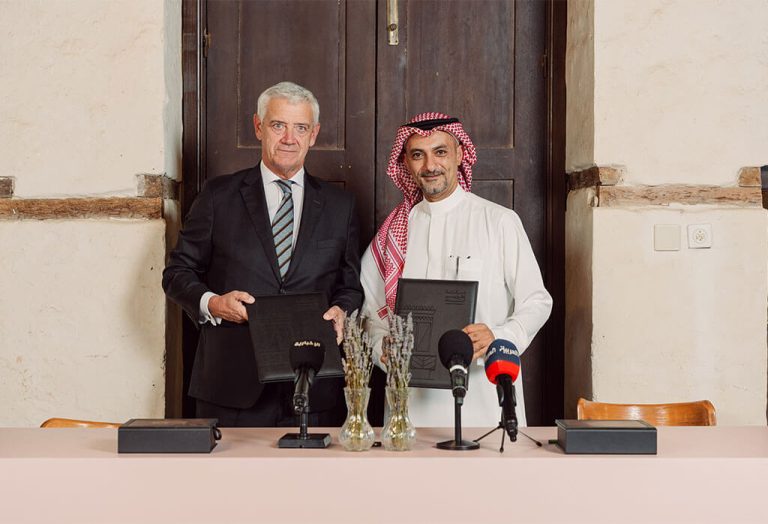
News that e& completes Vodafone stake sale confirms a full exit from a holding the Abu Dhabi group built over four years. Emirates Telecommunications Group Company PJSC moved all 3,944,743,685 of its ordinary Vodafone shares to three banks, namely BNPP Financial Markets, Crédit Agricole Corporate and Investment Bank, and Société Générale. That transfer settled a binding agreement reached on 10 July 2026 with Vega, an acquisition vehicle wholly owned by the Niel family group. The e& Vodafone stake sale ends a position worth about 16.21 percent of Vodafone’s share capital and 17.13 percent of its voting rights.

Gross cash proceeds came to AED21.5 billion, or US$5.84 billion, at close to 110.5 pence per share. One payment is still to come. e& will receive a final dividend of 2.02 pence per share, worth AED0.4 billion or US$0.11 billion, on 30 July 2026. That dividend relates to Vodafone’s FY2026 results. Once it lands, the total climbs to AED21.9 billion, equal to US$5.95 billion.

What the Vodafone stake sale $5.95 billion deal returns

The e& net cash return from the deal stands at AED4.8 billion, or US$1.3 billion. That figure measures the gain over what the group paid to build the stake. e& started buying into Vodafone in February 2022, taking an initial 9.8 percent holding for US$4.4 billion, then adding to it in stages. Secondary reporting set the sale price at 112.5 pence per share, a premium of about 13 percent to Vodafone’s market price before the announcement.

Ownership at the UK operator now shifts. The deal makes Xavier Niel Vodafone’s largest shareholder, giving the Iliad founder a stake that carries 17.13 percent of total voting rights. Niel has long argued for consolidation across Europe’s telecom sector. Through the Vega Vodafone acquisition, he takes that position without a wider bid for the company. The Vodafone stake sale, a $5.95 billion transaction, leaves him as a long-term minority holder for now.

Why e& completes Vodafone stake sale now

The timing fits a wider redirection of capital. e& completes Vodafone stake sale as part of a review of its international investment portfolio. The group said the exit sharpens its focus on core businesses while realising the value built through the investment. Last month it sold 12.5 percent of Careem Technologies to Uber for US$100 million, citing the same discipline over where it puts money. First quarter revenue rose about 15 percent from a year earlier to Dh19.4 billion.

The exit also changes e&’s role at Vodafone. Its Relationship Agreement with the operator has ended, and its board representative resigned as a non-executive director. That closes a strategic tie formed in 2023. For the group, e& completes Vodafone stake sale as a way to turn a large minority holding into cash it can direct toward markets it controls.

A sharper capital focus for e&

Set against the group’s recent moves, the sale points to a tighter model. e& has trimmed holdings that sit outside its operating control and steered capital toward businesses it runs directly across the Middle East, Africa, and Asia. The Vodafone exit and the earlier Careem reduction follow one logic. Cash from a passive minority position now returns to the balance sheet, where the group can fund networks and services in markets it manages each day.

Amina Taher is the new Chairwoman

Amina Taher is the new Chairwoman of the Arab Fashion Council, and the fit reads clean. The appointment took effect on 9 July 2026. Taher spent two decades leading brand and communications across aviation, fintech, media and sport. She earned an MBA from London Business School and a master’s from Harvard. Now she takes the top governance seat at a body that speaks for fashion across the 22 nations of the Arab League. Known in the UAE business scene, and her name is familiar. She served as Vice President of Marketing at Etihad Airways, where she helped shape the airline’s global identity. From there, she moved into fintech as Chief Marketing Officer of Wio Bank. That career sits at the crossroads of money, media and brand, which is close to where fashion is heading.

What the Arab Fashion Council built

The Arab Fashion Council spent the past decade turning a thin fashion scene into real infrastructure. It co-founded Dubai Fashion Week with Dubai Design District, and grew it into a platform buyers and press now track. That event sits on the international calendar next to New York, London, Milan and Paris. The Council also pushed Arab designers onto runways that once looked past them. Picture laying track before the trains arrive. The rails are down, and traffic is building. What matters now is speed and direction, and that is where the new leadership comes in.

The gap Taher steps into

Great institutions hit a ceiling when they lean on passion alone. What the Council needs next is weight: government backing, diplomatic reach, and partnerships measured in years rather than seasons. Taher has built that kind of trust across her career, working with public bodies and global brands alike. Founder and Chief Executive Officer Jacob Abrian called her arrival a sign of how far the Council has come, not a shift in course. “Amina Taher’s appointment is not a change of direction,” he said. His point was that the move reflects the standing the Council now holds, and a promise to hold it with more seriousness. That is the room Taher walks into.

What Amina Taher wants for Arab designers

Taher points her focus at the next wave of talent. She wants more room for young Arab designers to reach a global audience and build real businesses. “I am honoured to build on that strong foundation,” she said, crediting the institutions, partnerships and credibility built over the past decade. Her goal is a wider creative economy and more open doors for people entering the field. Amina Taher is the new Chairwoman at a moment when the region’s fashion voice carries serious reach, and she plans to push it further. Growth in the creative economy tends to follow the money and the platforms, and the Council now has both.

What comes next

Taher will present her vision at an invitation-only gala in September 2026. Until then, the plan stays in outline, with the full manifesto still to come. One thing is clear already. In choosing her, the Council made it official: Amina Taher is the new Chairwoman, and she builds for the present and what comes after.

Share this post

on your favourite social platforms

or copy the link