icnlive

Messi equals Maradona on one of the World Cup’s harder statistical tests, a comparison that returned after Argentina beat England 2-1 to

Trending Sports

Mohamed Salah is Egypt's all-time scorer

Mohamed Salah is Egypt’s all-time scorer in waiting, sitting one goal from the national record. He reached 68 international goals after his strike against New Zealand at the World Cup. One more goal will lift him above Hossam Hassan, the longtime Pharaohs record holder. You can sense how close this historic milestone now sits for the Egyptian captain.

Egypt waited 92 years for its first World Cup victory before this New Zealand match. Salah struck the decisive second goal as the Pharaohs came from behind to win. The 3-1 result pushed Egypt to the top of Group G at the tournament. This crucial win put one foot in the Round of 16 for the Pharaohs. His emotion after the final whistle showed how much these Mohamed Salah Egypt goals mean. “I don’t know how to express it,” Salah said right after the historic win. The Salah New Zealand goal will live long in proud Egyptian football memory now.

Mohamed Salah is Egypt’s all-time scorer once he finds the net again for the Pharaohs. The Hossam Hassan Egypt record has stood for years as a fierce national benchmark. Salah now sits one goal short of matching his own coach and former striker. Hassan once led the Pharaohs’ attack for years before moving into the coaching role. As the Salah Pharaohs record scorer race tightens, every Egypt match now carries real weight.

MOHAMED SALAH IS EGYPT’S ALL-TIME SCORER IN EVERYTHING BUT ONE GOAL

The Egypt World Cup 2026 campaign gives Salah more chances to break the scoring record. His final group game against Iran offers the next clear shot at making history. You will watch a player now chasing both a trophy and a personal milestone. From my standpoint, no Egyptian forward has carried this kind of national hope before. Salah had already broken Mohamed Aboutrika’s mark as Egypt’s leading World Cup qualifying scorer.

Years before this run, Salah ended a 28-year World Cup wait for the Pharaohs. He then scored a late stoppage-time penalty against Congo DR before 80,000 home fans. Cairo Stadium erupted as Salah sent his whole country to the global finals again. More recently, he smashed four goals past Djibouti in a single 2026 qualifying match. His stunning haul broke Aboutrika’s qualifying record and lifted his profile even higher still.

Salah also built global fame with Liverpool in the Premier League and Champions League. His earlier spells in Italy with Roma and Fiorentina shaped his sharp attacking style. You can see the same hunger when he pulls on the red Egyptian shirt. Egypt also ranks among Africa’s best with a record seven Cup of Nations titles. Salah now wants a World Cup run to sit beside those proud continental crowns.

EGYPT WORLD CUP 2026 KEEPS HIS RECORD CHASE ALIVE

Mohamed Salah is Egypt’s all-time scorer in spirit, even before the record fully falls. He has carried the Pharaohs to a second World Cup under his own captaincy. Egypt fans now wait to see if Salah passes the Hossam Hassan Egypt record. Your eyes will stay fixed on the Iran match for one truly defining moment. Mohamed Salah is Egypt’s all-time scorer on the night he finally nets his 69th goal.

Lewis Hamilton and Ferrari with a Barcelona win

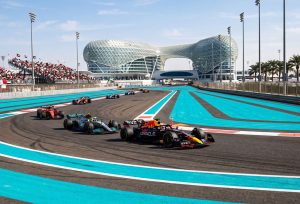
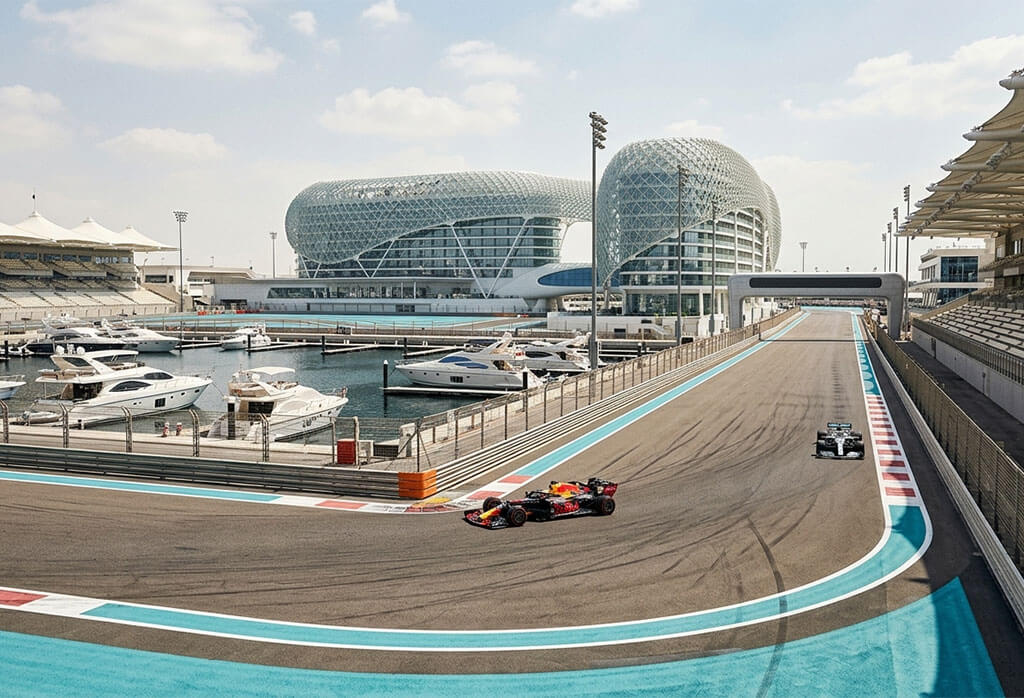
Lewis Hamilton and Ferrari, with a Barcelona win, ended the Mercedes winning streak this season. Hamilton crossed the line ahead of George Russell and Lando Norris on Sunday afternoon. Kimi Antonelli failed to finish the race, which handed the leaders a points advantage. You watched a 41-year-old driver take his first top step since the year 2024. The result also brought the first all-British podium since back in the 1968 season. For fans following the title, this race changed the mood around the championship fight.

How the Lewis Hamilton Ferrari win came together

Lewis Hamilton and Ferrari, with a Barcelona win, came from a bold three-stop tyre plan. Ferrari started the Briton on soft tyres, but the opening lap brought no clear lead. Team strategists pitted him early on lap 12 to force the rivals into quick reactions. A Virtual Safety Car then gave Hamilton a free stop at the perfect moment. He delivered fast laps and slowly built a gap over the Silver Arrows pair. Russell settled for second while Norris took third place for the McLaren racing team. Vasseur said his driver would have won the race even without the safety car.

Barcelona win changes the title race

This victory lifted hopes inside the Maranello camp after seasons of frustration and near misses. Lewis Hamilton and Ferrari, with a Barcelona win, also gave the team a needed lift. The win counts as his 106th career victory and the team’s 249th in Formula 1. It arrived at the same track where Michael Schumacher first won in red colours. Hamilton became the oldest race winner since Jack Brabham achieved the feat in 1970. Team boss Fred Vasseur said the win was “a lot about resilience” for the driver. From my standpoint, this success shows real grit after a long and testing wait.

The Hamiltons’ first Ferrari victory rewards an eighteen-month effort full of doubt and patience. Kimi Antonelli held second place late before his car shut down on lap 62. An electrical failure ended his run moments after he passed Russell for the spot. The Kimi Antonelli retirement cut his championship lead over the two chasing drivers sharply. Hamilton now sits 41 points behind the young Italian leader in the drivers’ standings.

What the Barcelona-Catalunya Grand Prix 2026 means next

George Russell’s Barcelona pole came after he topped both practice runs by a whisker. Russell led early but lost track position once Ferrari pitted Hamilton ahead of plan. Lewis Hamilton and Ferrari, with a Barcelona win, now reshape the title fight ahead. Red Bull took fourth and sixth as Max Verstappen finished ahead of Isack Hadjar. Oscar Piastri claimed fifth to bring useful points home for the reigning constructors’ champions. Pierre Gasly took seventh for Alpine after a strong and steady drive all afternoon. Liam Lawson and Arvid Lindblad gained eighth and ninth after a rival drew a penalty.

The Barcelona-Catalunya Grand Prix 2026 also saw seven different cars retire with various faults. Charles Leclerc joined the casualties with a late failure near the front of the field. Aston Martin endured a poor day as both their drivers failed to reach the flag. You should watch Austria next, since momentum and confidence now sit firmly with Hamilton. Vasseur warned his team to stay calm and keep the same approach in Austria.

Mexico City's challenges as FIFA World Cup host

Mexico City’s challenges as FIFA World Cup host reach far beyond the football pitch. The city opens the FIFA World Cup 2026 tournament on June 11 against South Africa. Fans will fill the historic Estadio Azteca for this record third opening match here. Yet the ground beneath this giant metropolis keeps dropping at an alarming yearly rate. New NASA satellite data show the Mexico City sinking problem is now moving faster than before.

The metropolis rose on the ruins of the Aztec capital, named Tenochtitlan centuries ago. Spanish conquerors drained the five connected lakes and replaced the water with soft clay. Today, crews pump huge volumes of groundwater to supply more than 22 million people. This constant pumping compacts the clay layers and causes severe and permanent land subsidence. Central districts lose 10 to 25 centimeters yearly, while eastern zones lose nearly 50.

You can see this effect best along the famous Paseo de la Reforma boulevard. There stands El Ángel de la Independencia, a stone monument erected in 1910. Engineers drove hundreds of steel and concrete piles 30 to 40 meters into bedrock. The angel still holds firm while the streets and shops around it sink lower. At the 1910 opening, visitors climbed only nine steps to reach the monument base. Today, you must climb 24 steps because the ground sank around the fixed structure.

Why the Estadio Azteca survives the slow collapse

The mighty Estadio Azteca raises a big question for every worried fan and engineer. How does this giant arena in Santa Úrsula avoid the grim fate around it? Builders placed the stadium on a former lava bed from the Xitle volcano eruption. This rocky base stays firm while the marshy area east of the city keeps sinking. For this reason, the venue stays immune to the collapse troubling the wider metropolis. Mexico City’s challenges as FIFA World Cup host include unstable ground across the central districts.

Mexico City’s challenges as the FIFA World Cup host for over a century

Geologists studying the valley predict a slow disaster rather than a sudden, dramatic fall. Enrique Cabral-Cano, a geophysicist tracking the valley, stresses the record-breaking speed of the sinking. He said, “We have one of the fastest velocities of land subsidence in the whole world.” The clay layers below the streets need about 150 more years to compact fully. Eastern and southern districts will drop another 20 to 30 meters during this slow period. Mexico City sinking at this pace threatens pipes, roads, and the metro for decades.

What can slow the steady sinking

City planners now push a bold shift toward the so-called sponge city design model. Crews install large rooftop systems to capture rainwater during the wet season each year. These systems reduce groundwater pumping and let the tired aquifer slowly recover its strength. Founder Enrique Lomnitz of the rainwater group, Isla Urbana, warns that the reservoirs sit empty. Modern buildings use floating box foundations, yet they only slow the Mexico City sinking.

Mexico City’s challenges as FIFA World Cup host now sit beside a deeper survival question. Visitors arriving for the Mexico City World Cup opening match will sense a proud city. Below the cheering stands, though, the ground keeps shifting beneath homes and old roads. As I see it, the city must treat water reform as its real long-term victory. Mexico City’s challenges as FIFA World Cup host will outlast the final whistle this summer.