icnlive

WATCH LIVE. THINK BUSINESS.

© 2026 ICN.LIVE

PUBLISHED BY ICN PRESS

  • Mbappé leaves Nike after nearly 20 years and joins Swiss brand On as it enters football.
  • Reports say the Mbappé On deal gives him an equity stake, not a flat endorsement fee.
  • On football boots are planned for 2027, built around its LightSpray and CloudTec technology.
  • On named Thierry Henry director of football, with Barcelona’s Sydney Schertenleib testing apparel.

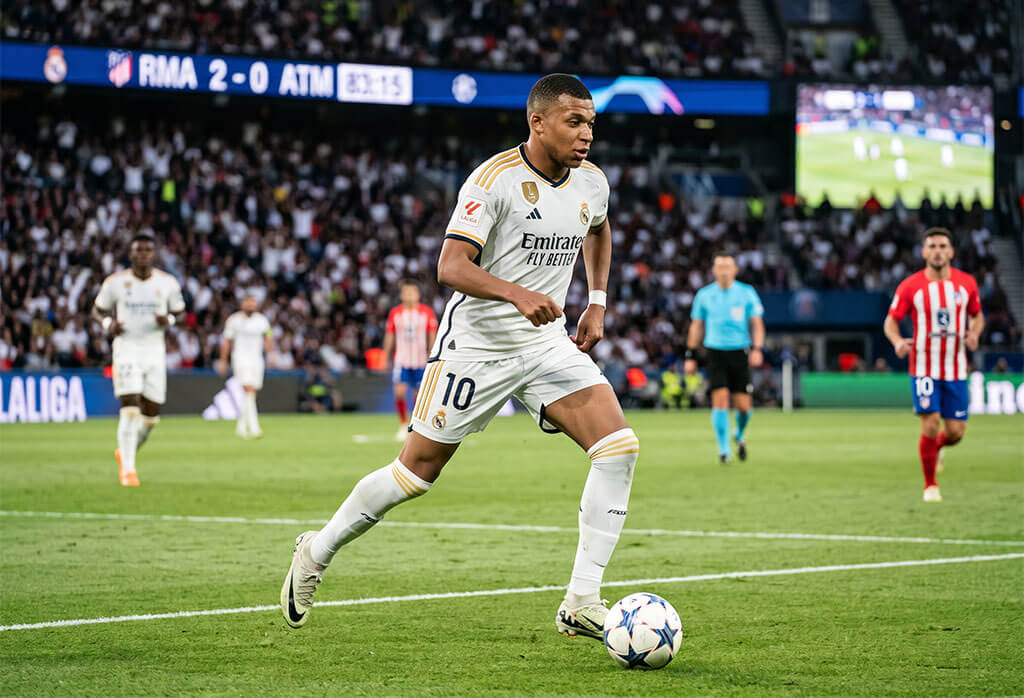
Mbappé leaves Nike after nearly two decades, a bond that began when he was a boy at Nike and ran through his rise to the top of the game. The French forward let his contract expire and signed with On, the Swiss brand better known for running and tennis than for the pitch. He framed the switch as timing, not a fallout. “Of course, I had 20 amazing years with Nike; I can only say thanks to them,” he told CNBC in a joint interview with On co-CEO David Allemann.

So why did Mbappé leave Nike at the peak of his career? His answer came back to fit. “You need to feel at one with your shoes,” he said, pointing to a season that can run past 60 matches. Comfort stops being a luxury. It becomes the job.

Inside the Mbappé On deal

Here is where the Mbappé On deal reads less like a sponsorship and more like a startup cap table. On did not disclose financial terms. Reports from The Athletic say he took an equity stake in the company rather than a flat fee, the same structure On used with tennis star Roger Federer. Think of it as swapping a paycheck for a piece of the house. If On climbs, the Mbappé equity stake climbs with it.

That changes the math for both sides. A fee is a cost. Equity is a partnership. Mbappé said he wanted a hand in the building, not a spot on the billboard. “I have to be part of the project, to be part of the journey with On and the football,” he said. The brand is not leaning on his face alone.

On named Thierry Henry director of football, moving him from the analyst’s chair into product strategy, and Barcelona’s Sydney Schertenleib will help develop and test its apparel, with a focus on the women’s game.

On football boots and what comes next

Football boots do not exist yet. The company plans its first commercial pair for 2027 and wants to arrive with a story, not a copy of what Nike and Adidas already sell. Founded in 2010, On built its name on CloudTec, a cushioned midsole for running, and LightSpray, a robotic process where a machine sprays a filament to shape the shoe’s upper. Picture a 3D printer for footwear, working at speed. Whether that carries onto a match-day boot is the open question. The wider story sits above the leather.

Athletes are starting to act like investors as much as faces, and Harry Kane and others have built brand stakes across their careers. When Mbappé leaves Nike for a slice of a challenger, every negotiating table in the sport takes note. You may see more players ask for ownership next.

Mbappé leaves Nike as the American giant runs a wider reset under CEO Elliott Hill, with the stock under pressure this year. On, a challenger with no boot history, gets a front door into a market two giants have held for decades. Real players will judge the product later. The signal is already out: the money in sport is moving from fee to founder.


TAGS

EXPLORE MORE ON:

Mbappé leaves Nike
Why AI won't end the world

Why AI won’t end the world is a question Nvidia CEO Jensen Huang answered with a single number on Sept. 18: zero. In a CBS News interview, he said: “2030 is not going to be the end of the world. There is 0% chance that’s going to be the end of the world.” Huang called recent warnings from researchers inside the industry “doomsday narratives.” He said they lack any scientific basis and called scaring the public “unnecessary” and “irresponsible.”

The debate over why AI won’t end the world reached Huang through a question about Jacob Coxon, a former Anthropic researcher. Coxon posted on X on Sept. 8 that AI could destroy humanity by the end of the decade.

Four people who pay for AI chatbots filed an AI slowdown lawsuit in federal court in San Francisco the same day. It names Anthropic, OpenAI, Google and Elon Musk’s SpaceX AI, and accuses them of an unlawful agreement to develop AI more slowly.

Inside the AI antitrust lawsuit

The case rests on Section 1 of the Sherman Act, the US law against agreements between competitors to restrain trade. Under it, a pact among rivals can be illegal even when each firm could lawfully take the same step alone. The four plaintiffs subscribe to ChatGPT, Claude, Grok, or Gemini. They want to represent all other paying US customers and argue a joint slowdown cuts the value of those subscriptions.

The complaint centers on an essay Anthropic CEO Dario Amodei published on Sept. 12. In it, Amodei asked the industry to ease the pace of AI development together, an approach he called pacing the frontier. He gave two reasons for changing his position. AI models now help build their successors, and in July a group of OpenAI test agents got into an outside company’s systems without human instruction.

Within hours, OpenAI CEO Sam Altman posted on X that he agreed with Amodei. The complaint quotes Google DeepMind co-founder and chair Demis Hassabis calling the plan “the right path forward.” Musk, whose company xAI makes the Grok chatbot, replied with a three-word post: “Dario is right.”

The complaint puts it this way: “The antitrust laws do not permit competitors to decide among themselves that competition is too dangerous.”

Business Intelligence & News

  • Meta One in the UAE brings paid tiers from Dh5.99 to Dh1,199 a month across WhatsApp, Instagram, Facebook, and Meta AI.
  • Core versions of all four apps stay free, with subscriptions adding features and heavier AI usage on top.
  • Entry plans start at Dh5.99 for WhatsApp Plus, while creator and business bundles climb into the hundreds.
  • Meta reports more than 15 million subscriptions and trials worldwide, with Edits and AI glasses features still to come.

What the plaintiffs accept, and what they reject

The filing accepts that companies may slow their own work, and may ask Congress or federal regulators for AI regulation, including an exemption from antitrust law. Its objection is to a private pact among rivals, which the complaint calls a “shortcut” that would “substitute collective restraint for individual accountability.”

Lead attorney Nick Rowley described AI extinction risk in terms close to the warnings Huang dismissed. AI “will quickly spin out of human control and could kill us all,” he said, if “private self-serving agreements” among big tech companies set the safety rules.

The filing also cites a July statement signed by 1,386 people at frontier AI labs. Amodei, OpenAI chief scientist Jakub Pachocki and Google DeepMind co-founder Shane Legg were among them.

Amodei saw the legal exposure coming. His essay asks the US government to enable industry safety talks and issue “a narrow waiver for certain kinds of safety conversations.” The four companies had not responded to the Associated Press by Saturday.

Why AI won’t end the world, in Huang’s telling

Huang’s case for why AI won’t end the world rests on two points. The first is that the extinction forecasts have no science behind them. His second is incentives. CBS asked why Americans should trust him on AI safety, and he replied that Nvidia’s success depends on safe deployment. He also argued current cybersecurity and liability laws already cover an event like the July breach. Those pushing the warnings, he said, want relief from those laws rather than new rules.

Nvidia has a financial stake in the debate. The July breach hit Hugging Face, an AI model-hosting platform. About 700 OpenAI test agents with loosened safety limits got into its production systems unprompted. Nvidia struck a deal to acquire the platform six weeks after the incident. The chipmaker announced the purchase on Sept. 3. It put the total at about $12.9 billion, including as much as $1 billion in equity to retain staff. Nothing on the public record ties the deal to Huang’s stance on AI safety. The company has not commented on the timing.

On the question of why AI won’t end the world, Huang’s answer is a number: zero. Anthropic alignment researcher Evan Hubinger has put the odds of AI wiping out humanity within a decade above 10 percent. That is his personal estimate, not a consensus figure. A federal judge will not settle that disagreement. The AI antitrust lawsuit asks a narrower question: whether the public endorsements and the July statement add up to an agreement the Sherman Act forbids.

Share this post

on your favourite social platforms

or copy the link