

icnlive

WATCH LIVE. THINK BUSINESS.

© 2026 ICN.LIVE

ICN.live

PUBLISHED BY ICN PRESS

  • e& transferred all 3,944,743,685 of its Vodafone shares to three banks, closing its position in the UK operator.
  • Gross proceeds reached AED21.5 billion, or US$5.84 billion, near 110.5 pence per share.
  • A 2.02 pence dividend due 30 July lifts the total to AED21.9 billion, equal to US$5.95 billion.
  • The net cash return stands at AED4.8 billion, or US$1.3 billion.

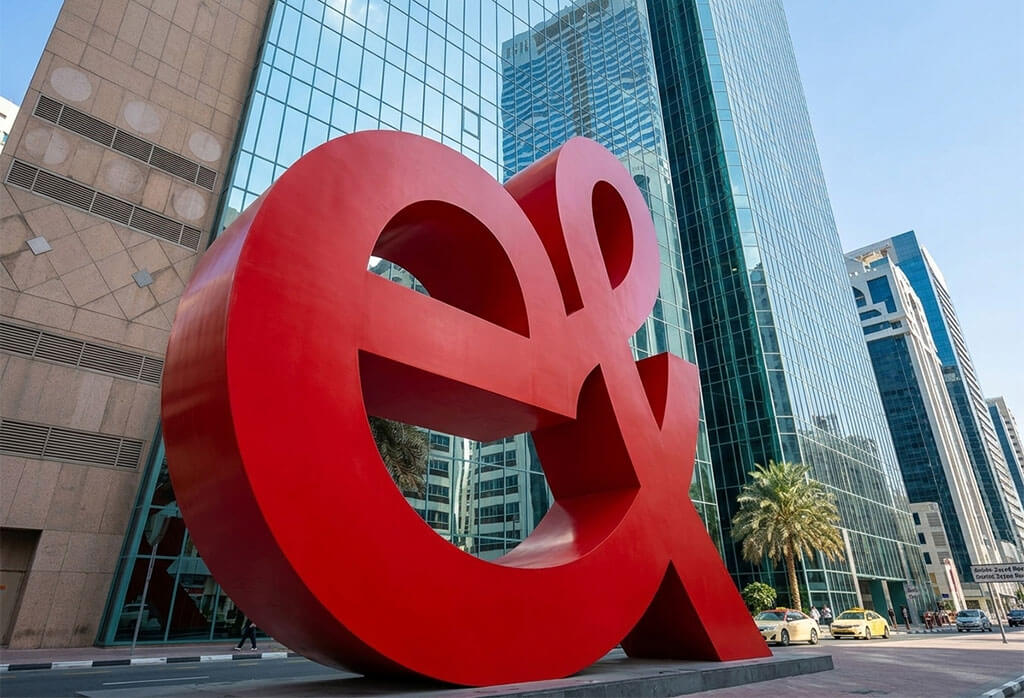
News that e& completes Vodafone stake sale confirms a full exit from a holding the Abu Dhabi group built over four years. Emirates Telecommunications Group Company PJSC moved all 3,944,743,685 of its ordinary Vodafone shares to three banks, namely BNPP Financial Markets, Crédit Agricole Corporate and Investment Bank, and Société Générale. That transfer settled a binding agreement reached on 10 July 2026 with Vega, an acquisition vehicle wholly owned by the Niel family group. The e& Vodafone stake sale ends a position worth about 16.21 percent of Vodafone’s share capital and 17.13 percent of its voting rights.

Gross cash proceeds came to AED21.5 billion, or US$5.84 billion, at close to 110.5 pence per share. One payment is still to come. e& will receive a final dividend of 2.02 pence per share, worth AED0.4 billion or US$0.11 billion, on 30 July 2026. That dividend relates to Vodafone’s FY2026 results. Once it lands, the total climbs to AED21.9 billion, equal to US$5.95 billion.

What the Vodafone stake sale $5.95 billion deal returns

The e& net cash return from the deal stands at AED4.8 billion, or US$1.3 billion. That figure measures the gain over what the group paid to build the stake. e& started buying into Vodafone in February 2022, taking an initial 9.8 percent holding for US$4.4 billion, then adding to it in stages. Secondary reporting set the sale price at 112.5 pence per share, a premium of about 13 percent to Vodafone’s market price before the announcement.

Ownership at the UK operator now shifts. The deal makes Xavier Niel Vodafone’s largest shareholder, giving the Iliad founder a stake that carries 17.13 percent of total voting rights. Niel has long argued for consolidation across Europe’s telecom sector. Through the Vega Vodafone acquisition, he takes that position without a wider bid for the company. The Vodafone stake sale, a $5.95 billion transaction, leaves him as a long-term minority holder for now.

Why e& completes Vodafone stake sale now

The timing fits a wider redirection of capital. e& completes Vodafone stake sale as part of a review of its international investment portfolio. The group said the exit sharpens its focus on core businesses while realising the value built through the investment. Last month it sold 12.5 percent of Careem Technologies to Uber for US$100 million, citing the same discipline over where it puts money. First quarter revenue rose about 15 percent from a year earlier to Dh19.4 billion.

The exit also changes e&’s role at Vodafone. Its Relationship Agreement with the operator has ended, and its board representative resigned as a non-executive director. That closes a strategic tie formed in 2023. For the group, e& completes Vodafone stake sale as a way to turn a large minority holding into cash it can direct toward markets it controls.

A sharper capital focus for e&

Set against the group’s recent moves, the sale points to a tighter model. e& has trimmed holdings that sit outside its operating control and steered capital toward businesses it runs directly across the Middle East, Africa, and Asia. The Vodafone exit and the earlier Careem reduction follow one logic. Cash from a passive minority position now returns to the balance sheet, where the group can fund networks and services in markets it manages each day.


TAGS

EXPLORE MORE ON:

Tim Cook last day as Apple CEO

Tim Cook’s last day as Apple CEO arrived on August 31, 2026, ending a run that began when Steve Jobs resigned in 2011. He led the company for about 15 years. John Ternus, the senior vice president of hardware engineering, takes over as chief executive on September 1. Cook announced the plan in April. He does not leave the company. Instead, he moves into the role of Apple executive chairman, where he will manage relationships with governments and policymakers around the world.

The move counts as a rare kind of exit for a company this size. Apple set the date months ahead. That timing matters. Sudden departures tend to unsettle markets, while a planned Apple CEO transition gives large shareholders room to price in the change.

How Tim Cook’s Apple tenure reshaped the company

Cook joined Apple in 1998 after Jobs met him and asked him to run worldwide operations. He became chief executive in August 2011, six weeks before Jobs died. Over Tim Cook’s tenure, the company grew from a business built on a few product cycles into a wider consumer technology operation. New categories arrived under his watch. The Apple Watch, Apple Pay, AirPods and Apple TV+ each launched during these years. Services revenue climbed past $100 billion, second only to the iPhone.

The financial record is direct. Apple became the first publicly traded U.S. company to reach a $1 trillion market cap. It passed $2 trillion in 2020 and crossed $3 trillion for the first time in 2022. The company reached $4 trillion in October 2025. Apple’s market cap now sits near $4.6 trillion, second behind Nvidia.

What Tim Cook’s last day as Apple CEO means for Ternus

Tim Cook gave a firm start date to his successor. John Ternus, the new Apple CEO as of September 1, brings a hardware background. He joined Apple in 2001 on the product design team and moved up to lead hardware engineering in 2021. Cook called him the right person to lead the company next. The question now is whether Ternus can keep the growth going while Apple works to catch up in artificial intelligence, the field where software learns patterns from data to answer questions or complete tasks.

Apple has moved slower than some rivals on that front. Ternus inherits strong finances and a loyal customer base, along with pressure to show progress on Apple Intelligence and Siri. Reports point to a foldable iPhone as one of the first big products of his era, along with plans for smart glasses. His first months will test whether the operating model Cook built can pair with sharper product engineering.

A quiet exit, on his terms

Cook framed the day with restraint. In a memo to staff, he said he was stepping away from a role he had loved deeply, and that he felt at peace with the decision. He keeps a seat close to the company. As executive chairman, Cook will steer Apple’s ties with President Trump and the Chinese government, work that shaped supply chains across his years in charge. Tim Cook closes one chapter, and the handover opens the next test for the world’s second most valuable company.

US ban on Chinese robots

The US ban on Chinese robots arrived quietly, as a line item added to a government list of security threats. On Tuesday, the Federal Communications Commission placed foreign-made humanoid and quadruped robots on the FCC Covered List, the register of equipment judged too risky to authorize for sale. Connected power inverters landed there too. Those devices link batteries, solar panels, and data centers to the electrical grid, and many are built in China.

The paperwork looks narrow. Its reach is not.

What the ban covers

The order stops new models from entering the US market. It does not pull back robots or inverters people already own, and it leaves untouched any model the FCC approved before Tuesday. A company selling an authorized robot dog can keep selling it. One with a new humanoid ready to launch cannot, unless it earns an exemption.

FCC Chairman Brendan Carr said the goal was to secure American supply chains. The commission warned that foreign-made inverters could let overseas firms switch them off, take data, or open a door to remote access and surveillance. Robots assembled abroad, it said, could let hostile actors watch Americans or take control of the machines.

Why the US ban on Chinese robots matters now

The move points to a larger contest over technology. Chinese humanoid robots have spread quickly through factories and homes, and industry estimates put China’s humanoid robot market share as high as 85 percent, a figure that comes from later reporting rather than the FCC order itself. The country’s firms reached buyers before US rivals such as Tesla and Boston Dynamics could match their pace.

Speed is the worry. National security risks sit at the heart of the FCC case, yet industrial strategy runs close behind. By shutting out new imports, Washington buys time for domestic robot makers to grow. The US ban on Chinese robots also lands as the two governments prepare for a planned meeting between Trump and Xi Jinping in September.

Beijing’s answer

China rejected the reasoning outright. The Chinese embassy in Washington accused the US of politicizing trade and acting on groundless pretexts. It vowed to take all necessary measures to protect Chinese interests and pressed other nations to build AI for good. The embassy told Washington to drop what it called a hegemonic mindset and stop smearing Chinese firms.

China said its AI progress grew from its own work and from cooperation abroad, not theft. US Treasury Secretary Scott Bessent has warned that Chinese AI companies could face sanctions over claims they took American intellectual property.

Part of a wider push

The robot order fits a longer run of US restrictions. Washington has taxed Chinese electric vehicles out of the American market and blocked sales of advanced US chips to China. Last year Beijing pushed back by tightening export controls on rare earth minerals, the raw material behind much modern electronics. That pressure still shapes how carefully the US acts.

Trump raised alarms about the China tech threat during his first term, pressing worries about intellectual property theft and state-linked spying. His second term has been gentler, hemmed in by Beijing’s grip on rare earths. The US ban on Chinese robots shows how far the fight has moved, from phones and chips to the machines now walking into daily life.

TDRA

The Telecommunications and Digital Government Regulatory Authority (TDRA) has granted Starlink Satellite Communications LLC a 10-year General Space Services License, authorising the company to establish, operate, and manage a public satellite communications network and provide broadband satellite internet services in the UAE, WAM announced.

The license marks an important milestone in the UAE’s regulatory framework for satellite communications services. It adds a space-based layer to the country’s national digital infrastructure, complementing terrestrial fibre-optic and 5G networks.

This will diversify internet access options, enhance the resilience, readiness, and continuity of the national network under various conditions, and support critical sectors including maritime and aviation transport, energy, logistics, and emergency response.

From a regulatory perspective, the license reflects TDRA’s approach to adopting a flexible and forward-looking regulatory framework that embraces emerging technologies, expands user choice and connectivity solutions, and promotes competition. This is expected to contribute to service quality, customer experience, and continuity of telecommunications services, while reinforcing the UAE’s position as an attractive destination for global satellite system operators, in support of the objectives of the UAE Digital Agenda and “We the UAE 2031” vision.

The scope of the license extends beyond individual consumers to include businesses and government entities, as well as satellite connectivity services for the maritime and aviation sectors, in accordance with the UAE’s approved regulatory and technical frameworks. This further enhances the license’s strategic and economic significance and broadens its impact across key productive sectors of the UAE.

Majed Sultan Al Mesmar, Director-General of TDRA, said, ”This license represents a significant addition to the UAE’s telecommunications sector and reflects the country’s commitment to adopting advanced technologies and fostering a flexible regulatory environment that supports innovation and investment. The introduction of advanced satellite internet services will expand connectivity options, enhance network resilience and business continuity, and support the UAE’s ambition to strengthen its position as a regional and global hub for telecommunications and the digital economy.”

He added, “TDRA is committed to ensuring that the introduction of emerging and new technologies delivers tangible benefits to customers, service quality, and sector competitiveness, while maintaining the highest standards of security, reliability, and consumer protection.”

The license is expected to contribute to digital transformation, develop connectivity solutions for vital sectors and areas requiring additional connectivity options, and enhance the UAE’s readiness to respond to emergencies and crises, in line with the country’s national visions and strategies.

The services covered by the license are subject to the UAE’s approved regulatory and technical frameworks, including requirements related to security and the protection of information infrastructure, service quality, reliability and continuity, consumer rights and data privacy, as well as compliance with spectrum-use regulations and technical coordination with relevant authorities.

These requirements form an essential part of licensing decisions of this nature. TDRA’s regulatory approach seeks to balance enabling access to advanced technologies with ensuring that their deployment takes place within a robust framework that safeguards network security and consumer rights.

Share this post

on your favourite social platforms

or copy the link