
icnlive

WATCH LIVE. THINK BUSINESS.

© 2026 ICN.LIVE

ICN.live

PUBLISHED BY ICN PRESS

  • China’s World Cup absence continues in 2026 even after the tournament grew to 48 teams.
  • A single 2002 appearance remains the only World Cup trip for the men’s national team.
  • Heavy Chinese Super League spending failed to build lasting strength on the pitch.
  • Weak grassroots roots and hard academic pressure keep young players away from the game.

China’s World Cup absence stretches into another summer while North America hosts the biggest football show. You watched the 2026 FIFA World Cup expand from 32 to 48 teams this year. Even with a wider door, the Chinese men’s national team stayed home once again. China reached its first and only World Cup back in 2002 in South Korea and Japan. Since then, the national team has entered every qualifying cycle without earning another ticket. Fans across the country now face the same painful question about football and national pride.

China lost 1-0 to Indonesia in Jakarta during June of last year, ending its run. The defeat left the squad bottom of its Asian group with no route forward. Branko Ivankovic, the team’s head coach, accepted full blame for the failed campaign right afterward. His team finished with six points from nine matches and a weak goal difference. Japan and Iran booked their places early on while China fell far behind them. Nine Asian teams reached the expanded finals this time, including newcomers Jordan and Uzbekistan. China’s huge population passes 1.4 billion people, yet the men’s side keeps falling short.

A dream born right at the top

Xi Jinping placed football near the center of a national ambition more than a decade ago. Before he became president, he named three public wishes for the sport he loved. He wanted the country to qualify, then host, and one day win the tournament. The Xi Jinping football plan took shape in April 2016 with bold national targets. Officials promised 70,000 new pitches and 30 million schoolchildren playing football across China by 2020. A decade later, the real results look quite modest against those large early promises. The men’s national team sat 82nd in the world back in 2016 across global rankings. Today it sits near 91st place out of 211 national teams tracked by FIFA.

China’s World Cup absence and the money years

China’s World Cup absence looks stranger once you study the spending during the boom years. The Chinese Super League drew global stars with enormous wages between 2015 and 2017. Clubs spent about 1.12 billion dollars on transfers across those three heavy-spending seasons. Big names like Oscar, Hulk, Paulinho, and Carlos Tevez traded Europe for Chinese football. Property developers funded most of this spending boom for reasons far beyond sport itself. By 2018, every single top-flight club owner also held interests in the property market. Dr. Tobias Ross studied this scene closely for a new book on the subject.

He interviewed 200 people inside Chinese football to understand the real motives at work. “It was never about football,” Ross told CNN Sports about the owners’ true aims. Owners chased closer ties with local party officials to reach land and bank loans. Officials, in turn, gained real prestige and a stronger case for career promotion at home. The whole model rarely made money, and Ross plainly called it a loss-making business. Guangzhou Evergrande won eight league titles yet still lost huge sums almost every year. Bloomberg reported yearly losses between 155 and 310 million dollars for the club in 2021.

Fans filled stadiums for a while, drawn by famous names and loud matchday shows. None of the current national team players compete for top clubs outside China today. European leagues still shape the best talent, and Chinese players lack such exposure abroad.

When the money and the interest faded

The wild spending spree never rested on a base built for the long term. Cash often dried up soon once developers secured their land or finished their key projects. Local officials chased short wins during limited terms rather than slow, patient team building. A slowing economy and falling birth rate then pushed football down the priority list. Ross notes football no longer sits inside the country’s important central five-year plan today. Local governments also lack spare cash right after the pandemic drained their tight budgets. Priorities shifted toward technology and trade as rivalry with the United States grew sharper.

Corruption also drained public trust across Chinese football here over many difficult recent years. Authorities handed lifetime bans to 73 players and officials over match-fixing earlier this year. Former national coach Li Tie now serves a long prison sentence for taking bribes. Weak oversight let public money slip into the wrong private hands again and again. Investigations reached coaches, referees, and top league bosses across several painful recent seasons here. Trust takes many years to rebuild once fans watch scandal after scandal unfold openly. Several naturalized players left the squad, and this move widened the talent gap further.
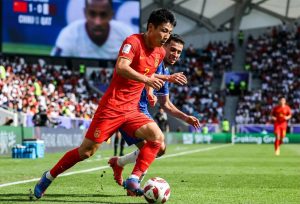
A Chinese football player

No culture to fill the pitches

China’s World Cup absence also traces back to weak roots at the community level. Beijing built many pitches, yet the country lacks a deep football tradition to fill them. Rowan Simons moved to China during the 1980s and later studied the language there. He soon became a well-known commentator and searched for a local club to join. “There were no football clubs then,” Simons told CNN Sports about his early years. Everything ran through the government, and this reality surprised him deeply at the time. In Britain, amateur clubs run on volunteers who mow pitches and drive team buses. China’s grassroots football stays fairly thin without those social clubs and shared community habits. Simons argues real progress needs the whole sport built from the base upward first. China lacks this base, so new pitches sit empty without steady weekend teams around. Volunteers keep local British football alive through shared duties passed down across many families.

The numbers behind the shortfall

China now counts around 980,000 registered players and roughly 40,000 amateur teams in total. England holds a population of around 4.2 percent of the Chinese total, yet fields more. This smaller nation still lists more registered players and three times as many teams. An official report last December ranked football outside the country’s six most popular sports. Badminton and cycling both draw more everyday players than the national football game does. China opened thousands of new school pitches, yet trained coaches stayed in short supply. Good coaching turns raw players into real teams, and China trails on this front.

Simons points to a sharp drop-off he simply calls the cliff in youth football. Children often play in primary school before heavy pressure pulls them off the pitch. The gaokao college exam looms large, and many parents drop sport for study time. State media even calls it the hardest test in the world for good reason. His own club sees heavy dropout among players once they turn 12 years old.

A system built for medals

Simon Chadwick teaches sport at Emlyon Business School and sees an even deeper problem. “Football rewards individual flair,” Chadwick told CNN Sports about stars like Messi and Ronaldo. He argues Chinese society rarely rewards the loose personal creativity strong football clearly demands. Family life, school, and work often follow rather tight and highly shared daily routines. Such a rigid structure leaves little room for the messy street play great talents need. Talented children need free play, and rigid schedules squeeze out such daily freedom fast. China finished a strong second in the medal table at the 2024 Paris Olympics. Chadwick says the Chinese sports system aims mostly toward clear, individual Olympic medal events. Winning a sprint race differs sharply from building a squad for a month-long tournament.

China’s World Cup absence and the road ahead

China’s World Cup absence hangs over every plan for the next generation of players. The China 2002 World Cup run still stands as the peak for the men’s team. Serbian coach Bora Milutinovic guided the side through Asian qualifying without a loss then. The squad lost all three group games in 2002 and scored no goals at all. Sun Jihai played in the 2002 tournament and later joined Manchester City in England. He also became the first East Asian player to score in the Premier League. Today he hopes to coach young players and repair Chinese football from the inside. “Youth coaching offers the fastest path to fix it,” Sun said in one interview.

Foreign coaches came and went, yet none of them fixed the shallow talent pool. From my reading of the evidence, no quick fix will change these deep habits soon. Money alone never built the culture your favorite football nations slowly grew over generations. You can now see why patience matters more than any single wave of hard spending. China owns wealth, ambition, and huge crowds, yet the grassroots base still needs work. Patience, better schools, and real local clubs offer the only honest path back up. Chinese brands still appear across the 2026 FIFA World Cup through large sponsorship deals. So the country shapes the tournament off the pitch while missing the pitch itself. The next qualifying cycle starts fairly soon, and young players carry the country’s hopes. Real change now waits in classrooms, community clubs, and a football culture built over time.

TAGS

EXPLORE MORE ON:

Manny Pacquiao poverty reduction role

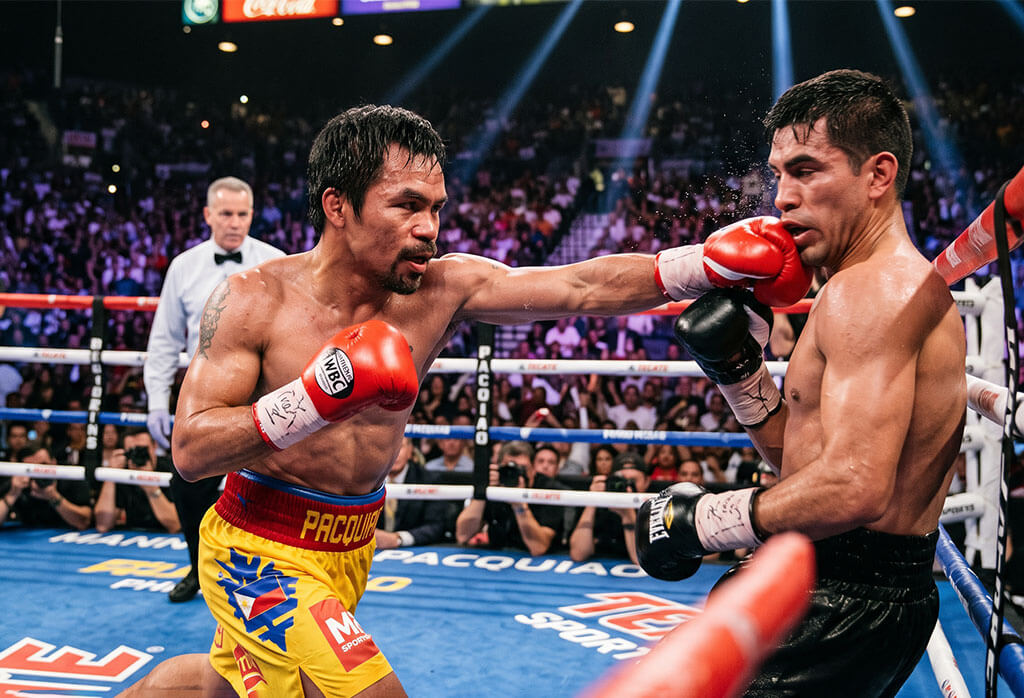
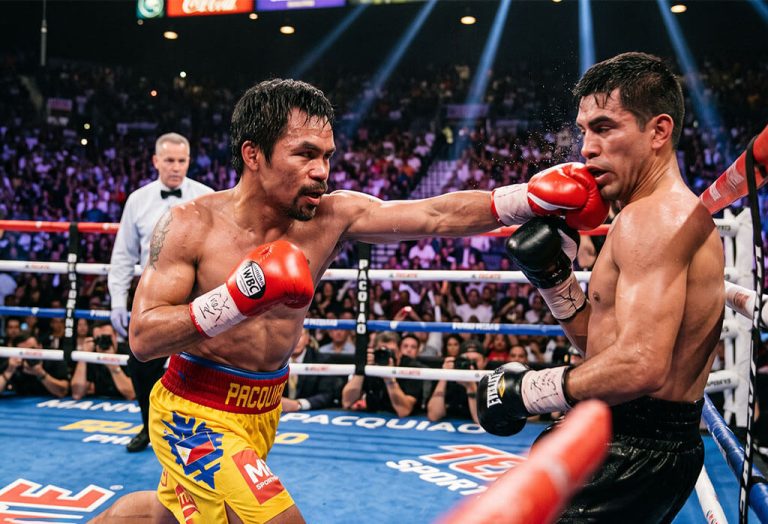
The Manny Pacquiao poverty reduction role places the former senator at the head of the agency that coordinates anti-poverty policy across the Philippine government. President Ferdinand Marcos Jr. administered his oath at Malacañang and gave the boxing champion the rank of Cabinet secretary. Pacquiao takes over the National Anti-Poverty Commission from Lope Santos III, who had led its secretariat since 2023.

His new post inside the Manny Pacquiao anti-poverty commission carries a coordinating mandate, not control of a single welfare programme. As NAPC lead convenor, he will run daily operations, align agencies and engage the 14 basic sectors the commission serves. Republic Act 8425, the Social Reform and Poverty Alleviation Act, created the body in 1998 and named the president as its chair. Marcos recently moved the commission from the Department of Social Welfare to the Office of the President through Executive Order 123, a shift that raised its standing before Pacquiao arrived. The post also sits apart from that of Larry Gadon, the presidential adviser on poverty alleviation.

Numbers behind the appointment

His Marcos cabinet appointment arrives as the country’s poverty indicators record steady improvement. Government data put the Philippines’ poverty rate in 2025 at 9.7 percent of the population, down from 15.5 percent in 2023. That lower share still represents about 11.08 million Filipinos living below the poverty line. Households in the poorest brackets gained the most. First decile incomes rose 23.8 percent, while second decile incomes climbed 22.7 percent over the same window.

The Philippine Statistics Authority also recorded declines in family poverty across all 18 regions between 2023 and 2025. Family poverty incidence now sits at its lowest level since the current series began. The Manny Pacquiao poverty reduction role begins with those indicators already moving in the government’s favour.

Inside the Manny Pacquiao poverty reduction role

A fixed deadline shapes the Manny Pacquiao poverty reduction role. Marcos has set a single-digit national poverty rate of 8 to 9 percent by 2028, and the latest data leaves the government within about one percentage point of that goal. Reaching it depends on programmes that pair job creation with skills investment, social protection and better public services. Pacquiao will monitor those programmes, recommend policy measures and coordinate how resources move across agencies.

Convergence defines the job more than any single benefit scheme. His office pulls separate efforts into one direction and reports where they fall short. The Manny Pacquiao poverty reduction role will be measured in the national figures, not in speeches.

From the streets to the commission

Pacquiao ties the role to hardship he knew long before boxing made him rich. He grew up selling goods on the streets of General Santos City, worked as a ship stowaway, and fought for about two dollars a bout as a boy. “I came from poverty. I experienced sleeping on cardboard on the streets, drinking only water, having nothing to eat,” he said in a statement.

Estimates of Manny Pacquiao’s net worth vary, and Sports Illustrated placed his fortune at 220 million dollars last year. He topped Forbes’ list of the world’s highest-paid athletes in 2012 and 2015. Outside politics, he has funded housing for poor Filipinos and handed cash to long queues of supporters after major fights.

The appointment gives the fighter his first Cabinet position after 12 years in Congress and the Senate. It follows his 2025 induction into the International Boxing Hall of Fame as the only eight-division world champion in the sport’s history. Pacquiao has yet to set out a detailed plan for the commission.

UAE business accelerators 2026

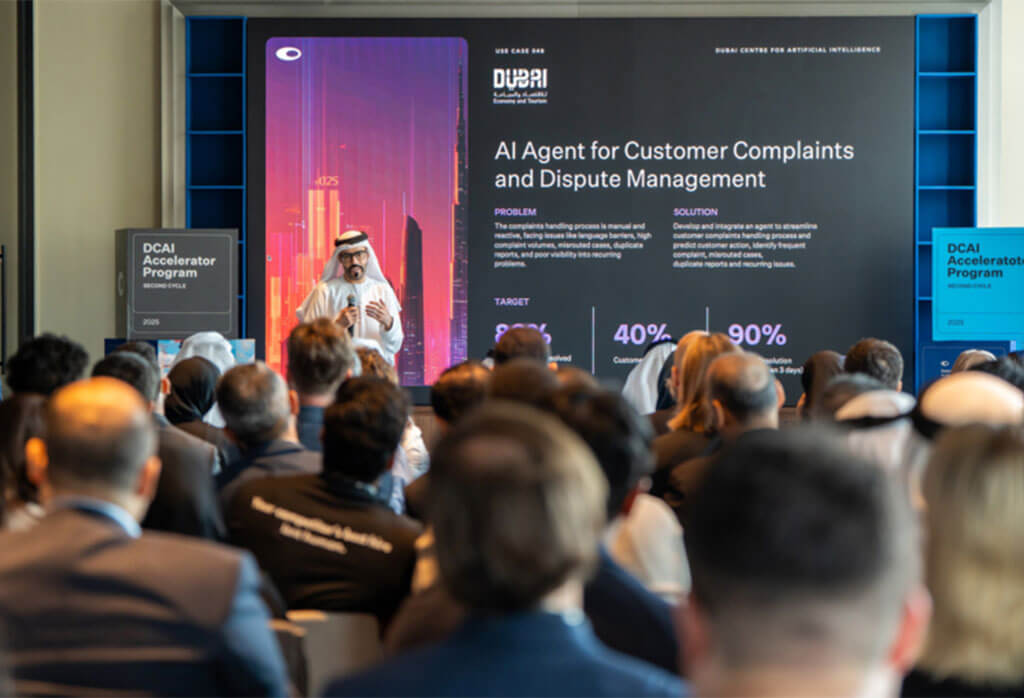
UAE business accelerators no longer sell classroom time, and ICN.live research across Dubai, Abu Dhabi, and Sharjah found that the shift is close to complete. Founder value now sits in four places: market access, institutional balance sheet backing, regulatory permission, and enterprise procurement. Desks and workshops still exist. They stopped being the reason anyone applies.

Why does the distinction matter to you? A founder who picks the wrong program loses a year at the stage when a year is most of the runway.

The ICN.live research team began with 24 active acceleration and incubation programs in the Emirates. Ten advanced to a shortlist, chosen on operational history, cohort transparency, and active venture deployment. Five made the final ranking. Weighting followed a strict evidence order, with audited reports and government registries at the top and self-reported marketing claims at the bottom, discounted unless independent data confirmed them.

If you are comparing startup accelerators in Dubai, three of the five finalists are based there. The other two sit in Abu Dhabi and Sharjah, and they solve different problems.

Where UAE business accelerators rank

Hub71 took first place with an overall score of 9.4 out of 10 in the ICN.live index. DIFC FinTech Hive followed at 9.2, then Dubai Future Accelerators at 8.9, Sheraa in Sharjah at 8.3, and in5 in Dubai at 8.2.

Read that order carefully, because the scores hide the more useful finding. These five do not compete on the same product. One sells sovereign capital. One sells a cheap trade licence. One sells a regulator. Another sells mentorship, and the last sells a government customer.

According to the ICN.live core finding, the strongest program for you is the one whose structural asset removes your immediate commercial blocker, rather than the one with the biggest community. Raw community size showed no reliable link to founder capital success. Concentrated vertical programs with small cohorts produced higher funding per startup and higher pilot conversion than sprawling generalist incubators.

That is a different way to shop. Instead of asking which name carries weight, ask which door the program opens.

Hub71 Abu Dhabi and the sovereign capital route

Hub71 launched in 2019, backed by the Abu Dhabi Government and Mubadala Investment Company, and operates from ADGM on Al Maryah Island. It supports seed to Series A companies across artificial intelligence, climate tech, digital assets and life sciences.

The ICN.live report counts 390 technology ventures supported, with $2.7 billion in cumulative alumni capital, equal to AED 9.9 billion. Startups can receive up to $204,000 in cash and in-kind incentives. That package is worth up to AED 750,000 and is delivered through a SAFE, under which Hub71 takes an equity interest when the startup closes a formal funding round. ICN.live also records more than 40 institutional venture capital partners connected through the program, and $244 million in signed enterprise deals closed by community startups.

For a deep tech founder, that combination is difficult to match anywhere in the Gulf. Mubadala sits a short walk away. So does the regulator.

The cost of joining Abu Dhabi

Every one of the ranked UAE business accelerators carries a trade-off, and Hub71’s is location. Physical relocation to Abu Dhabi is enforced, which loads housing and operating overhead onto international teams. The SAFE structure means you surrender equity at your next round. Sovereign compliance also moves at its own pace, and founders interviewed for the report described administrative friction that fast-moving software teams do not plan for.

Founder feedback collected in the research ran along a single line. Sovereign investor access and large enterprise deals were real, but capturing them required building genuine operations in the capital.

So the question is not whether Hub71 delivers. The research says it does. What you need to weigh is whether your team can physically move, and whether the equity you give up buys more than it costs.

in5 and the case for keeping your cap table

TECOM Group established in5 in 2013, and it now runs four specialised centres: in5 Tech at Dubai Internet City, in5 Media at Dubai Production City, in5 Design at Dubai Design District and in5 Science with Dubai Science Park. More than 1,100 startups have come through since inception.

The model inverts Hub71. in5 writes no cheques at all. Funding offered is zero. What you receive instead is a heavily subsidised Dubai commercial trade licence, prototyping labs and workspace, with no equity taken. ICN.live puts the operational savings at up to 80 percent of annual trade licensing and setup overhead, and records $2.45 billion in alumni capital, equal to AED 9.0 billion.

Treat it as a discount on the cost of existing rather than an investment. For a bootstrapped team, that can be worth more than a small cheque, because it stretches every month you already have.

The catch is attention. With over a thousand alumni, nobody runs your fundraise for you. Founders told ICN.live researchers the low-cost licence protected their early runway while they chased venture capital on their own.

When regulation is the product

DIFC launched FinTech Hive in 2017 with Accenture, as the region’s first fintech accelerator. It runs inside the DIFC Gate District and takes seed to Series A fintech, insurtech, regtech and Islamic finance ventures.

The asset here is permission. The DFSA regulatory sandbox, formally the Innovation Testing Licence, lets qualifying firms develop and test financial products inside DIFC for six to 12 months without meeting the full rules that apply to licensed firms. Capital cannot buy that. A payments startup with money and no licence still cannot trade.

ICN.live counts 220-plus accelerator alumni within the DIFC fintech ecosystem, more than $1.2 billion raised across cohort alumni, a $20,000 non-dilutive grant, access to the $100 million DIFC FinTech Fund, over 60 financial and wealth management partners, and more than 70 proof-of-concept pilots with regional banks each year.

Founders in the research prized one thing above the rest: meetings with banking chief technology officers that would otherwise take years of business development to arrange.

The limits are narrow and stated plainly. This program suits financial services and regulatory technology only. Bank procurement cycles move slowly, and full DFSA compliance carries continuing legal costs.

Sharjah runs an equity-free accelerator model

Sheraa, the Sharjah Entrepreneurship Center, started in 2016 as a government-supported platform, headquartered at the Sharjah Research Technology and Innovation Park with hubs inside the American University of Sharjah and the University of Sharjah. It works with pre-seed and seed companies in sustainability, creative tech, education, and digital services.

ICN.live gives Sheraa the highest program quality score in the ranking at 9.2, ahead of Hub71 on that single measure. Grants and milestone funding reach $50,000, and the report records 600 companies supported since 2016, $310 million in alumni capital equal to AED 1.14 billion, more than 140 public and private ecosystem partners, and a portfolio the report puts at 52 percent female-led.

For a first-time founder or a university researcher, this is the closest thing in the country to hands-on guidance without a cap table cost.

Sharjah’s weakness is capital density. Venture money is thinner than in Dubai or Abu Dhabi, so founders chasing multi-million-dollar follow-on rounds end up commuting to close lead term sheets.

Buying a government customer

Dubai Future Accelerators works differently again. Operated by the Dubai Future Foundation, it connects startups, private entities and government to position Dubai as a testbed for new technology. The program sits inside Area 2071 at Emirates Towers and matches growth-stage companies with government entities on urban, mobility and AI challenges. Cohorts run roughly nine weeks and are built around pilot contracts with those entities.

Procurement is the value. DFA offers fast-track access to more than 35 Dubai government bodies, including the Roads and Transport Authority, DEWA and Dubai Health Authority, which lets a company skip the standard public tender route. ICN.live records 350-plus scaleups matched, more than $1.5 billion in alumni capital, fully funded pilot deployment grants, and AED 1 billion under management through the Dubai Future District Fund. Conversion from cohort to signed government memoranda of understanding sits at 75 percent in the report.

One founder verdict collected in the research described a live public pilot inside nine weeks, and the international credibility that came with it.

Risk here is binary. DFA is an enterprise challenge platform rather than a school. Miss the pilot contract with your matched entity and the residual value falls sharply.

Equity or runway, the choice you have to make

Strip away the branding, and UAE business accelerators now offer two deals. Sovereign programs hand you balance sheet access and take equity through a SAFE. Zero equity utilities hand you cheap infrastructure and grants, and leave your ownership alone.

Neither wins in the abstract. Your answer depends on what is blocking you this quarter.

If licence and visa costs are draining you, a zero equity program buys months. Should no bank answer your email, a sector program with procurement relationships is worth the dilution. Where you cannot legally operate at all, regulatory permission outranks both.

Three questions before you apply

ICN.live built a decision matrix around three questions, and they work as a filter for whatever program you are weighing.

First, what exactly do you surrender relative to the cash you receive? Set SAFE dilution against the value of a sovereign investment pipeline, then compare that with an equity-free model that protects your ownership outright.

Second, what share of cohort alumni closed institutional capital within twelve months? Ask for audited follow-on funding numbers. Cohort press releases are marketing, and the ICN.live evidence hierarchy discounts them for exactly that reason.

Third, which named enterprise buyers or government procurement directors attend private partner days? A meeting with a decision maker is not the same as a crowded open demo day. The first can close a contract. The second rarely does.

Programs that answer all three cleanly are rare. Programs that dodge one are telling you something.

The market these programs sit in

Context helps you read the numbers. The UAE led MENA startup funding in the first quarter of 2026, with $625.8 million raised across 46 deals, and fintech took 46 percent of total regional investment. Regional capital has tightened since. According to Wamda, MENA startups raised $1.7 billion across 242 rounds in the first half of 2026, an 18 percent decline year on year, with capital concentrating in larger ecosystems and companies with clearer paths to scale.

Selective capital rewards founders who arrive holding something concrete: a signed pilot, a subsidised licence, a regulator’s sign-off. That is what the top UAE business accelerators now sell, and it explains why the ranking rewards structural assets over community size.

Building in the Emirates has stopped being an experiment in regional expansion. Founders who win here treat these programs as springboards to sovereign balance sheets, institutional clients and regional market share, and they choose on structure rather than reputation

Arab Media Summit 2026

The Arab Media Summit (AMS) 2026 will host ceremonies for three awards celebrating excellence and talent across the Arab media landscape, as the region’s largest media gathering returns to Dubai from 15th to 17th September, WAM announced.

The Arab Media Award (AMA); the Ibda’a – Arab Youth Media Award, and the Arab Social Media Influencers Award will honour established media professionals, emerging talent and digital content creators across a wide range of categories spanning journalism, television, digital media and content creation.

The largest edition of AMS to date will take place at the Dubai World Trade Centre under the patronage of His Highness Sheikh Mohammed bin Rashid Al Maktoum, Vice President and Prime Minister of the UAE and Ruler of Dubai, and the directives of H.H. Sheikh Ahmed bin Mohammed bin Rashid Al Maktoum, Second Deputy Ruler of Dubai and Chairman of the Dubai Media Council. The Summit is organised by the Dubai Press Club.

Over the years, the three awards have become a key part of the Summit, reflecting Dubai’s commitment to recognising excellence, nurturing emerging talent and supporting the continued development of the Arab media sector.

The Arab Media Award was launched in November 1999 as the Arab Journalism Award, following an initiative by His Highness Sheikh Mohammed bin Rashid Al Maktoum. It was established to encourage creativity among Arab journalists and recognise outstanding professional achievements.

Following successive phases of development, the Award was revamped and renamed the Arab Media Award in 2021 to reflect the growing diversity of the media sector and encompass a broader range of disciplines.

Celebrating 25 years of recognising excellence, the Arab Media Award marks its silver jubilee this year. The Award encompasses the Arab Journalism Award and the Visual Media Award, which features five categories recognising the Best Economic Programme, Best Social Programme, Best Cultural Programme, Best Sports Programme and Best Documentary Project. It also includes the ‘Media Personality of the Year’ Award, conferred by the Award’s Board of Directors.

Since its launch, the Award has attracted more than 82,000 entries and honoured around 360 media professionals from across the Arab world. It has established itself as one of the region’s leading platforms for recognising media excellence and has inspired generations of professionals to raise the quality and impact of their work.

Now in its tenth edition, the Ibda’a – Arab Youth Media Award continues to recognise outstanding media students from across the Arab world. Its six categories are Photography, Podcasting, News Reports, E-Games, Multimedia and Short Video. Winners will be announced during the Arab Youth Media Forum, held as part of the Arab Media Summit.

Launched in 2015, the Arab Social Media Influencers Award recognises Arab content creators whose work makes a positive impact on their communities.

The current edition features 12 categories spanning Podcast, Arts and Entertainment, Entrepreneurship, Sports, Tourism, Audience, Economy, Culture, Best Children’s Platform, Influential Personality of the Year, Community Service and Health, and Best News Platform

Share this post

on your favourite social platforms

or copy the link