

icnlive

ICN.live

Fatima Al-Nouri

  • Wireless Festival cancelled after UK officials blocked Ye from entering the country.
  • Sponsor exits and public criticism increased pressure on festival organizers before the final decision.
  • The case renewed debate around antisemitism, public values, and artist accountability.
  • Ticket holders will receive refunds after organizers ended the London event.

Wireless Festival cancelled after UK officials blocked Ye from entering the country before the planned London event. Organizers then ended the festival and promised refunds for every ticket holder after rising pressure. The move followed criticism from Jewish groups, politicians, and major sponsors linked to the event. Kanye West, also known as Ye, had faced backlash over earlier antisemitism controversies. Festival Republic said the cancellation followed the government’s decision on his planned travel. For many fans, the news changed a major summer weekend into another music industry dispute.

The story also raised hard questions about platforming artists during periods of public outrage. Your view on free expression might differ, yet public safety concerns shaped this outcome. Organizers tried to manage growing criticism, though pressure kept building from several directions. Pepsi and Diageo reportedly pulled support before the final cancellation announcement reached ticket buyers. Those sponsor exits added financial strain and increased reputational risk around the festival. UK Prime Minister Keir Starmer also criticized the booking before officials blocked Ye’s entry. His comments signaled strong political opposition before the final government action became public.

Festival Republic later shared comments from Ye about change, listening, and meeting Jewish community members. He said words were not enough and promised action to show change. Still, officials decided his presence would not serve the public good in Britain.

Wireless Festival cancelled, why did the decision grow so quickly

The cancellation did not come from one complaint or one public statement alone. Several forces joined together and pushed organizers toward a difficult final call. Jewish groups had objected strongly after Ye was announced as the main headline act. Their concerns centered on repeated antisemitic remarks made during recent years in public. Politicians then echoed those concerns and widened the pressure around the festival booking.

Once major sponsors left, the event faced another level of business risk. A London music festival depends on artists, partners, venues, and public trust working together. When one of those parts breaks, the full event often becomes harder to protect. In my view, organizers likely saw fewer paths forward with each passing day. Refunds became the cleanest option after travel restrictions removed the headline performance entirely. Ticket holders now face inconvenience, yet organizers avoided deeper confusion by ending the event. The case also shows how artists’ conduct outside music affects live entertainment deals.

Kanye West remains one of music’s biggest names, though public reaction shapes access and opportunities. Ye’s January newspaper apology added context, yet officials still chose to block entry. That gap between apology and acceptance became central to the final outcome here.


ANOTHER MUST-WATCH ON ICN

Public pressure, brand risk, and artist accountability

This story matters beyond one weekend concert in London. Promoters now face stronger pressure when public criticism meets political concern and sponsor fear. Brands rarely stay attached when controversy threatens trust with large customer groups. Pepsi and Diageo’s leaving the festival showed how fast support disappears during reputational crises. Antisemitism concerns also carry moral weight beyond ordinary celebrity disputes or booking disagreements. For Jewish communities, public statements from famous figures bring real personal harm and fear. British leaders emphasized those concerns while defending values they said required firm action. Festival Republic tried to present Ye’s wish for dialogue and personal change. Yet many critics believed the invitation itself was wrong from the start.

Starmer later said Ye should never have been booked for Wireless Festival. Those words made the government’s position clear and left little room for compromise. A UK travel ban in this context becomes more than an immigration step. The action sends a message about who receives major public platforms in Britain. London music festival promoters will likely study this case closely before future bookings. Artists with large audiences still draw crowds, though controversy now carries faster commercial consequences.

What the cancellation means for fans and the wider music industry

Fans lost a major event, and many likely feel anger, disappointment, or confusion today. Some bought tickets mainly for Ye, while others wanted the full festival lineup experience. Refunds address the cost issue, though they do not replace canceled plans or travel. Wireless Festival’s cancellation also becomes a warning for promoters handling high risk headliners. A festival name built over the years depends on stable planning and public confidence. Once controversy takes over the story, music itself stops being the main focus. That shift harms fans, workers, partners, and smaller artists on the same bill. Organizers across Europe will watch how governments respond in similar future cases.

They will also weigh how public values affect contracts, insurance, and sponsor commitments. Kanye West still holds major cultural influence, yet access now depends on more than fame. Ye’s promise to listen and meet communities might matter later, though trust needs time. For now, Wireless Festival’s cancellation stands as the central fact and lasting headline. The episode links celebrity conduct, government action, and business pressure in one sharp outcome. Your takeaway might center on accountability, free expression, or public safety, depending on perspective. Either way, this London music festival collapse will shape booking decisions far beyond one summer.

TAGS

EXPLORE MORE ON:

Saudi Arabia rethinks NEOM giga-project

Saudi Arabia rethinks NEOM giga-project plans as new budget figures reveal billions set aside for cancellations. The 2026 to 2030 budget includes around $16 billion in payments to contractors, according to Semafor. These payments are tied to penalty clauses inside long-term agreements signed during years of rapid contracting. Saudi authorities now expect to spend more on cancelling work than on building it. You should watch this shift because it reshapes one of the world’s largest development plans.

NEOM sits under the Public Investment Fund, which now reviews spending across its entire portfolio. The fund once projected that the full project would cost more than $1 trillion to build. Officials have already spent $64 billion on the site, with progress focused on select areas. Visible work centres on Oxagon NEOM, the industrial city and port near the Red Sea. An $8.4 billion green hydrogen project also nears completion within this same coastal zone.

This reset gained pace after Aiman Al-Mudaifer became NEOM’s chief executive during the past year. His strategic review brought layoffs, corporate restructuring, and a fresh look at development plans on-site. Saudi Arabia rethinks NEOM giga-project priorities through tighter procurement and a clear focus on delivery.

THE COST OF SLOWING DOWN GROWS

The reported $16 billion bill shows that scaling back a project this size carries high costs. NEOM contract cancellation costs equal more than a third of the projected 2026 budget deficit. Negotiations with contractors might change the final figure, people familiar with the matter told Semafor. The Line Saudi Arabia plan has become the clearest symbol of this wider recalibration effort. Planners first presented it as a 170-kilometre linear city running from the coast inland. Its scale, cost, and timeline drew growing scrutiny as the kingdom reassessed spending priorities. Semafor reported earlier work on The Line stays delayed until after the year 2030. Officials now redirect this spending toward infrastructure carrying clearer strategic or commercial near-term value. Selected parts of the development stay fully active even during this broader financial pullback.

WHY SAUDI ARABIA RETHINKS NEOM GIGA-PROJECT SPENDING

Saudi Arabia rethinks NEOM giga-project budgets because deficits and weak foreign investment forced tighter choices. The Public Investment Fund now favours projects tied to clearer returns and national priorities. Those priorities include logistics, artificial intelligence, defence, and infrastructure for Expo 2030 and the 2034 World Cup. Oxagon NEOM gained importance as the Iran war disrupted shipping through the Strait of Hormuz. The Red Sea port now serves as an alternative route for goods moving into the Gulf. One Qatar-based firm moved cargo from Europe to Doha in 22 days using this route. NEOM still plans to spend $10.7 billion on new work, mostly tied to Oxagon and utilities.

WHAT THE RESET MEANS FOR YOU

By contrast, some tourism plans face long delays under the revised NEOM budget 2026 framework. MAGNA resorts and the Trojena mountain site wait until the next decade for fresh funding. As I see it, Saudi Arabia rethinks NEOM giga-project plans to protect long-term financial stability. You now see a kingdom balancing bold ambition against cost, liquidity, and tight delivery timelines. The shift signals discipline reaching every corner of the kingdom’s wider development programme today.

China software industry growth

China’s software industry growth reached 10.9 percent over the first four months of 2026. The sector earned about 4.67 trillion yuan, nearly 689 billion US dollars, during this period. China’s Ministry of Industry and Information Technology released the official figures last month. You should track these numbers because they signal where the digital economy moves next.

Software product revenue hit around 1.05 trillion yuan, rising 8 percent year on year. These products made up 22.4 percent of the entire industry total during the window. Core software earned 59.8 billion yuan, while industrial software products reached 99.8 billion yuan. Both segments climbed 9.1 percent compared with the same four months one year earlier.

China’s IT services revenue climbed faster, reaching about 3.13 trillion yuan during the period. This category rose 12 percent and now forms 67.1 percent of all sector income. You can see services driving most of the Chinese software industry revenue right now. Cloud computing and big data China services earned 534.4 billion yuan over these four months. These services grew 12.6 percent, showing strong demand from companies across many different sectors. Integrated circuit design revenue reached 142.8 billion yuan, jumping 18.3 percent year on year. This segment posted the fastest rate among all areas the ministry reported this time.

SERVICES POWER THE SECTOR FORWARD

E-commerce platform technology services generated 363.3 billion yuan, rising 7.8 percent over the year. Your business strategy should weigh these shifts because online platforms keep gaining real momentum. Industry profits rose 2.2 percent, a slower pace than total revenue across the period. China’s software exports in 2026 figures showed strength, growing 13 percent to 20.65 billion dollars. My analysis indicates these export gains reflect rising global demand for Chinese software products. Strong service demand pushed overall China software industry growth above last year’s solid pace.

Cloud platforms, data tools, and chip design now anchor a large part of this expansion. You gain a clear picture when you read product, service, and export numbers together. Government policy keeps backing the sector through digital economy plans and steady public support. Analysts link the rise to enterprise digital shifts, cloud adoption, and demand for AI tools. These drivers should keep the China software industry growth story strong through the coming quarters. Software firms across the country now compete hard for skilled workers and new clients. Rising competition pushes companies to invest more in research and into faster product cycles. You will notice these trends shaping prices, hiring, and overall software quality over time.

CHINA SOFTWARE INDUSTRY GROWTH SIGNALS A WIDER SHIFT

Foreign clients keep seeking Chinese software services because prices stay low and quality improves. This trend supports China’s software exports in 2026 and lifts the broader trade balance. Domestic demand also stays firm as banks, factories, and retailers adopt new digital systems. Each sector now relies on cloud computing and big data China platforms for daily work. Chip design teams also gain ground as integrated circuit design revenue keeps rising fast. Your view of the market improves a lot when you watch these parts together. China’s software industry growth now sits at the center of the national tech plan. Leaders treat the sector as a core engine for jobs, exports, and future income.

UAE Government Media Office

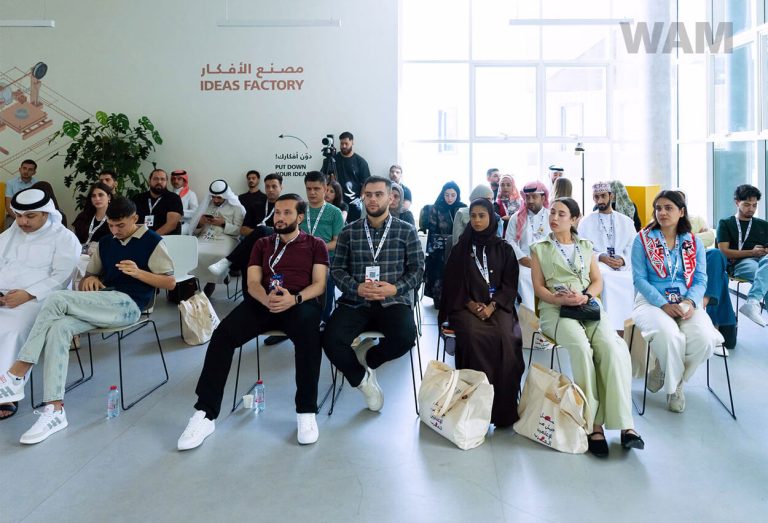
UAE Government Media Office launched a practical content guideline for every federal communication team this week. The launch happened during the latest Government Communication Network meeting at Creators HQ in Dubai. Communication directors and officials from across federal entities joined the session to review new standards. Saeed Al Eter, Chairman of the office, opened the meeting with a clear national message. He told the room that the government wants communication to move as fast as the world. Al Eter said, “We are developing an advanced government communication ecosystem grounded in data and knowledge.” His goal centers on credible content reaching every segment of society across the country. People stay at the heart of every public message the office plans to publish.

Al Eter then turned to artificial intelligence and its role in shaping future media. He said clearly, “Agentic AI will define the next chapter” for the sector ahead. This approach lets teams produce real-time, high-quality content at a far larger working scale. Agentic AI government communication also helps teams counter false information before it spreads widely online. Such tools also support precise crisis response and deeper engagement with growing digital communities. Government messaging then becomes more proactive, more responsive, and more effective for the wider public.

HOW THE NEW GUIDELINE HELPS YOUR TEAM

The Government Media Content Guideline works as a practical, end-to-end framework for federal teams. Rather than broad principles, it offers concrete tools for every stage of content work. You move through planning, message development, written and visual production, and channel distribution steps. Each stage follows clear standards built around the UAE communication identity and audience needs. The UAE Government Media Office wants content reaching the audiences each team plans to move. Officials designed every standard to keep content clear, consistent, and simple for most readers. You gain one repeatable process for planning, writing, and publishing across all federal channels.

The office also organised a hands-on workshop for the communication teams attending the meeting. Participants turned the framework into live practice through real content tasks and group exercises. They built strong narratives, shaped clear messages, and adapted content for many different platforms. The workshop ran as a working space, not a lecture, for the attending teams.

UAE GOVERNMENT MEDIA OFFICE BACKS CRISIS-READY TEAMS

A dedicated session from NCEMA addressed crisis media management across the wider federal system. Speakers explained the UAE model for communication during emergencies and other high-pressure crisis moments. Good crisis media management builds public trust and limits the spread of inaccurate information. Strong communication helps institutions respond with confidence and coherence when each moment matters most.

The new framework signals a clear shift toward faster, data-driven public communication for citizens. From my standpoint, this move ties technology, standards, and trust into one practical system. You should expect government content to arrive faster and stay clearer in the coming months. The UAE Government Media Office plans steady support as these tools reach every entity. Saeed Al Eter framed the guideline and Agentic AI as the next phase together. His message places the UAE Government Media Office at the center of national communication. You can follow how each entity adopts the new guideline through future network meetings. The Government Communication Network will likely track progress and share results with all teams.

Share this post

on your favourite social platforms

or copy the link