

icnlive

WATCH LIVE. THINK BUSINESS.

© 2026 ICN.LIVE

ICN.live

PUBLISHED BY ICN PRESS

  • A white paper from TDRA, e& UAE, Khalifa University, and NYU Abu Dhabi models Upper 6 GHz at roughly triple C-band capacity per cell, using the sites operators already have.
  • Outdoor reach stays within 2 to 5 percent of 3.5 GHz C-band across city, suburban, and rural settings, with the hardest indoor case within about 3 percent.
  • e& UAE holds up to 350 MHz of contiguous spectrum and plans a 10 Gbps Giga-MIMO launch between July and December 2026.
  • Devices supporting the band are expected from September 2026, once TDRA adds it to national type-approval rules.

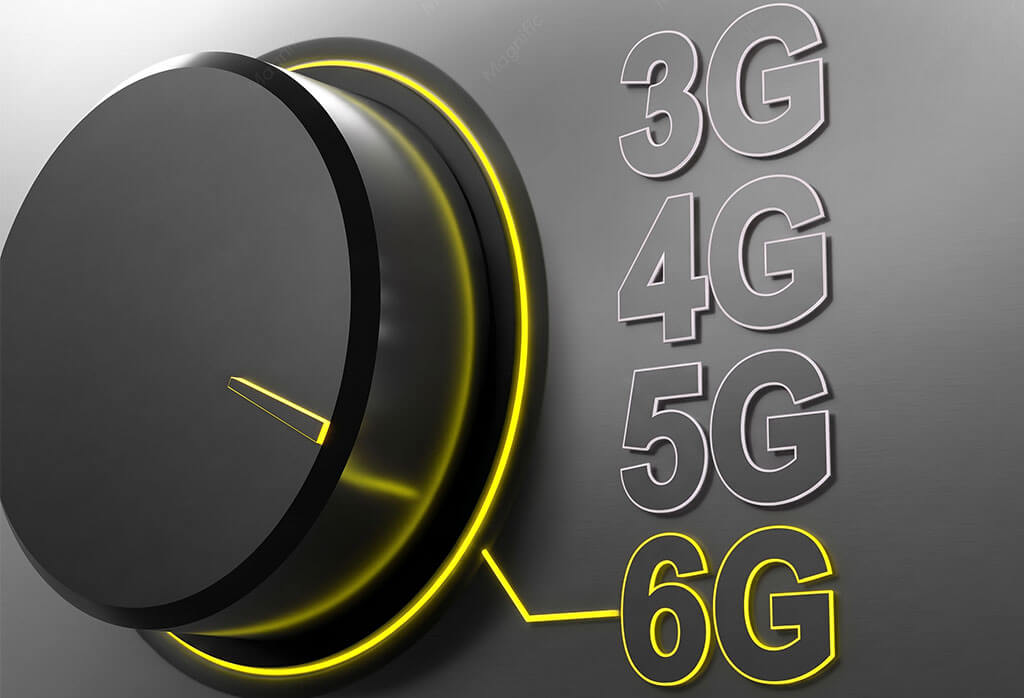
The case for the 6G band in the UAE rests on a small number: two to five percent. That is how far an Upper 6 GHz signal falls behind today’s 3.5 GHz C-band in reach. The modelling covered city centres, towns, suburbs and open country. Higher frequencies normally travel less far, and shorter reach normally means more towers. A gap this narrow points the other way. An operator can hang the new radios on masts and rooftops it already owns.

The figure comes from a white paper titled “The Golden 6 GHz Band.” Four names sit on it: TDRA, the telecoms regulator, e& UAE, Khalifa University of Science and Technology, and NYU Abu Dhabi. Its release comes with a decision to move the 6G band in the UAE out of trials and into commercial service. The industry calls it the golden spectrum.

Where the threefold figure comes from

Two gains sit behind the headline claim, and they multiply. The first is a gain in spectral efficiency of about 1.5 times. It comes from a 256TRX Giga-MIMO antenna array, which has far more transmit and receive paths than a standard 5G unit. Beamforming and scheduling across the array do the rest. This gain holds regardless of the channel width. The second is width itself. Set 200 MHz of Upper 6 GHz spectrum against a 100 MHz C-band carrier and the channel doubles. One and a half times two comes to roughly triple the capacity per cell. The authors say the result lines up with work by independent analysts.

Coverage comes out of the same hardware. Signals at higher frequencies lose strength faster, and the array’s beamforming makes up for the loss. In the hardest case the team modelled, indoors in a dense city, reach stays within about three percent of C-band.

A caveat travels with every figure. The results come from models, not field tests, and rest on assumptions the paper lists. Live performance, it says, will depend on where the radios go, which spectrum they get and what the devices can do. Bayan Sharif, provost of Khalifa University, called the 1.5 times gain “achievable under well-conditioned assumptions.” The method went out with the findings, he said, so others could check the work.

Business Intelligence & News

  • Meta One in the UAE brings paid tiers from Dh5.99 to Dh1,199 a month across WhatsApp, Instagram, Facebook, and Meta AI.
  • Core versions of all four apps stay free, with subscriptions adding features and heavier AI usage on top.
  • Entry plans start at Dh5.99 for WhatsApp Plus, while creator and business bundles climb into the hundreds.
  • Meta reports more than 15 million subscriptions and trials worldwide, with Edits and AI glasses features still to come.

How regulation shaped the 6G band in the UAE

Policy moved before engineering on the 6G band in the UAE. In 2023, the World Radiocommunication Conference identified 6425 to 7125 MHz for mobile service across ITU Region 1. The Telecommunications and Digital Government Regulatory Authority (TDRA) moved earlier than most of its peers and wrote the whole range into its national frequency plan. Within it, e& UAE holds 6425 to 6775 MHz, as much as 350 MHz in one unbroken block.

With the allocation settled, the operator committed to a commercial Giga-MIMO deployment built for peak downloads of 10 Gbps. Launch is planned between July and December 2026. Tariq Al Awadhi, TDRA’s executive director of spectrum affairs, drew the line himself: “Regulatory certainty is what turns research into infrastructure.”

Money follows the coverage result. The white paper treats Upper 6 GHz as a capacity layer laid over e& UAE’s current 5.5G network. It shares towers, rooftops, power and transport links, and backhaul gets an upgrade where needed. Fewer new sites can mean a lower cost for each bit carried as demand grows. Marwan Bin Shakar, chief technology officer at e& UAE, framed the customer side as higher speeds, more capacity and a steadier connection in crowded areas.

What the network is meant to carry

The paper groups planned uses under three headings: Connect Home, Connect Industry, and Connect Consumer and Vehicle. Those cover home broadband delivered over the air at speeds close to fibre, heavy-bandwidth uses for companies and public bodies, AI-driven services in the home, and connected cars.

The work extends earlier UAE research, including TDRA’s national 6G roadmap and two e& UAE papers written with the same universities. TDRA has described the band as a resource for 5G-Advanced services and a foundation for 6G. Abroad, over 60 companies, from operators and vendors to chipset suppliers and device makers, have signed a GSMA statement on the band’s readiness.

One piece sits beyond any operator’s control. A band is only useful to people whose phones and routers can tune to it. TDRA plans to add Upper 6 GHz, known in standards as n104, to national type-approval rules, with the first devices due from September 2026. How fast those handsets reach shop shelves will decide when the 6G band in the UAE turns from a modelled result into something a customer can measure.


TAGS

EXPLORE MORE ON:

6G band in the UAE
$20 billion Maldives project

For thousands of Maldivian families, a $20 billion Maldives project now stands between where they live today and a new home by the water. Abu Dhabi developer Eagle Hills has signed a commercial terms agreement with the Government of Maldives to build an island destination called Maldives Waterfront and Marina. The site covers 550 hectares, roughly 1,359 acres, in the Ras Malé area.

Ras Malé sits at Fushi Dhiggaru Lagoon, about 17 minutes by speedboat from the capital, Malé. The agreement, signed on Monday, sets out the main commercial terms. Finer details will follow as the work moves ahead.

Inside the $20 billion Maldives project

The Eagle Hills Maldives plan runs in phases. It brings together international hotels, premium and branded residences, a marina and waterfront leisure spaces. Retail, dining and entertainment sit alongside wellness, education, healthcare and community services. The aim is a place where people can holiday, live and go about ordinary days in one connected setting.

Numbers show the scale. The Ras Malé development could draw more than one million visitors a year and more than $2 billion in annual tourism revenue, by early estimates. Over its lifetime, it could attract more than $30 billion in gross foreign investment, including about $18 billion in net foreign investment. Planners expect it to create more than 54,000 jobs.

Homes for local families, and a cut for the state

The $20 billion Maldives project promises more than tourism for the islands. Its plan sets aside 5,000 homes for Maldivian families. The government will take 10 percent of sales revenue from the commercial side, plus a 4 percent fee on every property deal, including sales and resales. Each time a unit changes hands, the state earns its share.

Mohamed Alabbar, founder and chairman of Eagle Hills, told Reuters construction could begin in the first quarter of 2027. He also raised the chance of a familiar name joining in.

Where Emaar Properties fits in

The current agreement rests with Eagle Hills alone. Even so, Alabbar left the door open to a shared stake in the $20 billion Maldives project. “We may go for 50:50 sharing, depending on the decision of the Emaar Investment Committee,” he said. Emaar Properties, which Mohamed Alabbar also founded, is the name behind Burj Khalifa and Dubai Mall. Its presence would carry weight for buyers weighing where to put their money.

Eagle Hills works across more than 18 countries and runs a portfolio of 45 hotels. The developer said the masterplan folds in sustainability, resilient infrastructure and steps to protect the fragile island environment.

Dubai Creek Tower and no IPO

Alabbar addressed other plans too. He said the tendering of the proposed Dubai Creek Tower would depend on the conflict involving Iran and the United States. “Once the situation in Iran and the US settled, I might tender it,” he said. Back in June 2026, reporting indicated Emaar had delayed that tender after port closures tied to the Iran-US war pushed up material costs and pricing.

On one point, he was firm. “For Eagle Hills, no IPO is on the table,” he said, ruling out a public listing.

For families near Malé, the next signal to watch is simple. If ground breaks in early 2027 as planned, the $20 billion Maldives project moves from paper to shoreline.

What Qatar’s new dual-tranche

Qatar has launched a benchmark-sized sovereign USD bond across two tranches, with pricing expected later the same day. The offering is senior unsecured. It comes through the Ministry of Finance, acting for the State of Qatar.

The five-year tranche carries initial price targets of 85 basis points over US Treasuries. Guidance on the 10-year sits at 95 basis points. Both spreads fall below the 100 basis point mark. Final coupons will depend on Treasury levels once the order book closes.

Qatar is the latest Gulf state to return to international debt markets. The move follows a quieter stretch for regional supply during a period of renewed geopolitical tension. Earlier this month, Saudi Arabia raised 3.25 billion dollars through a dual-tranche dollar sukuk.

Business Intelligence & News

  • UAE higher education is becoming core economic infrastructure for talent, innovation, and growth.
  • Abu Dhabi University awarded QS Stars 5+ rating
  • Dubai private university enrolment reached 42,026, growing by around 20% in 2024–25.
  • Universities are aligning skills with AI, finance, healthcare and other strategic UAE sectors.

How the sovereign USD bond is structured

The deal is a Qatar dual-tranche bond, split by maturity. One tranche runs five years. The other runs 10. Each is a senior unsecured bond, which ranks holders alongside other unsecured senior creditors rather than against specific assets.

Initial price thoughts, or IPTs, are the early spread levels shown to investors before the book builds. They mark a starting point, not a final price. As demand forms, the spread can tighten. The US Treasuries spread is the gap between Qatar’s yield and comparable US government debt, and it moves with Treasuries until pricing locks. The sovereign USD bond gives Qatar dollar funding at two points on its curve.

A benchmark-sized transaction points to an issue large enough to trade with reasonable liquidity later. Qatar had not confirmed the final size at launch.

Ratings and syndicate

The State of Qatar holds an Aa2 rating with a stable outlook from Moody’s. S&P rates it AA with a stable outlook. Fitch rates it AA with a negative outlook. The notes are expected to carry a rating in line with the issuer.

Credit Agricole CIB, Deutsche Bank, Mizuho, MUFG, Santander and SMBC serve as joint lead managers. Goldman Sachs International, HSBC, JP Morgan, QNB Capital and Standard Chartered Bank act as joint global coordinators. HSBC is the billing and delivery bank on the five-year tranche. Standard Chartered Bank takes that role on the 10-year.

Settlement and listing

The bonds settle on September 28, 2026. They fall under Qatar’s Global Medium Term Note Programme, the standing framework the sovereign uses for repeat issuance. A listing on the London Stock Exchange Main Market will follow.

Pricing gives a current read on how investors weigh Qatar’s credit. Spreads under 100 basis points on a five- and 10-year sovereign point to steady demand. For the wider Gulf debt markets, the deal adds a fresh reference point after a thin run of supply. Other regional borrowers can price against it.

Qatar’s access to dollar funding rests on large hydrocarbon revenues and a deep pool of state financial assets. That base has long supported its standing with bond investors.

What comes next?

Order books will guide the final spread and coupon on each tranche. Pricing on the sovereign USD bond will firm up once the book closes. Investors will watch the size of Qatar’s prints and where the spreads land against the opening guidance.

Share this post

on your favourite social platforms

or copy the link