


Water security desalination in the UAE gained ground as Veolia signed two contracts worth close to €200 million, one in the Emirates and one in Oman. Together, the projects add 490,000 cubic meters of daily capacity. The company already built 18 percent of the world’s installed desalination capacity, and it plans to lift the volume it operates to 1.4 million cubic meters a day by 2030. For the Gulf, that goal lands close to home. Veolia has worked in the region for more than 30 years. Demand for drinking water keeps climbing as the population and the heat both rise. Across the region, scarce rainfall and fast growth have made the sea the main source of fresh water.
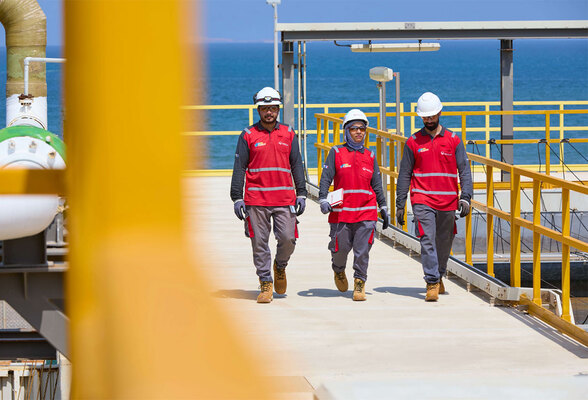
Inside the Al Hamriyah desalination plant
The Al Hamriyah desalination plant sits at the center of the UAE deal. Veolia is handling the design and supplying the technology for a facility built to produce 410,000 cubic meters of water each day. That output will reach roughly 1.4 million residents. The volume covers a large share of local household demand. What sets the project apart is its energy profile. The plant is expected to run at 2.75 kWh per cubic meter, a record low for a desalination plant in the UAE.
Veolia reaches that figure by layering several pretreatment and remineralization steps, among them dissolved air flotation, dual-media pressure filters and limestone filters. The result is energy-efficient desalination at a scale few sites match. Hassyan in Dubai, Mirfa 2 in Abu Dhabi, Umm Al Quwain and Fujairah already carry Veolia technology, so the new plant extends a record on water security desalination in the UAE.
Oman’s Al Asilah plant leans on solar and data
In Oman, Veolia picked up a five-year contract to run and fine-tune the Al Asilah plant. The site produces 80,000 cubic meters a day and serves about 200,000 people. A solar farm already feeds part of its power, and Veolia will trim electricity use further with its Smart Connectors and Hubgrade digital tools, which track equipment and flag weak performance. The company operates four large plants in the country, among them the nearby Sur facility, together supplying close to 2.5 million people. Digital monitoring like this now shapes how Gulf operators draw more from older plants. Both deals feed the same goal: stronger water security through desalination in the UAE and across the Gulf.
Why water security desalination in the UAE keeps advancing
Desalination now underpins daily life across the Gulf, and the technology has changed fast. Over five decades, Veolia water technologies have helped cut the energy needed to treat seawater by 80 percent since the 1980s, while the price of a cubic meter fell by about 90 percent. Newer gains come from AI-enabled reverse osmosis desalination, lower chemical use and better brine dispersal.
Those steps lower the environmental cost that has long shadowed the sector. “Desalination is one of the cornerstones of water security in the Middle East,” said Estelle Brachlianoff, chief executive of Veolia. For residents, the payoff is steadier supply at a price that holds. Water security desalination in the UAE, then, reads less as a single milestone and more as one more layer on a long build.